
How Often Should You Schedule AC Maintenance in Southwest Florida?

Valor HVAC • May 7, 2026

Share this article

In Southwest Florida, your AC doesn't get much of a break. For most homes, the right pace is professional maintenance twice per year .

That baseline changes when your system works harder than average. Older equipment, coastal homes, rentals, pet-heavy households, and homes with allergies often need closer attention.

Heat, humidity, salt air, and long cooling seasons wear parts down faster here than in many other places. The good news is that a simple schedule can keep your system cleaner, steadier, and less likely to quit when you need it most.

The maintenance schedule most homes can follow

For a typical home, twice-yearly service is the sweet spot. A spring visit gets the system ready before the worst heat shows up. A fall visit helps catch wear after months of long run times.

That rhythm works because your AC in Southwest Florida does more than cool the air. It also pulls moisture out of the house for much of the year. That extra workload affects coils, drains, electrical parts, and airflow.

Here's a simple way to think about it:

Home type Suggested maintenance schedule Why it may differ
Most homes Twice per year Covers both the cooling season and post-summer wear
Coastal homes Twice per year, with extra checks after storms Salt air and storm debris can speed up damage
Older systems Twice per year, sometimes more Aging parts fail faster under heavy use
Rentals or seasonal homes Twice per year Systems may sit, then get hit with hard use all at once
Homes with pets or allergies Twice per year, plus frequent filter changes Dust and dander build up faster

If your home fits more than one of these rows, lean toward the shorter service interval. Twice a year is a baseline, not a ceiling.

Why Southwest Florida changes the timetable

Southwest Florida puts extra stress on AC systems in a few clear ways. First, the cooling season is long. Many homes run the AC for most of the year, so the system rarely gets a true rest.

Humidity adds another layer. When your AC removes moisture from the air, it works harder than a unit in a drier climate. That can make coils dirtier and drains more likely to clog.

Coastal air is another problem. Salt can corrode outdoor parts, especially if you live near the water or in an area that gets breezy salt exposure. Afternoon storms can also push leaves, sand, and debris into the outdoor unit.

In Southwest Florida, AC maintenance is less about polishing equipment and more about keeping up with constant wear.

When all of that happens at once, small issues grow fast. A little dirt on a coil becomes a weak cooling problem. A slow drain turns into a wet closet or ceiling stain. A loose wire can become a full shutdown.

What a proper AC tune-up should include

A real maintenance visit should cover more than a quick look at the outside unit. It should check the whole system, because one weak part can drag the rest down.

A thorough tune-up usually includes:

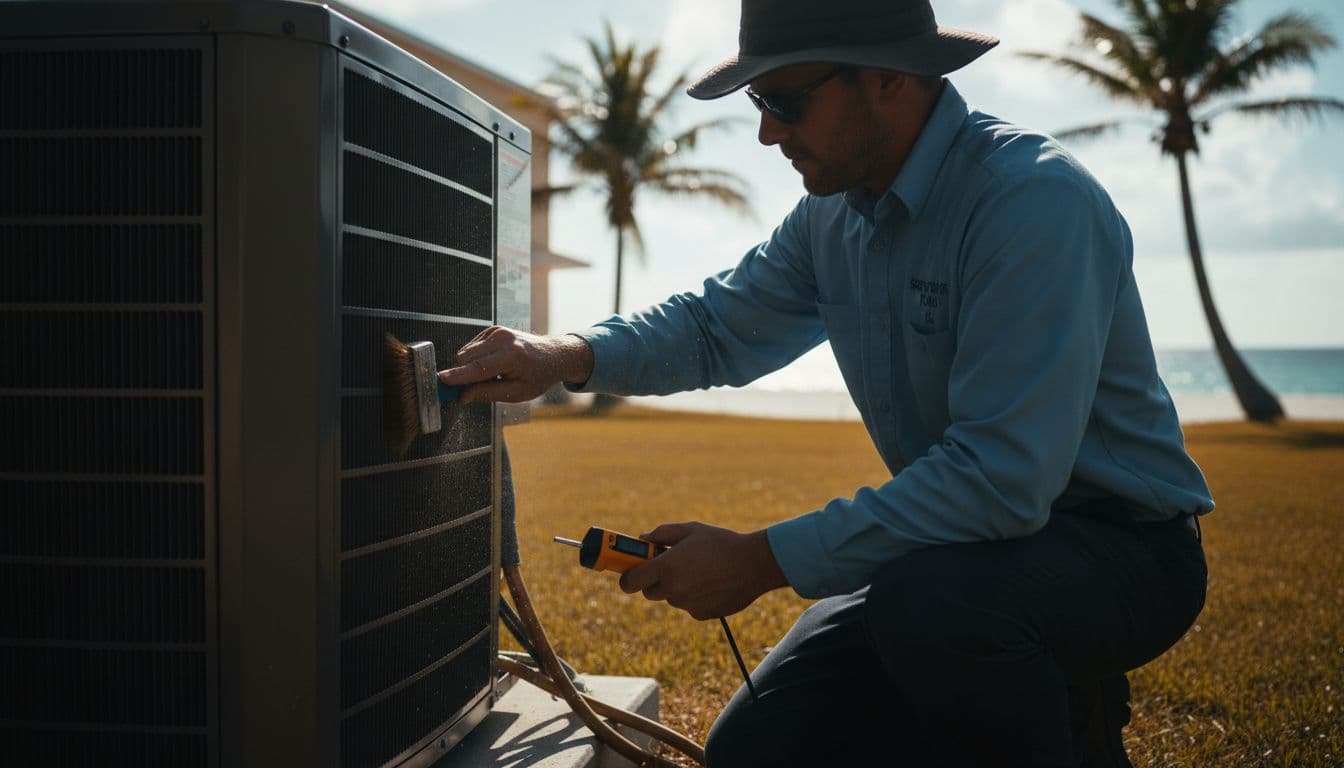
  • Cleaning the indoor and outdoor coils
  • Checking electrical connections and worn parts
  • Testing refrigerant levels and looking for leaks
  • Flushing and inspecting the condensate drain
  • Checking the blower, fan motor, and airflow
  • Testing thermostat response and temperature control

These steps matter because AC problems often start small. A dirty coil makes the system run longer. A clogged drain can trigger a shutdown switch. A weak capacitor can make the unit struggle to start.

That is why maintenance is cheaper than waiting for a breakdown. You are paying to catch wear early, not to react after the house starts warming up.

What you can handle between service visits

Professional maintenance does the heavy lifting, but you can help your system in simple ways between appointments. These small habits matter more in Southwest Florida because dust, moisture, and plant debris build up quickly.

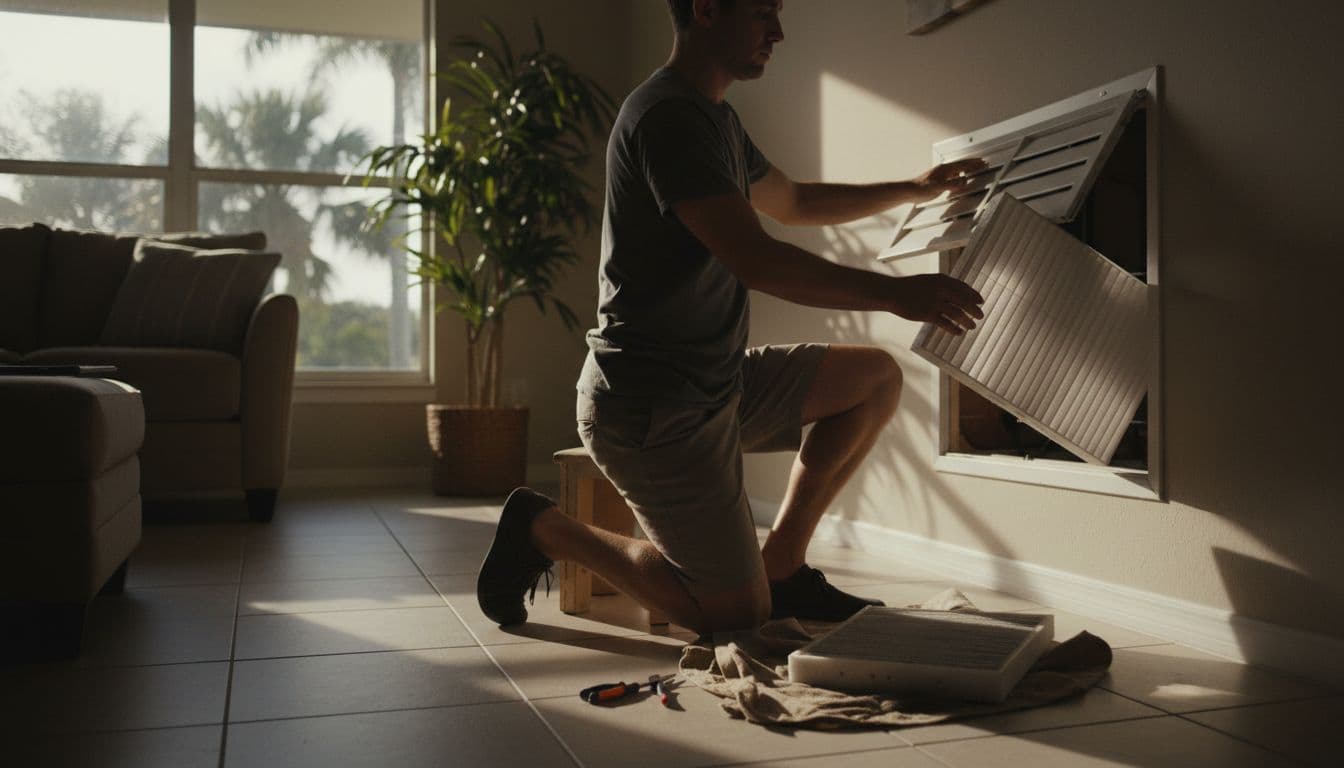
Start with the air filter. In many homes, changing it every 30 to 60 days works well. If you have pets, allergies, or a lot of foot traffic, monthly checks make more sense. A dirty filter restricts airflow and puts extra strain on the system.

The condensate drain deserves attention too. Look for standing water, damp spots, or slow draining around the indoor unit. In this climate, a clogged drain line can turn into a messy problem quickly.

The thermostat should get a quick test at the start of the cooling season. Make sure it responds fast, holds the set temperature, and doesn't keep forcing the AC to cycle on and off.

Keep the outdoor unit clear as well. Trim back plants, remove grass clippings, and clear away leaves, mulch, and patio clutter. Leave at least two to three feet of open space around the unit so air can move freely.

If a storm passes through, check the unit again. Broken branches, dirt, and blown debris can block airflow or damage the fins on the condenser.

Signs you should not wait for the next visit

Some AC problems can wait a week or two. Others should get attention right away. If you notice any of the signs below, the system may already be under strain.

  • Weak airflow from vents
  • Warm air when the AC should be cooling
  • Water near the indoor unit
  • Short cycling, where the system turns on and off too often
  • Musty or burning smells
  • Ice on the refrigerant line or indoor coil
  • A sudden jump in your electric bill
  • Breakers tripping or the system struggling to start

Those symptoms usually point to a problem that will not fix itself. The longer you wait, the more likely the repair gets larger and more expensive.

If your system is showing any of these signs, it's smart to Schedule an Estimate before the issue gets worse.

Conclusion

For most Southwest Florida homes, twice-yearly AC maintenance is the right target. It gives your system a spring check before heavy use and a fall check after the long cooling season.

Homes near the coast, older systems, and high-use households often need a little more attention. The local climate is hard on equipment, so the best schedule is the one that matches how your AC actually works.

A clean filter, a clear drain line, a tested thermostat, and an open outdoor unit help a lot between visits. That routine keeps your system ready for the heat, the humidity, and the next long summer stretch.

Recent Posts