Does Opening Windows Raise Indoor Humidity in Florida?
Opening windows can raise indoor humidity in Florida, but the result depends on outdoor dew point, indoor temperature, air conditioning operation, and how long the windows stay open. On a hot, damp day in Fort Myers or elsewhere in Southwest Florida, outdoor air often brings more moisture inside than your AC can remove.
However, windows aren't always the problem. If outdoor air has a lower dew point than the air inside, short-term ventilation may reduce moisture. A hygrometer can show what is happening instead of leaving you to judge by feel.
Key Takeaways
- Opening windows often increases indoor humidity when Florida's outdoor dew point is high.
- Relative humidity changes with temperature, so cool indoor air can show a higher humidity reading after warm air enters.
- Keep indoor relative humidity near 30% to 50% when possible.
- Humidity that stays above 60% raises the chance of mold and musty odors.
- Use a hygrometer and your weather app's dew point reading before opening windows for long periods.
Why Open Windows Can Add Moisture to a Florida Home
Warm outdoor air holds more water vapor than cool indoor air. When that air enters through an open window, it brings its moisture with it. Your air conditioner then has to cool that incoming air and remove the added water.
Relative humidity makes the situation more confusing. The same amount of water vapor can produce different humidity readings at different temperatures. When warm, humid outdoor air enters a cool room, the room may feel damp even if the air exchange seemed brief.
For example, an outdoor breeze may feel comfortable near a shaded patio. Once that air enters a home cooled to 74 degrees, its relative humidity can rise as the air temperature drops. The moisture hasn't disappeared. The cooler air is holding less moisture before reaching saturation.
Florida's outdoor dew point gives you a better clue than outdoor relative humidity alone. Dew point measures the amount of moisture in the air. When the outdoor dew point is higher than the moisture level you want indoors, open windows are more likely to increase indoor humidity.
The effect also depends on the home's construction. Older homes with leaky windows may exchange air quickly. Newer homes with tighter doors and windows may retain conditioned air longer, but opening several windows can still bring in a large amount of moisture.
Air conditioning operation changes the result, too. If your AC runs while windows remain open, cooled air escapes as outdoor air enters. The system may run longer while trying to reach the thermostat setting. That can increase energy use without controlling humidity as well as it should.
When Opening Windows May Lower Indoor Humidity
Opening a window doesn't automatically make a home more humid. The outdoor conditions matter most.
Ventilation may help when the outdoor dew point is lower than the dew point of your indoor air. This can happen during a less humid weather period, after a dry front passes, or when indoor moisture has built up from showers, cooking, or several people spending time in a closed room.
Still, outdoor relative humidity can mislead you. A cool morning might show a high relative humidity percentage, yet contain less total moisture than hot afternoon air. Compare dew points when possible, because dew point stays more closely tied to the actual moisture content.
The length of time also matters. Opening windows for a few minutes can exchange stale air without adding much moisture. Leaving them open for hours gives outdoor humidity more time to enter. Rain, wet landscaping, and wind can increase that moisture load near the windows.
Your AC may also affect the reading after ventilation. If the system has been off, the indoor temperature may rise and relative humidity may fall temporarily, even though the home still contains substantial moisture. Once the AC cools the air again, the humidity percentage may climb.
Use this simple approach before opening windows:
- Check the indoor humidity on a hygrometer.
- Check the outdoor dew point through a reliable weather app.
- Open windows briefly only when outdoor conditions look drier.
- Close the windows before turning the AC back on.
- Check the indoor reading again after several hours.
Avoid judging conditions by temperature alone. A 78-degree day with a moderate dew point can be easier on indoor humidity than a cooler day with saturated air.
Use a Hygrometer to Track Humidity Indoors
A hygrometer measures relative humidity. Small digital models are inexpensive and can give you a clearer picture than condensation on a glass or a room that feels sticky.
Place one in a central living area, away from supply vents, direct sunlight, bathrooms, kitchens, and exterior doors. Those locations can create readings that don't represent the rest of the home. If your house has separate floors or strong temperature differences between rooms, use more than one monitor.
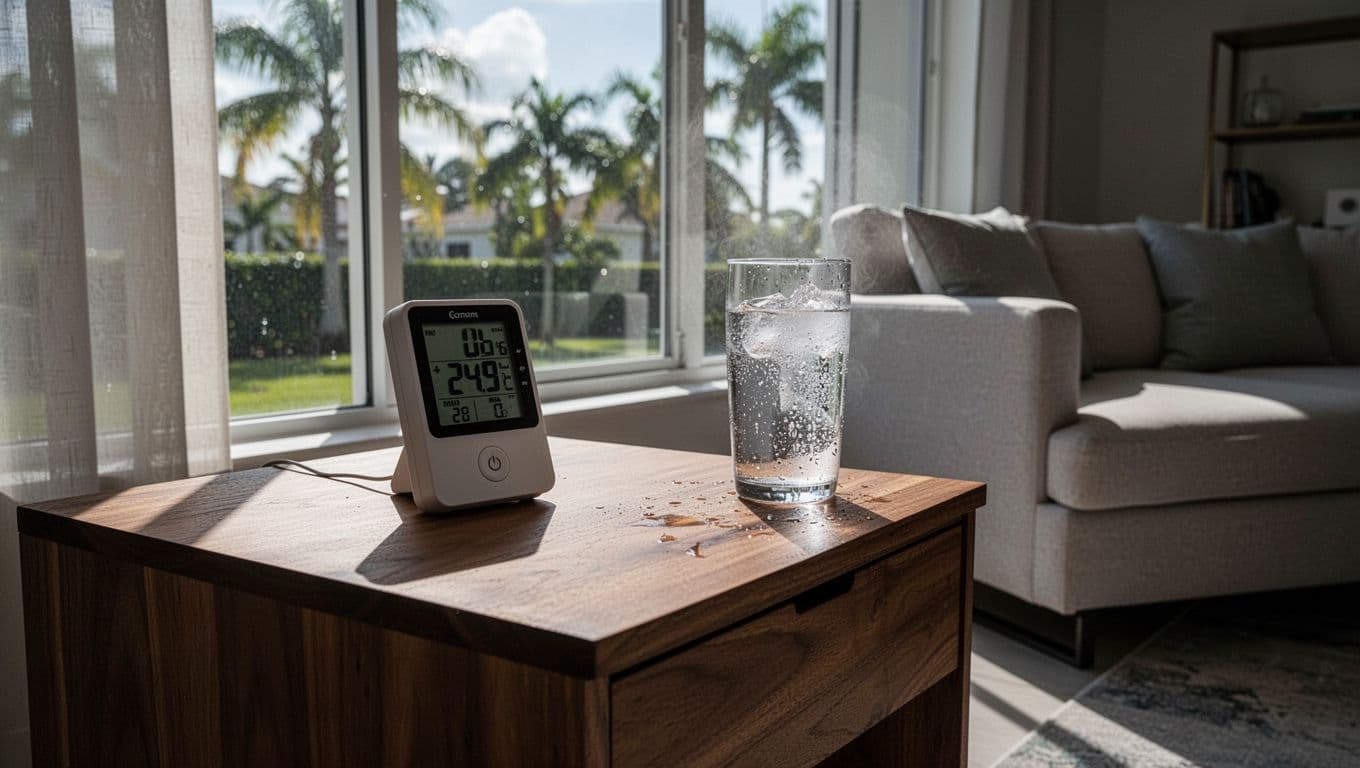
Check the reading at similar times each day. Record what happens when windows open, the AC runs, showers finish, or heavy rain moves through the area. Patterns can reveal whether outdoor air or an indoor HVAC issue is driving the change.
Indoor relative humidity between 30% and 50% is a practical target for many homes. Florida homes may sometimes run above that range, especially during rainy weather, but a reading that stays above 60% deserves attention. Persistent high humidity can support mold growth, damage some materials, and create musty odors.
A hygrometer also helps you avoid unnecessary changes. If the reading stays near 45% after opening a window for ten minutes, the ventilation probably hasn't created a serious moisture problem. If it rises from 52% to 66% and stays there, close the windows and let the AC or a dehumidifier remove the excess moisture.
Place the monitor in the room where you notice the issue most. A bedroom with closed doors may have a different humidity level than the open living area. A closet on an exterior wall may also develop condensation or odor before the main room shows a high reading.
A Safer Way to Ventilate in Southwest Florida
Use short, intentional ventilation instead of leaving windows cracked all day. Before opening them, check the dew point and look at the indoor hygrometer. If outdoor air appears drier, open two windows briefly to create airflow, then close them before the home's cooling system resumes.
Turn off the AC during a short ventilation period if outdoor conditions are suitable. Otherwise, conditioned air escapes through the open windows while humid air enters. After closing the windows, restart the system and give it time to cool and dry the air.
Bathrooms and kitchens need separate attention. Run the bathroom exhaust fan during a shower and for a short period afterward. Use the range hood when cooking, especially when boiling water. These steps remove moisture near its source instead of allowing it to spread through the home.
Keep windows closed during heavy rain and on muggy afternoons. A window may admit moisture even when rain doesn't blow directly inside. Wet screens, damp curtains, and moisture on nearby surfaces can add to the problem.
If you enjoy fresh air, choose the coolest and driest short periods available. You can also use ceiling fans for comfort, but fans don't remove moisture. They move air across your skin, so a room may feel better while the humidity reading remains unchanged.
When indoor humidity stays high, a portable dehumidifier may help in one room. It won't correct a whole-home HVAC problem, and it produces heat while operating. Use it as a temporary measure while you identify the main source of moisture.
When High Humidity Points to an AC Problem
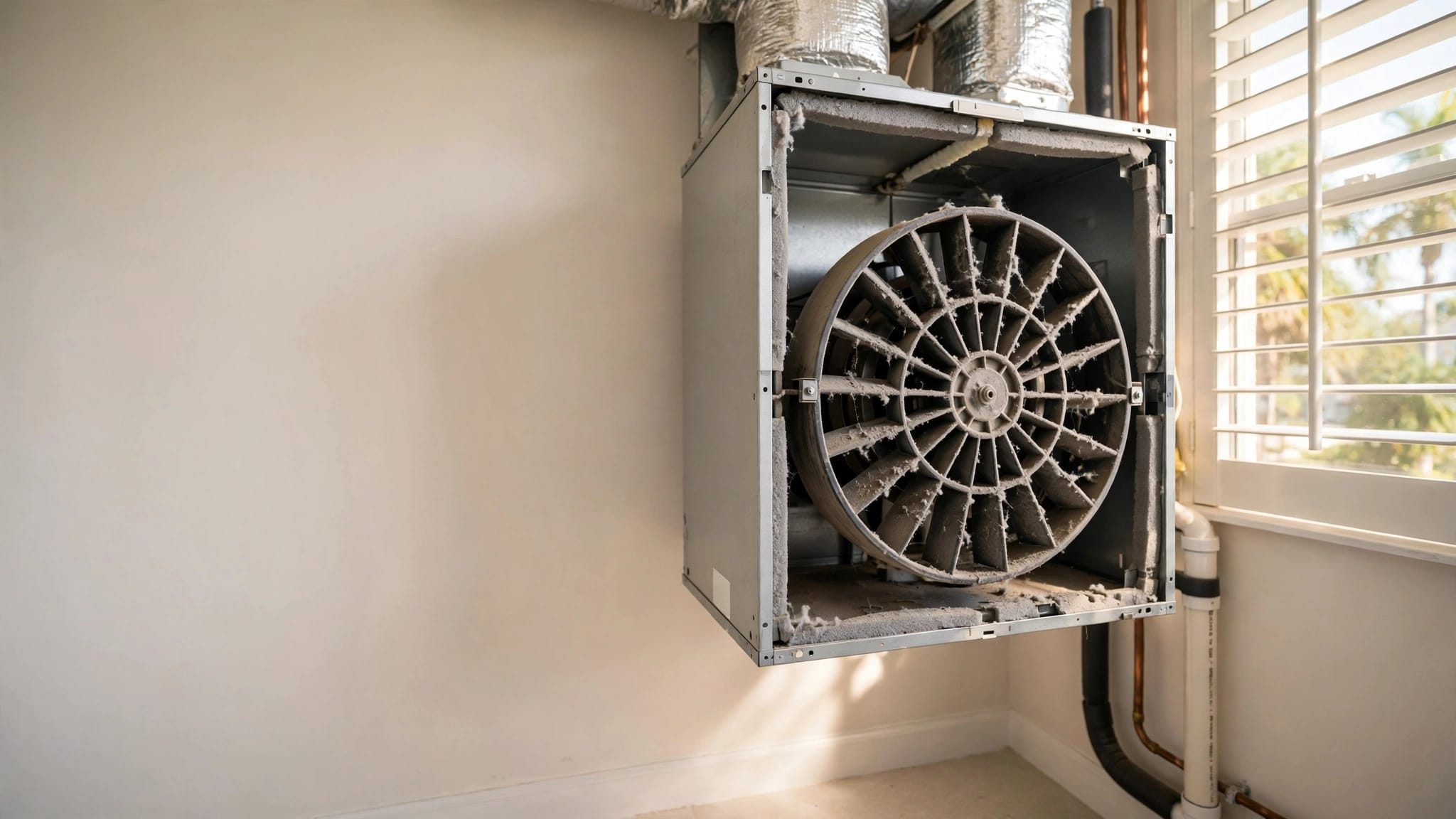
Your AC removes moisture when warm indoor air passes over a cold evaporator coil. The system needs enough run time and proper airflow to perform that job. A unit that cools the house quickly but shuts off after short cycles may not remove enough moisture.
Several conditions can affect humidity control. A dirty filter can restrict airflow. A clogged condensate drain can stop the system from removing water properly. Oversized equipment may satisfy the thermostat before it completes a longer dehumidifying cycle. Low refrigerant, coil problems, or duct leaks can also affect cooling performance.
Watch for warning signs such as:
- Indoor humidity above 60% for several days
- Musty smells near vents or closets
- Water around the indoor air handler
- Frequent short cycling
- Rooms that feel damp even when they reach the thermostat setting
- Condensation on supply vents, windows, or other cool surfaces
A clean filter and clear area around the outdoor unit help, but they won't solve every issue. Routine service can identify drain, coil, airflow, and electrical problems before they become an emergency. Valor Heating & Cooling provides professional HVAC maintenance services for homes in Fort Myers and Lee County.
If the system runs often but your humidity remains high, arrange an inspection rather than lowering the thermostat repeatedly. A colder setting may increase energy use without correcting the moisture source. You can Schedule an Estimate with a Valor Heating & Cooling technician to discuss repair, replacement, or humidity-control options.
Conclusion
Opening windows can raise indoor humidity in Florida when outdoor dew point is high, especially while the AC is running or the windows stay open for hours. Short ventilation can help when outdoor air is genuinely drier, so check the dew point instead of relying on temperature or how the air feels.
Keep a hygrometer in a central room and aim for indoor relative humidity near 30% to 50%. If readings remain above 60%, close the windows and have the HVAC system checked. In a Florida home, humidity control starts with measuring the air and understanding where the moisture enters .
Recent Posts