How to Register an AC Warranty in Florida
A new air conditioner is a major home purchase, and warranty registration is one of the easiest steps to overlook. If you skip it, you may have trouble proving the system's age, ownership, or installation details when a covered repair becomes necessary.
AC warranty registration usually requires your equipment information, purchase date, installation records, and contractor details. Before you begin, gather those records and confirm the exact instructions from your equipment manufacturer. The process starts with identifying the system and locating its warranty terms.
Key Takeaways
- Find the model and serial numbers on the indoor and outdoor equipment.
- Keep your paid invoice, installation agreement, permit records, and contractor information.
- Register through the manufacturer's official website or ask your HVAC contractor to complete it.
- Save the confirmation page, email, and warranty certificate with your home records.
- Continue regular maintenance and keep service invoices in case the warranty requires proof of care.
Gather These Documents Before Starting
Warranty registration takes only a few minutes when your records are ready. Without them, you may need to search through emails, call the installer, or remove an access panel to find missing information.
Prepare the following before opening the registration form:
- The outdoor condenser's model and serial numbers.
- The indoor air handler or furnace model and serial numbers.
- The date the system was installed, which may differ from the purchase date.
- Your name, service address, mailing address, phone number, and email.
- The installing company's legal business name, phone number, and license information.
- Your paid invoice, sales agreement, or installation contract.
- The manufacturer's warranty booklet or registration card.
- Permit and final inspection records, if your local building department required them.
- Any efficiency documents, such as a matched-system certificate or product data sheet.
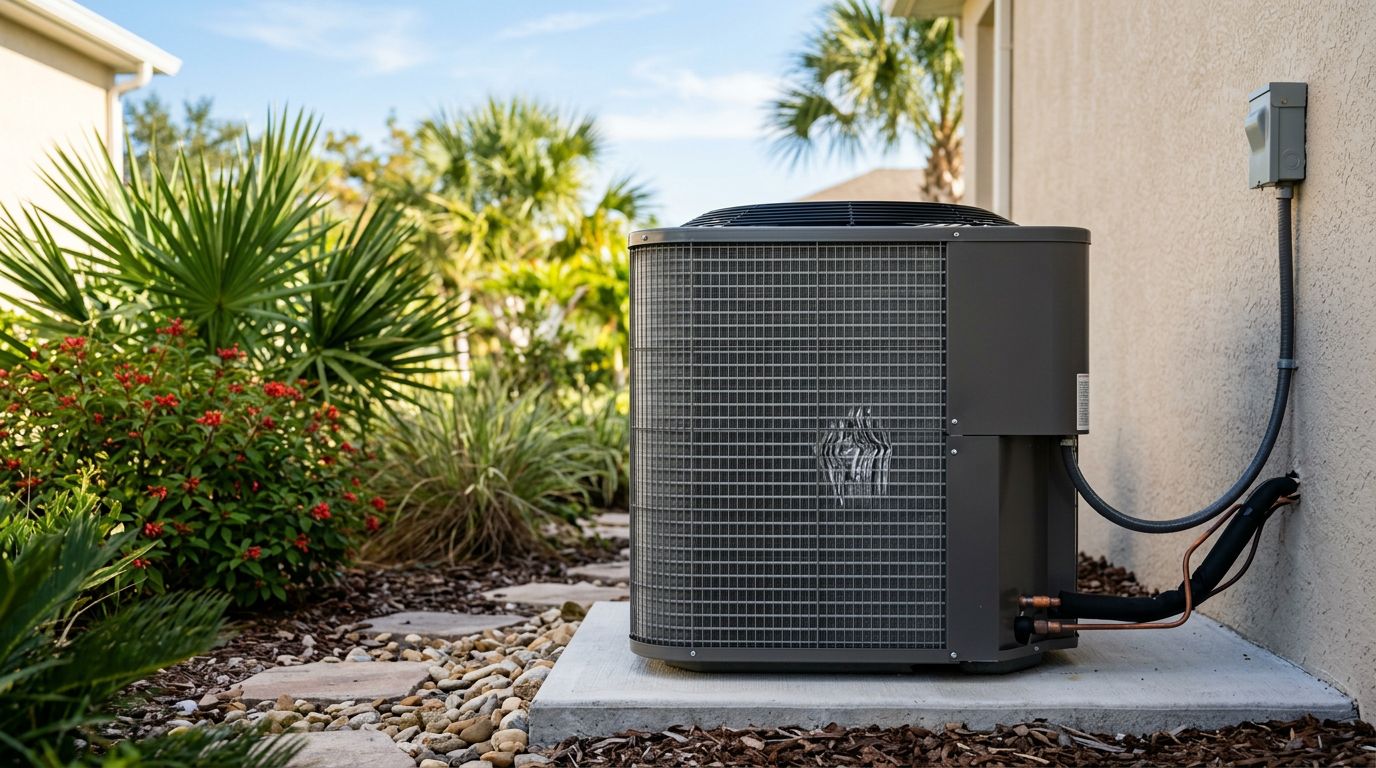
The model and serial numbers are usually printed on rating plates attached to the outdoor condenser and indoor equipment. Take clear photos of both labels. Florida's heat, humidity, and bright outdoor conditions can fade labels over time, so digital copies are useful.
Installation paperwork matters as much as the equipment label. It shows who installed the system, when the work happened, and what equipment you purchased. Keep the invoice even if the contractor offered to register the warranty for you.
If you're still arranging a replacement, schedule an estimate with a Southwest Florida HVAC technician and ask what warranty paperwork you'll receive after installation.
Find the Right Manufacturer Registration Process
The installer, not the local service company, determines which manufacturer's process you need to follow. Common residential brands include Carrier, Trane, Lennox, Goodman, Rheem, and Bosch. Each brand can use different registration forms, deadlines, and warranty terms.
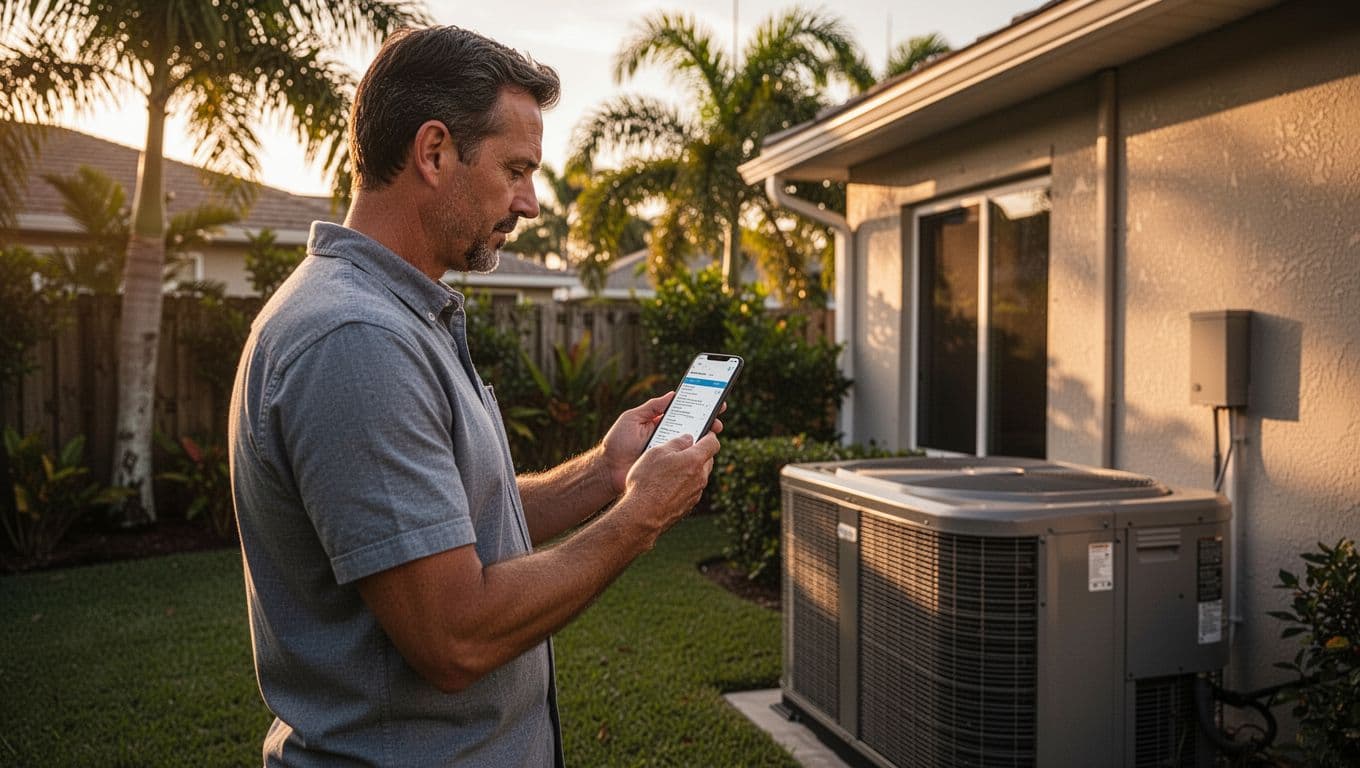
Start with the brand name printed on the outdoor unit. Then check the warranty booklet, registration card, or the manufacturer's official website. Search for a page labeled "product registration," "warranty registration," or "owner registration." Use the manufacturer's website rather than an unfamiliar third-party form.
Some contractors complete registration as part of the installation package. That can save time, but ask for written confirmation. A verbal assurance doesn't give you a record of the submission date or the information entered.
Warranty registration may be optional for certain products, while other manufacturers offer different coverage terms after registration. Some warranties begin according to the installation date, shipment date, or another condition listed in the written policy. Don't assume that registration alone creates coverage.
Registration records your ownership and equipment details, but the written warranty controls what the manufacturer covers.
If you can't find the warranty instructions, call the manufacturer using the phone number printed on the product documents. Have both model and serial numbers available. The support representative can usually explain whether you need to register the indoor and outdoor units separately.
How to Complete AC Warranty Registration
Most manufacturers use an online form. A few still provide paper cards through the installing contractor. The steps below apply to most new residential systems, but follow your brand's instructions when they differ.
1. Confirm the equipment information
Enter each model and serial number exactly as shown on the rating plate. Check every letter and number before submitting. A single incorrect character can make it difficult to match your registration with a future parts claim.
If the form asks for the system type, choose the correct combination, such as split air conditioner, heat pump, air handler, or packaged unit. Ask your installer if you're unsure.
2. Enter the installation date
Use the date the contractor completed the installation, not the date you paid a deposit or placed the order. Your invoice, permit paperwork, and startup report should help confirm this date.
If the installer gave you a commissioning or startup sheet, store it with your warranty confirmation. That document can show that the system was tested after installation.
3. Add homeowner and contractor details
Use the name of the person who owns the property or the name requested by the warranty form. Enter the address where the equipment operates. A mailing address may be different, but the service location should remain accurate.
Add the installing contractor's information exactly as it appears on your contract. If the form requests a license number, copy it from the paperwork instead of guessing. Florida homeowners can also review contractor licensing information through the state's Department of Business and Professional Regulation.
4. Review the coverage terms
Read the parts warranty period, registration deadline, exclusions, and claim procedure. Look for language about maintenance, approved replacement parts, transferability, and labor.
Manufacturer coverage often applies to selected equipment parts. Labor, refrigerant, diagnostic fees, overtime service, and other charges may fall under a separate contractor warranty or service agreement. The length and scope vary by brand, model, and installation package.
5. Submit and save proof
After submitting the form, save the confirmation number, confirmation email, and any downloadable certificate. Print a copy if you keep a home maintenance binder.
Take a screenshot of the completed confirmation page. Store the digital files in at least two places, such as cloud storage and a computer folder. Write the registration date on the first page of your equipment records.
If the website rejects the serial number, stop before repeatedly resubmitting the form. Recheck the characters, then contact the manufacturer or installer. Some systems require dealer enrollment or direct registration by the contractor.
Florida Installation Records Can Affect Future Service
Florida homes face long cooling seasons, high humidity, heavy rain, salt air near the coast, and occasional hurricane-related power problems. Those conditions make accurate installation and service records especially useful.
A licensed HVAC contractor should provide documentation for the work performed. Keep the installation contract, equipment invoice, permit details, startup readings, model numbers, and any warranty paperwork together. If the system includes a heat pump, thermostat, surge protection, or indoor air quality equipment, keep those records in the same file.
Permit requirements vary by city and county. Fort Myers, Cape Coral, Naples, Bonita Springs, and other Southwest Florida communities may handle permits through different local building departments. Keep the permit number and final inspection approval if your project required them.
Service documentation matters after registration. Save invoices that show the date of each visit, the technician's findings, parts replaced, refrigerant work, and maintenance performed. You don't need to collect every receipt in a drawer. A simple folder with dated records is enough.
Some warranty policies require reasonable maintenance or may ask for proof during a claim. A service invoice can also show that a failure resulted from a covered equipment issue rather than neglected care or an unrelated electrical problem.
Follow the maintenance schedule in your owner's manual. Because Florida air conditioners may run for much of the year, ask your contractor what service schedule fits your system, indoor humidity, filter type, and property conditions. A coastal home may also need attention to outdoor coil cleanliness and corrosion risks.
For ongoing upkeep, Valor's full-service HVAC maintenance and repair can help you keep installation and service records in one place.
What to Do When a Warranty Claim Is Needed
A warranty doesn't usually mean the manufacturer sends a technician directly to your home. In many cases, a licensed HVAC contractor diagnoses the problem, confirms whether a covered part failed, and works with the manufacturer or distributor to obtain the replacement.
Before scheduling service, gather your warranty confirmation, equipment model and serial numbers, installation invoice, and recent maintenance records. Describe the problem clearly, including unusual noises, weak airflow, short cycling, water near the air handler, or a system that stops cooling.
Don't remove sealed components or attempt electrical repairs yourself. Unauthorized modifications can create safety risks and may affect a claim. Turn off the system if you smell burning, see damaged wiring, or notice water near electrical equipment.
The contractor may need to diagnose the failure before anyone can determine coverage. A covered part doesn't always mean every service cost is covered. Ask for a written explanation of diagnostic fees, labor, refrigerant, shipping, and any non-warranty repairs before work begins.
For a system that has stopped cooling or is making unusual sounds, request professional AC repair and inspection in Fort Myers. Prompt diagnosis can also help prevent secondary damage to the home.
Common Warranty Registration Mistakes to Avoid
Many registration problems come from incomplete records rather than complicated forms. Watch for these errors:
- Entering the purchase date instead of the installation date.
- Registering only the outdoor condenser when the manufacturer requests indoor equipment details too.
- Mixing up zeroes and the letter "O" in a serial number.
- Using the contractor's email address instead of your own.
- Assuming a verbal registration promise is enough.
- Deleting the confirmation email after submission.
- Failing to update ownership information after moving.
- Treating a parts warranty as full coverage for every repair cost.
- Skipping maintenance because the system is still new.
If you bought a home with an existing system, contact the manufacturer to ask whether the warranty transfers and what deadline applies. Some policies allow transfers, while others limit coverage after a sale. Your closing documents may also include installation or replacement records.
If registration is late, submit it as soon as possible and keep the submission record. The manufacturer can tell you whether the original coverage remains active or whether the terms change.
Conclusion
Registering a new AC warranty in Florida is a short task that protects the value of your installation records. Gather the equipment numbers, installation date, contractor information, invoice, and permit documents before you start.
Then submit the correct information through the manufacturer's process and save the confirmation with every future service invoice. When Florida's heat puts your system under pressure, organized warranty records can make the next repair easier, faster, and less expensive.
Recent Posts