How a Cooling Tower Works in Commercial HVAC
A cooling tower releases unwanted heat from a building's air conditioning system to the outdoors. It works with a water-cooled chiller, which removes heat from water circulating through the building.
For Southwest Florida businesses, this equipment can affect comfort, operating costs, and maintenance needs. Understanding how the two pieces work together makes it easier to recognize problems and discuss service.
What a Cooling Tower Does
A cooling tower is part of the heat-rejection side of a commercial HVAC system. You'll often find it outside a large building, where it connects to the chiller through a separate set of water pipes.
The tower doesn't blow cold air into offices or stores. Air handlers or other indoor equipment do that work. The tower's job is to help the chiller get rid of heat that the cooling system has collected.
Not every commercial building has a tower. Many smaller properties use rooftop units or split systems instead. Buildings with water-cooled chillers can use a tower as part of a central cooling plant.
How Heat Moves Through the System
Heat passes through several pieces of equipment before it leaves the building. Each stage has a different job, and the water circuits remain separate.
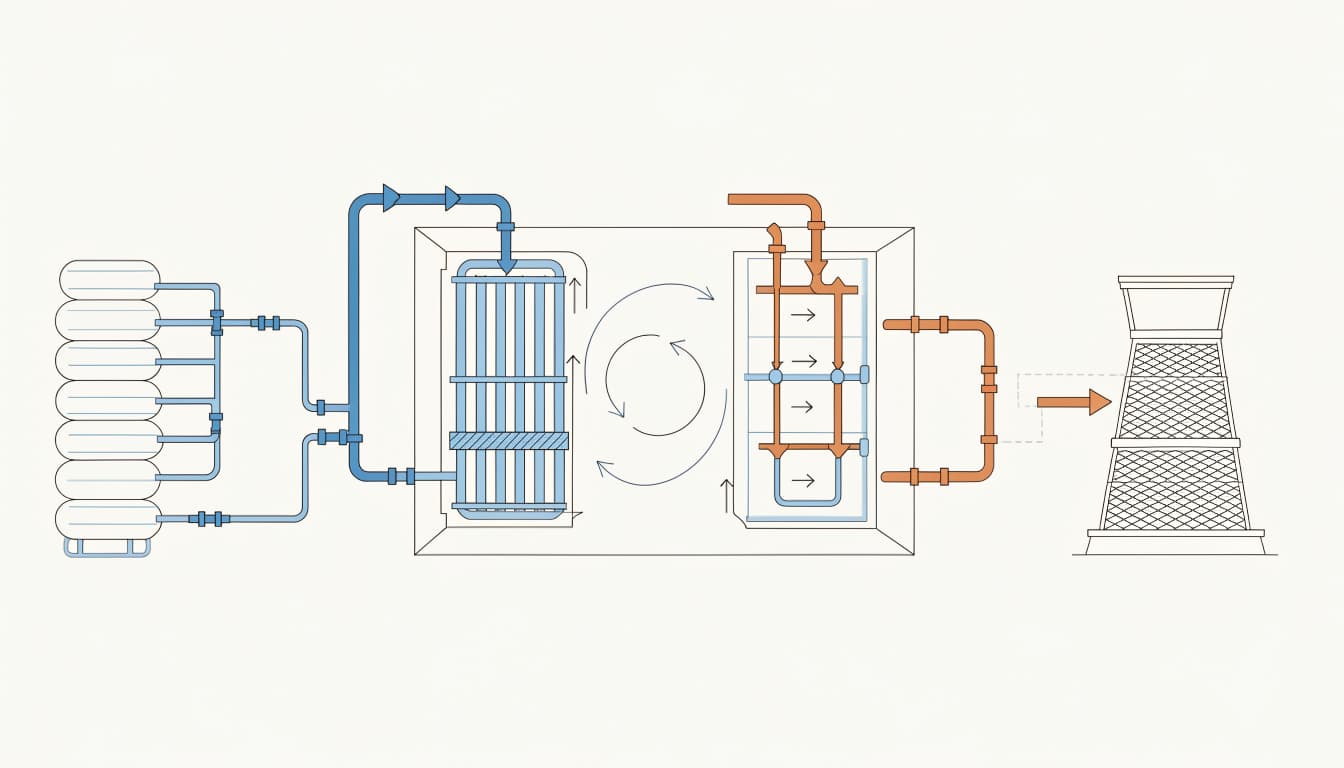
The Chilled-Water Loop Collects Indoor Heat
First, the chiller cools water that circulates to equipment inside the building. Pumps move this chilled water through pipes to coils in air handlers or other terminal units.
As warm indoor air passes over a cold coil, heat transfers into the water. Moisture can also condense on the coil and drain away, which helps control indoor humidity.
The warmer water then returns to the chiller. There, it gives up heat and leaves ready to circulate through the building again.
The Condenser-Water Loop Carries Heat Outside
Inside the chiller, refrigerant transfers heat from the chilled-water side to the condenser-water side. The condenser-water loop carries that heat to the outdoor tower.
After the tower rejects heat outdoors, the cooled condenser water returns to the chiller. Both water loops continue circulating while the system operates, but their water doesn't mix inside a properly functioning chiller.
The chilled-water loop serves the building. The condenser-water loop helps the chiller dispose of the heat the building loop collected.
How a Cooling Tower Works With a Chiller
The chiller and tower depend on each other, but they aren't interchangeable. Understanding the difference can help you describe a cooling problem more accurately when you call for service.
The Chiller Cools Water for the Building
A water-cooled chiller uses refrigerant and a compressor to move heat. Its evaporator absorbs heat from the returning chilled water. The compressor then moves the refrigerant through the refrigeration cycle, and the chiller's condenser transfers heat to the condenser water.
The chiller also adds compressor heat to the heat that must be rejected. As a result, the outdoor equipment handles more than the heat collected from indoor spaces alone.
The Tower Rejects the Collected Heat
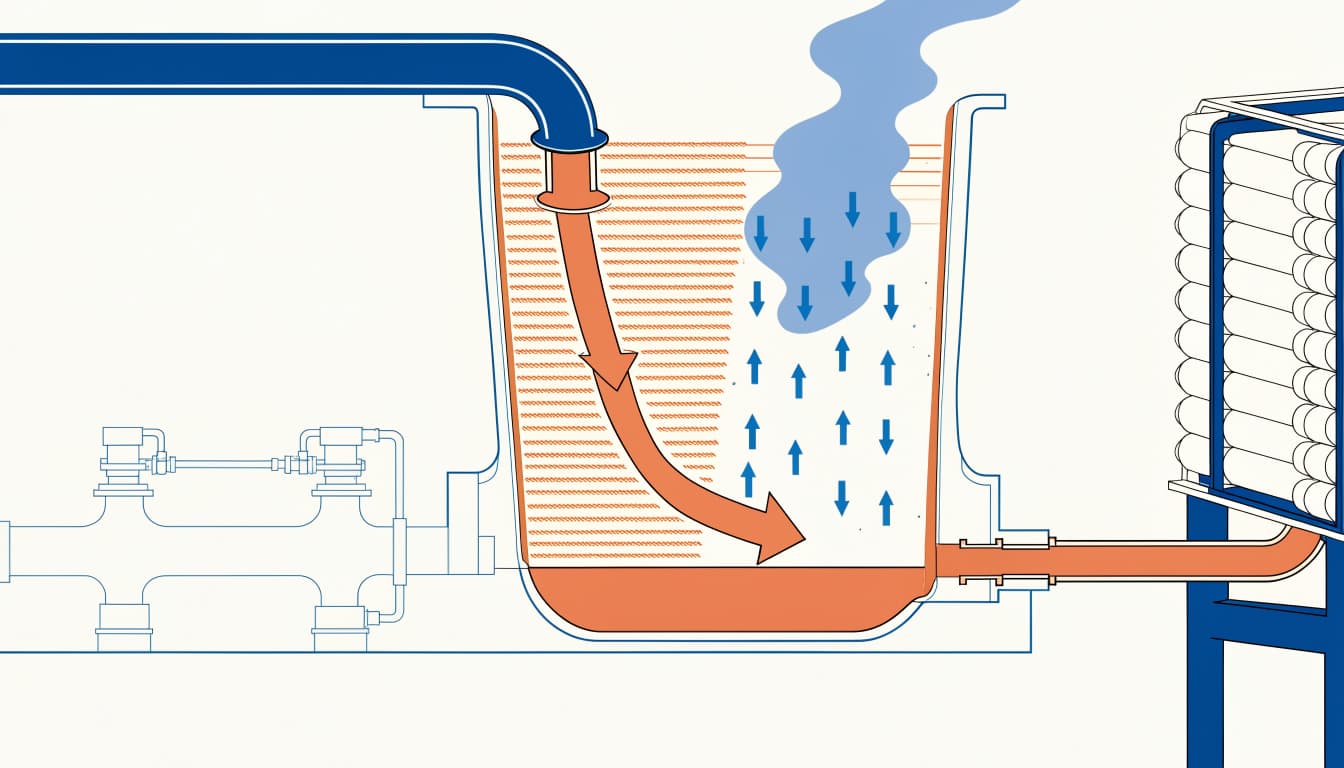
The tower receives warm condenser water and releases heat to the outdoor environment. The water then returns to the chiller to absorb more heat.
An air-cooled chiller takes a different approach: It rejects heat directly to outdoor air through its own condenser. It generally doesn't need a cooling tower. Knowing which type your building uses helps you understand what equipment belongs in its maintenance plan.
Main Parts of a Water-Cooled HVAC System
Several components must work together to move heat through the plant. A problem in one area can affect equipment elsewhere, even when the tower itself appears to be operating.
Pumps, Pipes, and Heat Exchangers
Chilled-water pumps circulate water between the chiller and indoor coils. Separate condenser-water pumps move water between the chiller and tower. Valves and piping direct flow through each circuit.
The chiller's evaporator and condenser are heat exchangers. They allow heat to move between fluids without mixing the chilled water, condenser water, and refrigerant.
Indoor coils are heat exchangers, too. They transfer heat from occupied spaces into the chilled-water loop.
Fans and Controls
Tower fans help the equipment reject heat outdoors. Motors, sensors, and controls coordinate operation with the rest of the cooling plant.
Controls may respond to water temperatures and cooling demand. A building automation system can also give operators a place to review operating conditions and alarms. However, the available controls depend on the equipment installed.
A technician looks at the plant as a connected system. A fan issue, pump problem, or control fault can prevent the chiller from receiving the water conditions it needs.
What Affects Energy Use?
The tower uses electricity, but its effect on energy use extends to the chiller and pumps. A useful maintenance review considers the whole plant rather than one motor at a time.
Condenser-Water Temperature
When the chiller receives suitable condenser water, it can reject heat more effectively. If that water is too warm for the operating conditions, the compressor may need more electricity to provide the same cooling.
Temperature readings matter alongside flow and the chiller's operating requirements. Lower water temperature isn't always the right target on its own because equipment has operating limits.
Fans, Pumps, and Controls
Fans and pumps also contribute to the electric bill. Some systems adjust motor speed as demand changes, while others use different control arrangements.
A change that reduces energy use in one component can increase it elsewhere. For example, running fans harder may improve condenser-water conditions while consuming more fan electricity. The goal is to operate the complete system efficiently within its design limits.
Water Use and Water Quality
A tower system needs a dependable water supply and a water-management plan. Water quality affects equipment condition, while leaks or control problems can increase water use.
Dissolved minerals can form scale on heat-transfer surfaces. Corrosion and biological growth are also concerns. These problems can restrict flow, damage components, or make heat transfer less effective.
Water treatment should match the system and its operating conditions. A qualified water-treatment provider can manage the treatment program alongside the HVAC service team.
Water safety matters as well. Poorly managed building water systems can support Legionella growth. A documented water-management program helps the people responsible for the building identify and manage conditions that can increase risk.
Signs the Cooling Plant Needs Attention
A tower or chiller problem doesn't always cause an immediate shutdown. Often, the first clue is a change in comfort or equipment behavior.
Changes Inside the Building
Rooms that take longer to cool, uneven temperatures, or persistent humidity can point to a cooling-system problem. Those symptoms don't identify the tower as the cause. Airflow, controls, indoor coils, and other equipment can produce similar complaints.
Record the affected area and time of day. That information gives the technician a starting point when comparing indoor conditions with plant operation.
Changes Around the Equipment
Unusual vibration, new noises, visible corrosion, leaks, or repeated alarms deserve attention. A rising utility bill can also prompt a review, although occupancy, weather, and business hours affect energy use.
Don't reset the same alarm repeatedly without finding the cause. If water is near electrical equipment, smoke appears, or continued operation could worsen damage, keep people away and arrange professional service.
Routine Cooling Tower and Chiller Maintenance
A maintenance plan should cover both the outdoor heat-rejection equipment and the rest of the cooling plant. The work and schedule depend on the system, its use, and the manufacturer's requirements.
Inspect Mechanical and Electrical Equipment
A technician can inspect motors, fans, pumps, valves, electrical connections, and controls. Operating readings help identify changes in temperature, pressure, or flow that may point to a developing problem.
Outdoor equipment also needs clear access and unobstructed airflow. Leaves, dust, and construction debris can collect around commercial equipment, while coastal salt exposure can accelerate corrosion.
Employees shouldn't open equipment panels or climb onto a roof for routine checks. Report visible concerns and leave electrical work and elevated access to trained personnel.
Keep Water Treatment and Service Records Together
The HVAC team and water-treatment provider should have a clear division of responsibilities. Service records can document readings, treatment work, repairs, and recurring alarms.
Those records make it easier to spot a pattern. They also help a technician understand what changed before a comfort complaint or equipment shutdown.
For a broader view of building equipment, our commercial HVAC maintenance checklist for Florida businesses covers inspections beyond the cooling plant.
Planning Service in Southwest Florida
Long periods of hot, humid weather put commercial cooling systems to work throughout much of the year. In Fort Myers and nearby communities, outdoor equipment may also face rain, debris, and salt exposure.
Access matters when planning maintenance. A technician needs a safe route to the equipment and enough room to inspect and service it. Keep the building's equipment information and previous service records available so the visit can focus on the system you have.
Maintenance costs vary with equipment type, access, and the work included. Our guide to commercial HVAC maintenance costs in Fort Myers explains the factors that affect a service plan.
If your business has a cooling problem or needs an HVAC evaluation, Schedule an Estimate with our team at Valor Heating & Cooling.
Keep the Whole Cooling System in View
A cooling tower helps a water-cooled chiller reject heat after the chilled-water loop collects it from the building. Pumps, controls, and heat exchangers connect those jobs into one cooling system.
Regular attention to equipment condition and water management can help you catch changes before they interrupt cooling. When a problem appears, readings and service records give your technician a clearer place to start.
Recent Posts