Commercial HVAC Replacement Cost in Fort Myers
A commercial HVAC replacement cost in Fort Myers depends on the equipment and the work needed to install it. A straightforward swap may involve little more than replacing a compatible unit, while another project may need a crane, duct repairs, electrical changes, and roof work.
The complete scope matters more than a price per ton. Here's how to understand the major costs and compare quotes for your building.
Key Takeaways
- Commercial price estimates vary widely, and online figures aren't a substitute for a Fort Myers site-specific quote.
- Building use and humidity requirements affect the capacity and equipment you need.
- Roof access, ductwork, electrical changes, permits, and old-equipment removal can add to the installed price.
- Efficiency, maintenance, and eligible rebates affect what you spend after installation.
What Does Commercial HVAC Replacement Cost?
Published commercial rooftop unit estimates cover a wide range. One commercial rooftop cost guide lists $1,800 to $4,500 per ton for a standard replacement before major duct or electrical work. Another rooftop pricing guide lists $5,500 to $12,500 per ton installed.
Those figures aren't a verified Fort Myers average, and their scopes aren't necessarily comparable. Use them as a reminder that a per-ton figure can leave important work out.
For another point of reference, a 2022 national benchmark cited in this rooftop replacement analysis put the median cost of a 5-ton constant-volume rooftop unit at $13,038. It included a curb, economizer, filters, and gas heat under typical site conditions, but excluded site constraints.
That older national figure isn't a current local quote. Your building's equipment, access, and installation needs determine the price.
Building Size and Use Affect Capacity
Square footage is a starting point for sizing, but it doesn't tell the whole story. Two buildings with the same floor area can need different systems because of occupancy, ventilation, operating hours, and heat-producing equipment.
Cooling load and building layout
A load calculation accounts for factors such as windows, insulation, sun exposure, air leakage, and the amount of outdoor air entering the building. It also considers heat and moisture separately, which matters in Fort Myers.
Existing equipment capacity can inform the discussion, but it shouldn't be the only sizing guide. Tenant changes or renovations may have changed the building's needs since the old unit was installed.
Occupancy and operating hours
A busy restaurant with cooking equipment can have different cooling and ventilation needs than an office of the same size. A multi-tenant building may also need separate temperature controls and operating schedules.
These details affect equipment selection and the installation scope. A proposal should explain the capacity being installed and how it fits the way your business uses the space.
System Type Changes the Installation Scope
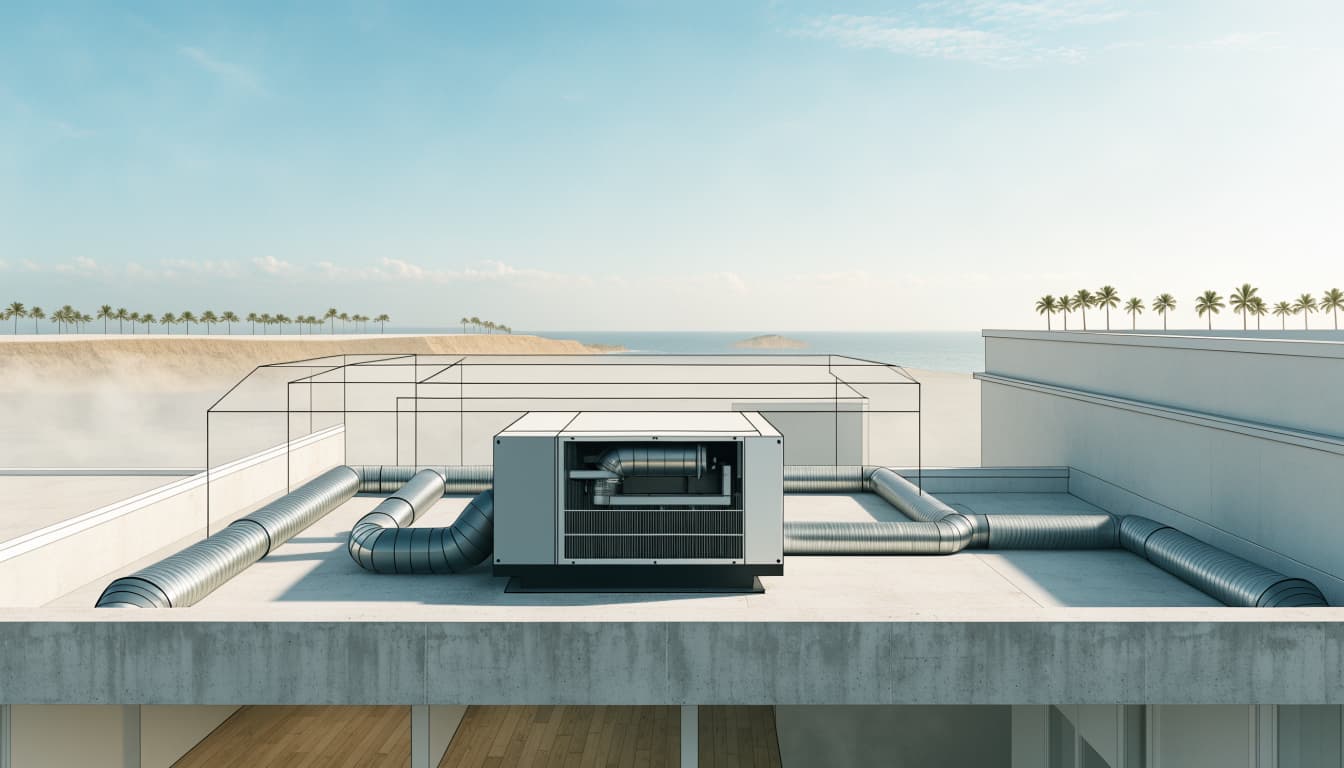
A packaged rooftop unit contains major heating and cooling components in one outdoor cabinet. A split system separates the outdoor condenser from indoor equipment. Larger buildings may use other arrangements, including chilled-water systems.
Rooftop replacement
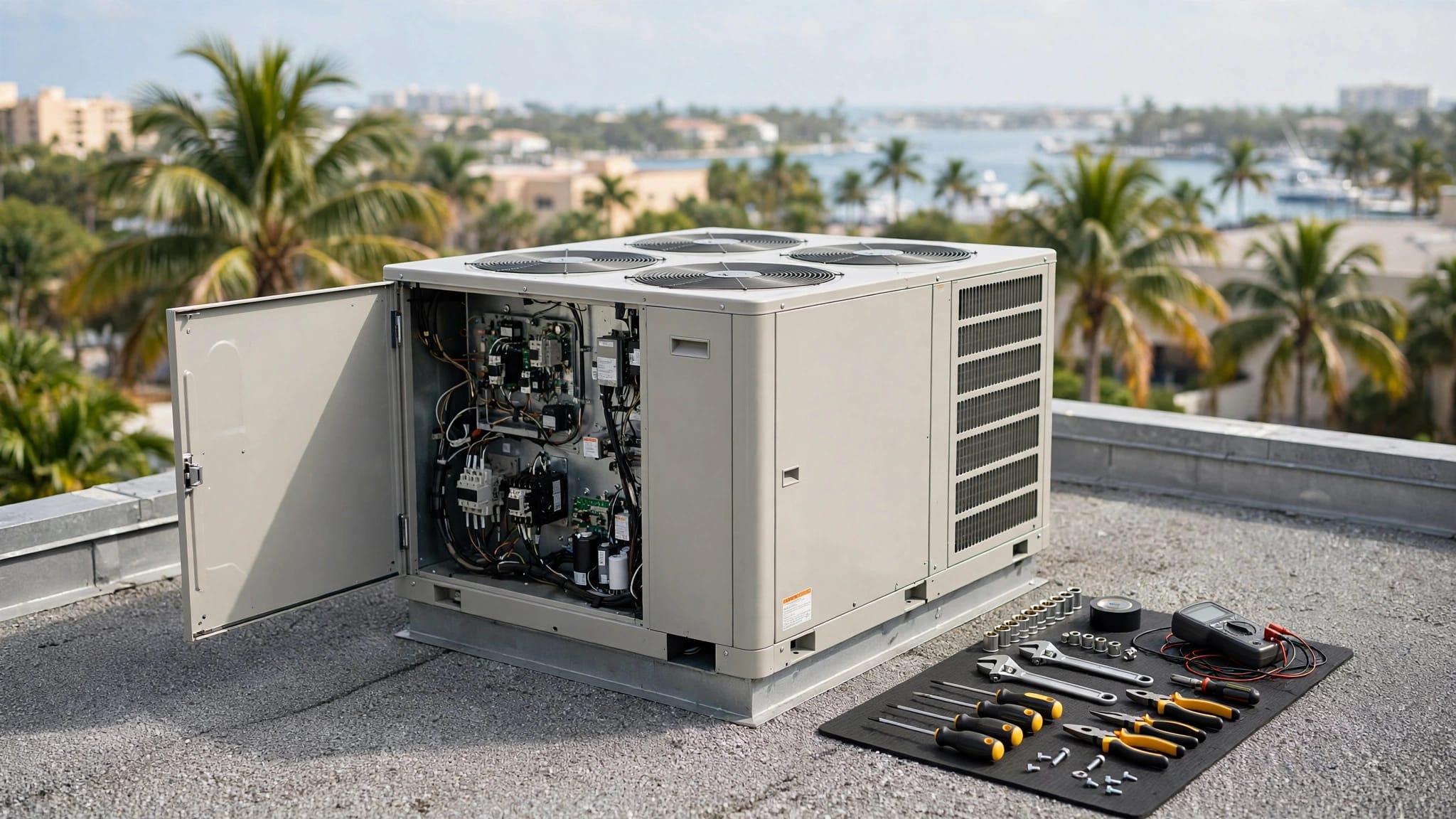
A compatible rooftop unit may connect to an existing curb and duct opening. If the new unit doesn't fit, the work can include a curb adapter, duct transitions, and roof flashing. Crane access and the condition of the roof can also affect labor.
Our guide to commercial rooftop AC replacement planning covers details to include when preparing for a swap.
Split systems and other options
A split system can avoid a rooftop lift, but it may need new refrigerant lines, electrical connections, indoor equipment access, or a condenser pad. Multiple zones can add equipment and controls.
The commercial rooftop and split-system comparison can help you understand how access and building layout influence that choice.
Southwest Florida Weather Affects Equipment Choices
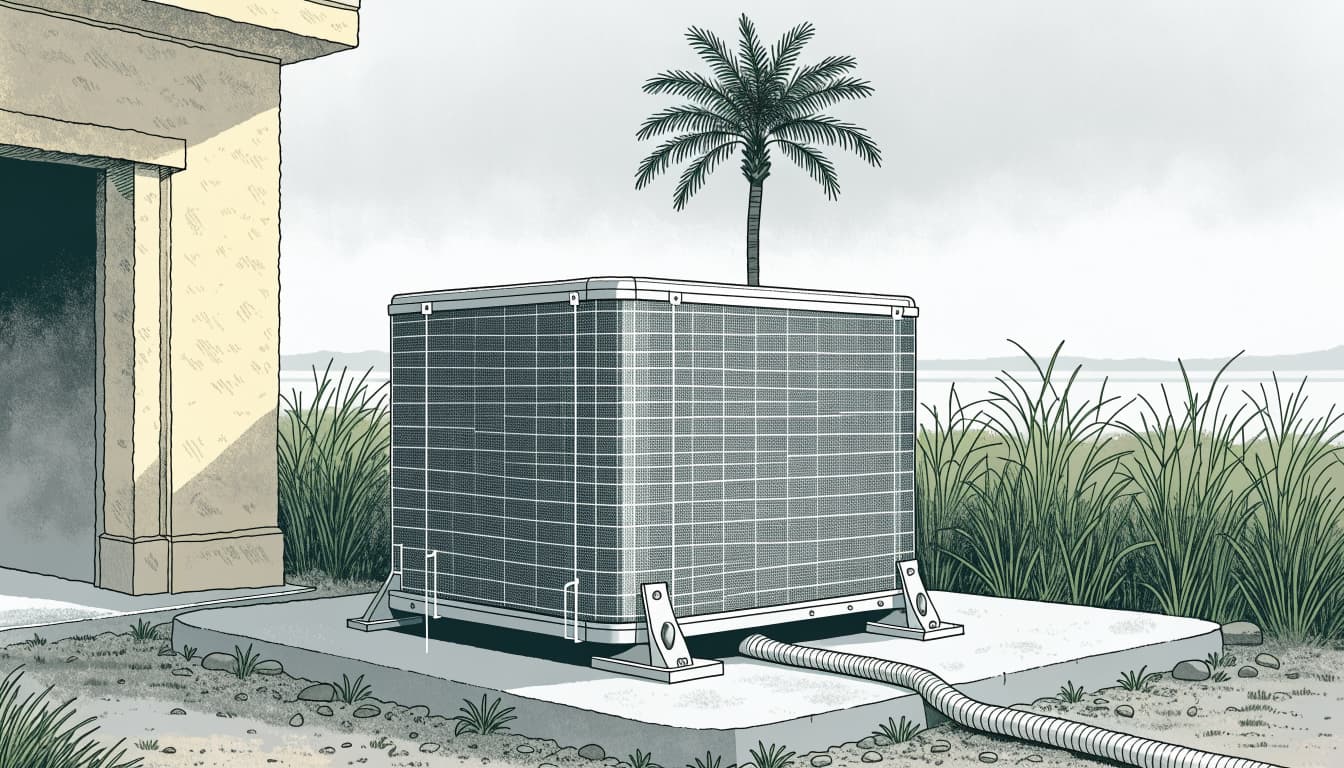
Fort Myers equipment must handle long cooling seasons and humid conditions. Near the coast, salt exposure also deserves attention. Storm preparation adds another layer to the installation plan.
Heat and humidity
A system needs to remove moisture as well as lower the temperature. An oversized unit may cool a space quickly without running long enough to provide the humidity control the building needs.
Equipment sizing, airflow, ventilation, and controls all affect the result. The quote should also address condensate drainage and access for drain maintenance.
Salt air and storm exposure
Salt air can accelerate corrosion on outdoor coils and other metal components. Depending on the location, a proposal may include corrosion-resistant equipment or coil protection, along with placement that preserves service access and airflow.
Storm-related work can include equipment anchorage, roof attachment, and protection of roof penetrations. Requirements depend on the equipment and site. An outdoor unit's elevation and drainage conditions also belong in the project discussion.
Ductwork and Controls Can Add to the Quote
New equipment can only deliver its intended performance if the rest of the air distribution system works properly. Leaks, damaged insulation, restricted returns, and poorly sized ducts can contribute to uneven temperatures or wasted energy.
If the existing ductwork needs repairs or modifications, those costs should appear separately in the proposal. A quote should also state whether it includes airflow testing and the work needed to connect the new unit to existing ducts.
Controls can change the price as well. A basic thermostat replacement is different from connecting equipment to a building automation system or setting up multiple zones and schedules.
Equipment compatibility matters. A proposal should identify who will connect and set up the controls, particularly when another company manages the building's automation system.
Installation Access and Old-Equipment Removal Matter
The location of the existing unit affects labor. A rooftop system may need a crane, while an indoor air handler may require ceiling access or a tight equipment-room removal.
Lifts, roof work, and scheduling
A contractor needs room to position a crane safely and reach the unit. Building height, nearby obstacles, and the length of the lift all affect the work. A replacement may also require roof curb changes or repairs around the opening.
Business schedules can add costs. After-hours work, tenant notifications, and temporary cooling may be relevant if a shutdown would interrupt operations or affect temperature-sensitive inventory.
Removal and disposal
The proposal should cover disconnecting and removing the old equipment, including refrigerant recovery and disposal. It should also identify cleanup and any work needed to prepare the existing pad, roof curb, or connections for the replacement.
A low equipment price can look less attractive once those items are added. Compare the entire job rather than the new unit alone.
Permits and Inspections Belong in the Budget
Commercial HVAC work may require permits and inspections. The requirements and fees depend on the project's scope and its local jurisdiction, which may be the City of Fort Myers, another municipality, or unincorporated Lee County.
The written estimate should state who handles the permit, whether fees are included, and what inspection-related work is covered. Electrical changes or other construction work can affect the approvals needed.
Lee County's published fee schedule distinguishes mechanical inspection charges from proposed changes. That distinction matters because a permit fee is only one part of the overall replacement price, not a standard project total.
Compare Efficiency and Lifecycle Costs
Higher-efficiency equipment often costs more upfront, but it may reduce electricity use over its operating life. The potential savings depend on the building's schedule, utility rates, equipment sizing, and actual operating conditions.
Compare ratings and expected savings
Proposals should identify the equipment model and its efficiency rating. Depending on the equipment, you may see SEER2 or EER. Compare like ratings for similar systems rather than treating different measurements as interchangeable.
Request an energy estimate based on your building's hours and use. Whole-building utility bills provide context, although lighting and other equipment can make it difficult to isolate HVAC savings.
Include maintenance and payback
Operating costs also include filter changes, coil cleaning, inspections, and repairs. Roof access and the number of units can affect service costs.
For a simple payback estimate, subtract any eligible rebate from the added installed cost of a higher-efficiency option. Then divide that amount by estimated annual energy savings. This calculation doesn't account for financing, future utility rate changes, or differences in maintenance.
Rebates Can Reduce the Installed Cost
FPL offers a commercial heating and cooling incentive program for qualifying customers and equipment. Its business HVAC program standards, updated in November 2026, list these incentives for qualifying direct-expansion equipment:
| Equipment capacity | Minimum efficiency | Listed incentive |
|---|---|---|
| Under 5.42 tons | 14.78 SEER2 | $200 per unit |
| 5.42 to under 11.25 tons | 11.98 EER | $400 per unit |
| 11.25 to under 20 tons | 11.77 EER | $800 per unit |
The program has eligibility requirements, including an active FPL business account. Larger equipment incentives can be based on summer kilowatt reduction rather than a fixed amount per unit.
A rebate can improve the economics of an efficient system, but it should be shown separately from the contractor's installed price.
How to Compare Commercial HVAC Quotes
Ask each contractor to price the same scope. A useful proposal identifies the manufacturer, model, capacity, efficiency rating, controls, and total installed price. It should also show the work included and any exclusions.
Look for line items or clear descriptions covering duct connections, electrical work, crane access, permits, refrigerant recovery, removal, startup, and testing. Warranty terms should distinguish manufacturer parts coverage from labor coverage.
Our guide to comparing HVAC replacement estimates offers more ways to review the details behind a quoted price.
If you'd like a site-specific proposal, Schedule an Estimate with our team. We can discuss the system, building use, and replacement scope with you.
Frequently Asked Questions
Does a larger commercial unit always cost more?
Larger capacity often increases equipment cost, but capacity alone doesn't determine the total. A smaller unit with difficult roof access, duct changes, and electrical work may have a more complex installation than a larger, compatible replacement.
Can existing ducts be reused?
Existing ducts can be reused when they're suitable for the new equipment and in good condition. Leaks, damaged insulation, restrictions, or changes in airflow requirements may call for repairs or modifications.
Does a new HVAC system automatically lower energy bills?
No. A more efficient system can reduce energy use, but savings depend on sizing, installation, controls, building use, and maintenance. A reliable comparison includes the assumptions behind the projected savings.
Choose a Quote That Fits the Building
The commercial HVAC replacement cost for your Fort Myers property is the installed project price, not just the equipment price. Capacity, access, weather exposure, and the condition of existing components all shape that number.
A clear proposal makes those costs visible. It also gives you a sound basis for comparing efficiency and ongoing expenses before you choose a system.
Recent Posts