How to Set Commercial HVAC Occupancy Schedules in Florida
A good commercial HVAC schedule follows the way a business actually uses its space. For Florida businesses, that means cooling ahead of opening, easing back after closing, and maintaining humidity control even when the building is quiet.
HVAC occupancy schedules can reduce unnecessary runtime without leaving employees, customers, or equipment in uncomfortable conditions. The right plan starts with real operating hours, then accounts for zones, shift changes, holidays, and Southwest Florida's long cooling season.
Key Takeaways
- Set occupied periods around when people use each area, not only the business's posted opening hours.
- Start cooling early enough for the building to reach comfortable conditions before people arrive.
- Use setbacks during unoccupied periods, but don't treat a Florida building as if humidity stops mattering after hours.
- Review comfort complaints and energy use after schedule changes, then adjust one period or zone at a time.
- Keep operating schedules separate from maintenance schedules. Both affect reliable performance.
Build HVAC occupancy schedules around real business hours
A business's public hours are only one part of its occupancy pattern. Employees may arrive early, cleaning crews may work after closing, and deliveries or appointments can create activity outside normal hours. Record those routines before changing thermostat settings or programming a building automation system.
Map when people use each area
List the opening and closing times for each day, then note staff arrival, cleaning, deliveries, meetings, and other regular activity. A conference room may fill for an hour while the rest of an office stays lightly occupied. A retail floor may need cooling before the doors open, while a stockroom follows a different pattern.
Also identify spaces that need steady conditions even when few people are present. Server rooms, medical areas, or rooms with sensitive inventory may not suit a basic occupied and unoccupied schedule. Equipment and ventilation needs vary by use, so avoid applying one building-wide timetable without considering these areas.
Account for irregular days
Create separate weekday, weekend, and holiday schedules when business hours differ. For shift work, build around shift start and end times rather than the traditional office day. If a space is used only occasionally, a temporary override or a separate schedule may be more practical than running the whole building as if it were occupied.
Keep a record of schedule exceptions. When a holiday or special event passes, return the controls to the regular program so an override doesn't accidentally become the new routine.
Choose controls that match the building
The control system determines how easily staff can follow the schedule and make appropriate changes. A small business may need only a programmable thermostat, while a multi-zone property may benefit from a building automation system.
Use a programmable thermostat for simple hours
A programmable thermostat can set occupied and unoccupied periods by day. It's a practical option for a small office or shop with consistent hours and one main area. Give the person responsible for the schedule clear instructions, and limit who can make casual changes. Frequent manual adjustments can leave the system running outside the intended hours.
Some thermostats allow temporary overrides. Those are useful for an unexpected late meeting or early opening, as long as the override ends automatically or staff know how to restore the usual schedule.
Use building automation for multiple schedules
A building automation system can coordinate schedules across several systems or zones. Depending on the installed controls, it may let a facility manager manage different occupied periods centrally and review system operation. That can help when tenants, shifts, or room uses vary.
Keep the programming understandable. Label zones by their actual use in the control interface, and make sure the people responsible know how to handle a schedule exception. Complex controls provide little value if nobody can tell which schedule is active.
Allow time for pre-occupancy startup and after-hours setbacks
Turning cooling on at the moment the first employee arrives may leave the building warm during opening. Instead, schedule the system to begin conditioning before occupancy. The required lead time depends on the building, equipment, weather, and how much heat accumulated while it was empty. Use comfort feedback to refine the start time rather than assuming every space needs the same lead.
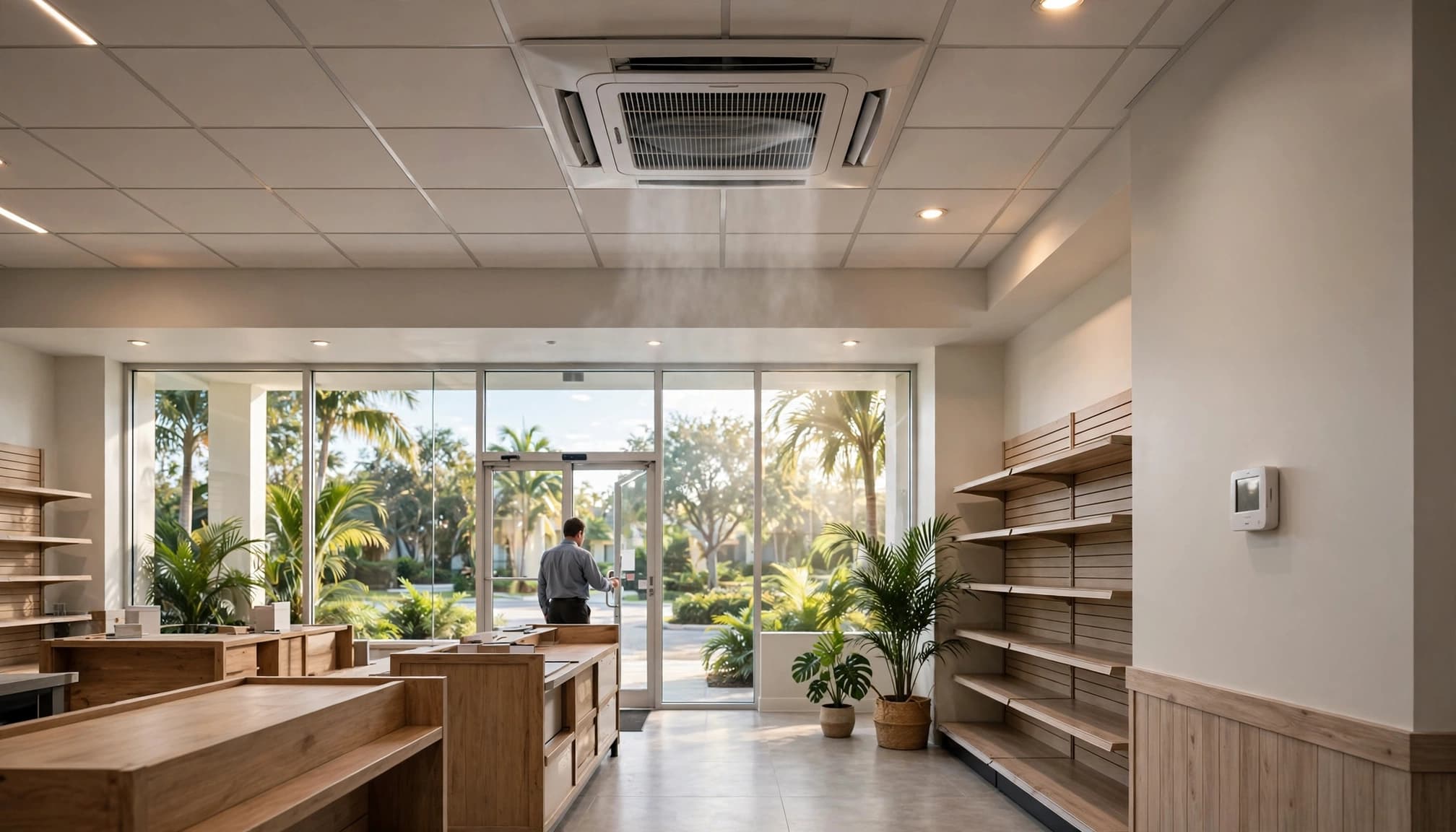
After closing, allow for the people who remain to clean or finish work. Once the building is empty, shift to an unoccupied setting that reduces unnecessary cooling while keeping the system's humidity needs in view. Fully switching off cooling may not suit every Florida building, particularly during humid weather or extended closures.
A simple sample weekday schedule might look like this:
| Period | Example schedule |
|---|---|
| Before opening | Begin pre-occupancy cooling early enough for the building to be comfortable by opening |
| 8:00 a.m. to 5:00 p.m. | Occupied schedule for a business open during these hours |
| After 5:00 p.m. | Allow for staff, cleaning, or other planned activity, then move to the unoccupied schedule |
| Overnight | Use the unoccupied schedule while accounting for humidity and sensitive areas |
These times illustrate a business open from 8:00 a.m. to 5:00 p.m. They aren't universal settings. If staff arrive before opening or work later, adjust the occupied period to match.
Use zones to cool the spaces that need it
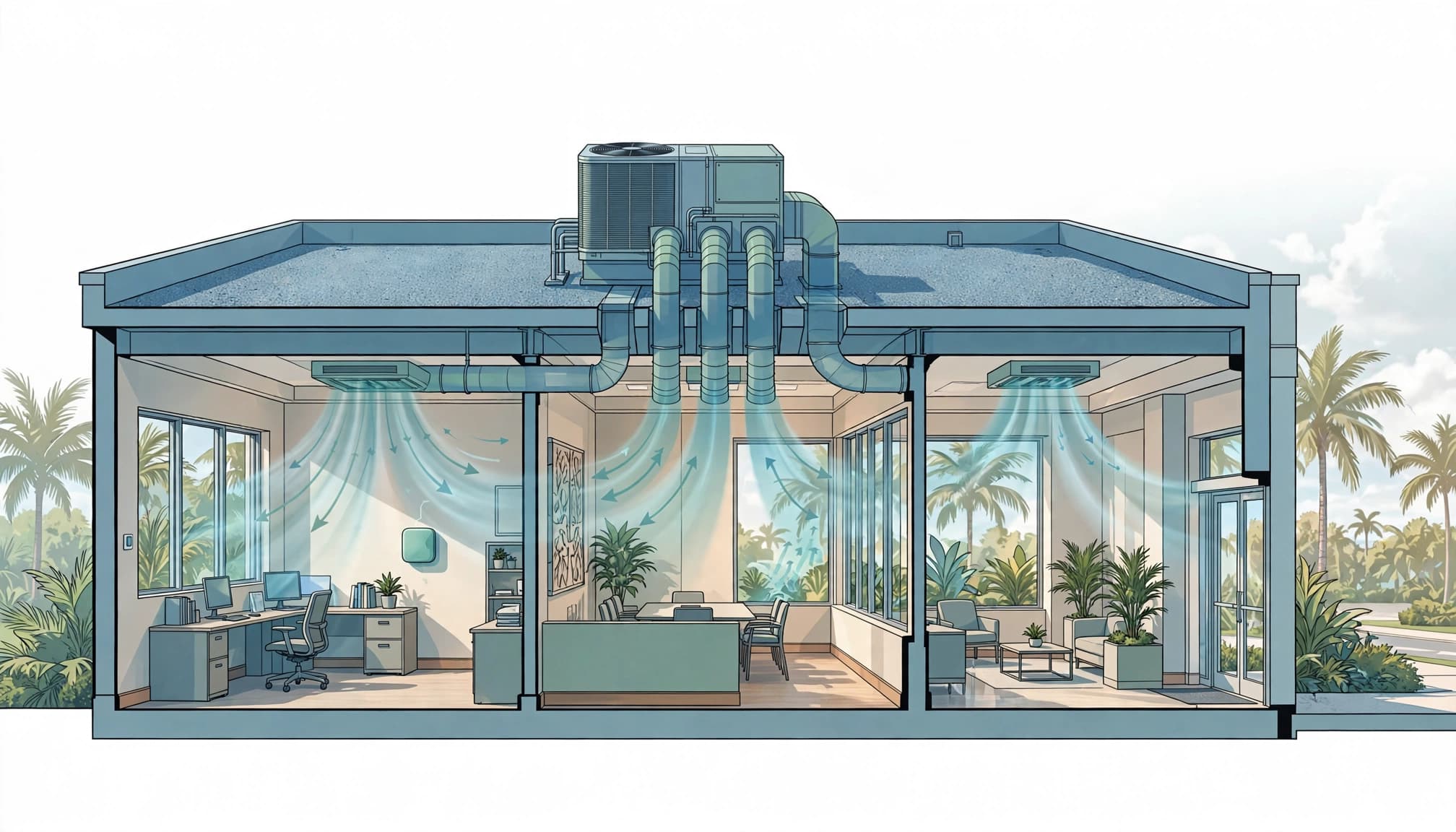
A single schedule can waste energy when different areas have different hours. Zoning divides a building into areas that can be controlled separately, depending on the system design. Where controls support it, use different schedules for spaces with distinct occupancy patterns.
Match zones to use
A reception area, conference room, private offices, and storage space may not all need the same occupied hours. Set schedules according to each area's typical use, while accounting for shared equipment and how the system moves air through the building.
Room names alone don't define what a system can control. A zone's boundaries depend on the installed equipment and ductwork. If the space is consistently uncomfortable despite a sensible schedule, the cause may involve airflow or equipment performance rather than timing alone.
Keep ventilation needs in the plan
Occupancy scheduling should not cancel ventilation that the building needs while people are present. A meeting room with intermittent use may have a different occupancy pattern from an open office, but the controls still need to support the space's intended operation.
If a tenant changes the room layout or business activity, revisit the schedule and the system's use. More people or a new type of activity can change comfort and ventilation demands, even when the business hours remain the same.
Plan for Florida humidity and seasonal changes
Southwest Florida businesses face long cooling seasons, high humidity, afternoon storms, and, near the coast, salt air. A thermostat schedule affects when cooling runs, but temperature alone doesn't tell the whole comfort story. The air conditioner also removes moisture while it cools, so schedules should account for the building's humidity needs.
Adjust for changing weather
A schedule that works during a mild period may not feel right during a hot, humid stretch. In warm weather, a building may need more pre-occupancy time or a different approach to after-hours operation. During milder periods, cooling demand may fall, but humidity can remain an issue.
Review comfort complaints when the weather changes. If people report clammy conditions even when the thermostat seems satisfied, repeatedly lowering the temperature may not solve the underlying issue. Poor airflow, short cycling, or a maintenance problem can affect moisture removal. A technician can assess persistent comfort or humidity concerns.
Set holiday and seasonal exceptions deliberately
For a planned holiday closure, use an exception schedule rather than leaving the normal weekday program active. Extended closures call for more care than a single day off. Keep humidity and the needs of sensitive equipment or inventory in mind, and arrange for someone to notice unusual conditions.
When seasonal hours change, update the schedule and document the reason. A written record makes it easier to restore the regular program later and helps explain why an exception remains active.
Adapt schedules to the type of business
The best schedule depends on what happens inside the building. A calendar built for a standard office may not fit a retail shop, restaurant, medical office, school, or warehouse.
Offices and retail spaces
Offices often have predictable weekday hours, but meeting rooms and reception areas may have separate patterns. If staff work late or clean after hours, include those periods rather than extending the occupied schedule across the entire building.
Retail stores need comfortable conditions before customers enter and may have evening or weekend traffic. Back-of-house spaces can follow staff and inventory needs. A store with changing seasonal hours should use clear schedule exceptions rather than relying on frequent thermostat overrides.
Businesses with shifts or sensitive spaces
Restaurants, schools, medical offices, and businesses with sensitive inventory may need schedules that reflect staggered shifts, early preparation, or steady room conditions. These uses can also require more attention to maintenance than a lightly occupied office. Don't assume a room can follow the general building setback if its contents or operation need a different environment.
For unusual hours or persistent comfort problems, a schedule review can be part of a broader system assessment. Valor Heating & Cooling provides commercial HVAC repair and maintenance services for businesses in Southwest Florida.
Review the schedule using comfort and energy feedback
Treat the first schedule as a starting point. After a change, ask staff to note the time, location, and type of comfort issue. "Warm" or "clammy" is less useful than "conference room feels warm by 9:00 a.m." or "front sales area stays cool after closing."
Compare similar periods
Review energy use alongside the schedule, but compare similar operating periods and weather where possible. A utility bill covers the whole building, including lighting, computers, and other equipment, so it won't isolate HVAC use by itself. Where the controls provide operating data, use it with the schedule and comfort notes.
Change one item at a time, such as the startup period for a specific zone. Then observe whether comfort improves without leaving the system running longer than needed. If the problem persists, investigate airflow, controls, or equipment condition instead of repeatedly changing the schedule.
Keep maintenance separate from daily control
An operating schedule can't make up for a clogged filter, blocked drain, dirty coil, or other equipment issue. Southwest Florida's long cooling season and humid conditions put steady demands on commercial systems. A commercial HVAC maintenance checklist for Florida businesses can help staff track routine observations and professional service.
For scheduling, energy, or comfort concerns that need a system evaluation, Schedule an Estimate with an HVAC technician. A review can help identify whether the problem comes from the programmed hours or from equipment and airflow.
Frequently Asked Questions
Should a Florida business turn off its HVAC system overnight?
Not automatically. An unoccupied schedule can reduce cooling during closed hours, but Florida's humidity and the needs of sensitive areas still matter. The appropriate approach depends on the building, equipment, and use. If the space feels damp or develops persistent comfort problems, have the system assessed rather than relying only on a thermostat change.
How often should a business review its HVAC schedule?
Review it whenever operating hours, staffing, room use, or seasons change. It also helps to revisit the schedule after staff report repeated hot or clammy areas, or when energy use changes without an obvious business reason. Keep notes on each adjustment so you can tell which changes helped.
Set the schedule around the people and the building
A practical HVAC schedule follows actual occupancy, gives the system time to prepare the building, and treats zones and humidity as part of the plan. Start with known hours, then refine the schedule using staff feedback and system data.
In Southwest Florida, comfort doesn't end when the doors lock. A thoughtful after-hours plan protects the building's needs while avoiding unnecessary operation.
Recent Posts