
What Is a Commercial HVAC Chiller, and When Is It Needed?
A commercial HVAC chiller cools water and circulates it through a building to remove heat. It can be a good fit when a building has substantial, steady cooling needs or several areas served by a central system.
Unlike rooftop and split systems, chillers cool water rather than sending refrigerant directly to each indoor cooling coil. The right choice depends on the building's layout, cooling load, available space, and service needs. Here's how to tell when a chiller may make sense.
What a commercial HVAC chiller does
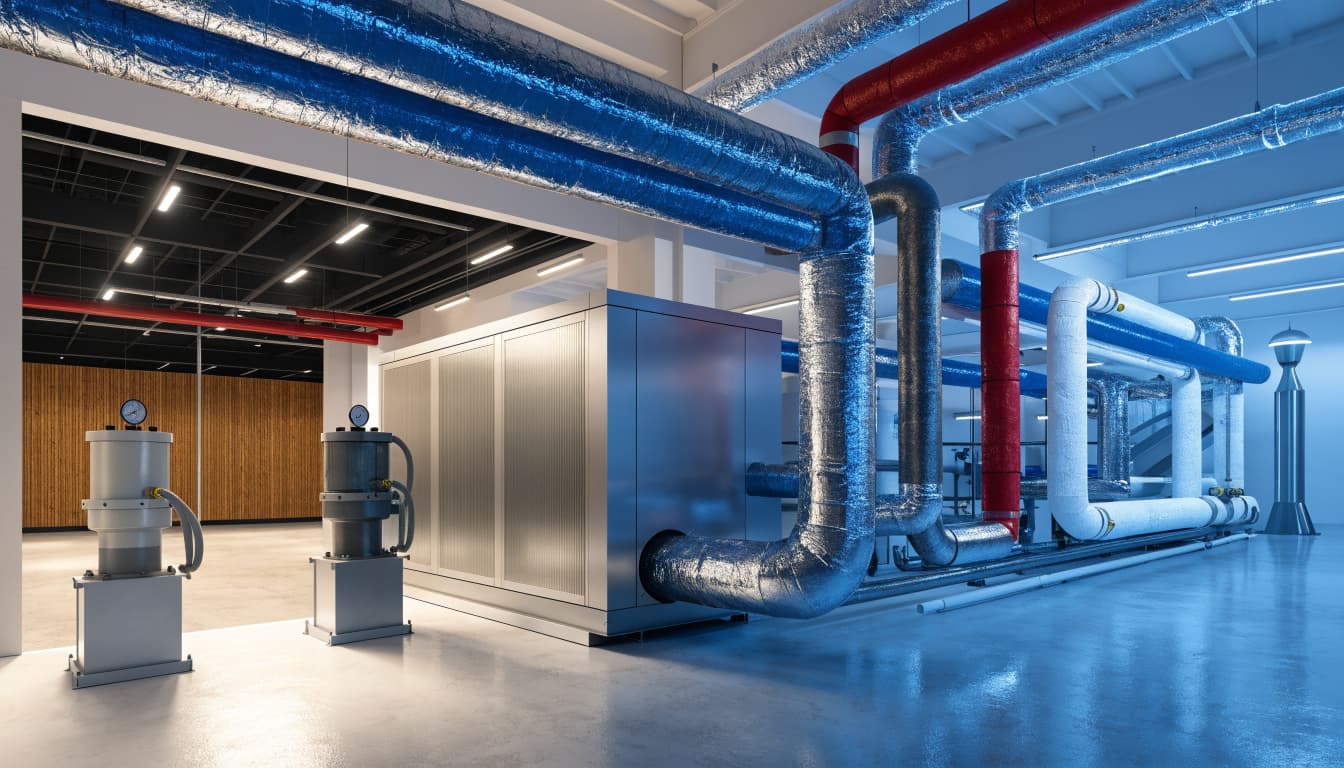
A commercial HVAC chiller is a central cooling machine. It removes heat from water, then pumps that chilled water through pipes to air-handling units or fan coil units around the building. Coils in those units cool the air that moves through occupied spaces.
The chiller is one part of a larger system. Pumps circulate water, while fans and air-handling equipment distribute cooled air. Depending on the design, the system may also include a cooling tower. Chillers often serve buildings with multiple zones, long operating hours, or cooling demands that are difficult to handle with separate packaged systems.
How the chiller cooling cycle works
Refrigerant transfers heat out of the water
Inside the chiller, refrigerant absorbs heat from water in an evaporator. A compressor raises the refrigerant's pressure and temperature. The refrigerant then releases heat through a condenser, and an expansion device lowers its pressure before the cycle starts again.
As the refrigerant carries heat away, the chiller produces chilled water. Pumps move it to the building's air-handling equipment, where coils cool the air. The warmed water returns to the chiller to be cooled again.
Chillers reject heat in different ways
An air-cooled chiller releases heat to outdoor air through condenser coils and fans. A water-cooled chiller transfers heat to condenser water, which typically carries it to a cooling tower.
Chillers also vary by compressor design, including centrifugal, screw, and scroll models. Absorption chillers use heat rather than a conventional mechanical compressor and suit specific applications. Each type has different space, operating, and maintenance requirements.
When a building may need a chiller
Building size and cooling layout matter
A chiller may be worth considering when one central plant can serve many zones more practically than separate rooftop or split systems. Large offices, hotels, hospitals, campuses, and buildings with high internal heat loads may use chilled water to serve different areas.
However, square footage alone doesn't determine the right system. Occupancy, equipment, hours of operation, ventilation, humidity, and the building envelope all affect cooling demand. A load assessment helps determine whether a chiller is appropriate and what capacity the system needs.
Watch for recurring cooling limits
A building may need a system evaluation if existing equipment runs for long periods but can't keep up, temperature complaints persist across several zones, or cooling demand has grown after renovations or added equipment. Frequent failures across multiple units can also prompt a review of whether a central system would better fit the building.
These symptoms don't prove a chiller is the answer. Airflow problems, controls, duct issues, or poor sizing can cause similar problems. Testing the existing equipment and assessing the building's cooling load should come before choosing a replacement system.
How chillers compare with rooftop and split systems
Rooftop units package the equipment
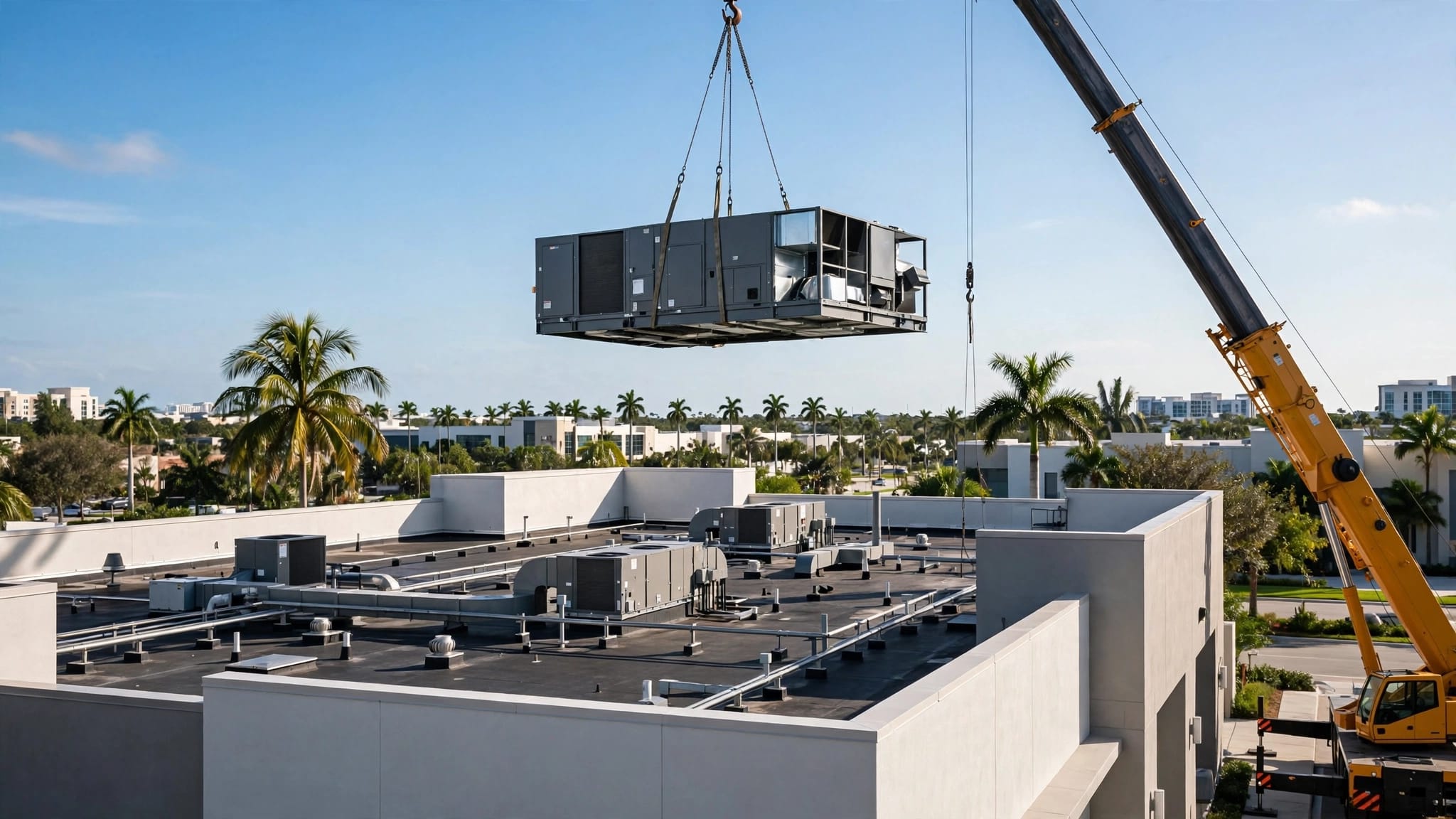
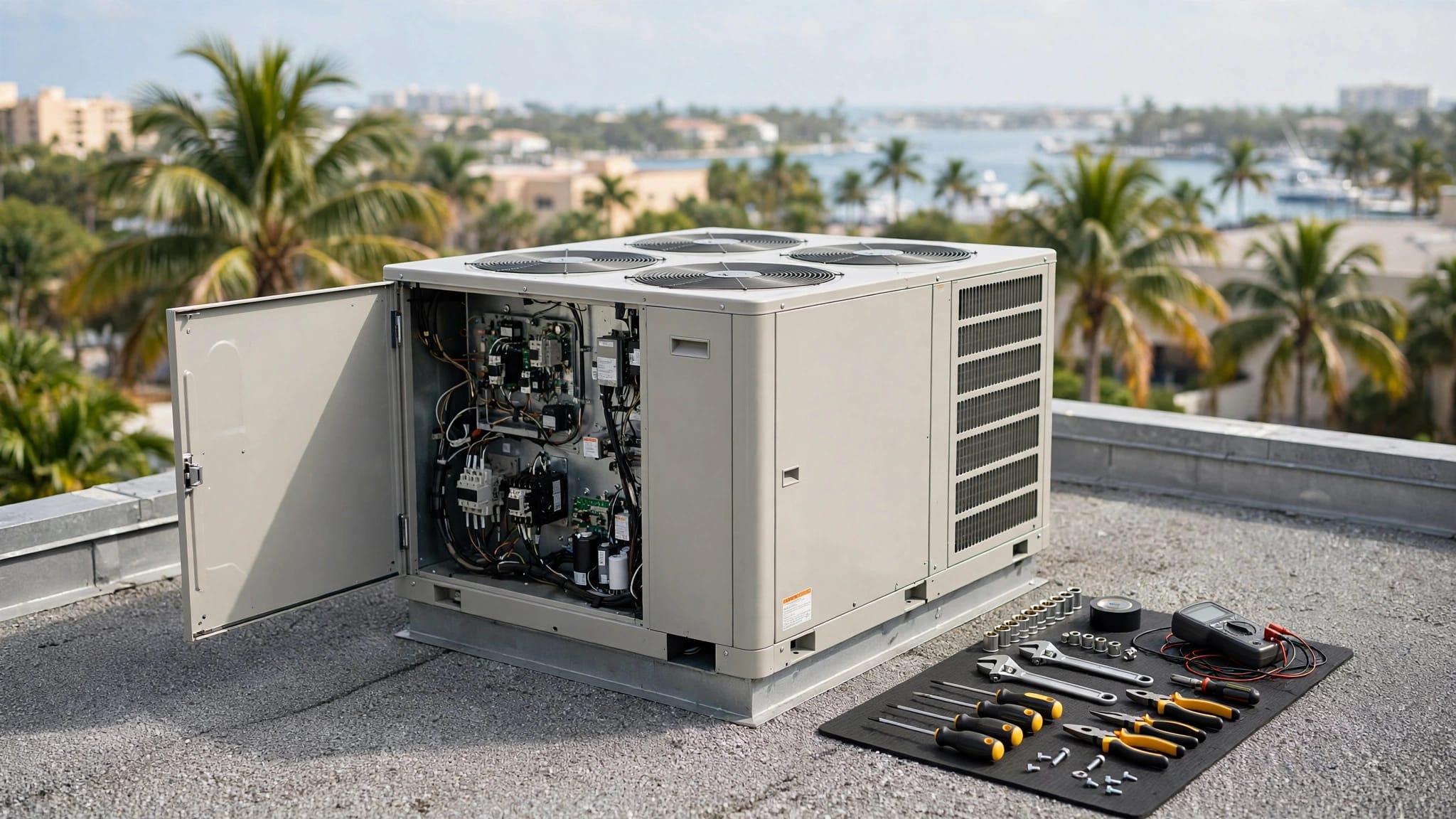
A rooftop unit, or RTU, combines major HVAC components in an outdoor cabinet and connects to the building's ducts. It often suits open retail or commercial spaces, especially when existing ductwork and roof equipment are already in place. However, the roof needs room, structural support, and safe service access.
Split systems offer flexible placement
A split system puts the condenser outdoors and the air handler indoors. This can work well for smaller suites or buildings that need separate comfort zones. It also gives more flexibility when rooftop access is limited, though it requires indoor space for the air handler and room for outdoor equipment.
For more on those two options, see our guide to rooftop units vs. split systems for small businesses. A chiller adds a central water loop and plant equipment, so it's generally a larger infrastructure decision than replacing one RTU or split system.
What to assess before selecting a chiller
Capacity, efficiency, and humidity control
The chiller needs enough capacity for the building's actual load, without being oversized. A qualified design assessment should account for how the building operates, how much heat its people and equipment produce, and how outdoor conditions affect cooling and moisture removal. In Southwest Florida, humidity control matters alongside temperature.
Compare expected energy use and operating needs, not only the chiller's purchase price. Pumps, cooling towers, controls, and air-handling equipment all affect how the complete system performs.
Space, access, and maintenance
A chiller plant needs space for the chiller, piping, pumps, and service access. A water-cooled design also needs room for its heat-rejection equipment. Rooftop or mechanical-room limits, storm exposure, and future building changes can affect the choice.
Maintenance should cover the equipment that makes up the whole system. Regular inspection can include coils, pumps, filters, drains, controls, and visible corrosion. See our overview of commercial HVAC maintenance costs in Fort Myers for factors that affect ongoing service.
Key takeaways
- A chiller cools water and circulates it through a building's air-handling equipment.
- It may suit buildings with extensive, multi-zone, or steady cooling demands.
- Building load, humidity needs, space, energy use, and maintenance access all matter.
- Persistent cooling problems call for an assessment, not an automatic chiller replacement.
Frequently asked questions
Does every large building need a chiller?
No. Size alone doesn't determine the system. A large building may use rooftop units, split systems, or another design depending on its layout, cooling load, and operating needs.
Is a chiller the same as an air conditioner?
Both remove heat, but they distribute cooling differently. A conventional air conditioner cools air directly at an indoor coil, while a chiller cools water that carries cooling to air-handling equipment.
Who can assess a building's HVAC options?
A commercial HVAC technician can review the equipment, building layout, cooling complaints, and service access. For HVAC installation, repair, and maintenance services in Southwest Florida, or to discuss a building assessment, Schedule an Estimate.
Choose the system that fits the building
A commercial chiller can be a practical choice when a building needs centralized cooling across many spaces. The decision should follow a careful assessment of load, humidity, layout, costs, and maintenance needs. A system that fits the building's real demands is more likely to provide dependable comfort through Southwest Florida's long cooling season.
Recent Posts