AC Refrigerant Overcharge Signs and Safe Next Steps
An AC refrigerant overcharge can affect cooling performance, system pressure, and energy use, but homeowners usually can't confirm it from symptoms alone. Poor cooling, ice, short cycling, unusual sounds, and higher electric bills can point to several different problems.
In Southwest Florida, air conditioners work through long, hot, humid seasons. If your system starts behaving differently, shut it down if it is icing or making loud noises, then arrange a professional inspection. The right diagnosis matters more than adding or removing refrigerant based on a guess.
What an AC refrigerant overcharge means
An air conditioner needs the correct refrigerant charge for its design and operating conditions. An overcharge means the system contains more refrigerant than it should. That extra refrigerant can affect how the system moves heat and may contribute to abnormal pressure or poor performance.
However, an overcharge is only one possible explanation for cooling trouble. A dirty condenser coil, restricted airflow, a failing electrical component, a blocked drain, or a refrigerant leak can create similar symptoms.
The amount of refrigerant cannot be judged safely by looking at the outdoor unit or touching a copper line. A qualified technician needs to inspect the equipment and use appropriate testing procedures. For help with weak cooling, strange sounds, or a system that has stopped working, Fort Myers HVAC repair and inspection is a safer starting point than trying to correct the charge yourself.
Possible signs that warrant an inspection
An AC refrigerant overcharge may produce warning signs, but none of these symptoms proves the diagnosis. Record when the problem happens and whether it affects the whole home or only certain rooms.
Poor or inconsistent cooling
Your air conditioner may run for a long time without reaching the thermostat setting. Supply air may feel less cool than usual, or some rooms may stay warm while others remain comfortable.
Several issues can cause this pattern. A dirty filter, blocked return, damaged ductwork, dirty indoor coil, weak blower, thermostat problem, or refrigerant issue can all reduce cooling. In Florida, high outdoor humidity also makes the system work harder and may make a performance change more noticeable.
If the system used to cool the home normally and now struggles, arrange an inspection instead of assuming the charge is wrong. A technician can evaluate airflow and the refrigeration system together.
Ice or frost on the lines
Frost on a refrigerant line or coil often gets blamed on an overcharge. That conclusion is unreliable. Low airflow, a dirty filter, a dirty evaporator coil, a refrigerant leak, and other operating problems can also cause icing.
If you see ice, turn the cooling system off and leave the fan setting in its normal position unless a technician gives you different instructions. Running an iced system can restrict airflow further and place extra strain on the equipment.
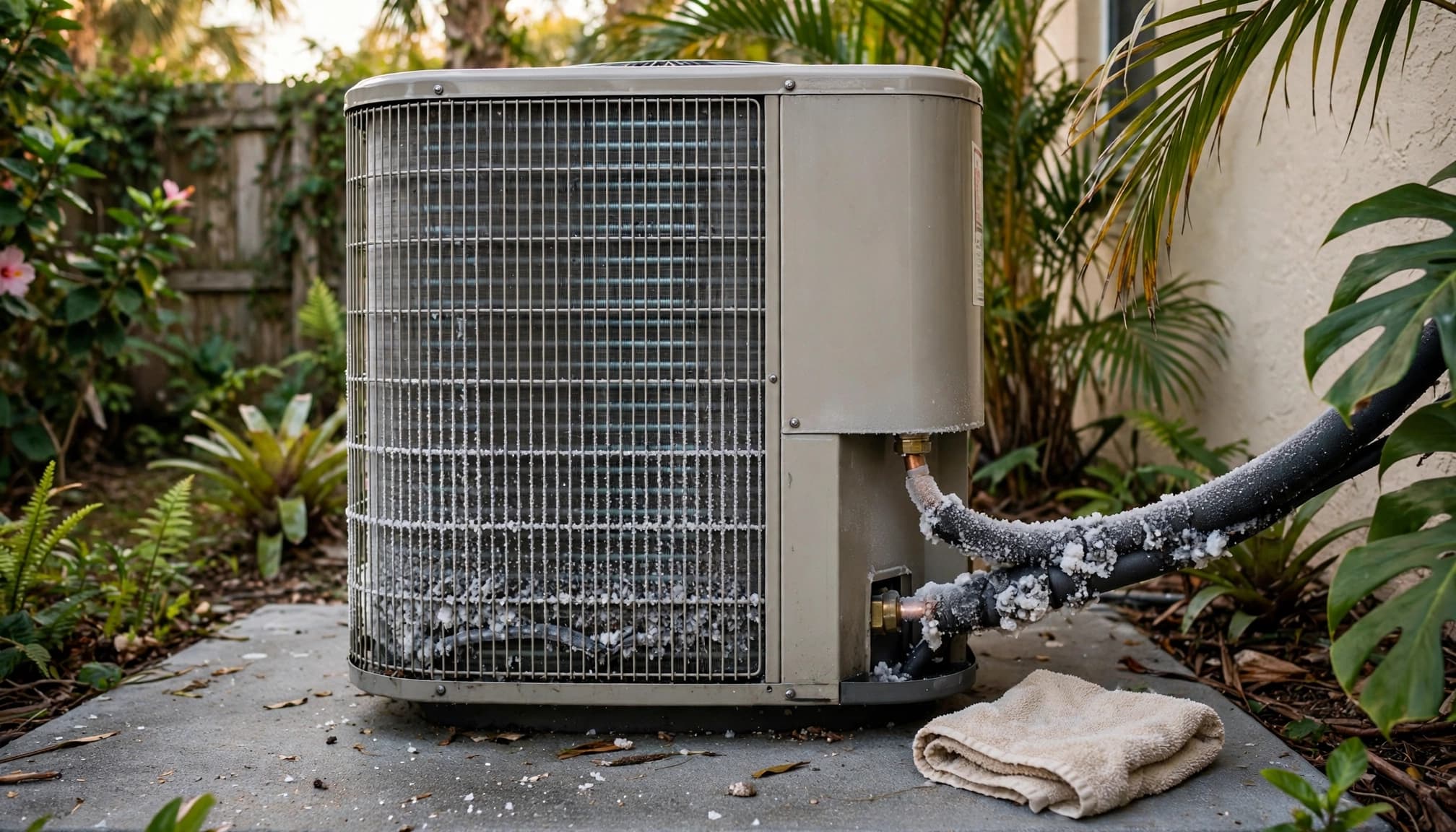
The signs of an AC refrigerant leak can overlap with suspected overcharge symptoms, including warm air and icing. A professional must separate those possibilities before making repairs.
Unusual noises, high pressure, or short cycling
A hissing sound can occur with a refrigerant problem, while rattling, grinding, buzzing, or clicking may point to mechanical or electrical trouble. Short cycling, when the system starts and stops repeatedly, can also have several causes.
An abnormal pressure condition may contribute to poor operation, but homeowners should not connect gauges or attempt to interpret readings. High pressure can also relate to a dirty condenser, restricted airflow, outdoor heat, or a component problem.
Higher energy use belongs on the warning-sign list as well. A system that runs longer than usual may consume more electricity because of airflow problems, reduced capacity, poor maintenance, or a refrigerant issue. Compare the change with weather and usage before treating the bill as proof of an overcharge.
Why icing does not prove an overcharge
Ice forms when part of the air-conditioning system becomes cold enough for moisture to freeze. That can happen when airflow across the indoor coil drops, when the system has a refrigerant problem, or when another fault changes normal operation.
A clogged filter is a common place to start. So are blocked return grilles, closed supply registers, dirty coils, and blower problems. If airflow falls, the coil may become too cold even when the refrigerant charge is not excessive.
A refrigerant leak can also create icing. In that situation, adding refrigerant without finding and repairing the leak only provides a temporary correction. The system may lose charge again, and the original problem remains.
Ice is evidence that the system needs attention, not proof that it contains too much refrigerant.
Do not scrape ice from the coil or use a heat source to melt it. Both actions can damage components. Turn the system off and schedule service, especially if the icing returns after the unit has thawed.
How professionals confirm the problem
A proper diagnosis looks at the complete system rather than one symptom. The technician should compare the equipment's operation with its design requirements and inspect related components before recommending a charge adjustment.
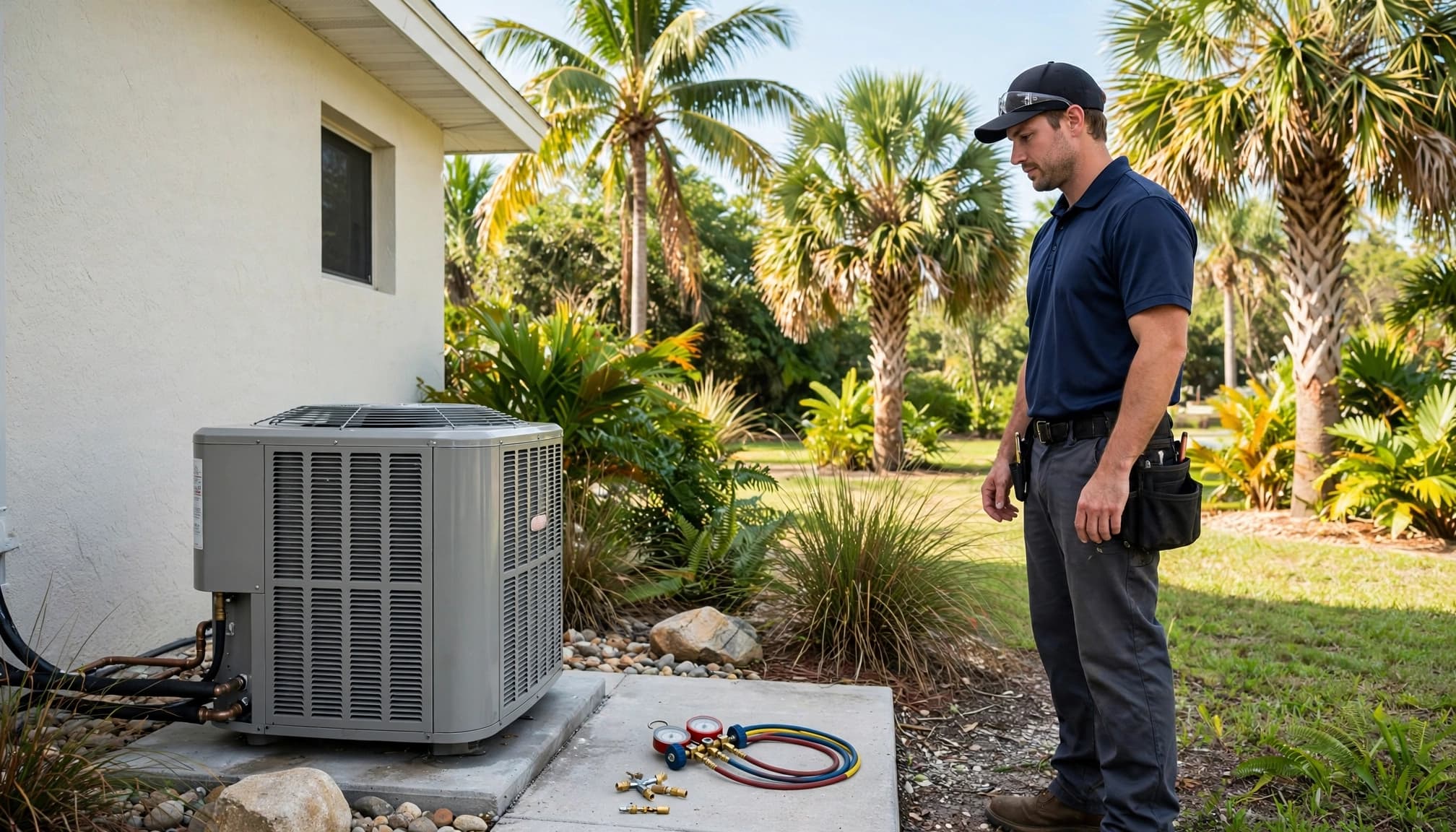
Inspect the system and test operating conditions
A technician may begin by checking the thermostat, filter, indoor airflow, outdoor unit, electrical connections, and visible refrigerant lines. They may also test system pressures and other operating conditions using professional equipment.
Those readings need context. Outdoor temperature, indoor conditions, airflow, equipment type, and the system's history all affect interpretation. A single gauge reading does not provide enough information for a safe diagnosis.
The technician should also ask what changed, when the symptoms began, whether the system was recently serviced, and whether another company added refrigerant. Those details can help identify an incorrect prior charge or an unrelated fault.
Check coils, connections, airflow, and leak evidence
A complete evaluation may include cleaning or inspecting the indoor and outdoor coils, checking the blower and fan motor, testing thermostat response, and examining the condensate drain. These checks matter because a dirty coil or weak airflow can imitate a refrigerant problem.
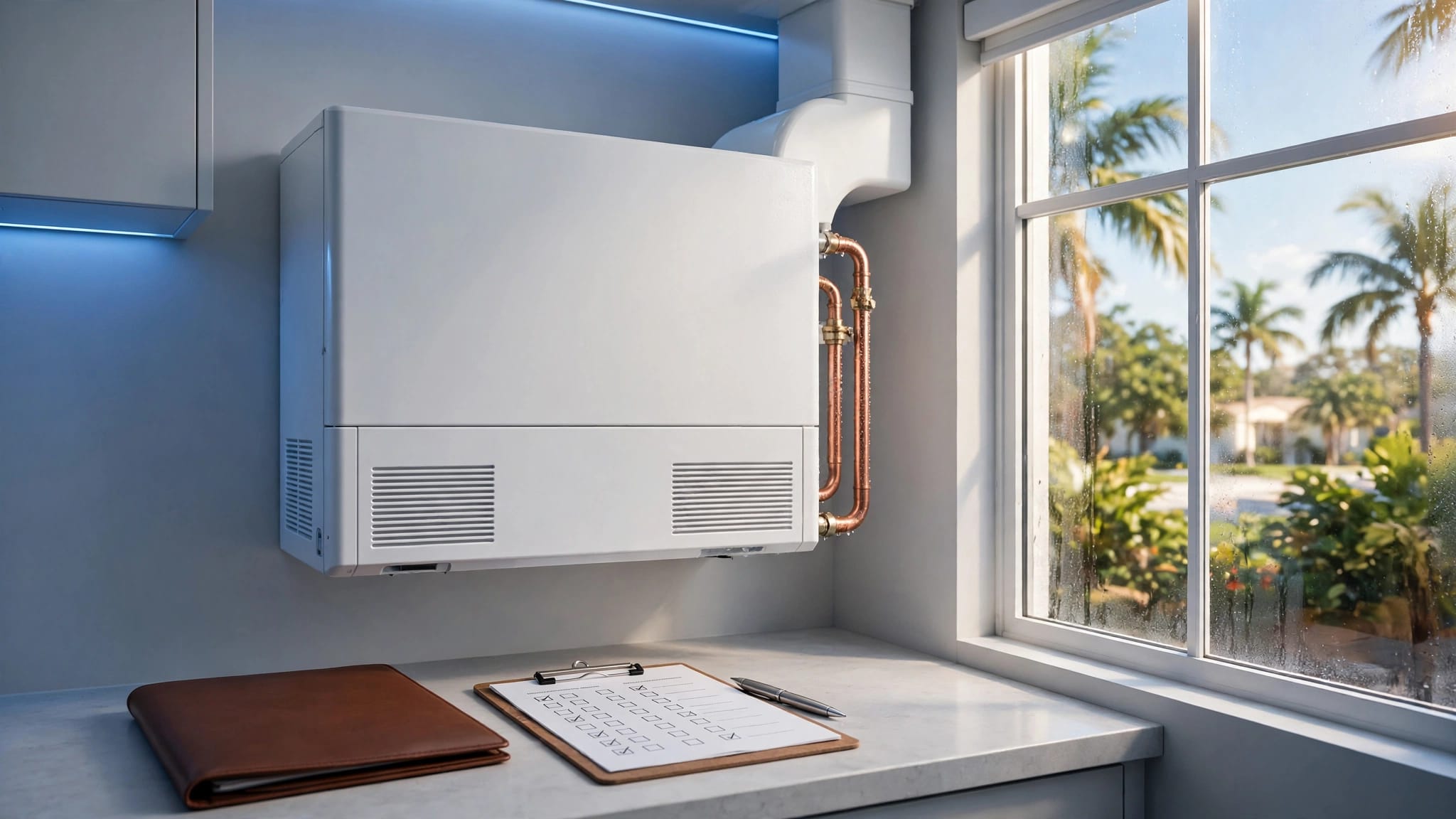
The technician may inspect connections and coils for signs of a leak, including oil near a suspected leak point. If a leak is present, the repair should address its source before the refrigerant charge is corrected.
A Southwest Florida tune-up may include what an AC tune-up should include, such as coil cleaning, airflow checks, electrical inspection, drain inspection, and refrigerant testing.
Correct the charge only after diagnosis
If testing confirms an incorrect charge, a trained professional can determine the proper repair. That may involve recovering excess refrigerant, repairing a leak, testing the system again, or correcting another problem first.
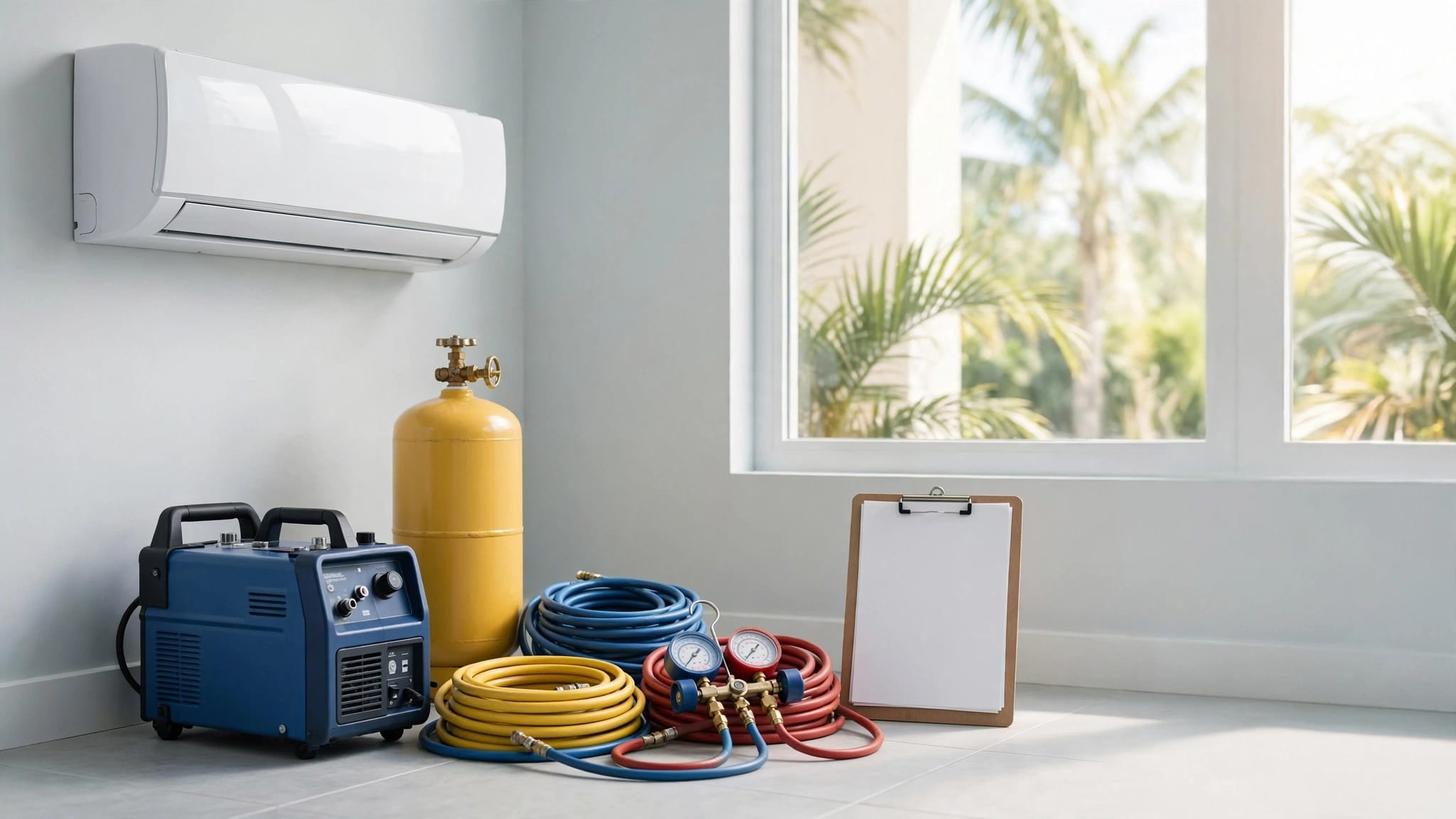
Homeowners should not release refrigerant, transfer it, connect service gauges, or add refrigerant from a cylinder. Refrigerant handling requires specialized equipment and creates safety and environmental risks when performed incorrectly.
Safe next steps for Southwest Florida homeowners
The safest response depends on what the system is doing. A minor performance change still deserves attention, while a complete loss of cooling may require urgent service during extreme heat.
What to do before the technician arrives
Start with safe observations:
- Check whether the thermostat has power and is set to cooling.
- Look at the filter and replace it if it is visibly dirty and the correct replacement is available.
- Make sure supply vents and return grilles are open and unobstructed.
- Keep leaves, stored items, and other debris away from the outdoor condenser.
- Turn the system off if it is iced, repeatedly cycling, leaking water, or making a loud unfamiliar sound.
- Note the symptom, the time it began, and whether another company recently serviced the unit.
Avoid opening panels, handling refrigerant lines, resetting breakers repeatedly, or attempting a pressure test. If you smell burning, see smoke, or hear severe electrical buzzing, leave the system off and seek professional help.
Questions to ask an HVAC technician
A clear service conversation can help you understand the recommendation. Ask:
- What tests showed that the refrigerant charge is incorrect?
- What other causes did you check, such as airflow, coil condition, electrical parts, and the thermostat?
- Did you find evidence of a refrigerant leak?
- If there is a leak, where is it and what repair does it require?
- Will the system be tested again after the repair?
- What maintenance issue could have contributed to the symptom?
Valor Heating & Cooling lists routine maintenance that includes cleaning key components, checking system operation, and making adjustments. Fort Myers HVAC maintenance can help identify problems before they become a major cooling failure.
Key takeaways
- An AC refrigerant overcharge can cause abnormal operation, but symptoms alone cannot confirm it.
- Poor cooling, icing, high pressure, short cycling, unusual sounds, and rising energy use have multiple possible causes.
- Ice on a refrigerant line does not prove that the system is overcharged.
- A technician should inspect airflow, coils, electrical components, controls, drains, and leak evidence before correcting the charge.
- Homeowners should never recover, release, pressure-test, or add refrigerant themselves.
- Turn the system off if it is icing, repeatedly cycling, making severe noises, or showing signs of electrical trouble.
- Ask for the test results, the diagnosed cause, and the recommended repair before approving refrigerant work.
Frequently asked questions
Can an overcharged AC still blow cold air?
Yes. The system may still produce some cool air while operating inefficiently or under abnormal conditions. Cooling performance alone cannot confirm the refrigerant charge.
Does high pressure mean the AC is overcharged?
Not necessarily. High pressure can have several causes, including a dirty outdoor coil, restricted airflow, high outdoor temperatures, or a mechanical problem. A technician must evaluate the complete system.
Should I run the fan to melt ice faster?
Do not use a heat source or scrape the ice. Turning the cooling system off allows it to thaw without adding unnecessary heat or physical damage. A technician should inspect the cause before normal cooling resumes.
Is adding refrigerant a safe temporary fix?
Homeowners should not add refrigerant themselves. If the system has a leak, a refill without repairing the leak only hides the problem temporarily. Professional diagnosis should come first.
When is an AC refrigerant problem an emergency?
Sudden loss of cooling, severe electrical sounds, smoke, burning odors, repeated breaker trips, or a system that will not operate can justify urgent service. Valor Heating & Cooling offers 24/7 emergency HVAC service throughout Lee County.
Conclusion
An AC refrigerant overcharge is possible, but poor cooling, ice, high pressure, short cycling, unusual sounds, and higher energy use do not prove it. Those signs can come from airflow restrictions, dirty coils, leaks, electrical faults, or other problems.
The safest next step is a professional inspection that tests the whole system and identifies the cause before anyone changes the refrigerant charge. In Southwest Florida's demanding climate, accurate diagnosis protects your equipment, your comfort, and your home.
Recent Posts