Signs Your AC Has a Refrigerant Leak in Fort Myers
An AC refrigerant leak in Fort Myers can hide in plain sight. Your system may still run, but it stops cooling the house the way it should.
That matters fast in Southwest Florida. Long cooling seasons, sticky humidity, and heavy daily use put extra stress on your system, so a small leak can turn into weak comfort and higher bills before long.
The early signs are easy to miss if you don't know what to watch for. Pay attention to how your AC sounds, how long it runs, and whether the air feels as cool as it used to.
Why refrigerant leaks show up fast in Fort Myers
Refrigerant is part of the cooling process inside a sealed system. It absorbs heat from your home and helps move that heat outside.
When refrigerant drops, your AC has to work harder to do the same job. In Fort Myers, where the system may run for hours at a time, that extra strain shows up fast. Rooms feel slower to cool. The thermostat takes longer to catch up. Your energy use can climb too.
Humidity makes the problem more obvious. If the system can't remove enough heat, it also struggles with moisture. That leaves the home feeling muggy even when the thermostat says the temperature is close.
A refrigerant issue can start small. A tiny leak, a loose connection, or a worn coil can all lead to the same result, less cooling and more stress on the equipment.
If your AC runs longer but cools less, refrigerant loss is one possible cause.
Signs your AC may have a refrigerant leak
When refrigerant is low, the symptoms often pile up. One sign by itself may point to another issue, but several together are hard to ignore.
Weak cooling is one of the first clues. The AC may blow air, but the house never feels fully comfortable. You might lower the thermostat and still feel warm.
Warm air from vents is another red flag. If the blower is pushing air but it doesn't feel cold, the system may not be moving enough refrigerant to absorb heat.
Longer run times also matter. A healthy AC should cycle normally. If yours runs and runs without reaching the set temperature, something is off.
Hissing sounds near the indoor coil, outdoor unit, or refrigerant line can point to escaping gas. Some leaks make a faint bubbling sound too. These sounds are not normal.
Ice on the evaporator coil or refrigerant lines often means the system is running too cold inside the coil. Low refrigerant can cause that, and so can airflow problems. For more on that symptom, see why AC units ice up in Southwest Florida.
Higher energy bills can show up before you notice comfort issues. When the AC works harder to make up for lost refrigerant, it uses more power.
A few homes also see uneven cooling. One room may feel fine while another stays hot and sticky. That kind of split usually means the system is struggling, not that the weather is simply too hot.
These signs can overlap with dirty filters, airflow trouble, or thermostat issues. Still, when several show up together, refrigerant loss moves higher on the list.
Why refrigerant problems need a professional diagnosis
Refrigerant leaks are not a homeowner repair job. The refrigerant is sealed inside the system, and the leak has to be found before the charge can be corrected.
A quick refill without a repair only hides the problem for a while. The leak stays there, and the system loses refrigerant again. That means the same symptoms come back, along with more wear on the AC.
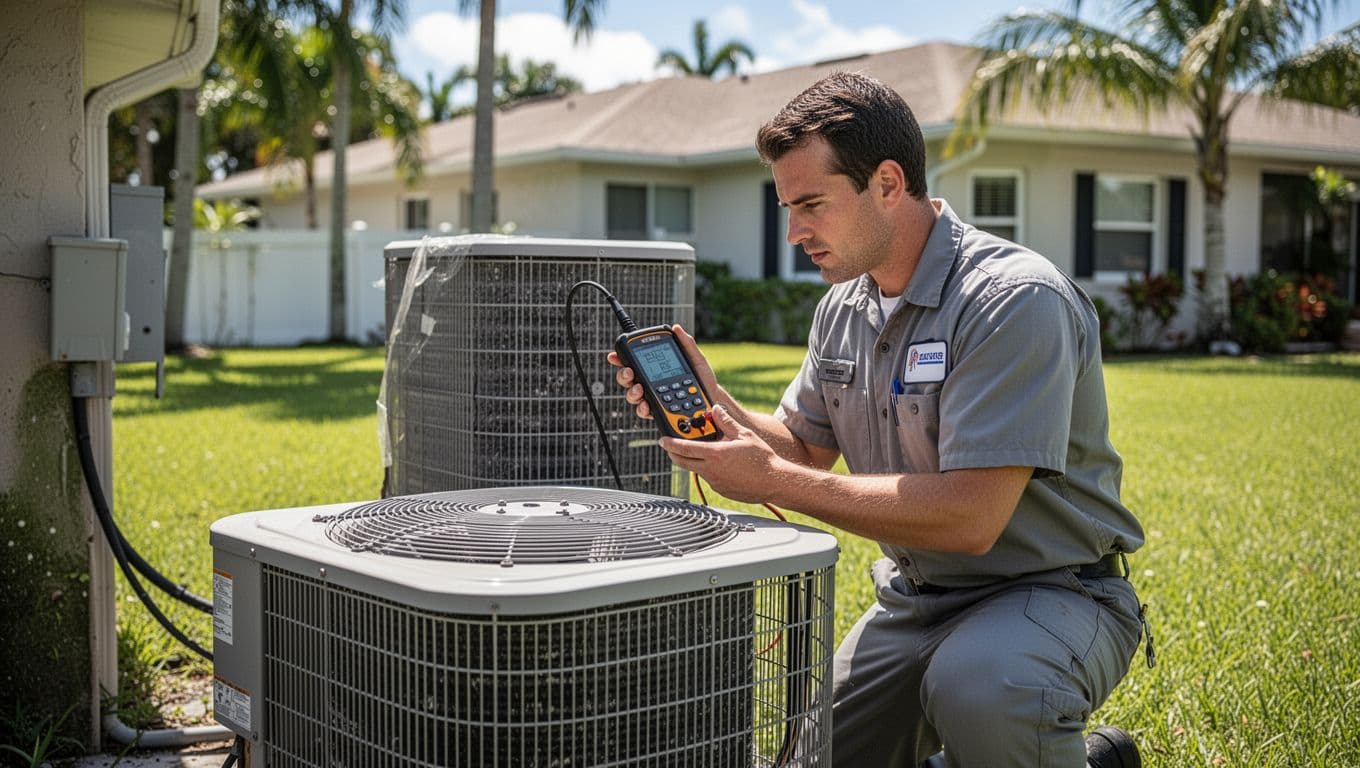
A trained HVAC technician can test pressures, inspect the coil, check the connections, and look for signs of oil near the leak point. Then the tech can repair the leak, test the system, and recharge it to the proper level.
Low refrigerant usually means there is a leak somewhere in the sealed system, and that needs a technician.
This matters because low refrigerant can damage the compressor. The compressor is one of the most expensive parts in the system. When it runs under stress for too long, repair costs can rise fast.
If your system is older and the leak keeps returning, replacement may make more sense than another repair. The decision depends on age, condition, and repair history. A helpful place to start is when a leaking AC unit should be replaced.
What to do when you suspect a leak
If your AC is blowing warm air, icing over, or making new hissing sounds, don't wait for the problem to grow. The safest move is to have the system checked soon.
Prompt service helps protect comfort, utility costs, and the compressor. It also gives a technician a better chance to catch the leak before it spreads into a bigger repair.
A refrigerant issue often gets worse during Fort Myers heat waves. That is when the AC is already under pressure, so even a small loss can make the home feel much warmer than it should.
If you want a clear answer, schedule service before the system starts shutting down more often. You can Schedule an Estimate with Valor Heating & Cooling and get the system checked by an HVAC technician who knows what to look for.
Conclusion
A refrigerant leak usually starts with small signs, then grows into bigger ones. Weak cooling, longer run times, warm air from vents, hissing sounds, ice on the coil, and rising bills all point to trouble.
In Fort Myers, those warning signs deserve quick attention because your AC works so hard for so much of the year. The sooner the leak is found, the better your chances of avoiding poor comfort, wasted energy, and compressor damage.
Recent Posts