AC Replacement in Manufactured Homes: Fit, Ducts, and Codes
Replacing an air conditioner in a manufactured home takes more than matching the old unit's capacity. The air handler's orientation, existing ductwork, electrical service, and equipment openings all affect what can be installed.
A manufactured home AC replacement should start with an on-site assessment by a qualified HVAC professional. In Southwest Florida, that assessment also needs to account for long cooling seasons, high humidity, and outdoor exposure. First, look at how the home's existing system is arranged.
Why manufactured home AC replacement needs a site-specific plan
Manufactured homes can have compact equipment spaces and duct layouts that differ from conventional site-built houses. An off-the-shelf system may not fit the opening, connect to the duct trunk, or deliver air properly through the existing registers.
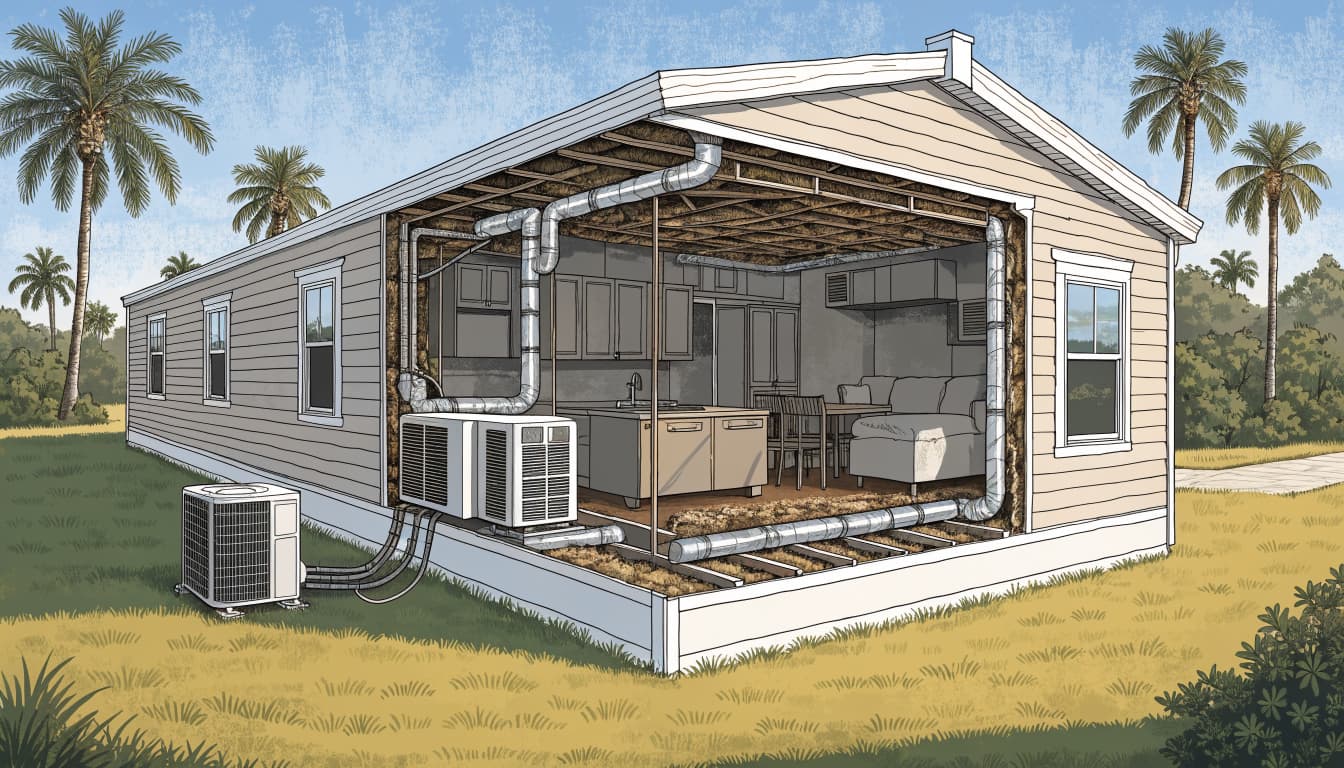
Start with the equipment and opening
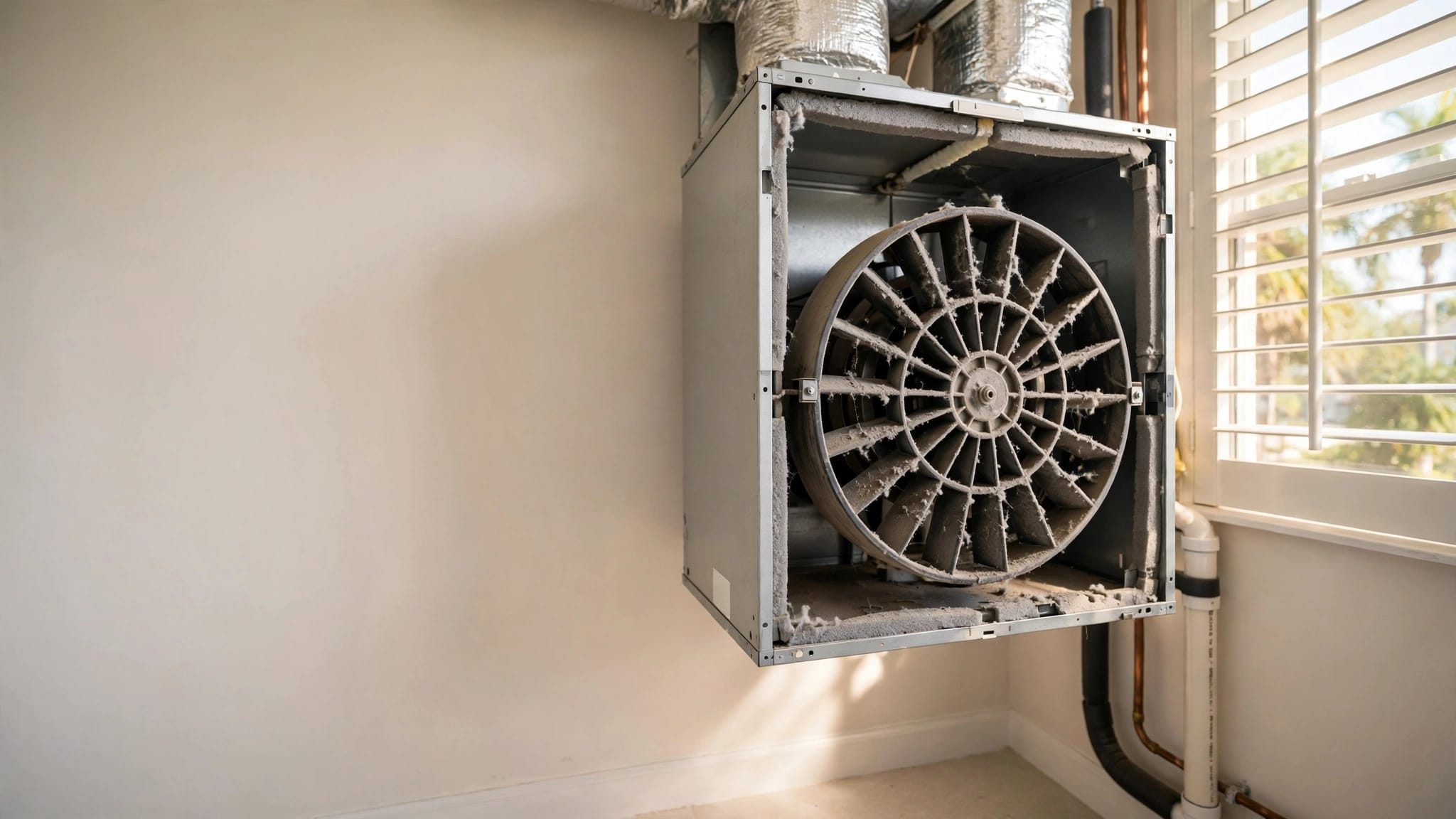
The indoor unit may sit in a closet or connect to a central duct system beneath the floor. Its dimensions, supply and return connections, and access-panel clearance matter just as much as the outdoor condenser's footprint. A replacement that is too tall, wide, or deep can require changes to the cabinet or surrounding space.
The technician should identify the existing equipment type, orientation, and connection points before recommending a replacement. Photos and model information help, but they don't replace measurements taken at the home.
Treat the existing system as a whole
A system includes more than an indoor air handler and outdoor unit. The return-air path, supply ducts, registers, drain, refrigerant lines, and electrical connections all affect performance. A mismatch can lead to weak airflow, poor humidity control, or recurring service issues.
A site-specific plan also helps distinguish parts that can remain from those that need repair or replacement. That's the basis of HVAC installation and replacement in Fort Myers, where the equipment recommendation should fit the home rather than a generic template.
Check ductwork, openings, and airflow before choosing equipment
Existing ducts can make a replacement easier, but only when they're compatible with the new system and in usable condition. Manufactured-home ductwork may be compact, concealed, or routed through a floor cavity, so a visual check at accessible areas is only part of the assessment.
Look for leaks, damage, and restrictions
Loose connections, crushed or disconnected sections, blocked returns, and damaged insulation can reduce airflow. In Southwest Florida, duct insulation also matters because warm, humid air around a poorly insulated duct can contribute to condensation.
HUD's manufactured-housing standard, 24 CFR § 3280.715, addresses duct construction and performance. It calls for at least R-4 insulation on supply ducts, with an exception for ducts within qualifying floor or ceiling insulation. Specified ducts directly exposed to outdoor air require at least R-8 insulation. These provisions help frame the inspection, but they don't determine whether a particular existing duct system suits a new unit.
Match connections and airflow
An air handler that physically fits may still connect poorly to the existing supply or return opening. A contractor should assess the opening size, transition pieces, register layout, and airflow through the home. If a duct modification is needed, it should be part of the installation scope, not an afterthought.
Good airflow depends on the whole path, not only the equipment rating. The importance of proper AC installation includes checking ducts and system setup so the new unit can cool the home evenly.
Size the system for the home, not the old unit
The old system's capacity can provide a useful reference, but it shouldn't decide the new system size by itself. Previous equipment may have been oversized or undersized, and changes to windows, insulation, occupancy, or duct condition can alter the home's cooling needs.
Account for heat and humidity
In Lee County, air conditioners often run through long, humid stretches. An oversized unit can cool a room quickly and shut off before it has removed enough moisture. The result may feel cool but damp. A properly selected system needs to meet the home's cooling load while supporting useful run times for moisture removal.
The contractor should assess the home's size, layout, windows, insulation, orientation, and air leakage. A room-by-room or whole-home load assessment is more useful than applying a simple square-foot rule.
Consider airflow and system pairing
The indoor and outdoor equipment need to be compatible as a matched system. The air handler must also move the airflow the equipment requires through the installed ductwork. If the ducts can't support that airflow, replacing only the units may not solve comfort problems.
A size recommendation should come with an explanation of the equipment match and any required duct changes. When comparing bids, what to look for in Fort Myers AC replacement quotes can help you assess whether each proposal describes the same work.
Choose equipment that fits the home's orientation and space
Manufactured-home equipment is designed for layouts and installation conditions that may differ from standard split-system configurations. Product family names can guide a search, but they don't confirm that a particular model will fit an existing home.
Ask about manufactured-housing equipment
Mortex Products, Inc. lists manufactured-housing product families that include CCWC, MS, HO2/HO3, WCW, BO2/BO3, C/S, HE, MMVE, and MMVT series. Its listings also include an MMVT Residential Air Handler that is 28 inches deep and a Multi-Family Multi-Position Air Handler.
These examples show why model selection needs to account for the home's layout and existing connections. The installer should identify the proposed indoor and outdoor equipment, explain the match, and describe any transition or cabinet work required.
Confirm downflow or other installation requirements
Equipment orientation affects connections, drainage, support, and access. For example, the ACiQ FTM4 installation manual's manufactured and mobile home section calls for at least 24 inches of clearance from access panels. Its downflow installation requires accessory downflow and base kits, along with a specified fireproof resilient gasket measuring 1/8 to 1/4 inch thick.
Those are requirements from that product's manual, not universal dimensions for every manufactured home. The installer must follow the instructions for the selected equipment and the conditions at the home.
Plan refrigerant lines and outdoor-unit placement
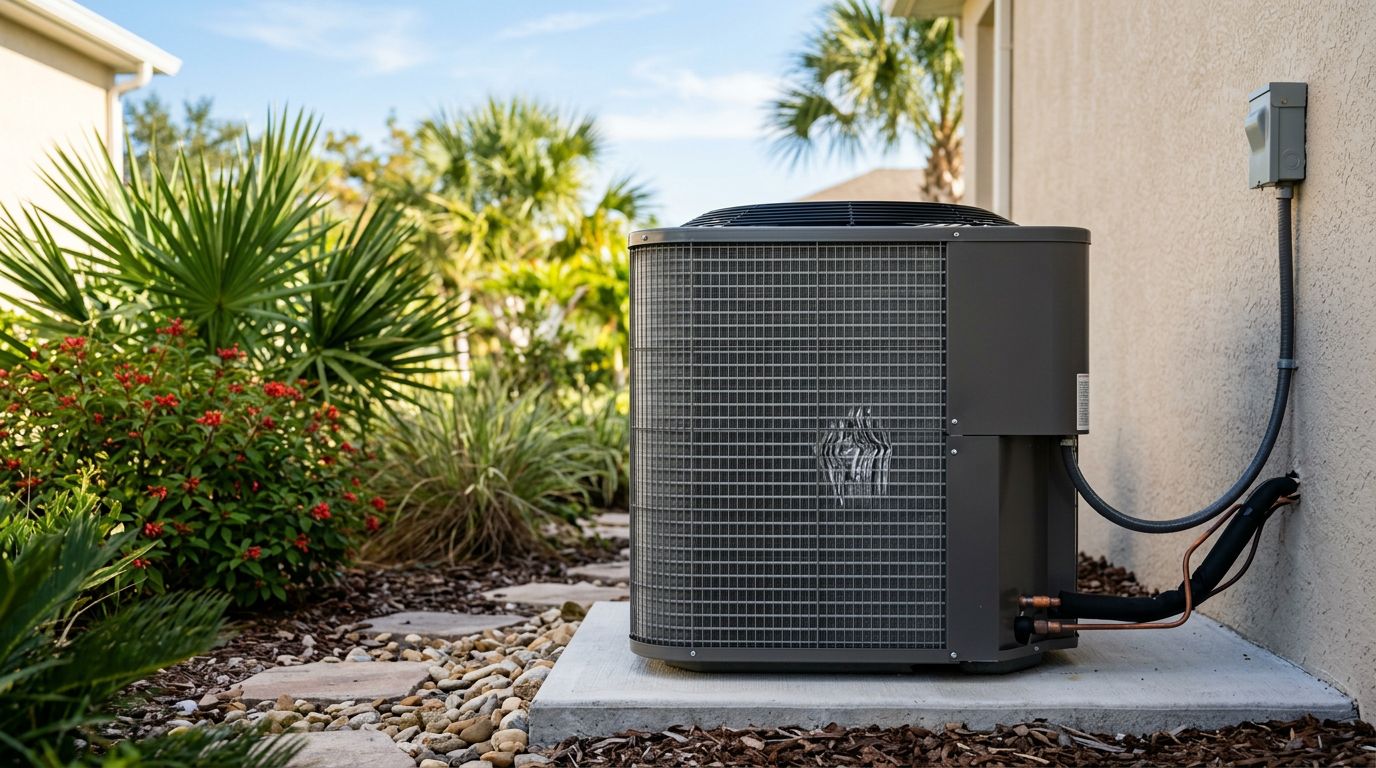
The outdoor condenser needs a stable location with adequate service access. Existing refrigerant lines may be reusable, but age, condition, size, length, and compatibility with the selected equipment affect that decision.
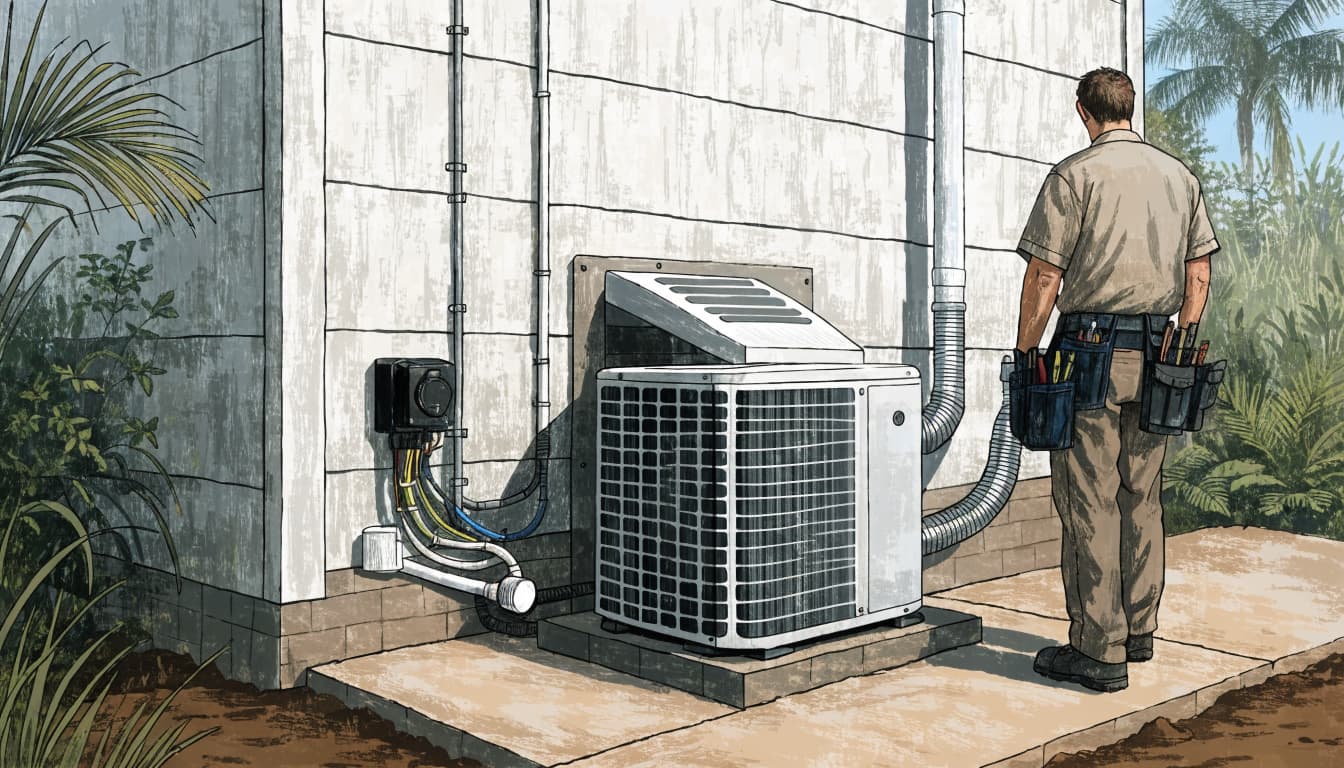
Assess the line set and wall entry
The technician should inspect the refrigerant-line route, insulation, fittings, and points where the lines pass through the home. A replacement system may have different connection requirements than the old equipment. The proposal should say whether existing lines will be reused, modified, or replaced.
Refrigerant work requires trained handling and correct installation procedures. A qualified HVAC professional should make these decisions, not a homeowner attempting to adapt lines or open a sealed system.
Allow for access and local exposure
Outdoor placement affects service access, airflow, drainage, and exposure to weather. In Southwest Florida, coastal air can also affect exposed equipment and components. A suitable pad and clearances help provide a stable installation and room for maintenance.
The plan should account for the condenser's location relative to the home, landscaping, walkways, and line entry. Moving the unit may add work, so the estimate should identify placement changes before installation begins.
Check electrical capacity and connection details
A replacement can have different electrical requirements from the unit it replaces. The service disconnect, circuit conductors, breaker, grounding, and wiring condition need to match the selected equipment and applicable electrical rules.
Don't assume the existing circuit is suitable
A new unit may require a different circuit configuration or updated wiring. The installer should compare the equipment nameplate requirements with the existing electrical setup. If circuit wiring or other electrical work is needed, it should be included in the plan and handled by qualified personnel.
For City of Fort Myers work, the mechanical checklist identifies separate electrical trade permitting for mini-splits and circuit wiring. Requirements differ by project type and jurisdiction, so the property's location and actual scope matter.
Protect service access
Disconnects and service panels need to remain accessible after installation. Duct transitions, storage, or landscaping shouldn't block the equipment's required service clearances. Electrical and mechanical access should be planned together, especially where the indoor unit sits in a tight closet.
Understand permits and manufactured-home code requirements
Permit rules vary by location and scope. Lee County's mechanical guide, updated May 14, 2026, says mechanical permits are required for installation, alteration, or replacement of mechanical equipment, including HVAC equipment and ductwork. Its listed documentation for new A/C units includes heater size, energy calculations, and duct layout, with distinctions for change-outs and mini-splits.
The City of Fort Myers has its own mechanical checklist. It identifies a Notice of Commencement for repair or replacement of existing A/C units when the project value exceeds $15,000. The checklist also lists separate electrical trade permitting for mini-splits and circuit wiring. These local requirements shouldn't be treated as one rule for every address in Southwest Florida.
HUD's 24 CFR § 3280.715 covers manufactured-home duct provisions, including insulation and temperature-related requirements near furnace discharges. It's useful context for understanding duct construction, while local permitting and the selected equipment's installation instructions shape the replacement work.
A permit is part of the installation plan, not a substitute for correct sizing or fitting. How to prepare for AC installation in Fort Myers covers practical preparation and the details to discuss before work begins.
Choose an installer who understands manufactured homes
Manufactured-home replacements call for careful measurements and practical knowledge of compact equipment spaces, duct connections, and system orientation. Ask the contractor to explain how the proposed equipment fits the existing opening and what changes the installation includes.
Review the scope, not only the equipment label
A useful estimate should identify the indoor and outdoor units, equipment match, duct or opening modifications, refrigerant-line work, electrical work, condensate drainage, permits, and startup steps. It should also describe which existing components will remain and which will be replaced.
If two proposals differ, compare their scope before comparing equipment prices. A lower quote may omit duct repairs or electrical updates needed for the system to work as intended.
Expect an on-site assessment
Remote estimates can't establish the dimensions of a closet, condition of concealed ducts, electrical capacity, or refrigerant-line suitability. A qualified HVAC professional should inspect the home and discuss the system's current performance before recommending a replacement.
At Valor Heating & Cooling, we provide HVAC installation and replacement service in Fort Myers, Lee County, and Southwest Florida. To arrange an on-site conversation about your home, Schedule an Estimate.
Key Takeaways
- The old unit's size and connections are starting points, not a complete replacement plan.
- Equipment orientation, openings, duct condition, airflow, electrical service, and refrigerant lines all affect compatibility.
- HUD duct provisions and local permit rules address different parts of the work.
- Requirements vary by home and region, so an on-site assessment is the reliable way to plan the installation.
Frequently Asked Questions
Can I replace a manufactured-home AC with a standard split system?
Possibly, but the equipment must suit the home's opening, duct connections, orientation, and electrical setup. A standard split system isn't automatically compatible. The installer should assess the indoor unit location, outdoor placement, and existing system before selecting equipment.
Can existing ductwork stay in place?
It may remain if it's properly sized for the system, connected, insulated, and in usable condition. Leaks, restrictions, damage, or an incompatible opening may call for repairs or modifications. The duct system should be assessed alongside the equipment.
Do manufactured-home AC replacements need a permit?
Permit requirements depend on the property's jurisdiction and the work involved. Lee County and the City of Fort Myers publish different mechanical guidance, and electrical work may have separate requirements. The installation plan should identify applicable permits for the project.
A better fit starts with an on-site assessment
A successful replacement depends on how well the equipment works with the home, not simply on whether the new unit matches the old one. Ducts, openings, sizing, electrical capacity, refrigerant lines, and local requirements all belong in the plan.
With careful assessment and an installer experienced in manufactured-home layouts, you can choose a system that fits the home and supports reliable cooling through Southwest Florida's humid season.
Recent Posts