Dirty Blower Wheel: How It Limits AC Airflow in Fort Myers
When your air conditioner runs but rooms still feel warm or sticky, a dirty blower wheel may be reducing airflow. The wheel moves indoor air through the system, so dirt on its blades can affect both comfort and performance.
In Fort Myers, an AC system also has to manage humid air for much of the year. A clogged filter, dirty coil, or duct problem can cause similar symptoms, so the blower wheel is one possibility, not a diagnosis. Knowing what to watch for can help you decide when to arrange an inspection.
Key Takeaways
- The blower wheel moves air through the indoor unit and into the supply ducts. Dirt buildup can make that job less effective.
- Weak vents, uneven room temperatures, longer run times, and a clammy feeling can point to an airflow problem.
- A dirty wheel is only one possible cause. A technician can inspect the filter, coil, ducts, and blower, then test system pressure.
- Avoid opening the air handler or trying to clean parts near electrical and moving components yourself.
What the blower wheel does inside your AC
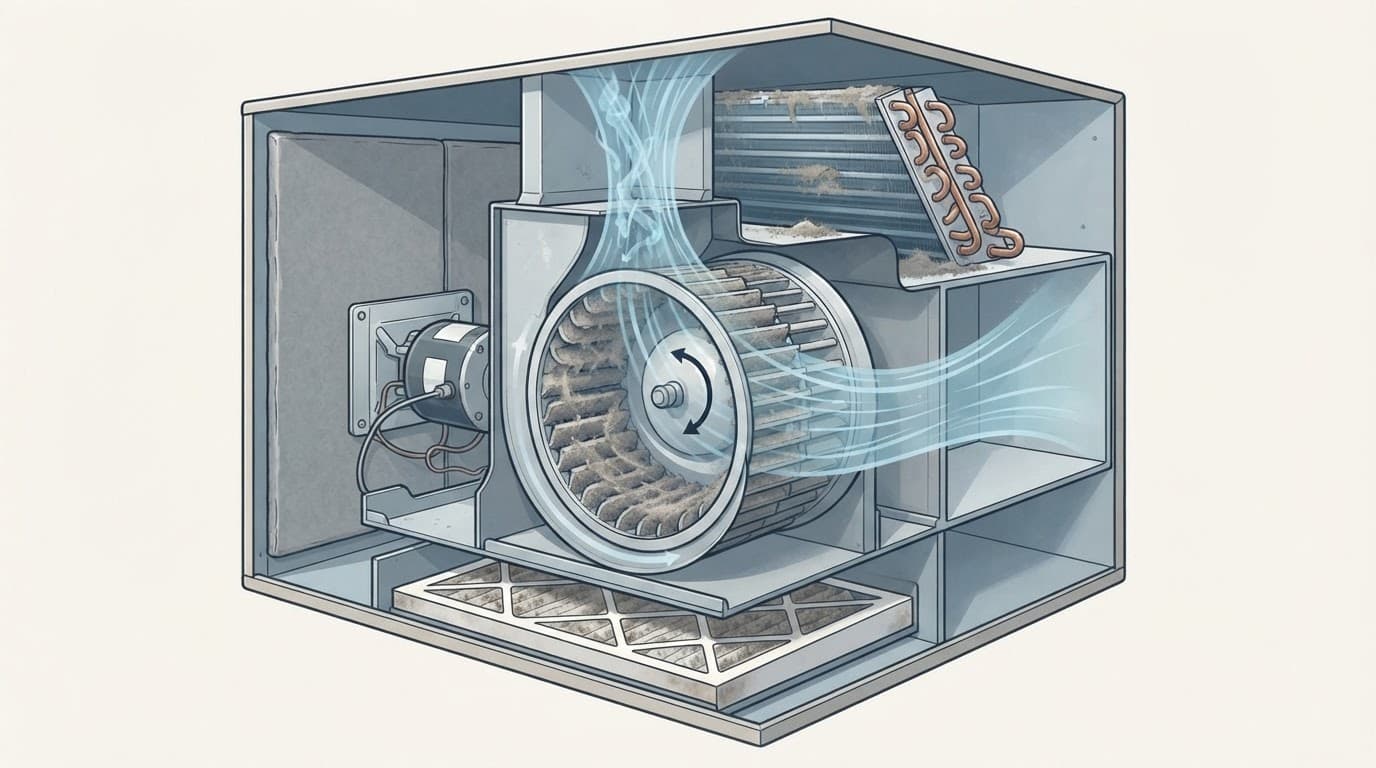
The blower wheel sits inside the indoor air handler. Its motor spins a round assembly of curved blades, moving air through the equipment and into the home's ductwork.
How air moves through the system
Return grilles draw room air back toward the air handler. The system filters that air, moves it across the evaporator coil, and sends cooled air through supply ducts to rooms. The blower wheel helps keep that circulation going while the AC runs.
When airflow drops, less conditioned air may reach a room, even if the thermostat is calling for cooling. In a Fort Myers home, the system also needs to circulate indoor air across the coil to help remove heat and moisture.
Why buildup matters
Dust, lint, and other particles can collect on the wheel's curved blades over time. As buildup coats the surfaces or fills spaces between blades, the wheel may move air less effectively. The system then has to work against a less favorable airflow path.
A dirty wheel doesn't automatically mean the AC will stop working. However, restricted airflow can affect how evenly the system cools and may contribute to longer cycles or other performance problems.
How a dirty blower wheel can reduce AC airflow
The blower wheel is designed to move air through the air handler. When its blades carry a layer of debris, the airflow can fall short of what the system needs. The degree of impact depends on the equipment and the condition of the wheel.
Less air moves through the air handler
A buildup on the blades can reduce how effectively the spinning wheel moves air. That means less air may pass through the indoor unit and reach the supply vents. You might notice that some rooms receive less airflow, or that air from several vents feels weaker than usual.
This symptom can also result from a dirty filter, a blocked return grille, or a duct restriction. A technician needs to inspect the system before linking weak airflow to one part.
Other components can feel the strain
The evaporator coil needs adequate airflow to operate as intended. When airflow is restricted, the coil can get too cold and begin to freeze. A frozen coil can reduce cooling further, so the original airflow issue may become more noticeable.
High static pressure can also occur when the blower faces too much resistance moving air through the system. A dusty wheel is one possible contributor. Longer run times or a whistling return vent may occur with airflow problems, but neither symptom confirms a dirty wheel.
Warning signs in Fort Myers homes
Airflow problems can show up as comfort changes before a system stops cooling. In Southwest Florida, where AC systems often run through hot, humid weather, pay attention to changes that persist across more than one room or cooling cycle.

Rooms cool unevenly or feel clammy
One room may take longer to cool than the rest, or air from a supply vent may feel weaker than it used to. If the AC runs but the home still feels humid or sticky, reduced circulation could be part of the problem.
Those signs have several possible causes. For instance, a closed or blocked register, a duct issue, or a filter that needs attention can also limit airflow. If airflow seems weak at multiple vents, an inspection can help identify where the restriction begins.
The system runs longer or makes a new sound
Longer cooling cycles can accompany airflow problems, especially when the home struggles to reach the thermostat setting. A whistle near a return vent may point to air resistance, while a new mechanical sound near the air handler deserves attention.
If you see ice on the indoor coil or refrigerant lines, stop running the cooling system and contact an HVAC technician. Restricted airflow is one possible reason for a frozen coil, but a professional needs to identify the cause. You can also read about how static pressure can cause vent noise.
Weak airflow can have other causes
A dirty blower wheel is one item to consider, but it shouldn't be assumed to be the culprit. Several parts of the air-delivery system can create similar symptoms, and a technician may need to examine the full path air travels through your home.
Filters, coils, and return grilles
A loaded filter can restrict air entering the system. A filter that doesn't fit properly may allow dust to bypass it, while a filter with too much resistance for the equipment can also affect airflow. Blocked return grilles can create another restriction.
The evaporator coil can collect debris as well. If it becomes dirty or blocked, air may not pass through it as expected. A technician can inspect the filter, filter rack, coil, blower wheel, and motor as part of an airflow investigation.
Ducts and system pressure
Supply ducts carry conditioned air from the air handler to rooms. A crushed, blocked, or disconnected section can reduce delivery to one or more areas. A return duct problem can also limit how much air gets back to the equipment.
A pressure test helps distinguish restrictions within the air handler from problems elsewhere. For more on the process, see AC airflow diagnostics in Fort Myers. Testing can help prevent a wheel from being blamed when another part of the system is responsible.
When a professional inspection or cleaning makes sense
Arrange an inspection if weak airflow continues after you address simple, safe checks, such as making sure supply and return grilles aren't blocked. A technician can examine the blower wheel and nearby components without guessing from symptoms alone.
What a technician can inspect
The inspection may include the filter and filter rack, blower wheel and motor, evaporator coil, return path, ducts, registers, and system pressure. A technician can use a manometer to measure static pressure and compare the result with the equipment manufacturer's limits.
The findings matter because cleaning the wheel won't fix a blocked duct or a coil restriction. A careful diagnosis connects the service to the part that needs attention. A routine visit may also include other airflow and drainage checks, as described in what an AC tune-up includes.
Why wheel cleaning isn't a DIY task
The blower assembly sits inside the air handler, where electrical components and moving parts are present. Accessing or removing it can require equipment-specific steps. Avoid reaching into the unit, spraying cleaners, or attempting to remove the wheel.
If cleaning is appropriate, a technician can determine how to access the component and clean it without damaging the wheel, motor, or surrounding equipment. If you're still dealing with poor airflow or uneven cooling, Schedule an Estimate with an HVAC technician from Valor Heating & Cooling.
Habits that help maintain airflow
Routine attention to basic airflow needs can help reduce avoidable restrictions. It won't prevent every blower-wheel issue, but it can help keep the system's air path clearer and make changes easier to spot.
Check the filter regularly
In many homes, changing the AC filter every 30 to 60 days works well. The right timing depends on the home and filter condition. Pet hair, dust, or frequent system use may mean the filter needs attention sooner.
Use a filter that fits the rack and suits the system. A filter that's too restrictive can interfere with airflow, even when it's clean. For more guidance, see how often to service your AC.
Keep service focused on the problem
During maintenance, a technician can check the blower, coils, airflow, and drain line, along with other system components. A dirty wheel or coil calls for air-handler service, while duct cleaning addresses debris inside ductwork. Those are different services, and one doesn't automatically require the other. Learn more about air duct cleaning versus AC maintenance.
Frequently asked questions
Can I tell by looking at my vents if the blower wheel is dirty?
No single vent symptom identifies the wheel as the cause. Weak airflow, uneven cooling, and longer run times can come from several restrictions, including the filter, coil, ducts, or return path. The wheel usually needs direct inspection, and system measurements can help narrow down the cause.
Can a dirty blower wheel make an AC coil freeze?
It can contribute to restricted airflow, which is one possible reason an evaporator coil freezes. However, a frozen coil can have other causes too. Turn off cooling and arrange professional service if you see ice, rather than opening the air handler or trying to thaw or clean internal parts.
Does a dirty blower wheel mean I need duct cleaning?
Not necessarily. The blower wheel is inside the air handler, while duct cleaning addresses the inside surfaces of the duct system. An inspection can establish whether the wheel, ducts, or another component needs service.
Keep airflow problems from becoming a comfort problem
A dirty blower wheel can limit the air your AC moves, but weak airflow alone can't confirm the cause. Filter, coil, duct, and pressure problems can produce similar signs.
In Fort Myers' hot, humid climate, steady airflow supports both cooling and moisture removal. If your vents feel weak, rooms stay uneven, or the system runs longer than usual, a professional inspection can identify the restriction and the right next step.
Recent Posts