AC Condenser Coil Fins: Damage Causes and Safe Prevention
A few bent fins on an outdoor AC unit can look alarming, but their appearance alone doesn't tell you whether the system is in trouble. AC condenser coil fins are thin metal surfaces that help release heat, so extensive damage can affect airflow and cooling.
In Southwest Florida, physical impacts, careless cleaning, salt air, and outdoor debris can all harm the fins. The safest approach is to prevent contact, rinse gently when appropriate, and leave significant or uncertain damage to an HVAC professional.
Key Takeaways
- The fins are delicate, so avoid pressing, brushing, or scraping them.
- A small, isolated bend may be cosmetic. Widespread damage can restrict airflow and affect cooling.
- Turn off power before cleaning, then use only gentle water pressure. Never use a pressure washer.
- A fin comb can help with minor bends, but use it cautiously. Extensive damage needs professional attention.
What AC condenser coil fins do
The outdoor condenser releases heat removed from inside your home. Its coil has narrow metal fins attached to tubing. Together, the fins and tubing provide surface area for heat transfer while air moves through the coil.
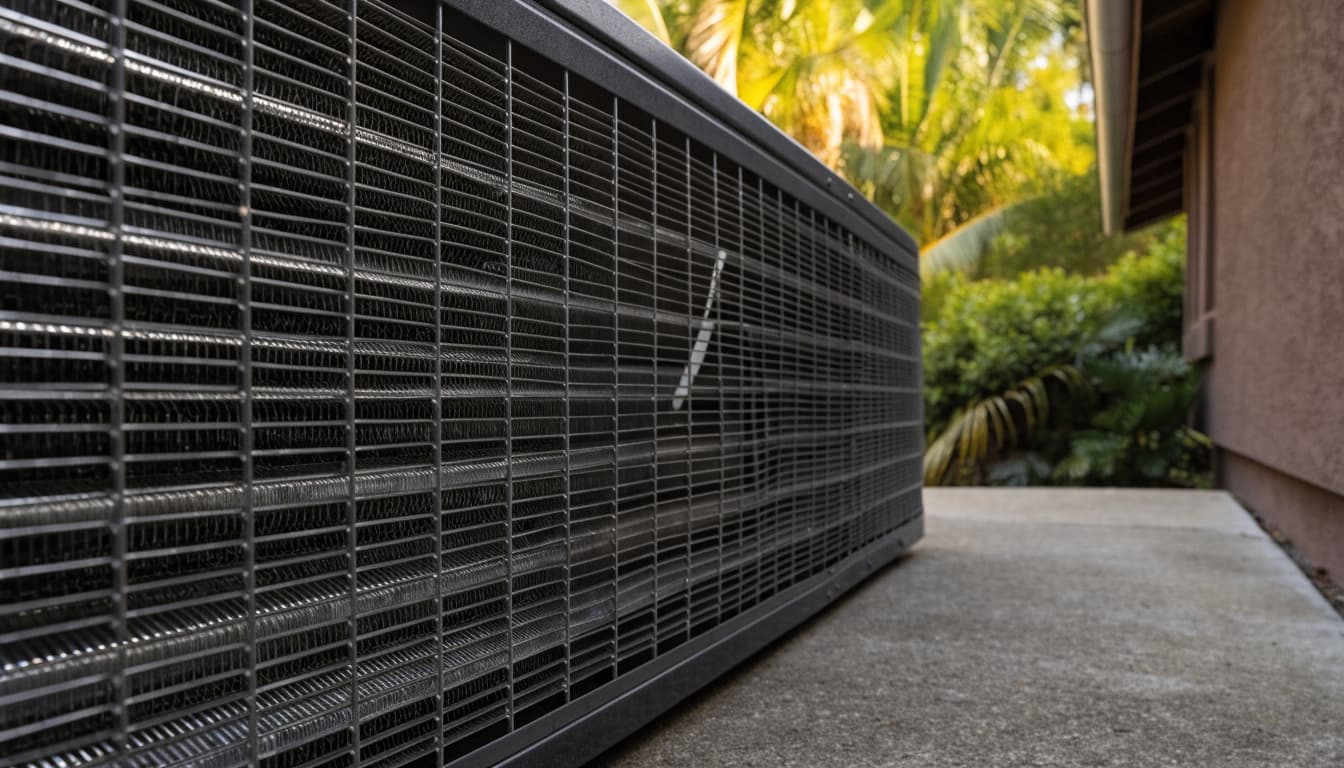
Because the fins are thin, even a small amount of force can bend them. A few bent edges don't automatically mean the whole unit needs repair. However, a dense patch of bent fins can narrow the paths air needs to cross the coil.
The fan and coil must move air freely to release heat. When airflow is restricted, the system may struggle to cool efficiently or run longer than usual. That's why the location and extent of the damage matter more than whether every fin looks perfectly straight.
Common causes of physical fin damage
Most avoidable fin damage happens when something contacts the coil. Even routine yard work or cleaning can cause harm if a tool, spray, or hand presses against the fins.
Yard work and loose debris
A grass trimmer, rake, or hedge tool can strike the coil when used too close to the unit. Leaves, palm fronds, and windblown branches may also hit the cabinet during storms. Debris piled against the unit can block airflow, while sharp or heavy objects can bend fins on contact.
Give the condenser room around its sides, and move patio items away from it. Leave about two to three feet of open space where practical. When clearing leaves or clippings, remove loose debris around the cabinet by hand without reaching through the grille.
For more on clearance and airflow, see our guide to protecting condenser coil fins from damage.
Rough cleaning and maintenance
A pressure washer can bend fins in seconds. Stiff brushes, vacuum attachments pressed against the coil, and other tools can do similar damage. Even a garden hose can be too forceful if its nozzle concentrates the water into a narrow stream.
Keep hands and tools away from the fins. The edges can also be sharp, so don't reach inside the grille to pull out debris. If cleaning requires removing a panel or reaching near the fan or electrical parts, stop and arrange service.
Salt, corrosion, and Southwest Florida conditions
Coastal air brings salt that can collect in the narrow spaces between fins. Over time, salt and moisture can contribute to corrosion and weaken the aluminum. Homes near the Gulf Coast, canals, and bays may face more exposure, but wind can carry salt inland as well.
Salt and chemical exposure
Salt isn't the only outdoor concern. Sprinkler water, pool chemicals, grass clippings, and other debris can leave residue on or near the coil. Avoid directing irrigation spray at the condenser, and don't apply household cleaners or harsh chemicals to the fins.
Corrosion may change the surface or weaken the metal without causing an immediate cooling failure. A unit can continue to run while deterioration develops. For more detail on how salt and debris damage condenser fins, including why routine care still matters, see our related guide.
Why corrosion needs a different response
Bending is physical damage; corrosion is material deterioration. Rinsing loose residue may help with light surface dirt, but it can't restore corroded or weakened metal. If you see flaking, visible corrosion, or damaged coil tubing, don't try to scrub the area or straighten it yourself.
A technician can assess the coil and look for related issues. This is especially important if cooling has declined or you notice signs of a refrigerant leak. For coastal homes, regular professional maintenance can catch deterioration before it causes a larger problem.
Cosmetic bends versus damage that affects performance
A few fins bent in one small area may have little effect on airflow, particularly if most of the coil remains open. A close look can't always reveal the full condition, though. The bend's location, size, and impact on airflow all matter.
Signs damage may be more than cosmetic
Pay attention to broad sections where fins are folded together or pressed flat. Damage that covers a large portion of the coil can restrict air movement. Corrosion, loose or distorted tubing, or visible leakage also calls for professional attention.
Watch how the AC performs, too. If it runs longer than usual, struggles to cool, or no longer keeps the home comfortable, a damaged coil could be one factor. These symptoms can have other causes, so don't assume the fins are the only problem.
What appearance alone can't tell you
A small dent doesn't prove that the condenser is working normally, and a few imperfect fins don't prove that it's failing. The system's performance and the condition of the full coil give a better picture than one close-up spot.
If the coil looks mostly open and the system cools as expected, avoid poking at it to make the fins look neat. If airflow appears blocked or performance has changed, have a technician inspect the unit instead.
Preventing condenser fin damage
Prevention mostly means keeping objects away from the coil and avoiding forceful cleaning. Small habits around the outdoor unit can protect the fins without requiring you to handle them.
Keep the area clear
Trim vegetation before it grows close to the cabinet, and keep furniture, storage bins, and yard equipment away from the unit. After a storm, look for palm fronds, branches, or leaves around the exterior. Remove only loose debris you can reach safely from outside the grille.
Also look for sprinkler heads that spray the coil. Redirecting water away from the unit can reduce repeated exposure to mineral deposits and pool or lawn-care chemicals. If your condenser sits in a tight enclosure or low area, ask a technician whether its placement allows adequate airflow.
Choose gentle maintenance
Routine coil care can remove dust and debris before they build up. However, the cleaning method matters: avoid scrubbing, concentrated water jets, and chemical products that aren't approved for the equipment.
If you're unsure how to clean your model safely, leave the coil to a technician. A maintenance visit can include outdoor coil cleaning and inspection of other system components. Learn more about outdoor coil cleaning during an AC tune-up.
How to clean the coil safely
A light rinse may be suitable when the coil has surface dust and the unit is in good condition. Don't clean a unit with damaged wiring, water around its electrical components, or damage you can't assess.
Shut off power and use a gentle rinse
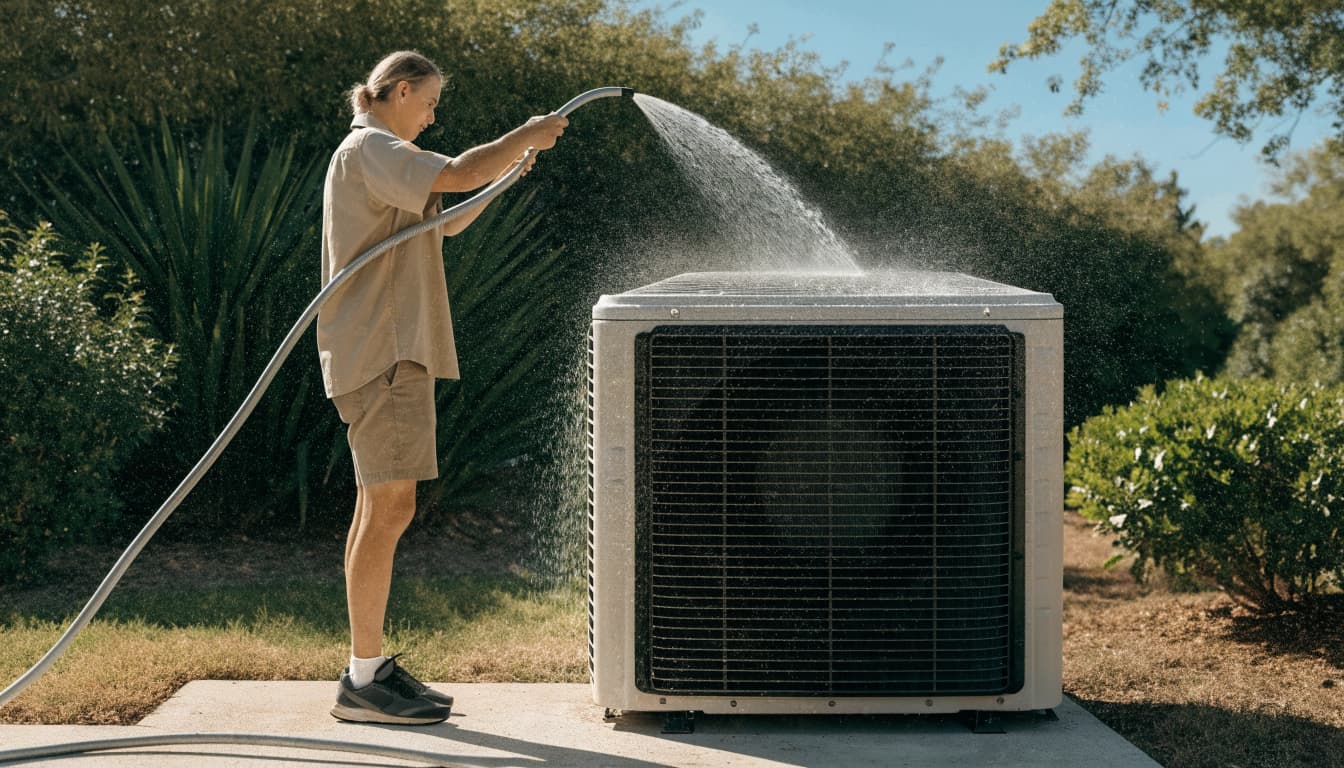
Turn the system off, then shut off power to the outdoor unit at the appropriate breaker or disconnect before rinsing. Don't remove electrical covers to reach the coil, and don't handle wet equipment. If you can't safely shut off power or see signs of electrical damage, don't proceed.
Use a garden hose with a gentle flow, not a pressure washer or a concentrated nozzle. Keep the spray away from electrical areas, and let loose dirt rinse away rather than pushing it deeper into the fins. Stop if debris won't come off easily.
For more detail on how to safely clean an outdoor AC condenser, including safe homeowner maintenance, see our Fort Myers guide.
Use a fin comb with care
A fin comb is designed to straighten bent fins, but it can cause more damage if you force it or choose a tool that doesn't fit. Consider it only for a small, accessible area of minor bending. Keep the unit powered off, work gently, and stop if the tool catches, tears, or pushes the metal out of shape.
Don't use a comb to repair broad sections of damage or to reach into the unit. If you're uncertain about the bend or can't access it safely, leave the repair to an HVAC professional.
When to call an HVAC professional
Arrange an inspection if a large section of fins is flattened, corrosion is visible, the coil has a leak, or the AC's cooling performance has changed. A technician can assess airflow and the coil's condition, then recommend a repair if one is needed.
Professional help is also the safer choice if cleaning would require opening the cabinet, reaching near wiring, or working around a damaged fan or grille. We provide HVAC repair and maintenance in Fort Myers and Southwest Florida. If you're concerned about the condenser, Schedule an Estimate with Valor Heating & Cooling.
Frequently asked questions
Can I use a pressure washer on condenser fins?
No. The concentrated force can bend the thin metal and restrict airflow. Use a gentle garden-hose rinse for light dirt, or have a technician clean the coil.
Do a few bent fins mean I need a new AC?
Not necessarily. A small, isolated bend may have little effect, while extensive damage or corrosion needs a professional assessment. The system's cooling performance and overall coil condition matter.
Should I straighten the fins myself?
Only minor, accessible bends may be suitable for careful fin-comb use. Don't force the tool, work near electrical parts, or attempt to straighten a large damaged area. Leave uncertain repairs to an HVAC professional.
Protect the fins by keeping force away
Condenser fins are delicate, but not every small bend means the AC is failing. Keep yard tools and debris away, shut off power before any rinse, and use gentle water pressure only. When damage is widespread, corrosion is visible, or cooling has changed, a professional inspection is the safer next step.
Recent Posts