
How to Clean a Mini-Split Wall Unit Filter in Florida
In Southwest Florida, a mini-split filter can collect dust, lint, and household debris faster than you expect. Regular mini split filter cleaning can help maintain airflow, but the right method depends on the filter your wall unit uses.
Turn the unit off before cleaning, and follow its manufacturer's manual. Some filters are washable mesh; others need replacement. Here's how to tell the difference and care for the filter without damaging the equipment.
Key Takeaways
- Switch off the mini-split before opening the unit, then follow the manual for your model.
- Wash only a filter the manufacturer identifies as reusable. Replace disposable filters instead.
- Let a washable filter dry completely before putting it back.
- Check filters more often when dust, pets, foot traffic, or heavy AC use cause buildup.
- Routine filter washing doesn't include cleaning the coils. Leave coil service to a qualified technician.
How to clean a washable mini-split filter
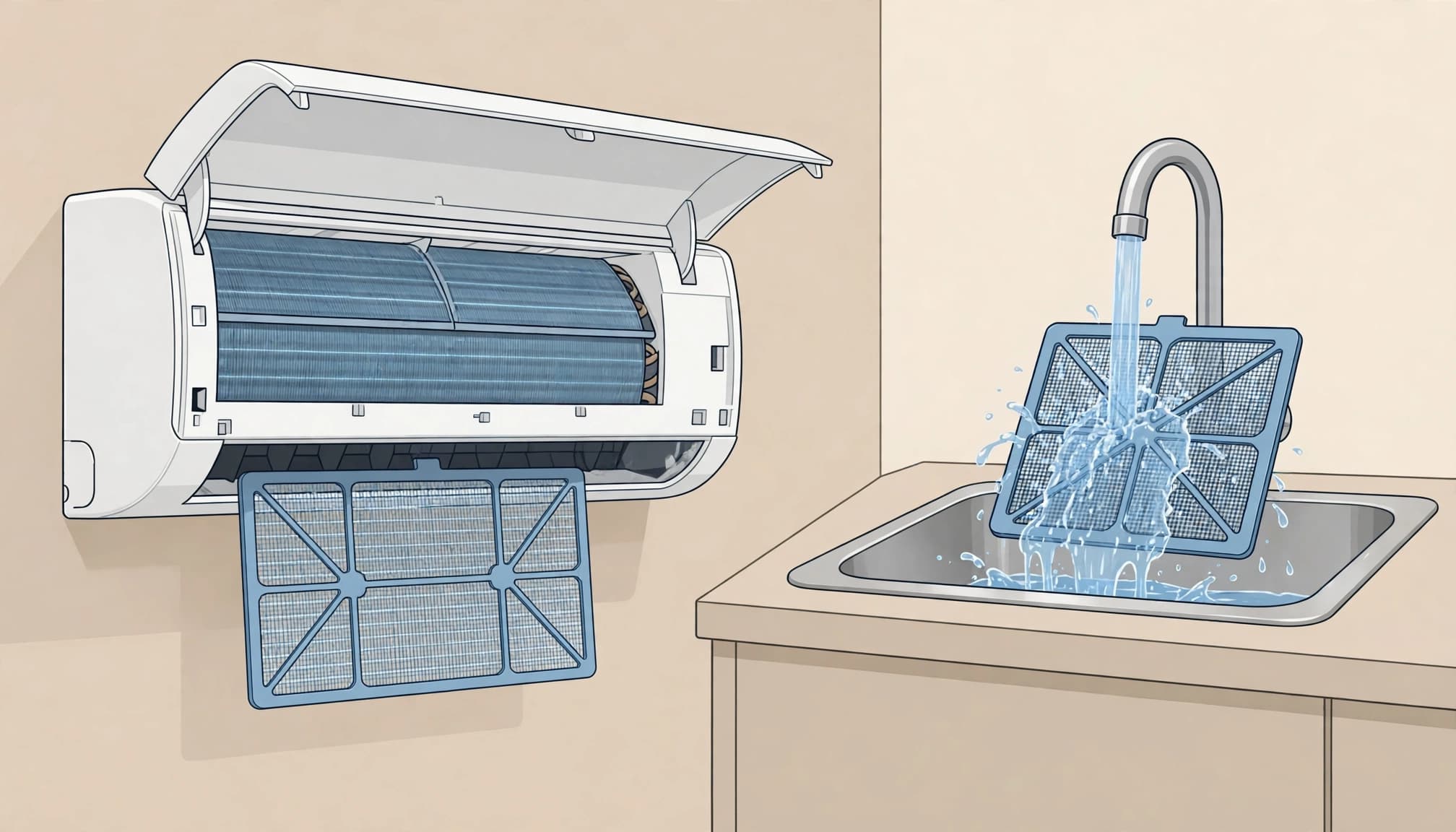
Most wall-mounted mini-splits have filters behind the front panel, but the panel and filter design vary. Use your owner's manual for the correct way to open the unit and remove the filter. Don't force a panel or pull on a part that doesn't release easily.
Switch off the unit and remove the filter carefully
Turn off the unit using its controls before you start. Wait for the fan to stop, then open the front panel as directed in the manual. Some models have multiple screens or filter pieces, so note how each one sits before removing it.
Hold the filter by its frame and handle it gently. If it looks torn, warped, or brittle, don't try to clean and reinstall it. A damaged filter may not sit properly, allowing debris to pass around it.
Wash only if the manual allows it
If the manual identifies the filter as washable, clean it according to those directions. For a washable mesh filter, gently rinse away loose dust without bending the mesh. Avoid aggressive scrubbing or treatments that the manufacturer hasn't approved.
Let the filter dry fully before reinstalling it. A damp filter can introduce unwanted moisture inside the unit, so don't rush this step or put it back while it still feels wet. Then return it to its original position and close the panel as directed.
For more guidance on the difference between reusable and disposable filters, see our advice on cleaning reusable air conditioner filters.
How often to check a mini-split filter in Florida
There isn't one cleaning interval that fits every mini-split. How quickly a filter loads depends on the home, the amount of use, and the filter design. In Florida's long cooling season, use the filter's condition as a practical guide rather than waiting for airflow or comfort to change.
Start with frequent visual checks
Check the filter regularly when you're learning how quickly it collects dust. If it stays clean, you can adjust the routine based on what you observe. If it looks coated or clogged, clean or replace it according to the manual.
Homes with pets, allergies, frequent visitors, or nearby renovation work may need more frequent checks. These conditions can add hair, dander, and airborne dust. A home with open windows or lots of foot traffic may also bring in more debris.
Treat general AC schedules as context
General central AC guidance often recommends replacing filters every 30 to 60 days, with monthly checks for homes with pets, allergies, or heavy foot traffic. That range is not a universal schedule for washable mini-split filters . Follow the mini-split manufacturer's directions and adjust based on visible buildup.
For broader regional maintenance context, read our guide to the Southwest Florida air conditioner maintenance schedule. The key habit is to check the filter before dirt significantly restricts airflow.
Why Florida conditions can change your routine
Southwest Florida combines humidity with near year-round cooling needs. Your mini-split may run for long stretches, while dust and everyday household debris continue to collect on its filter. That mix makes periodic inspection more useful than relying on a calendar alone.
Pay attention to use and indoor conditions
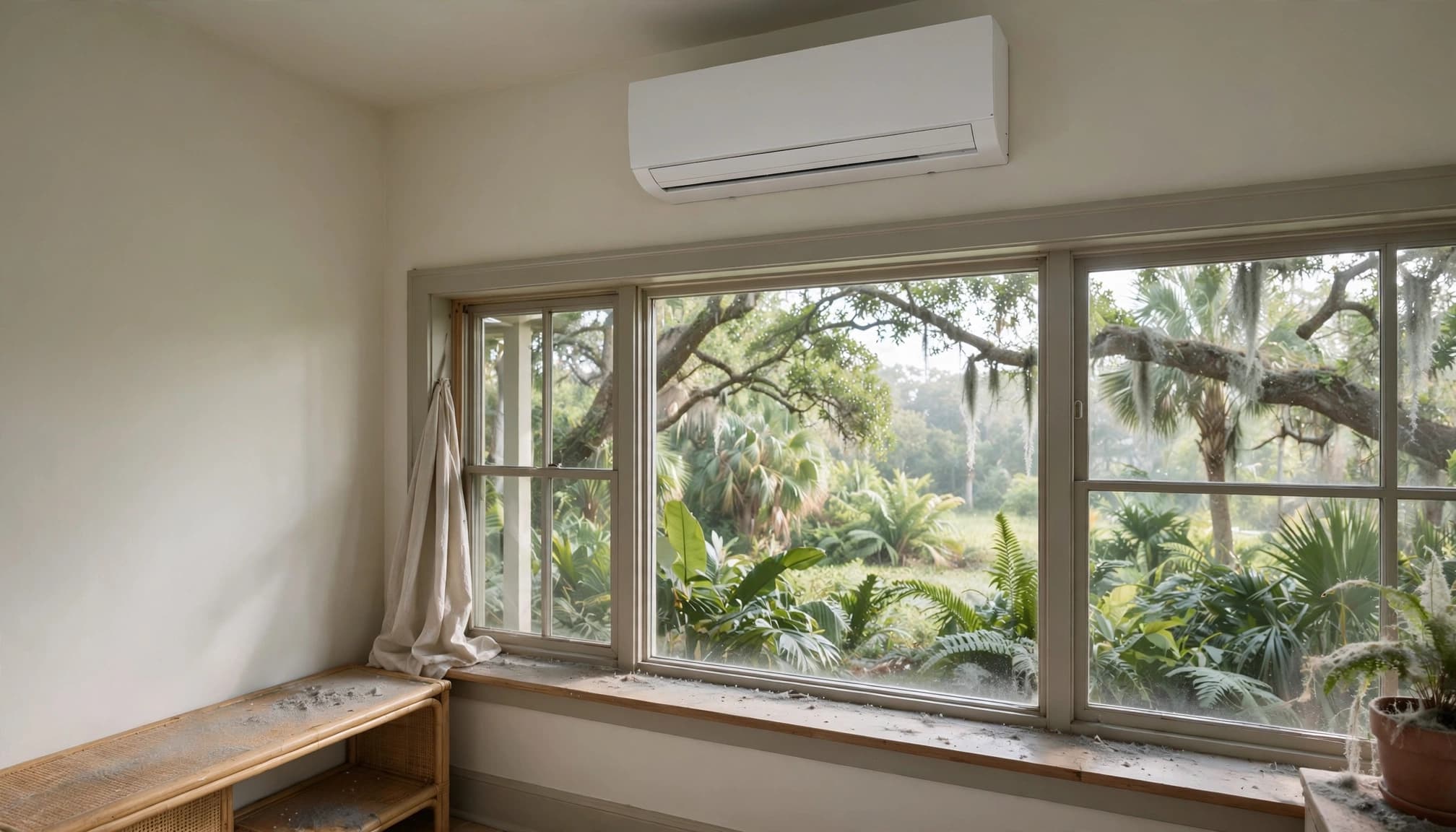
A guest room that's rarely occupied may collect dust at a different rate than a living room with steady activity. Likewise, a household with pets may see hair or dander build up sooner. During especially busy or dusty periods, check the filter sooner instead of waiting for your usual cleaning day.
Use airflow and visible dirt as clues
A dirty filter often looks gray or visibly coated. You may also notice weaker airflow or less consistent comfort, though those signs can have causes beyond the filter. If cleaning a reusable filter doesn't improve the issue, don't assume another wash will solve it.
A persistently dirty filter can point to a need for more than basic upkeep. Our safe AC maintenance tasks for Fort Myers homeowners explains which routine tasks homeowners can handle and when professional help makes sense.
Identify the filter before you wash it
The filter's appearance alone doesn't prove it's washable. Some replacement filters may look like a fine mesh or screen, while a reusable filter can have a frame that resembles a disposable component. Check the label or manual before applying water.
Washable mesh filters
A washable mesh filter is designed to be removed, cleaned, dried, and reinstalled according to the manufacturer's instructions. Keep its shape intact and make sure it fits back into the track or clips as intended. If it won't sit securely after cleaning, stop and consult the manual.
Filters made for replacement
A filter designed for replacement should be discarded and replaced with the type and size specified for the unit. Don't rinse it and put it back. Water can damage the filter material or change its shape, leaving it unable to fit or filter as designed.
A disposable filter that looks gray, packed with dust, damp, bent, or sagging needs attention. Our guide to when to replace a dirty air conditioner filter covers those warning signs.
Filter cleaning doesn't include coil cleaning
A mini-split's filter and its indoor coil are separate parts. The filter catches airborne debris before air reaches the equipment. The coil is inside the unit, where moisture and dirt can collect under conditions that routine filter washing doesn't address.
Keep routine washing to the filter
Don't reach past the filter to scrub or rinse the coil as part of regular filter cleaning. The coil and nearby components are delicate, and cleaning them may require a technician's tools and procedures. Removing the filter gives you access for filter care, not permission to clean everything behind it.
Know when maintenance needs a technician
If airflow remains weak after you clean or replace the filter, or if you see buildup deeper inside the unit, schedule an inspection. A technician can assess components such as the evaporator coil, blower, drain line, and electrical connections. In a humid climate, proper drain performance matters too.
Our guide to what technicians check during an AC tune-up describes the broader work involved in a professional maintenance visit.
Signs the problem may be bigger than a dirty filter
A dirty filter is one possible cause of poor airflow or comfort changes, but it isn't the only one. If cleaning or replacing the filter doesn't help, note what you're observing and avoid repeatedly opening the unit to reach internal components.
Watch for persistent airflow or cooling problems
If the room stays warm or airflow remains weak after filter care, the cause may involve another part of the system. Also pay attention to unusual sounds, visible moisture, or a unit that stops operating as expected. These conditions call for a professional assessment rather than more forceful cleaning.
Don't ignore dirt that returns quickly
A filter that becomes dirty again soon after cleaning may reflect conditions in the home, but a recurring problem can also be worth investigating. If the unit's comfort or operation has changed, a technician can look beyond the filter and identify whether the equipment needs service.
For homes in Fort Myers and across Southwest Florida, Schedule an Estimate with an HVAC technician from Valor Heating & Cooling when filter care isn't resolving the issue.
Mini-split filter cleaning FAQ
Can I wash every mini-split filter?
No. Wash only filters the manufacturer identifies as reusable. Replace filters designed for one-time use, and follow the manual for the correct filter type.
How often should I clean a washable mini-split filter?
There's no single interval for every model or home. Check it regularly, then clean it when dust buildup warrants attention, following the manufacturer's schedule and instructions. Pets, heavy use, and extra dust may call for more frequent checks.
Can I reinstall a filter while it's slightly damp?
No. Let a washable filter dry completely before reinstalling it. Putting a damp filter back can add moisture inside the unit.
Should I clean the coils when I wash the filter?
No. Routine filter care is limited to the filter. Coil cleaning and inspection of internal components are separate maintenance tasks that a qualified technician should handle.
Keep filter care simple and consistent
For reliable mini-split filter care, identify the filter type, switch off the unit, and follow the manual. Wash only reusable mesh filters, replace disposable filters, and make sure a washable filter is fully dry before reinstalling it.
Florida homes can need more frequent checks when dust, pets, or long cooling cycles speed up buildup. If cleaning the filter doesn't restore airflow or comfort, have the system inspected rather than reaching inside to clean the coils.
Recent Posts