AC Installation Fort Myers: Prepare Your Home
Your new air conditioner can be the right model and still perform poorly if your home isn't ready for the work. In Fort Myers, heat, humidity, long cooling seasons, tight access, attic equipment, and coastal exposure all affect an AC installation Fort Myers homeowners expect to last.
Preparation doesn't mean touching refrigerant or rewiring anything. Your job is to clear access, confirm the installation plan, protect belongings, and give the licensed HVAC crew accurate information. The technician should handle sizing, electrical connections, refrigerant, permits, and startup. Start by confirming what the system and the home actually need.
Plan Your AC installation Fort Myers Project Before Work Starts
Before a contractor recommends equipment, ask for a home assessment. The technician should review conditioned square footage, ceiling heights, window exposure, insulation, duct condition, air leakage, thermostat location, and the existing unit's history. A room addition or converted garage can change the cooling load, even if the old system once kept the house comfortable.
Correct sizing requires more than matching the tonnage printed on the old condenser. A licensed HVAC professional should calculate the home's cooling load and compare it with a matched system's capacity. An oversized unit may reach the thermostat setting quickly, but it can remove less humidity and cycle more often. An undersized unit may run for long periods without keeping up on the hottest afternoons.
Capacity should match the home's measured load and duct system. A larger condenser isn't automatically a better choice for a humid Fort Myers house.
Ask what efficiency rating, blower design, refrigerant type, and warranty apply to the proposed equipment. Also ask whether the indoor coil and outdoor condenser are a matched system, whether the existing line set can remain, and whether the quote includes duct repairs, return-air changes, drain work, and removal of old equipment. Clear answers prevent surprises after the crew arrives.
When you research AC installation Fort Myers services, compare the written scope, not only the equipment price. A professional HVAC setup should identify who handles permits, electrical work, startup, cleanup, and warranty registration. If you want an on-site review, you can Schedule an Estimate.
Prepare Access, Furniture, and the Outdoor Pad
Installation moves faster when the crew can reach every work area without moving half the house. Walk the path between the driveway, indoor air handler, attic or closet, electrical panel, and outdoor condenser. Remove boxes, planters, bikes, and fragile decorations. If the route crosses a narrow hallway, measure it and tell the contractor about stairs, locked gates, or parking limits before the appointment.
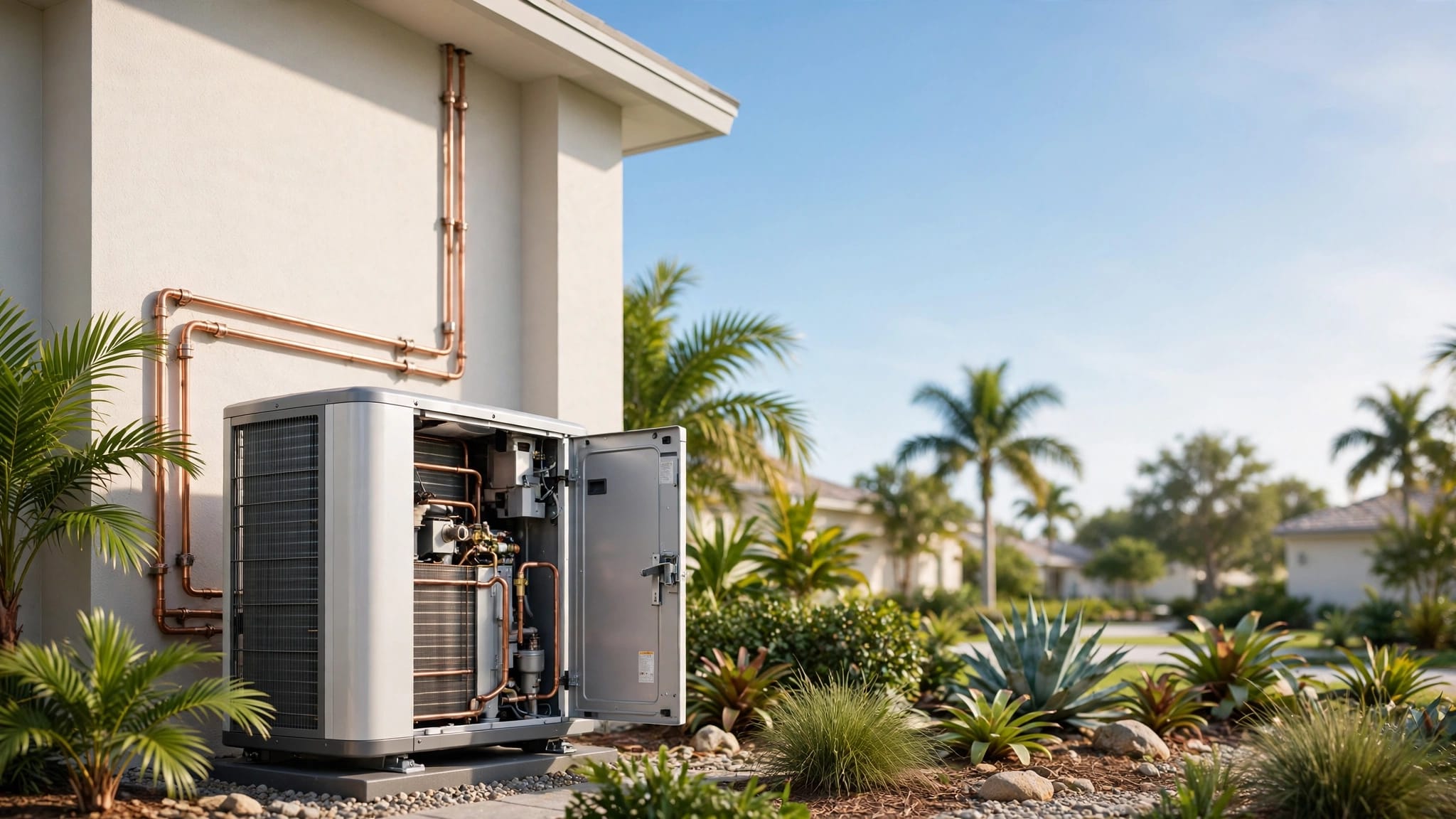
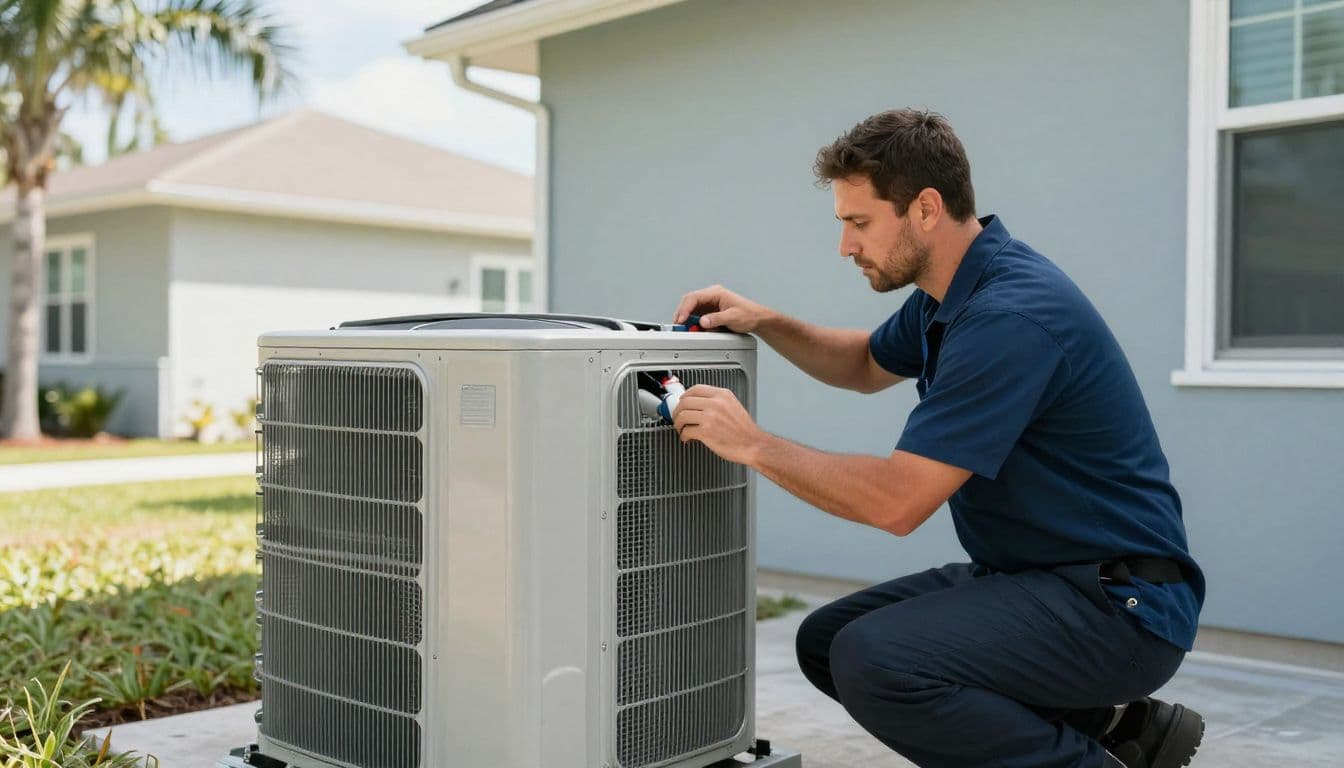
Outside, identify the current unit and keep the area clear. Do not disconnect, lift, or drag the condenser yourself. The technician must check the pad, wall clearances, service access, line-set route, and drainage conditions. Landscaping may need temporary protection or trimming, especially where leaves and mulch could block airflow.
Inside, move furniture away from the air handler, thermostat, return grille, and supply registers. Cover electronics and delicate items near attic access. If the unit sits above a finished ceiling or in a tight closet, tell the installer about water stains, previous leaks, or limited lighting.
Keep children and pets away from the work zone. Ask the crew what they will use to protect floors and walls, then point out any surfaces that need extra care. Don't remove the old thermostat or cut drywall before the visit. The installer may need those areas to trace wiring, inspect duct connections, or route a new drain.
Leave Technical Work to Licensed HVAC Professionals
Some preparation tasks belong only to qualified professionals. AC sizing, refrigerant recovery and charging, electrical changes, brazing, pressure testing, evacuation, and commissioning require training, proper tools, and safe procedures. EPA Section 608 rules apply to technicians who handle refrigerants, so homeowners shouldn't open lines or attempt a recharge.
Electrical work deserves the same boundary. A new system may need a different breaker, disconnect, wiring size, or panel evaluation. Never assume the existing circuit is correct because the old unit ran on it. Have a licensed professional verify the equipment nameplate, circuit, disconnect, grounding, and connections before startup.
Permit questions should be part of the written scope. Requirements can vary by project and jurisdiction, so don't guess whether a replacement needs a permit or inspection. Ask the contractor which permits apply, who submits them, and how final inspection records will reach you. If a utility rebate interests you, check the current program directly and confirm that the selected equipment and installation meet its terms before counting the money.
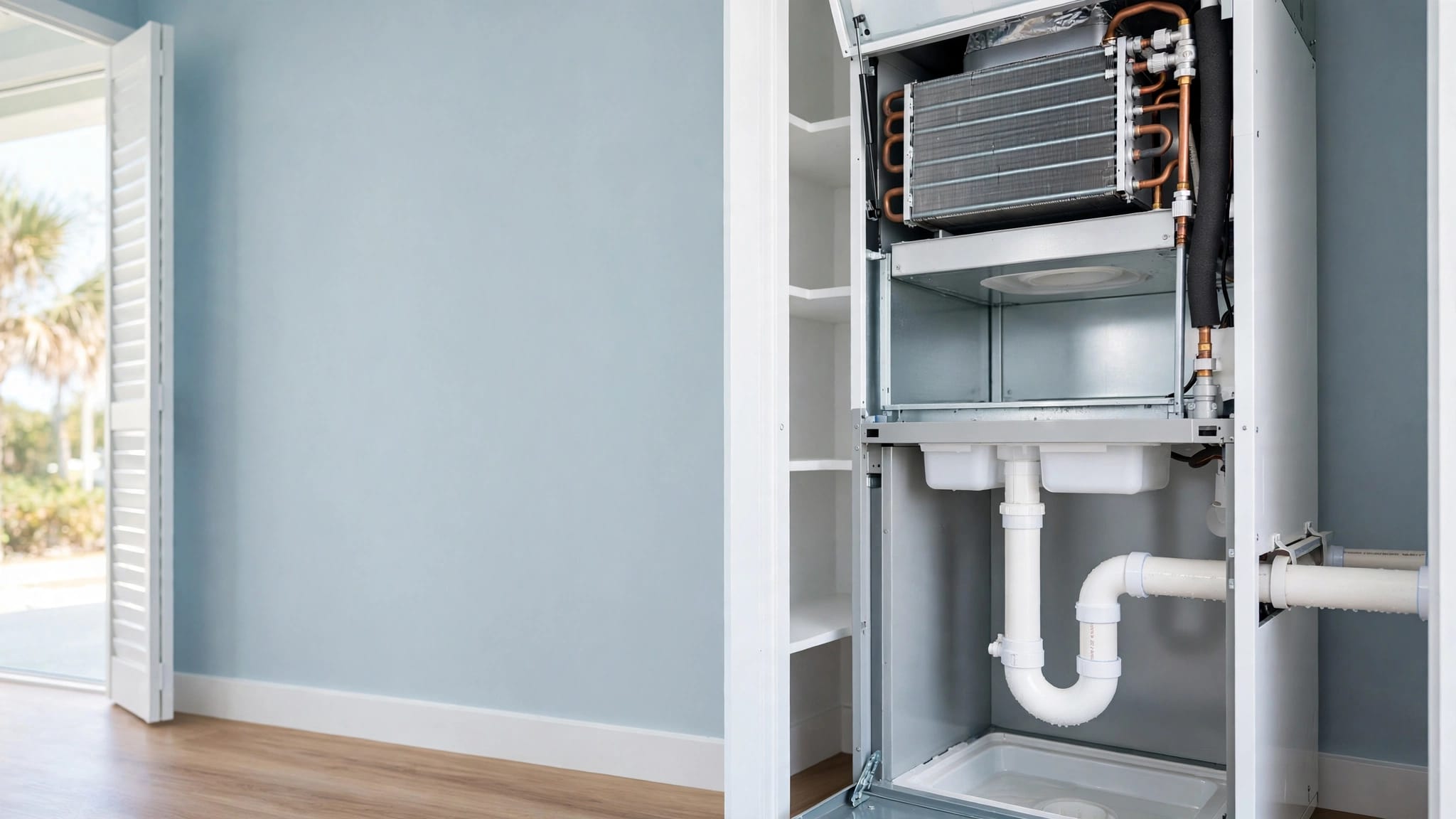
Your home also needs a safe condensate plan. The installer should inspect the drain, pan, float safety switch, and discharge route. In an attic, ask how the system will protect ceilings and alert you to a blocked drain. These details matter as much as the cabinet size.
Make Installation Day Easier and Review the Finished System
Choose an appointment window that gives the crew room to work. Keep the driveway, gate, electrical panel, thermostat, and indoor equipment accessible. Secure pets in a separate room and arrange care for young children if the work will involve an attic, open electrical equipment, or loud tools. Tell the technician about allergies, hot rooms, recent renovations, and any comfort problems you want addressed.
Don't shut off breakers or disconnect the old system unless the contractor tells you to do so. Before work begins, photograph the old model and serial numbers, then save the proposal, equipment model numbers, and warranty details. Ask how long the home may be without cooling, though the actual schedule can change with access, wiring, duct repairs, or weather.
Check commissioning before the crew leaves
Installation is complete only after the system operates safely and the technician verifies its setup. Ask for a clear walkthrough, then confirm that the crew has:
- Tested thermostat modes, fan operation, and the equipment's response.
- Checked airflow through supply and return ducts, with adjustments made if needed.
- Verified refrigerant charge using the manufacturer's required procedure.
- Checked electrical readings, disconnects, and safety controls.
- Tested condensate drainage and the overflow or float switch.
- Sealed accessible duct and cabinet joints where work disturbed them.
- Given you model and serial numbers, filter size, maintenance instructions, warranty documents, and permit information when applicable.
Ask where to change the filter, how to recognize a drain problem, and which sounds or smells require a service call. A good technician should also explain the thermostat settings and show you the outdoor unit's required clearance. Keep the startup report with your home records.
A Smoother Start for Your New AC System
A successful AC installation Fort Myers homeowners can rely on starts before equipment arrives. Confirm the load calculation and written scope, clear the route, protect indoor spaces, and ask direct questions about permits and warranty coverage.
Leave sizing, electrical work, refrigerant handling, and final commissioning to licensed HVAC professionals. When those technical steps are paired with careful preparation, your crew can focus on fitting the system correctly and leaving your home ready for dependable cooling.
The best time to find a clearance problem, access issue, or paperwork gap is before installation day, not during a hot afternoon without air conditioning.
Recent Posts