AC Reversing Valve Failure Signs and Repair Basics
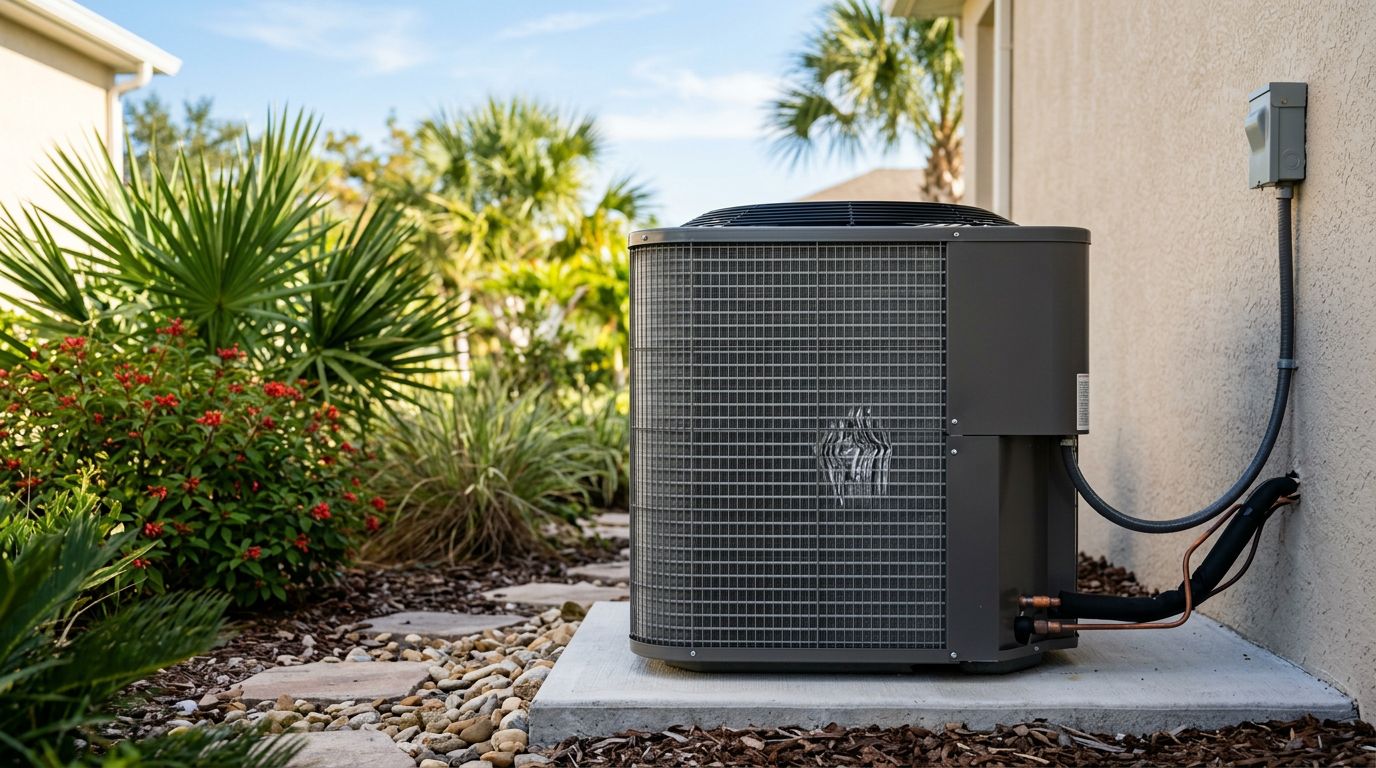
A heat pump can provide heating and cooling for a Southwest Florida home. The reversing valve lets a heat pump switch modes, so cool air in heating mode or warm air in cooling mode can point to a problem.
However, several problems can produce similar symptoms. Incorrect thermostat settings, a failed capacitor, refrigerant issue, compressor fault, airflow problem, or control-board failure can all resemble a valve problem at first. These symptoms don't confirm a valve failure, so a clear description helps guide diagnosis and avoid unnecessary repairs.
Key Takeaways
- A heat pump's reversing valve redirects refrigerant so the system can switch between cooling mode and heating mode.
- Cool air in heating mode or warm air in cooling mode may indicate a reversing valve problem, but thermostat settings, wiring, refrigerant, airflow, compressor, and control-board faults can cause similar symptoms.
- Technicians confirm the O/B signal, solenoid coil, wiring, temperatures, pressures, and compressor operation before recommending valve replacement.
- Reversing valve replacement requires refrigerant recovery, brazing, pressure testing, evacuation, and recharging, so it should be completed by a qualified HVAC professional.
- Homeowners can safely check thermostat settings, replace an accessible dirty filter, clear debris around the outdoor unit, and note unusual sounds or operating symptoms.
What a Reversing Valve Does Inside a Heat Pump
A standard central AC system only cools. A heat pump can cool your home and move heat indoors during cooler weather. This two-way design gives the heat pump year-round flexibility.
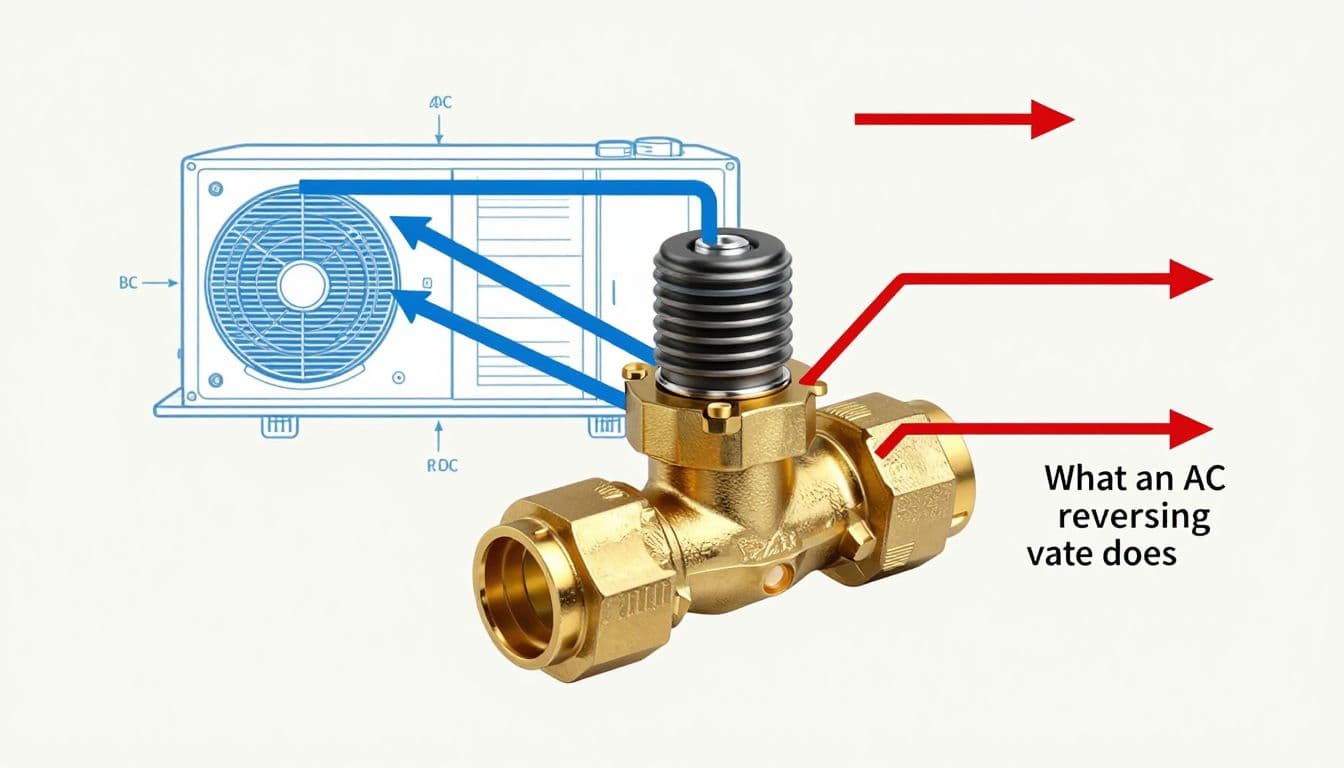
This brass four-way valve, called the reversing valve, sits in the outdoor unit near the compressor. It has four refrigerant connections and an electrically operated solenoid coil. The coil controls a pilot mechanism, while pressure differences shift an internal slide that redirects refrigerant.
How refrigerant moves in cooling mode
The compressor sends hot discharge gas through the discharge line toward the outdoor coil. That discharge line carries high pressure refrigerant, which releases heat outdoors and condenses into liquid.
After passing through the metering device, refrigerant enters the indoor coil and absorbs heat and humidity from your home. The resulting low pressure vapor returns through the suction line to the compressor.
This refrigerant flow cools air moving through the ducts. The system sends collected indoor heat outside.
How the valve changes heating mode
When the thermostat calls for heat, the reversing valve redirects the compressor's hot discharge gas through the discharge line toward the indoor coil. That coil becomes the hot coil, so it can release heat into your living space.
At the same time, the outdoor coil absorbs heat from outdoor air. Even on a mild Fort Myers winter day, that air still contains usable heat. The valve changes the refrigeration cycle by redirecting refrigerant through the discharge line and other paths.
A reversing valve does not create heating or cooling. It changes where the system releases and absorbs heat.
The Thermostat's O/B Signal Controls the Reversing Valve
Your thermostat communicates with the heat pump through low-voltage control wiring. The O/B terminal sends a 24-volt command to the solenoid coil, telling the reversing valve when to shift.
A working solenoid coil creates a magnetic field that opens a small pilot passage. That pilot action lets the internal slide move into its new position. The coil doesn't force the large valve slide back and forth by itself.
O/B settings are not the same for every brand
Many manufacturers energize the valve in cooling mode, often shown as the "O" setting. Others energize it in heating mode, often shown as "B."
That difference matters when thermostat settings change after a thermostat replacement or reprogramming. An incorrect O/B setting can make a healthy heat pump operate in the wrong mode. A technician should confirm the equipment manufacturer's wiring diagram before blaming the valve.
Control problems can look like valve problems
If 24 volts never reach the solenoid, the valve can't shift when the thermostat changes modes. The issue may be a damaged thermostat wire, loose connection, faulty thermostat, safety switch, or failed control board.
Homeowners shouldn't test live electrical components. Voltage and coil checks belong to a qualified professional.
For that reason, a technician confirms the electrical signal at the coil before recommending an AC reversing valve replacement. Replacing a good valve won't fix a missing electrical command.
Signs your heat pump reversing valve may be failing
A failed reversing valve often leaves a heat pump stuck in one operating mode. For example, the unit may cool normally but blow cool air when heating mode is selected. It may also heat but refuse to enter cooling mode.
Still, that symptom alone is not proof. Careful diagnosis separates a mechanical valve issue from electrical, refrigerant, airflow, and compressor problems.
A stuck valve may not switch modes
A mechanical reversing valve has an internal slide that can't move fully into the heating or cooling position. Wear, contamination, internal damage, or a high pressure condition can interfere with that movement.
A click or change in refrigerant sound may occur when the thermostat switches modes, yet the air temperature never changes. In some cases, a stuck valve partly shifts and lets refrigerant flow bypass internally. Heat transfer at the outdoor coil and indoor coil may weaken, causing weak heating, weak cooling, and longer run times. Lower system efficiency can then increase energy use.
A failed solenoid coil has different clues
A bad solenoid coil may be open, shorted, loose, or disconnected. If the solenoid coil fails, the valve may remain in its default position even when the thermostat sends the proper call.
The outdoor unit may still run, so homeowners often suspect the compressor. A technician must test the coil and confirm that the control command reaches it. This check doesn't require opening the refrigerant circuit.
Other faults can produce the same symptoms
Low refrigerant, a refrigerant leak, a dirty coil, a clogged filter, a failing blower, and duct leaks can all reduce comfort. Each alternative must be tested rather than assumed to indicate a reversing valve fault. In Florida, frozen indoor coils and drainage problems can also affect cooling performance.
A weak compressor can mimic an internally bypassing valve. A failed control board may block the O/B signal from reaching the coil. Technicians compare refrigerant paths, temperatures, and pressures at the suction line and discharge line before recommending heat pump repair.
How Technicians Diagnose a Reversing Valve Fault
A qualified HVAC technician starts with the basics on a heat pump. They verify the thermostat's mode and setpoint, inspect the air filter, check indoor airflow and breaker status, and observe outdoor unit operation.
Next, they inspect wiring, confirm the O/B command, and test its electrical signal at the solenoid coil. They also check coil resistance and connections. These checks can separate a reversing valve control fault from a refrigerant problem.
Pressure readings tell part of the story
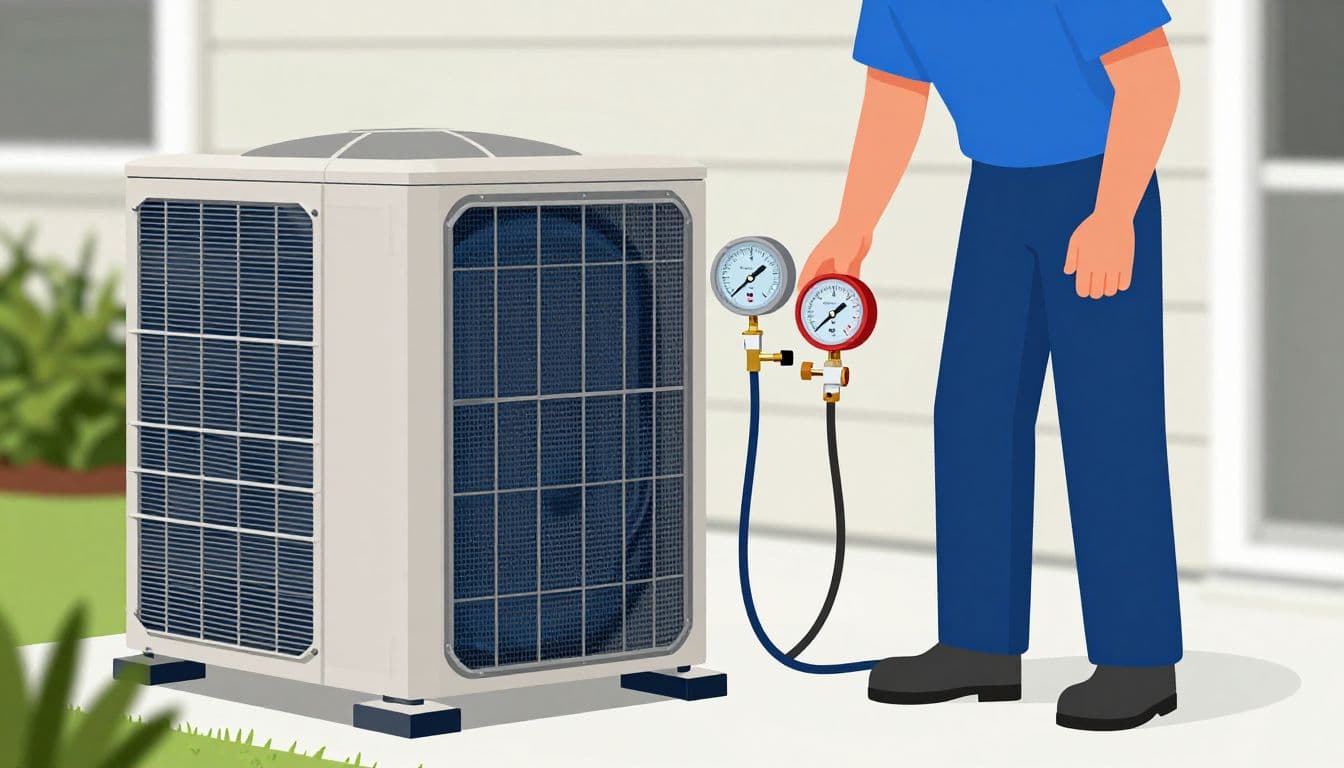
Technicians use manifold gauges and line temperatures to assess high pressure and low pressure behavior. They compare the high pressure side with low pressure readings in cooling mode and heating mode because the refrigeration cycle changes direction. The discharge line temperature and suction line temperature should reflect the commanded refrigerant flow, but low pressure vapor movement also depends on refrigerant type and manufacturer data.
Pressure readings that move toward the same value while the compressor runs can point to an internal bypass or poor compressor pumping. A discharge line that stays unusually cool and a suction line that changes unexpectedly may support that concern. A pressure pattern can also prompt checks for compressor damage. Equalized pressures after the system shuts off, however, can be normal. Gauge readings alone don't identify the failed component.
Restrictions, incorrect refrigerant charge, failed compressor valves, or coil problems can change readings too. A comparison of low pressure readings between operating modes can help narrow the possibilities. Only a trained professional should connect gauges or handle refrigerant.
Sound and temperature checks add useful evidence
A commanded shift may make a soft click or brief whoosh. However, sound isn't a reliable pass-or-fail test. The technician checks the discharge line temperature and the discharge line response, along with outdoor coil and indoor coil temperatures. These readings show whether the system changed its heat-transfer path, but they aren't standalone proof of a failed part. Testing can show whether the reversing valve actually shifted.
If your heat pump is running but cannot maintain the selected temperature, arrange heat pump repair in Fort Myers. Early testing can prevent extended run time from putting extra strain on the compressor.
Why AC Reversing Valve Replacement Needs Professional Service
Replacing a reversing valve is not a coil swap or simple wire repair. In a heat pump, it is brazed into sealed refrigerant lines, including the discharge line and suction line. An HVAC technician recovers refrigerant with a recovery machine, then cuts or unsolders connections as appropriate. The technician installs the component and any required filter drier, then reconnects the discharge line. A nitrogen pressure test checks for a refrigerant leak and supports final system verification. A vacuum pump removes moisture and air before the system is recharged to manufacturer specifications. Equipment-specific procedures vary, and only trained technicians should handle refrigerant and brazing.
The work also requires care around nearby components. Excess heat can damage the new reversing valve, solenoid coil, service valves, wiring, or compressor if the job is handled poorly.
What affects replacement cost
The replacement cost often runs about $400 to $700 , although the final price can vary. Access, system size, refrigerant type, corrosion, labor time, refrigerant loss, and related failures all affect the final estimate.
Older equipment may need a broader evaluation. Compressor damage or several major faults can make replacement more sensible than a large repair. Test results and the condition of the rest of the system should guide a professional heat pump repair decision. A technician should explain the options in plain terms.
What homeowners can safely do first
You shouldn't try to unstick the valve, open refrigerant lines, test live electrical components, or add refrigerant. Those jobs involve pressurized refrigerant, high voltage, high-temperature brazing, and environmental requirements.
You can take a few safe steps before service arrives:
- Confirm the thermostat settings match the intended mode and temperature.
- Replace a dirty air filter if it’s accessible and the correct size.
- Clear leaves and loose debris from around the outdoor unit without removing panels.
- Note whether cooling mode or heating mode is unavailable, and whether the system makes new noises.
For a sudden loss of cooling during extreme heat, use 24/7 emergency HVAC service in Fort Myers rather than repeatedly restarting the unit.
Preventative Maintenance Reduces Strain, Even Though It Cannot Prevent Every Failure
A reversing valve is a sealed mechanical component, so routine preventative maintenance can't guarantee it will never fail. Still, regular service helps technicians find airflow problems, dirty coils, and corrosion before they create larger issues.
Clean coils, including the outdoor coil, help a heat pump transfer heat properly. Good airflow protects the indoor coil and reduces needless runtime. Regular inspections also give a technician a chance to spot corrosion, especially near coastal areas of Lee County.
Keep the outdoor unit clear and the air filter clean
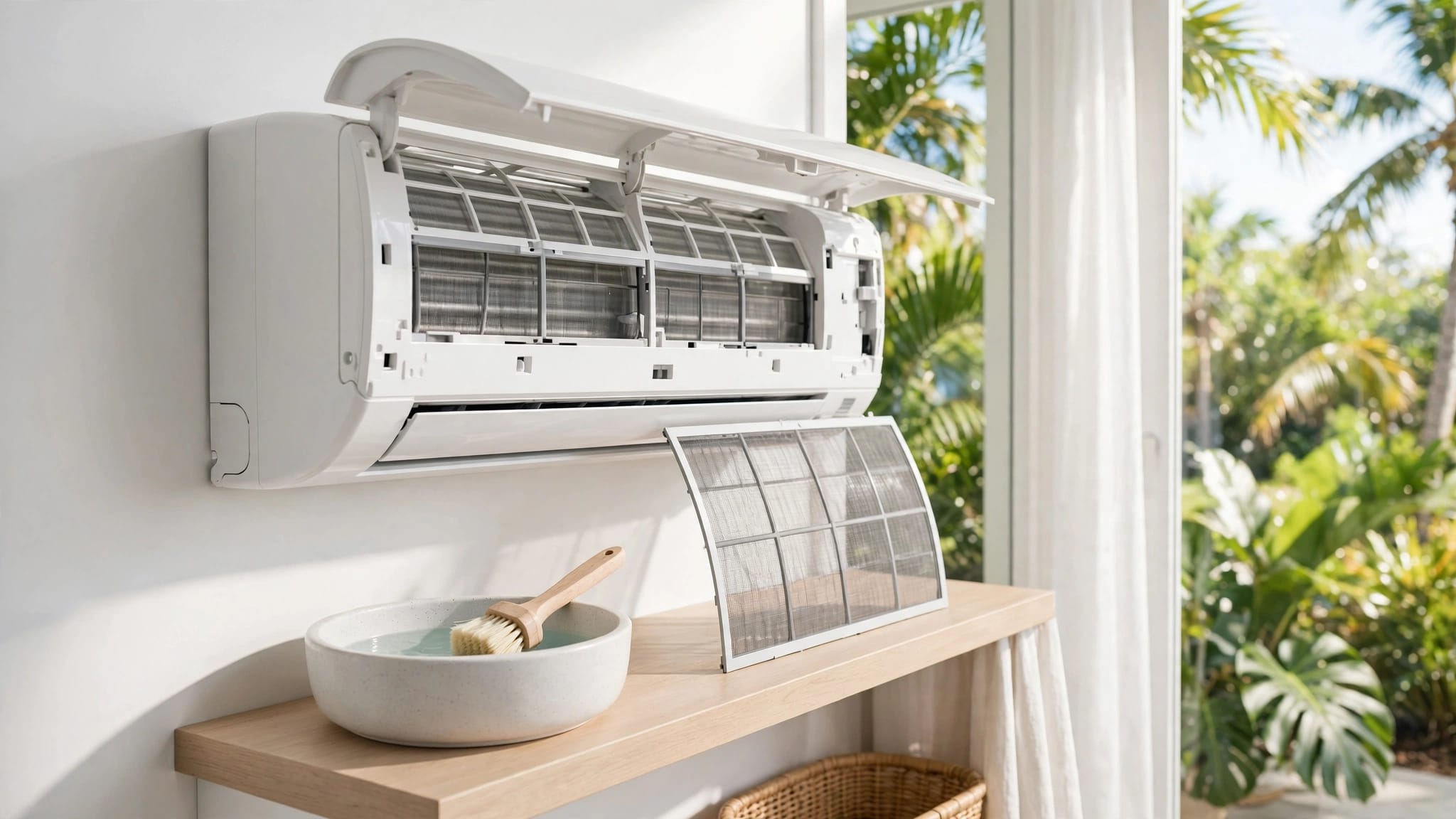
A clogged air filter can restrict airflow through the system. Meanwhile, grass clippings, mulch, or vegetation around the outdoor coil can limit heat transfer.
Check the filter regularly during long cooling seasons. Keep at least a clear working area around the outdoor unit, and avoid directing sprinklers at its cabinet. Salt air and constant moisture can speed up corrosion on metal parts.
Professional HVAC maintenance in Fort Myers includes preventative maintenance that can catch small performance changes before a hot afternoon exposes them. Timely filter replacement supports system efficiency.
Frequently Asked Questions
What are common signs of a failing AC reversing valve?
A heat pump may remain stuck in heating or cooling mode, or it may provide weak heating and cooling because the valve is partly shifting or bypassing refrigerant internally. These symptoms can also result from thermostat, refrigerant, airflow, compressor, or control problems.
Can a thermostat setting cause a reversing valve problem?
Yes. Heat pumps use an O/B thermostat setting, and manufacturers differ on whether the valve is energized in cooling mode or heating mode. An incorrect setting or missing 24-volt signal can make a healthy valve operate incorrectly.
Can homeowners replace or unstick a reversing valve?
No. The valve is brazed into sealed refrigerant lines, and service involves pressurized refrigerant, high-temperature brazing, and specialized testing equipment. A qualified HVAC technician should diagnose and replace the component.
How much does reversing valve replacement cost?
Replacement often costs about $400 to $700, although the final price depends on access, system size, refrigerant type, corrosion, labor, and related failures. A technician should provide an estimate after testing the system and checking its overall condition.
What can I check before calling for heat pump repair?
Confirm that the thermostat mode and temperature are correct, replace a dirty accessible filter, and clear leaves or debris from around the outdoor unit without removing panels. Note which operating mode is unavailable and whether the system makes new noises so the technician has useful information.
A clear diagnosis protects your heat pump
The reversing valve, also called a four-way valve, plays a major role in system operation. A reversing valve may stick, bypass internally, lose its control signal, or receive the wrong thermostat command.
Reliable diagnosis requires testing the controls, refrigerant behavior, and compressor rather than guessing from one symptom. Correcting extended runtime or internal bypassing protects system efficiency and helps prevent compressor damage.
If your system cannot switch between cooling mode and heating mode, Schedule an Estimate with a qualified HVAC technician for heat pump repair and diagnosis.
Recent Posts