Can an Attic Fan Reduce AC Use in a Florida Home?
A hot attic can make an attic fan seem like an easy answer to long AC cycles. In a Florida home, though, a cooler attic doesn't automatically mean less air conditioning use.
An attic fan may reduce some heat entering your home, but its effect depends on insulation, air sealing, and ventilation . Humidity and ceiling leaks can also work against the result you want.
Before adding equipment, it helps to understand which heat and airflow problems your home actually has.
Key Takeaways
- A powered attic fan exhausts attic air, while a whole-house fan pulls air through the living space.
- The effect on AC use depends on attic temperature, ceiling insulation, air leaks, and the path for replacement air.
- In Southwest Florida, sealing ceiling leaks, improving insulation, and addressing AC problems deserve attention before adding a fan.
An attic fan is worth evaluating as part of the home's overall performance. A hot attic alone doesn't establish that installing one will reduce your cooling bill.
What an Attic Fan Does in a Florida Home
The term "attic fan" often describes two different systems. Their airflow paths matter because they affect your house differently.
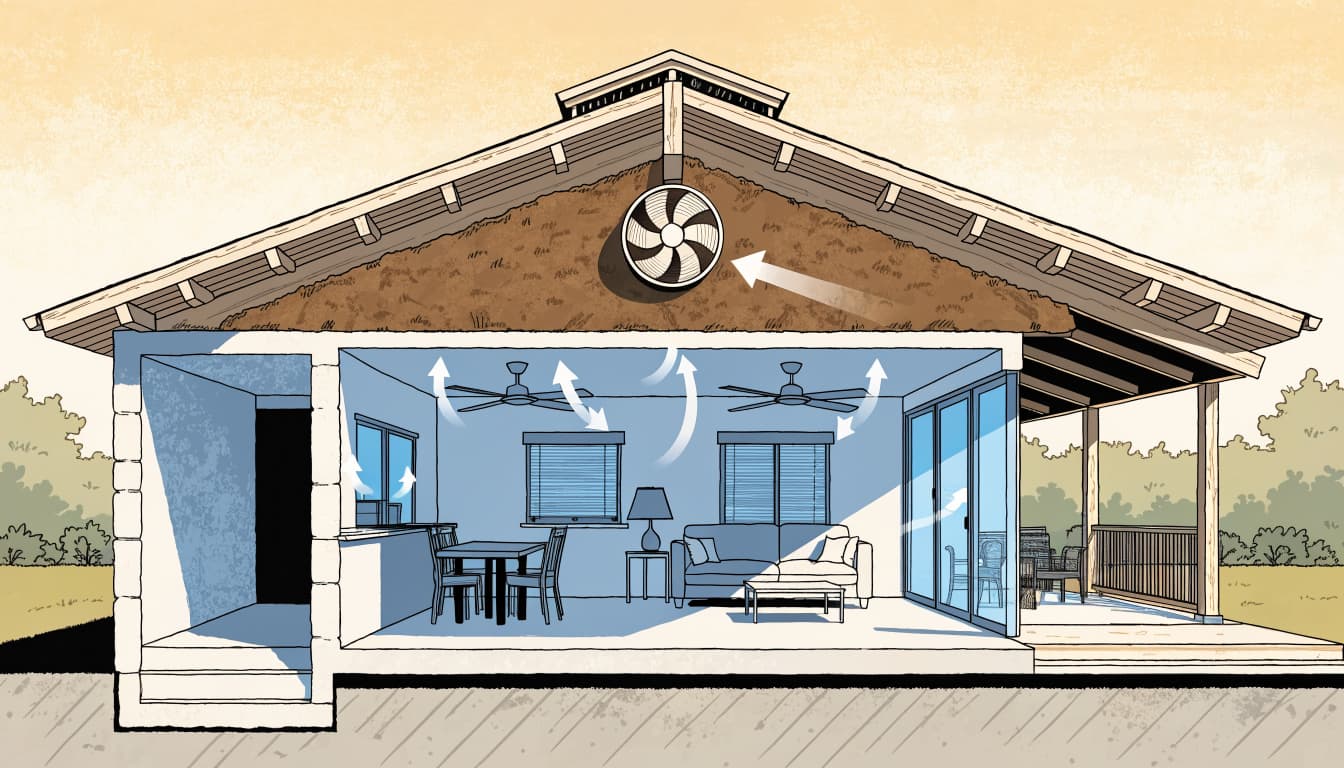
A powered attic fan exhausts attic air
A powered attic ventilator mounts in the roof or a gable and moves air out of the attic. Replacement air should enter through the attic's intended intake vents, commonly at the soffits.
The fan doesn't deliver cooled air to bedrooms or remove moisture from indoor air. Its purpose is to exchange attic air with outdoor air.
That distinction matters when you're comparing it with an AC repair or insulation upgrade. Each addresses a different part of the home's cooling demand.
A whole-house fan moves indoor air
A whole-house fan typically mounts in the ceiling between the living space and attic. With windows open, it pulls outdoor air through rooms and exhausts that air through the attic.
This approach depends on outdoor conditions being suitable for cooling the house. In Southwest Florida, warm, humid outdoor air can limit its usefulness.
Running a whole-house fan with the AC on also sends conditioned air outdoors. It shouldn't be treated as an automatic companion to air conditioning.
Why a Cooler Attic Doesn't Guarantee Less AC Use
An attic's temperature tells you how hot that space is. It doesn't tell you how much of that heat reaches your rooms.
Insulation controls heat through the ceiling
Ceiling insulation slows heat transfer between the attic and living space. When insulation is continuous and properly installed, it reduces the influence of hot attic air on indoor comfort.
Missing sections, compressed material, and poorly insulated attic access panels create weaker spots. These details can matter more than the attic's peak temperature.
Radiant heat from the roof also contributes to attic conditions. Moving attic air doesn't eliminate every path heat takes through the roof assembly and ceiling.
Your AC handles more than attic heat
Air conditioning also handles heat entering through windows and walls, along with indoor heat from people and appliances. In Florida, removing moisture is another important part of its work.
Ducts in the attic can add another source of heat gain, especially when their insulation is damaged. Air leaks at duct connections create a separate problem that attic ventilation won't repair.
As a result, an attic temperature drop doesn't translate directly into a matching change in AC runtime. The home's entire cooling load determines how much the system works.
Florida Humidity Changes the Decision
Fort Myers and surrounding communities face humid conditions through much of the cooling season. That makes the source of replacement air important.
Outdoor ventilation air carries moisture
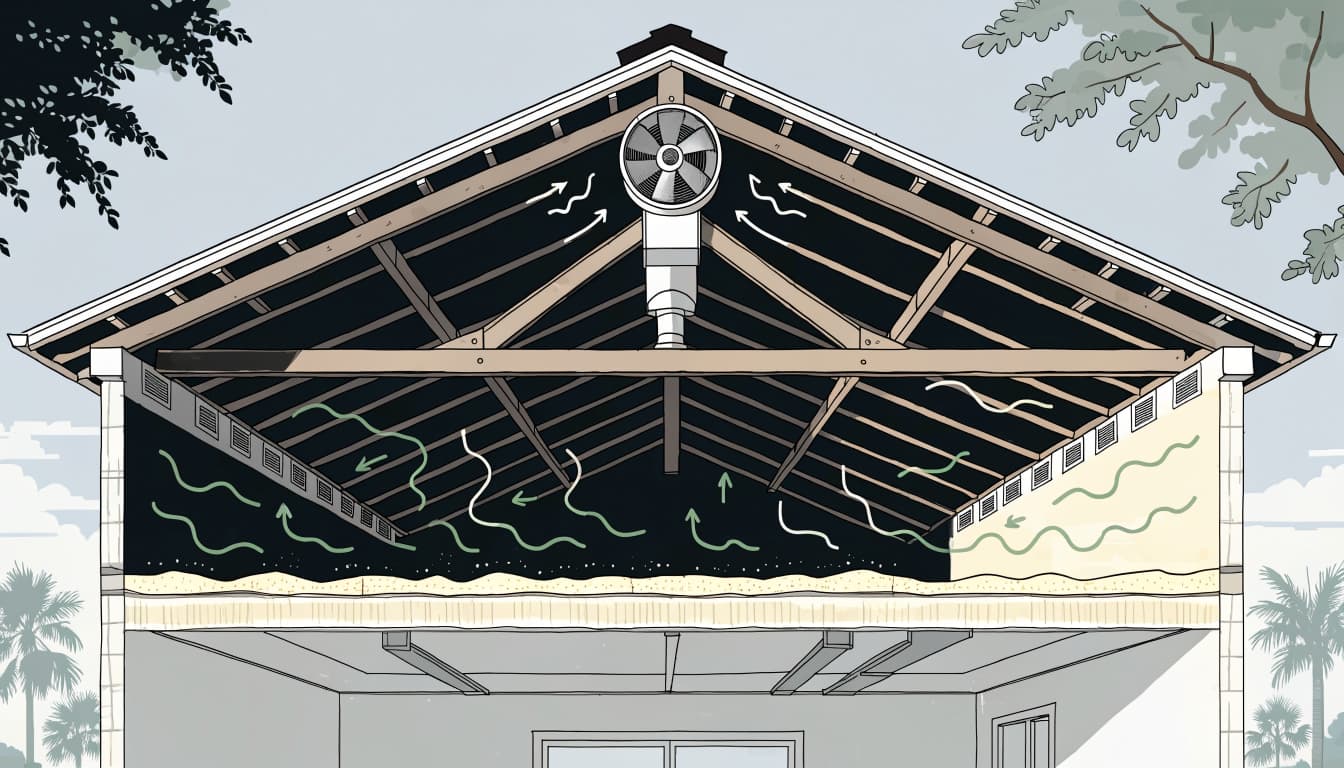
A powered attic fan brings outdoor air into the attic as it exhausts air. It doesn't dry that incoming air.
In a conventional vented attic, outdoor air already enters through passive vents. Adding a fan changes how air moves through that space, so intake paths and moisture conditions deserve attention.
Condensation depends on both moisture and surface temperature. Humid air contacting a sufficiently cold duct surface can create moisture concerns, particularly where duct insulation is damaged.
Ceiling leaks can pull cooled air upward
Exhausting attic air can lower attic pressure. If the ceiling has gaps, the fan may draw conditioned air out of the house instead of getting all its replacement air through vents.
Potential leakage paths include attic hatches, wiring penetrations, and gaps around fixtures. The house may then draw outdoor air through other openings to replace the lost indoor air.
A lower attic temperature can be misleading if part of the replacement air came from your air-conditioned rooms.
That possibility is why air sealing belongs in the discussion before fan installation.
Air Sealing and Insulation Deserve Priority
For many homes, the more direct approach is to improve the boundary between the attic and occupied rooms.
Seal unwanted air paths first
Air sealing addresses gaps that let air move through the ceiling. Insulation slows heat transfer, but many insulation materials don't stop airflow by themselves.
Attic access openings deserve attention because their edges can leak even when insulation covers the panel. Other common locations include plumbing penetrations and openings around ceiling-mounted equipment.
Some penetrations require special materials or clearance from hot components. A qualified professional should handle sealing near combustion vents, electrical hazards, or fixtures with insulation restrictions.
Improve insulation without blocking vents
Once air leaks receive attention, insulation coverage becomes easier to evaluate. Consistent coverage matters, including over areas that installers or previous repairs may have disturbed.
Adding insulation over unresolved moisture damage or roof leaks won't fix those problems. The underlying condition needs attention first.
In a vented attic, insulation should also leave the intended soffit airflow path open. Baffles can preserve that path where the roof meets the exterior walls.
These improvements address unwanted heat transfer directly. They also remain useful whether a professional ultimately recommends a powered attic fan or leaves the existing ventilation alone.
Proper Ventilation Depends on the Attic Design
A fan needs a suitable path for incoming air. Blocked soffits or an incompatible vent arrangement can change where it draws that air.
Combining exhaust systems also requires care. For example, a powered fan may pull replacement air through nearby roof vents rather than across the attic as intended. Simply adding more exhaust doesn't establish better ventilation.
The distinction between vented and unvented attics is especially important. Some Florida homes have roofline insulation and an attic designed to stay within the building's air and thermal boundary.
Adding an exhaust fan to that assembly can interfere with its intended operation. Spray foam at the roof deck is a reason to assess the attic design before making ventilation changes.
Roof penetrations also need appropriate installation and weather protection. In Southwest Florida, roof work should account for rain and wind exposure rather than treating the fan as a standalone appliance.
Assess the AC Before Adding an Attic Fan
Long cooling cycles can have several causes. An attic fan won't resolve a dirty coil, restricted airflow, or an equipment fault.
Separate normal operation from a performance problem
An AC system can run for extended periods during hot weather while maintaining the thermostat setting. Runtime alone doesn't prove that the attic needs powered ventilation.
However, worsening cooling, repeated shutdowns, or rooms that no longer reach their usual temperature deserve investigation. Our HVAC repair and inspection services address those equipment concerns before you spend money on an unrelated change.
An inspection should distinguish an AC fault from building conditions that increase the load on a functioning system.
Include the equipment and attic ducts
A useful evaluation considers the air handler, indoor and outdoor coils, airflow, and the condition of attic ductwork. Damaged duct insulation and leaking connections deserve their own repairs.
Our guide to what an AC tune-up includes describes checks such as thermostat response, temperature split, and electrical components.
Those findings provide a clearer starting point than an attic temperature reading alone. They can also keep an existing AC problem from being mistaken for a ventilation problem.
When a Professional Assessment Makes Sense
A professional assessment is appropriate when you're considering a powered fan, have persistent humidity concerns, or don't know whether your attic is vented.
It should connect the attic conditions with what happens inside the house. Relevant findings include ceiling leakage, insulation gaps, duct condition, and available ventilation paths.
Depending on the concern, a home-performance assessment may include a blower-door test to locate building air leakage. Duct testing can help identify losses in the air distribution system.
An HVAC technician can assess cooling performance, while insulation or roofing work may call for another qualified trade. At Valor Heating & Cooling, we provide HVAC inspections in Fort Myers and Southwest Florida.
The recommendation should follow the home's actual conditions. Fan installation shouldn't replace repairs that address a known source of heat gain or air loss.
Frequently Asked Questions About Attic Fans in Florida
Will a solar attic fan solve a cooling problem?
A solar-powered model still exhausts attic air and needs an appropriate replacement-air path. Its power source doesn't change the importance of ceiling air sealing, insulation, or humidity.
If your house isn't reaching the thermostat setting, diagnosing the cooling problem should come before selecting a fan.
Should a fan go into a spray-foam attic?
Roofline spray foam often accompanies an unvented attic design. In that case, exhausting attic air may conflict with how the space is intended to work.
A professional should assess the assembly before changing ventilation. The presence of a hot attic doesn't override its design requirements.
Does every hot Florida attic need powered ventilation?
No. Conventional vented attics can become hot in sunny weather, and heat alone doesn't establish a need for a fan.
The more useful issue is how much that attic affects your rooms. Insulation, ceiling leakage, duct condition, and existing ventilation determine whether powered exhaust deserves consideration.
Start With the Cause of Excess AC Use
An attic fan may help under suitable conditions, but a hot attic doesn't establish an energy-saving opportunity by itself. Air sealing, insulation, and AC performance provide a stronger starting point.
If cooling performance has changed, Schedule an Estimate with our HVAC team.
The goal is to address the heat, airflow, or equipment problem affecting your home before adding another device.
Recent Posts