What to Expect During an AC Tune-Up in Fort Myers
When your AC runs for months without much of a break, small issues can build up fast. In Fort Myers, that matters even more because long cooling seasons, high humidity, and salt air all put extra stress on your system.
A AC tune-up in Fort Myers is less about a quick look and more about keeping a hard-working system ready for heavy use. If you've never sat through one, the process is easier to understand than most homeowners expect, and it helps to know what should happen before, during, and after the visit.
Why Fort Myers homes need AC maintenance more often
In 2026, Southwest Florida homes are still dealing with the same mix of heat, humidity, and coastal air that wears on equipment. Your AC is often running for long stretches, so dust, moisture, and normal wear show up faster than they do in cooler places.
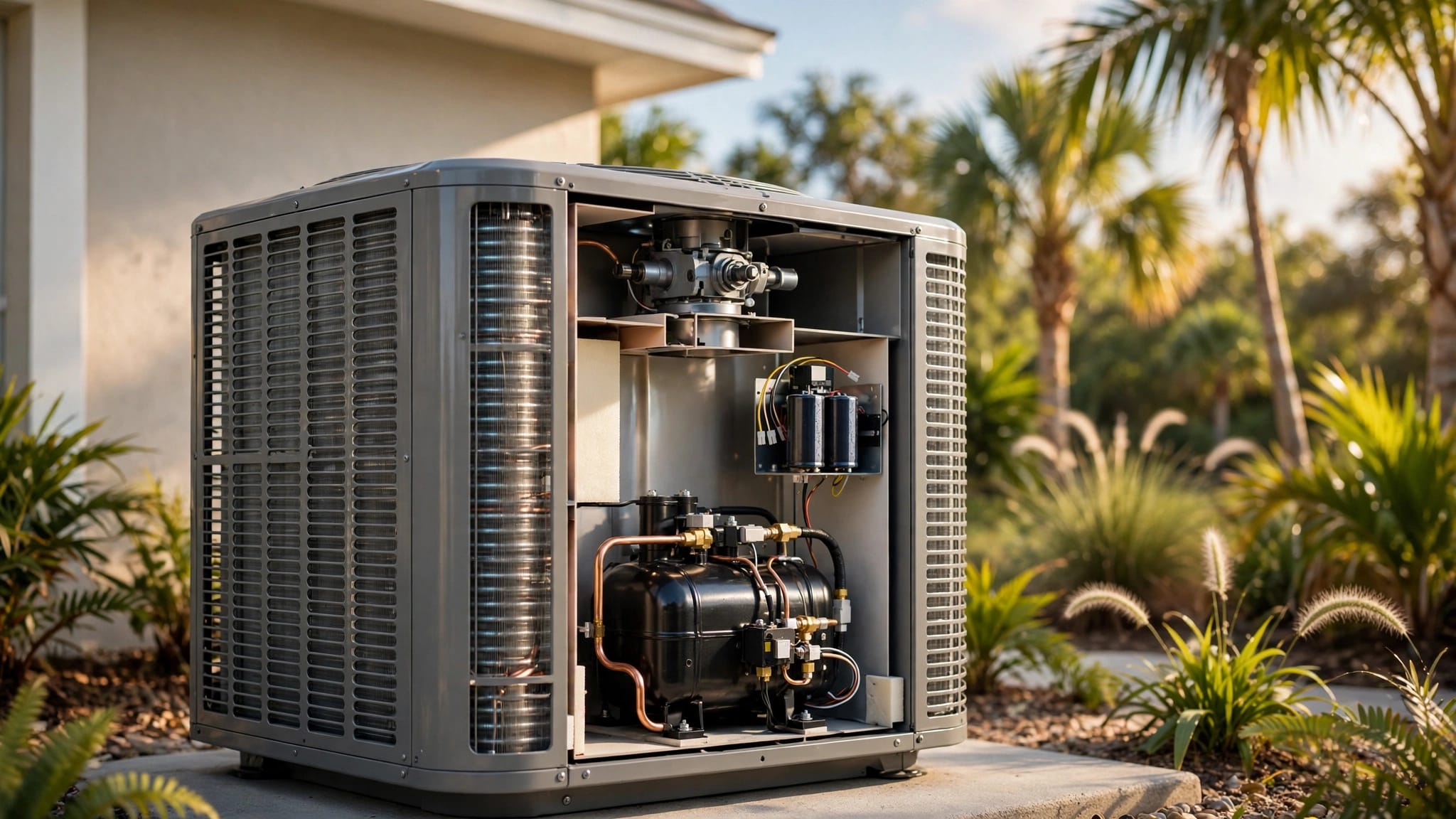
That constant use affects more than comfort. Dirty coils can slow heat transfer. A clogged drain line can lead to water around the air handler. Salt in the air can speed up corrosion on outdoor parts, especially in homes closer to the coast.
In Fort Myers, maintenance is about keeping a system ready for long workdays, not waiting until it struggles.
A tune-up helps catch small problems before they turn into an emergency call. It also gives the technician a clear picture of how the system is aging. That matters when a unit has to keep up through a long summer, a warm fall, and plenty of humid days in between.
How to prepare before the technician arrives
A good AC tune-up doesn't require much from you, but a little prep makes the visit smoother. The goal is simple, give the technician easy access and a better sense of how your system has been behaving.
Start by clearing space around the indoor and outdoor units. Move boxes, storage bins, patio furniture, or anything else that blocks access. If the outside unit sits near shrubs or fencing, trim back anything that makes it hard to reach.
Next, think about the issues you've noticed. Maybe one room feels warmer than the rest. Maybe the system makes a new rattle when it starts. Maybe the thermostat seems to run longer than it used to. Those details help more than you might think.
A short prep list can help:
- Clear a path to the indoor air handler and outdoor condenser.
- Replace a dirty filter if you already have one on hand.
- Write down any odd sounds, smells, or weak airflow spots.
- Make sure pets are secured and the thermostat is easy to reach.
If you want to get ahead of the summer rush, Schedule an Estimate before the busiest weeks hit. Seasonal maintenance is easier to fit in before peak heat puts everyone on the same calendar.
What happens during the AC tune-up
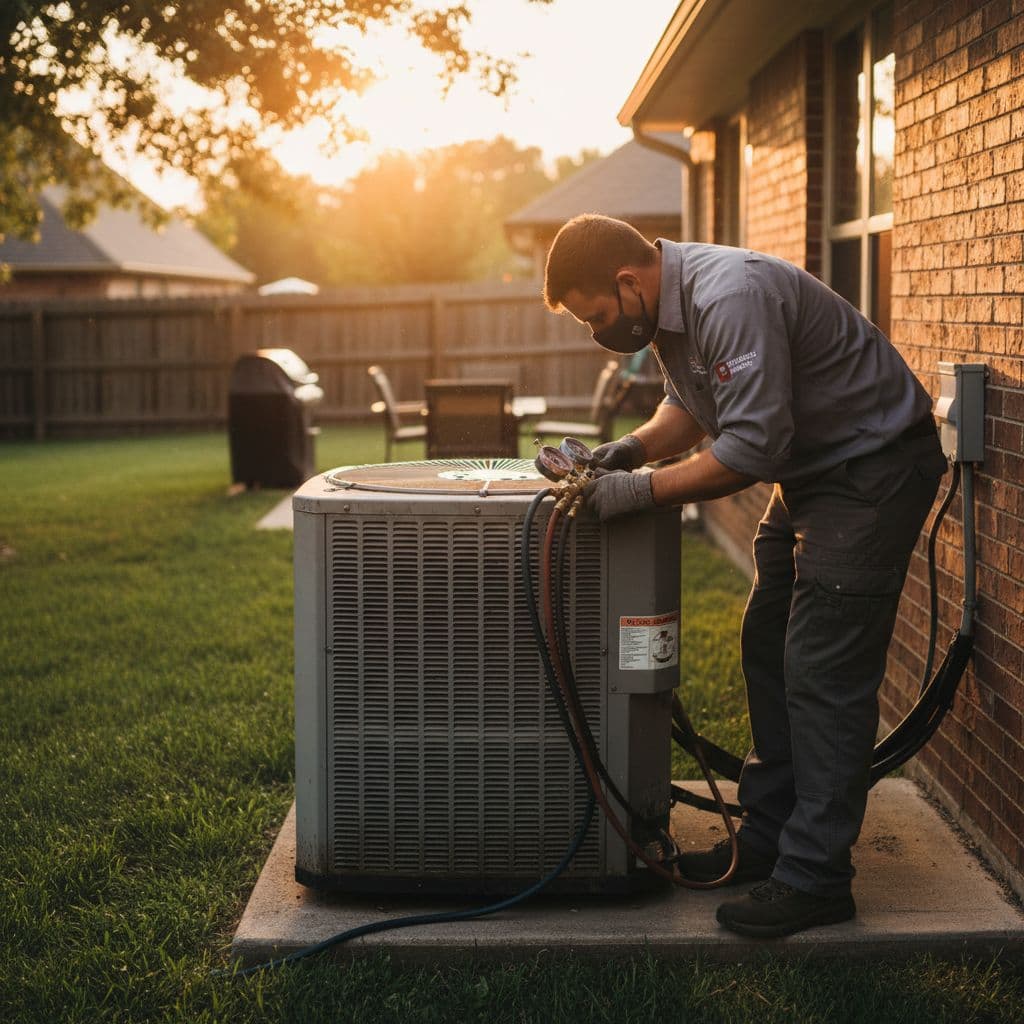
The visit usually starts with a visual inspection. The technician looks at both the indoor and outdoor equipment, checks for obvious wear, and listens for signs that something isn't running the way it should. That first pass matters because many AC problems leave clues before they turn into a full breakdown.
After that, the technician typically checks the filter, evaporator coil, condenser coil, blower components, drain line, and electrical connections. Each part has a job. If one is dirty, loose, or worn, the whole system can feel it.
The work often includes cleaning or clearing parts that affect airflow and drainage. In Southwest Florida, that step is especially useful because humidity can add moisture where you don't want it. A clear drain line helps prevent overflow, while clean coils help the system move heat out of the house more efficiently.
The technician may also test temperature split, inspect thermostat response, and check refrigerant pressure or charge. That doesn't always mean a refrigerant correction is needed. It simply means the system gets measured, so small issues don't stay hidden.
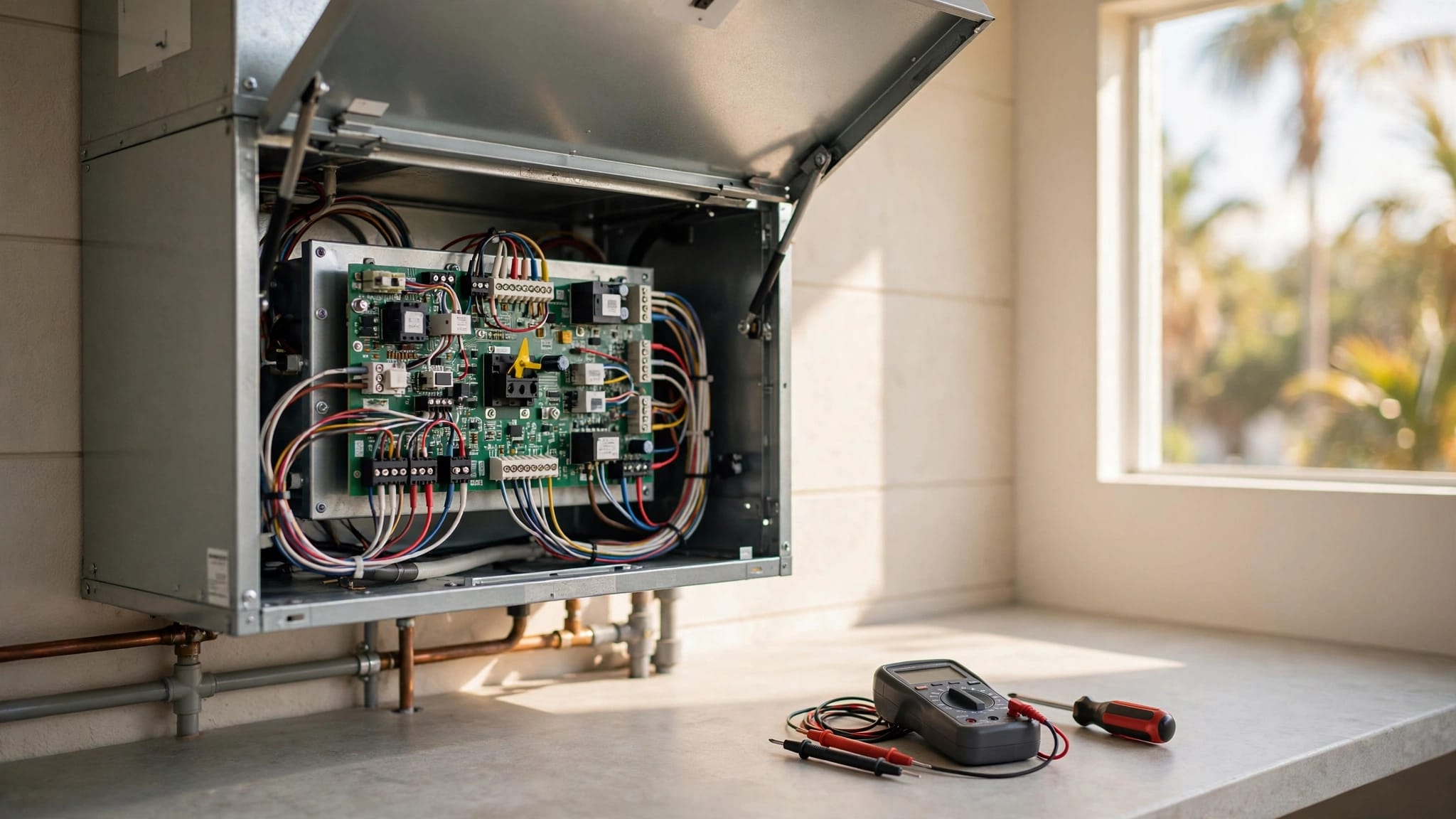
Electrical checks are part of the visit too. Loose wiring, weak capacitors, and worn contact points can create start-up trouble or short cycling. Those are the kinds of problems you want spotted early, before the AC quits on a hot afternoon.
The process is hands-on, but it shouldn't feel rushed. A thorough tune-up gives the technician time to find signs of wear that a quick glance would miss.
What you should get after the appointment
A tune-up should end with more than a thumbs-up and a closing invoice. You should get a clear summary of what was checked, what looked good, and what needs attention later.
If your system is in solid shape, the technician may tell you that the main parts are clean and operating normally. Even then, you might still hear about a weak capacitor, a filter that needs more frequent changes, or a drain line that should be watched during the wet season. Those are useful details, not alarm bells.
If the tech finds a small issue, they should explain it in plain language. You shouldn't have to decode technical terms just to understand whether something is urgent. A good report tells you what is safe to monitor, what should be repaired soon, and what can wait.
That written or verbal summary also gives you a record for the future. When the same system gets checked again next season, the technician can compare notes. That makes it easier to spot patterns, like a drain line that keeps clogging or a fan motor that is starting to wear out.
You may also notice a comfort change after the appointment. The system might run quieter. Airflow can feel steadier. Rooms that used to lag behind may cool more evenly, although the result depends on the condition of the equipment and the layout of the house.
When a tune-up is enough, and when it isn't
A tune-up is helpful, but it doesn't fix every problem. If your AC has a major mechanical issue, preventive maintenance won't make that problem disappear.
Watch for signs that point past routine service. Weak cooling, repeated breaker trips, ice on the refrigerant lines, water around the air handler, or a system that starts and stops too often all deserve a closer look. So do odd smells, loud grinding sounds, and air that never feels as cool as it should.
Here are a few clues that a repair visit may be needed:
- The system blows warm or uneven air after the tune-up.
- The outdoor unit struggles to start or makes harsh noises.
- Your energy use climbs even though your habits stay the same.
- One room stays hot while the rest of the house cools normally.
- The same drain, wiring, or airflow issue keeps coming back.
A tune-up is also not the same thing as a full system replacement. If the equipment is older and major parts are wearing out, the technician may explain your options rather than push a quick fix. That kind of honest answer helps you plan instead of guessing.
For Fort Myers homeowners, the best time to book maintenance is before the hottest stretch of the year. Waiting until the AC is already straining often means longer waits and more stress on the system. A seasonal checkup keeps you one step ahead of that cycle.
Conclusion
An AC tune-up in Fort Myers should feel practical, not mysterious. The technician inspects, cleans, tests, and looks for early warning signs, then gives you a clear picture of where your system stands.
That matters in a place where the AC works hard for months at a time. High humidity, salt air, and long cooling seasons all add wear, so preventive maintenance is one of the simplest ways to keep your home more comfortable.
A well-timed AC tune-up gives your system a cleaner start and gives you a better read on what it needs next.
Recent Posts