West-Facing Windows and AC Loads in Fort Myers
A room that feels comfortable at noon can become your home's hottest space by late afternoon. In Fort Myers, west-facing windows can admit strong afternoon sun while your AC is already working against outdoor heat.
Reducing that solar heat gain can improve comfort, but the right fix depends on your glass, shading, insulation, and HVAC system. Start by separating a predictable afternoon heat load from an AC problem that needs service.
Key Takeaways
- Afternoon sunlight through west-facing glass adds cooling demand, especially across large, unshaded windows.
- Exterior shading, compatible window film, efficient glazing, and well-fitted treatments can reduce heat gain, but results vary by home.
- A hot west-side room doesn't automatically mean you need a larger air conditioner. Check room loads, ductwork, and equipment performance first.
Why West-Facing Windows Raise Afternoon AC Loads
Sunlight heats more than the air beside a window. It also warms floors, furniture, and other indoor surfaces, which release heat into the room. Your AC must remove that added heat to maintain the thermostat setting.
Afternoon sun reaches farther indoors
As the sun moves lower in the western sky, its rays can enter beneath roof overhangs. Direct sunlight may reach well beyond the window and heat a large part of the room.
Meanwhile, the house has absorbed heat through its roof and walls throughout the day. Those overlapping loads can make a west-side living room or bedroom uncomfortable even when other rooms feel fine.
Compass direction matters, too. A window facing southwest receives a different pattern of sunlight than one facing northwest. Nearby buildings, trees, and seasonal sun angles also affect exposure.
Heat and humidity create different cooling demands
Solar gain increases the sensible cooling load , which is the heat your AC removes to lower air temperature. Fort Myers homes also have a latent load, meaning moisture the system must remove.
Humid air enters through leaks and open doors. Cooking, bathing, and occupants add indoor moisture as well.
Closed, intact glass can add substantial heat without admitting moisture. A sun-heated room and a clammy room may need different fixes.
Added cooling runtime can contribute to higher summer electricity bills, but window exposure alone doesn't explain every increase.
How Window Exposure Fits Into AC Sizing
A window's cooling impact depends on its area, glass properties, direction, and shade. Therefore, square footage alone isn't enough to determine AC capacity.
Calculate the room's load, not just the house total
ACCA, the Air Conditioning Contractors of America, publishes Manual J for residential load calculations. A Manual J load calculation estimates design cooling needs in BTUs per hour, including sensible and latent loads.
Room-by-room calculations help identify where cooling is needed. They should account for window orientation, glazing, exterior shade, insulation, and other building characteristics.
That distinction matters when one room has broad western glass while neighboring rooms have smaller, shaded windows. The hottest room may need different airflow, even if the home's total equipment capacity is appropriate.
Match equipment to the calculated demand
After calculating the load, Manual S equipment selection matches equipment performance to the home's needs and operating conditions.
Installing a larger AC without this work can create another problem. Oversized equipment may cool the air quickly and shut off before removing enough moisture.
Also, tell your contractor about planned window replacements or permanent shading. Those upgrades can change the load used to select replacement equipment. Existing system tonnage shouldn't become the default answer without checking the house as it is today.
Exterior Shading That Works Against Low Afternoon Sun
Blocking sunlight before it reaches the glass reduces the solar energy entering your home. Exterior shading is therefore worth considering when western windows receive direct afternoon exposure.
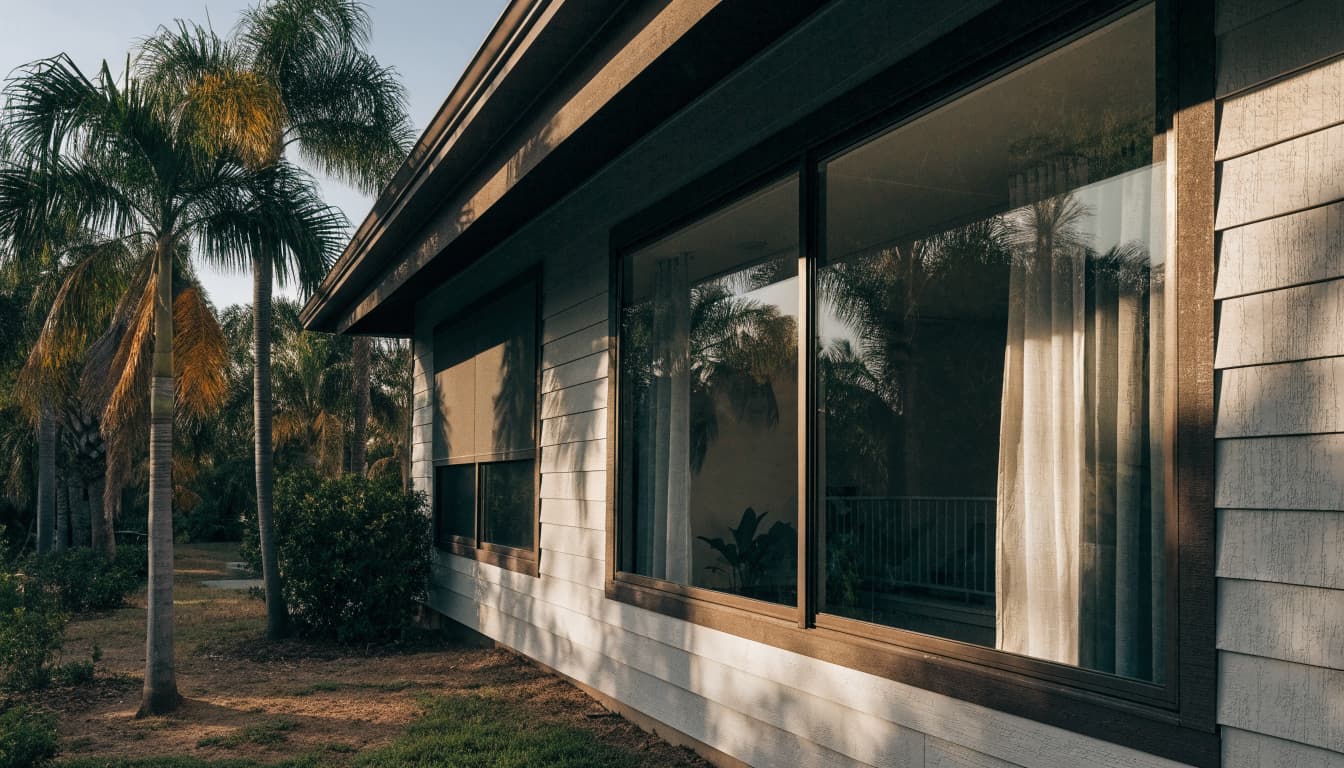
However, a shallow horizontal overhang may provide little protection against low western sun. An awning with appropriate projection, exterior solar screen, or adjustable outdoor shade may cover the glass more effectively.
Check the window during the hours when the room becomes uncomfortable. Shade that covers the glass at noon may miss it later. An installer should evaluate the actual sun path rather than choose an awning by appearance alone.
Trees can also shade western walls and windows, but placement matters. Allow space for mature growth, roots, maintenance, and storm exposure. Don't crowd the outdoor AC unit or restrict its airflow.
For Fort Myers and Lee County properties, ask about wind resistance, attachment details, permits, and any association requirements. Retractable products also need a clear storm-storage plan.
The useful comparison is how much direct sun each option blocks when you need protection, along with visibility, upkeep, and installation requirements.
Choosing Window Film and Efficient Glazing
Film and replacement windows address heat at the glass. Compare their rated performance and compatibility rather than relying on tint darkness or sales claims.
Window film can improve existing glass
Solar-control film can reduce transmitted solar energy without replacing the entire window. However, products differ in solar rejection, visible light transmission, reflectivity, and appearance.
A darker-looking film isn't automatically the best heat-control choice. Ask for product specifications and view a sample in the room, because reduced daylight can affect how the space feels.
Confirm compatibility with the exact glass assembly before installation. Existing coatings, insulated glass units, and laminated glass can affect film selection. An unsuitable film can create thermal stress or warranty issues.
Also, UV protection and solar heat control are different properties. A product's UV-blocking claim doesn't tell you its complete cooling performance.
Replacement windows require more than a low-E label
The National Fenestration Rating Council, or NFRC, labels whole-window performance. Two useful values are solar heat gain coefficient, called SHGC, and U-factor.
SHGC runs between 0 and 1. A lower value means less solar heat passes through the window. U-factor measures heat transfer through the assembly; lower values indicate better insulation.
For west-facing windows, compare SHGC alongside daylight transmission, frame quality, and installation details. "Low-E" describes a coating category, not one universal performance level.
Impact resistance also addresses a different need. An impact-rated window doesn't automatically have low solar heat gain, so review both structural protection and energy ratings.
Window Treatments for Existing Glass
Interior treatments are often a practical first step because you can adjust them without replacing windows. Close them before direct sunlight enters , rather than waiting until the room feels hot.
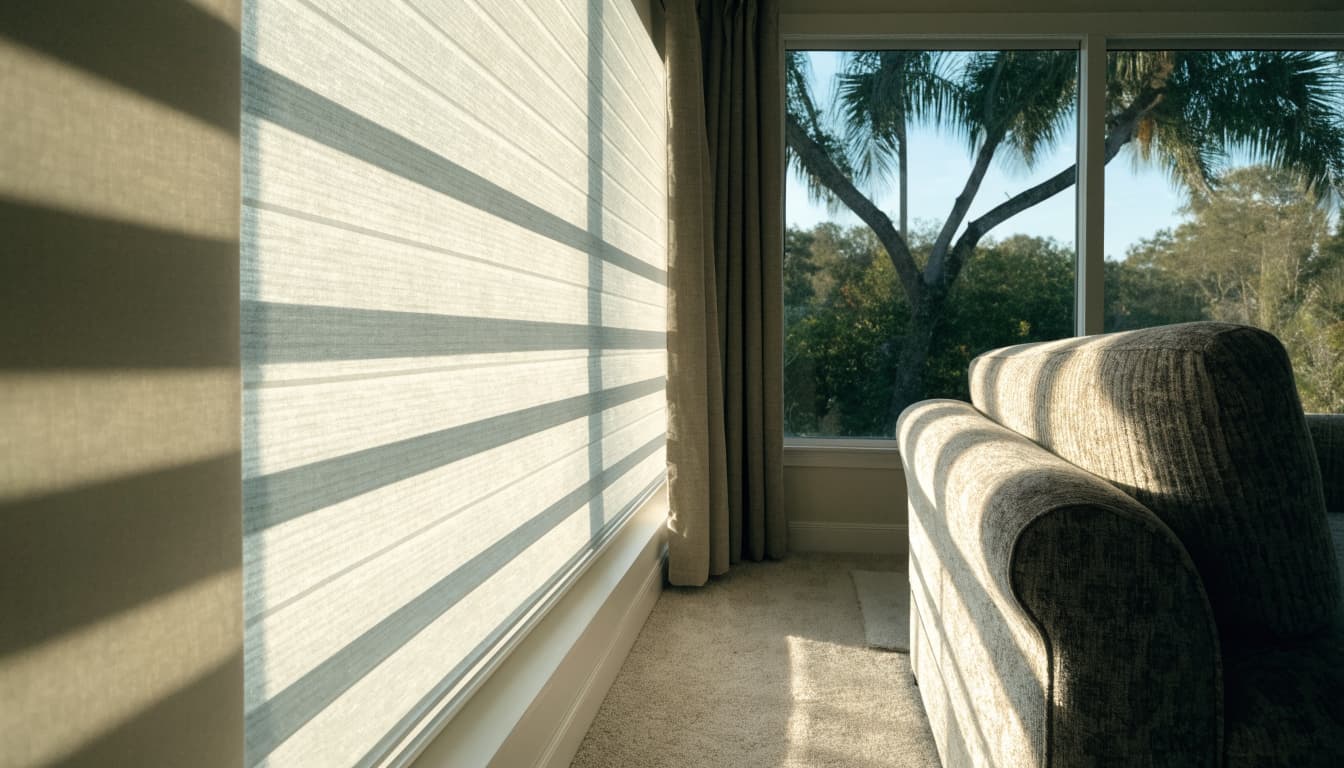
Cellular shades, solar roller shades, and lined curtains offer different combinations of insulation, glare control, and visibility. A close-fitting treatment can limit exposed glass, while large gaps leave paths for sunlight.
Solar shades preserve some view, but their openness affects light transmission and glare. Blackout curtains block light well, yet their thermal performance depends on construction, fit, and the window-facing surface.
Because interior treatments sit behind the glass, some solar energy has already entered before the treatment intercepts it. They can improve comfort, but they don't perform the same way as exterior shade.
Keep supply registers and return grilles clear when placing curtains or furniture. Otherwise, a treatment intended to reduce heat can interfere with the airflow the room needs.
Check Airflow and AC Performance Before Replacing Equipment
A room that heats up mainly during direct afternoon sun points toward solar gain. However, a room that stays warm overnight may also have an airflow, duct, insulation, or equipment problem.
Start with observations across several sunny days. Record when discomfort begins, whether the thermostat reaches its setting, and whether other rooms remain comfortable. Note whether closing the window treatment changes the pattern.
Then check accessible basics. Replace a dirty filter according to the equipment's requirements, keep registers open, and move obstructions away from return grilles. Avoid closing other rooms' vents as a shortcut; that can disrupt system airflow.
An HVAC technician can evaluate delivered airflow, duct leakage, coil condition, and system operation. In attic duct systems, return leaks can draw in hot, humid air. Supply leaks lose cooled air before it reaches the room.
That makes proper duct design and airflow part of the solution when a west-side room doesn't receive adequate cooling.
Long afternoon cycles alone don't prove that the AC is failing. Maintaining temperature during heavy load can require sustained operation. Falling behind, unusual cycling, or persistent humidity calls for a closer inspection.
Choose Upgrades Based on Your Home's Actual Conditions
There isn't one window product or AC setting that fits every Fort Myers home. A large, unshaded glass area presents a different problem than a small window already protected by a lanai.
Start with the least disruptive changes, then use the results to guide larger purchases:
- Track afternoon exposure and close existing treatments before sunlight reaches the room.
- Have persistent cooling or humidity problems checked, including airflow and duct condition.
- Compare shading, film, or replacement glazing using product ratings and installation requirements.
- Recalculate cooling needs before replacing the AC, especially after major window or insulation upgrades.
Request quotes that identify the product, work included, warranty terms, and glass compatibility where relevant. Replacement windows generally involve more extensive work than adding treatments, so compare the full scope rather than price alone.
If equipment replacement is necessary, understanding AC efficiency ratings helps you compare options. SEER2 measures efficiency under standardized testing; it doesn't correct poor sizing or leaky ducts.
No reliable savings estimate follows from window direction alone. Results depend on exposed glass area, orientation, existing insulation, shading, thermostat use, and HVAC performance.
Reduce Afternoon Heat Without Guessing at AC Size
West-facing windows can add a substantial afternoon cooling load, but the right response starts with identifying the cause . Control direct sun where practical, then check whether the HVAC system delivers the cooling each room needs.
Better shading or glazing may reduce demand. A larger air conditioner deserves consideration only after load calculations and performance checks support it.
If your Fort Myers home regularly falls behind in the afternoon, Schedule an Estimate with an HVAC technician from Valor Heating & Cooling to review the home's cooling needs.
Recent Posts