Commercial Rooftop AC Replacement: When to Act
A commercial rooftop AC replacement is easier to manage when you plan it before a sudden failure shuts down part of your building. In Southwest Florida, long cooling seasons, high humidity, salt air, and storm exposure can put heavy strain on packaged rooftop units.
Aging equipment can still appear functional while losing efficiency, struggling with humidity, or developing expensive problems behind the access panel. The right decision depends on age, repair history, comfort performance, refrigerant type, and the cost of keeping the unit running. Start with the warning signs below.
Why Southwest Florida rooftop units age faster
Commercial rooftop units often last about 15 to 20 years with proper maintenance. That range is general guidance, not a guarantee. A unit's actual service life depends on runtime, installation quality, repair history, airflow, weather exposure, and the building's operating schedule.
In Fort Myers, Cape Coral, and nearby Lee County communities, many businesses run air conditioning for most of the year. A rooftop unit that cools a lightly used office may age differently from one serving a busy restaurant, retail store, warehouse, or medical office.
Consider the unit's age and workload
Age alone doesn't require replacement. However, equipment near the 15-year mark deserves a serious condition assessment, especially if it has already needed major repairs.
Older units also tend to lose efficiency as coils corrode, motors wear out, insulation breaks down, and controls become harder to source. A unit may still cool the space, but it can take longer to reach the setpoint and run for more hours each day.
Check the equipment data plate for the model and serial numbers. A commercial HVAC technician can use those details to estimate the unit's age, identify its refrigerant, and check whether replacement parts remain available.
Account for heat, humidity, and salt air
Southwest Florida's climate creates problems that a basic cooling test may miss. A unit can reach a thermostat setting while leaving the building damp, uncomfortable, or prone to musty odors.
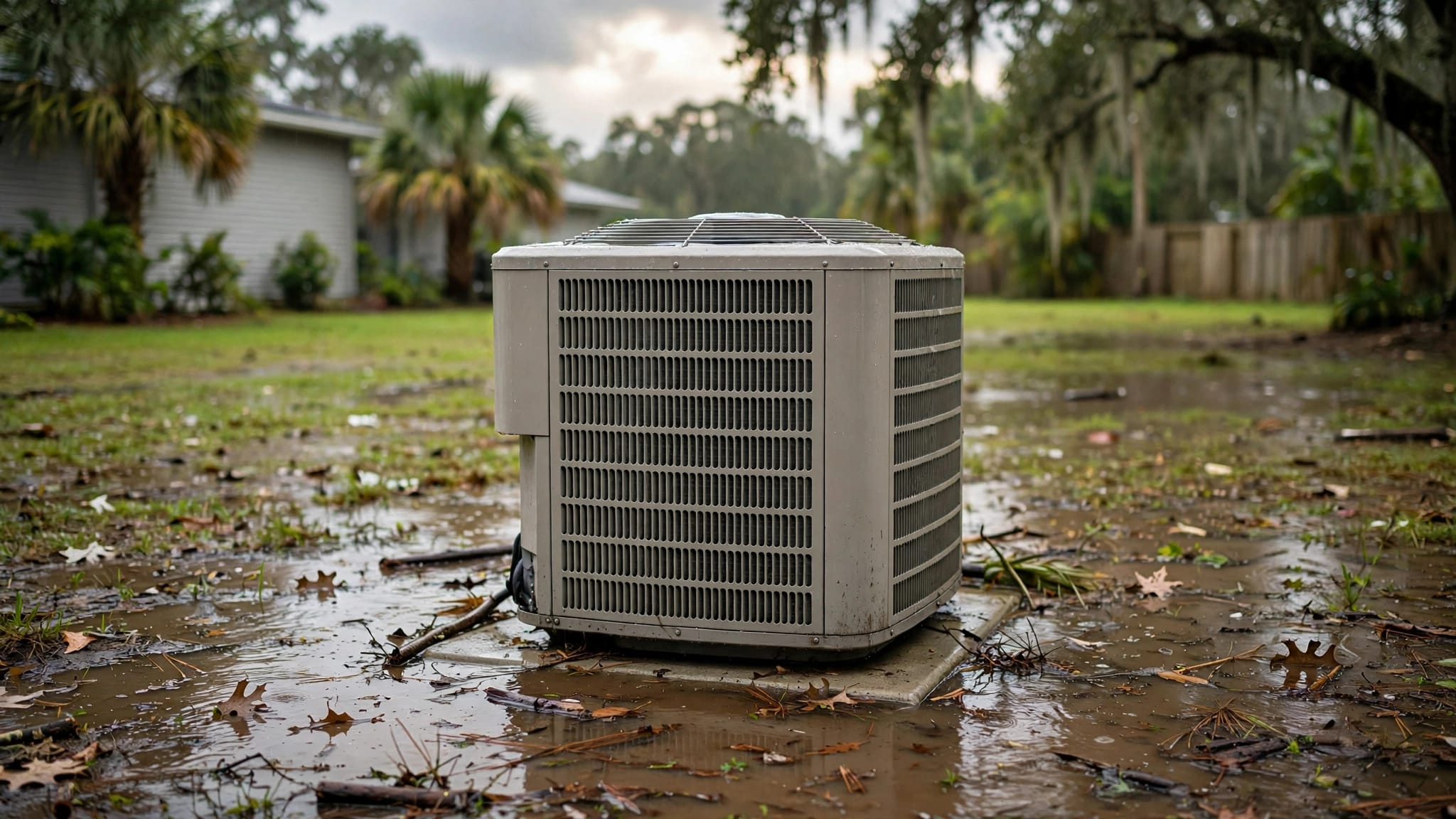
Salt air near the coast can accelerate corrosion on coils, fasteners, electrical connections, and cabinet panels. Sand and outdoor debris can also reduce airflow when maintenance falls behind. For these reasons, local conditions should influence your replacement timeline.
When commercial rooftop AC replacement makes financial sense
A replacement usually deserves consideration when repairs keep returning, the unit causes business interruptions, or the remaining service life is difficult to predict. The cheapest decision today can become expensive when another failure occurs during a busy workday or a stretch of extreme heat.
Compare the full cost of continued operation over the next one to three cooling seasons. Include repairs, emergency calls, lost productivity, damaged inventory, tenant complaints, and higher electricity use.
Review the repair history, not one isolated bill
A failed capacitor or contactor doesn't automatically justify replacement. Those are common repair items, and a newer unit with a healthy compressor, coils, blower motor, and controls may be worth fixing.
The picture changes when the same rooftop unit needs several major repairs in a short period. Repeated compressor problems, refrigerant leaks, failed coils, motor issues, and control board replacements can quickly change the financial calculation.
Ask the technician to provide two written options:
- The immediate repair, including the part, labor, warranty, and expected operating outlook.
- The replacement cost, equipment details, installation scope, warranty, and estimated energy performance.
You don't need a fixed repair percentage to make the decision. Instead, compare the repair's value against the unit's age and the chance of another major failure.
Treat refrigerant and parts availability as costs
R-22 equipment presents a special concern. The United States no longer produces or imports R-22 for normal HVAC use. Existing systems can still receive recovered or reclaimed refrigerant, but supply is limited and service can become expensive.
R-410A remains available for servicing existing equipment in 2026. However, federal refrigerant transition rules are moving new comfort-cooling equipment toward lower-global-warming-potential refrigerants. That transition can affect product availability, pricing, and long-term service planning.
A low repair quote may not be a low-cost solution if the unit has an obsolete refrigerant, scarce parts, or a history of repeat failures.
Signs your rooftop AC unit is nearing replacement
Some warning signs appear in the occupied space, while others show up in service records or on the roof. Ask for a complete inspection rather than replacing equipment based on one symptom.
Watch for comfort and operating problems
Uneven temperatures are often the first complaint from employees, tenants, or customers. Hot zones may result from duct problems, poor airflow, controls, or an undersized system, so the technician should test those possibilities before recommending new equipment.
Persistent humidity is another warning sign in Southwest Florida. If the unit runs for long periods but the space still feels damp, the problem may involve coil performance, airflow, refrigerant charge, controls, or insufficient dehumidification capacity.
Other operating clues include:
- Longer run times during weather the unit handled easily in prior years.
- Frequent thermostat or building automation alarms.
- Breakers or safety controls that trip repeatedly.
- Rising utility use after accounting for occupancy and weather.
- Temperature complaints that return after each repair.
- Water leaks caused by a damaged drain pan or condensate problem.
Energy use alone doesn't prove that a replacement is needed. A dirty coil, blocked filter, failing economizer, or duct leak can produce similar symptoms. Testing matters before you commit to a major purchase.
Inspect physical damage and safety concerns
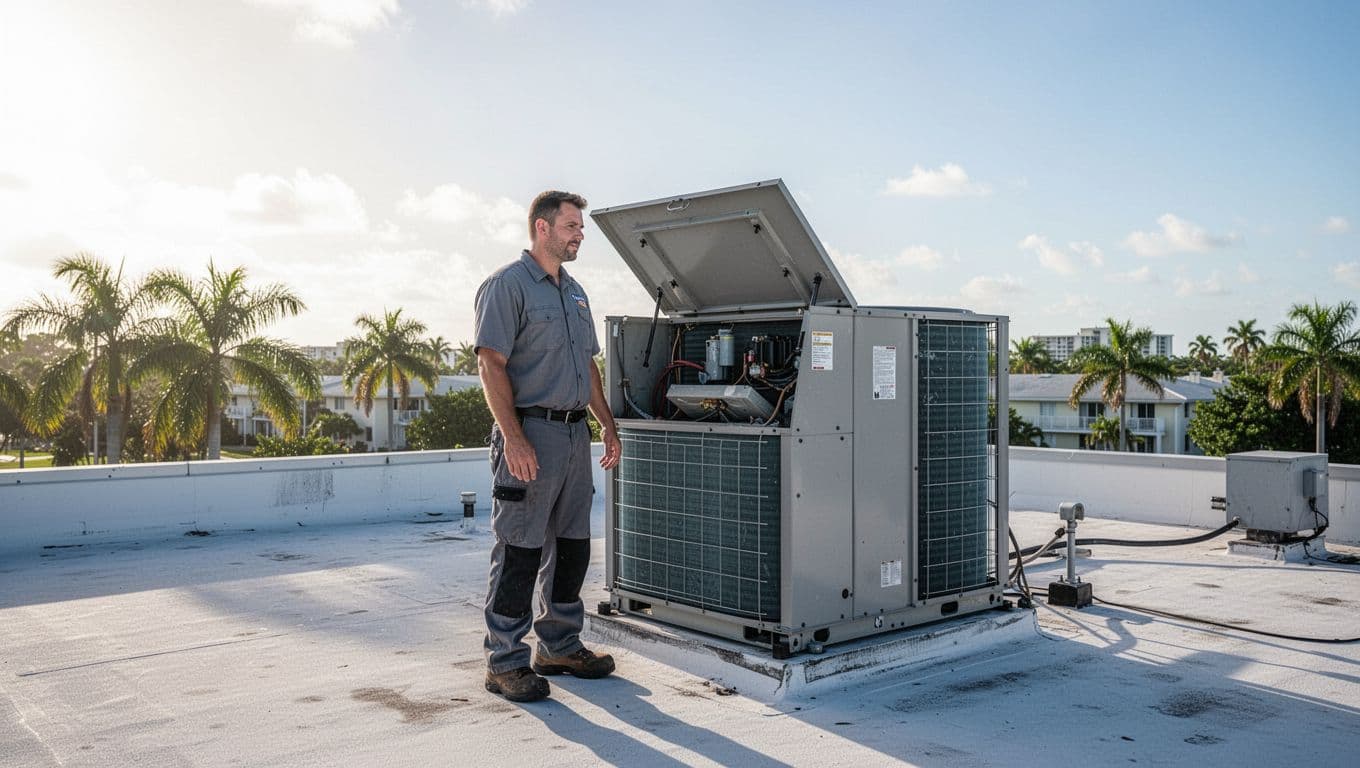
A technician should inspect the cabinet, coils, wiring, blower assembly, drain pan, economizer, refrigerant circuit, and electrical connections. Rust, oil stains, crushed coils, burned wiring, excessive vibration, and deteriorated insulation all deserve attention.
The roof curb matters too. A new unit may not fit an old curb without an adapter or modifications. The contractor should check curb dimensions, roof flashing, access paths, and structural conditions before preparing a final proposal.
Storm exposure adds another concern. Replacement planning may include hurricane-wind anchoring, corrosion-resistant components, secure panels, and proper equipment fastening. The exact requirements depend on the building, location, equipment, and current code requirements.
What to evaluate before approving a replacement
A like-for-like swap isn't always the best choice. The new unit should match the building's cooling load, airflow needs, electrical service, controls, curb, and use.
Confirm capacity, airflow, and system compatibility
An HVAC contractor should review the space served by the rooftop unit and look for changes since the original installation. Remodeling, added equipment, new lighting, occupancy changes, and altered ventilation can affect the load.
Oversized equipment may cool the air quickly but remove less humidity. Undersized equipment may run continuously and still fail to maintain comfort. In a humid climate, the selected system needs appropriate sensible and latent cooling performance.
The proposal should identify more than a tonnage number. Ask for the exact manufacturer, model, capacity, voltage, airflow, efficiency rating, refrigerant, curb requirements, controls compatibility, and warranty.
Check whether the building uses a thermostat, zoning controls, or a building automation system. A new rooftop unit that doesn't communicate correctly with existing controls can create comfort and service problems after installation.
Verify refrigerant rules, efficiency, and availability
As of August 2026, many new comfort-cooling products are moving to lower-GWP A2L refrigerants such as R-454B or R-32. These refrigerants have different handling and installation requirements. The contractor should identify the refrigerant clearly and confirm that the crew has the right training and equipment.
The EPA's 2026 rule also allows some older R-410A equipment manufactured or imported before January 1, 2025, to continue being installed while existing supplies last. That allowance doesn't mean older-stock equipment is the right long-term choice. Ask why the proposed unit is available, how long parts will be supported, and whether the equipment complies with the rules in effect on your installation date.
Efficiency ratings vary by equipment class. Commercial proposals may list EER2, IEER, COP, or another DOE or AHRI performance rating. Don't compare a commercial rooftop unit using residential SEER2 alone. Request the product submittal and AHRI-certified performance for the exact model.
Current regulations and equipment availability can change. Have the contractor verify the selected unit's sale and installation status, refrigerant requirements, efficiency rating, warranty, lead time, permits, and Florida compliance before you sign.
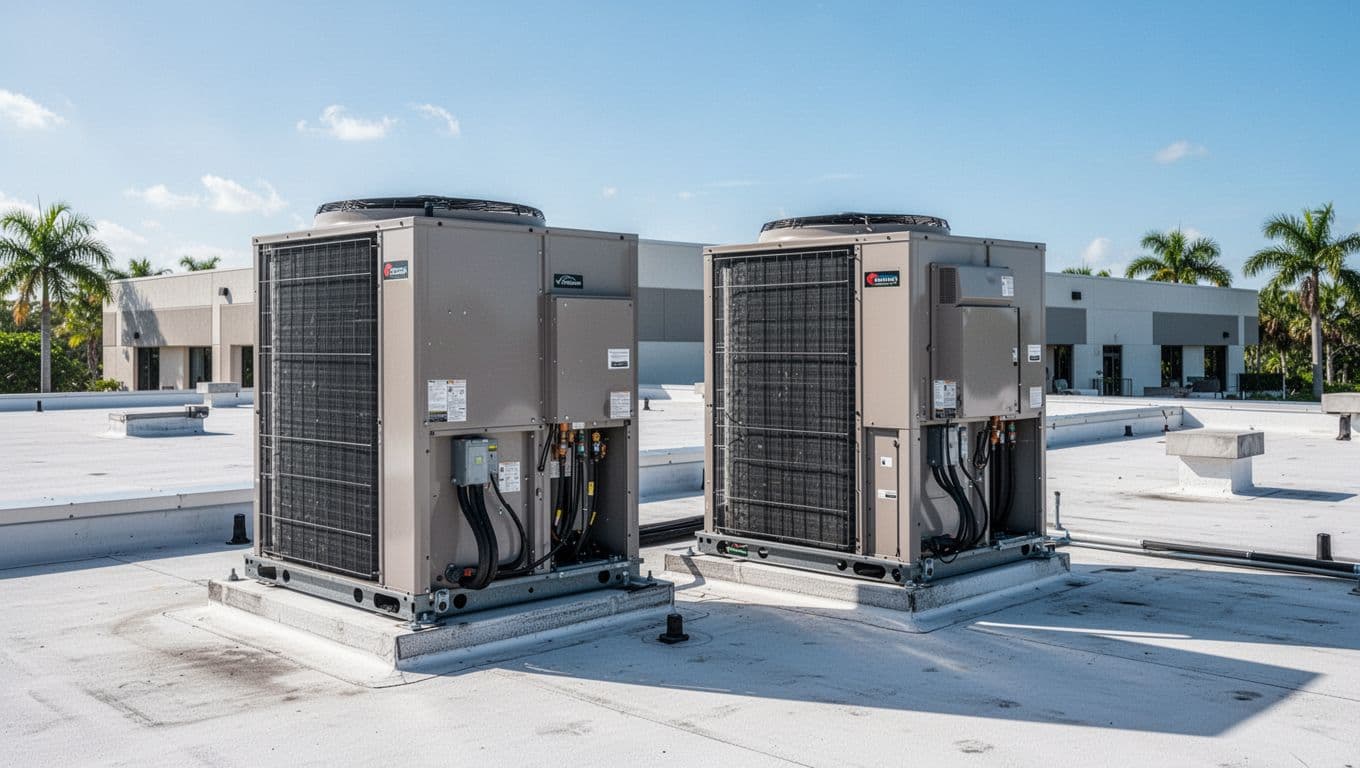
How to plan a commercial rooftop AC replacement
Planning ahead gives you more control over the equipment, schedule, and total cost. It also reduces the chance of making a rushed choice after a compressor fails during peak cooling demand.
Compare complete proposals
The lowest equipment price may not be the lowest project cost. Review whether each proposal includes removal and disposal, crane or lift access, curb adapters, electrical work, duct transitions, condensate drainage, controls, permits, startup, testing, and cleanup.
Ask each contractor to state the installation timeline and any assumptions about roof access. A quote that excludes a curb modification or control integration may look attractive until those costs appear later.
You can also review this commercial rooftop unit repair versus replacement guide before comparing bids. For a broader proposal review, use this guide to compare commercial HVAC replacement proposals.
Choose the right time and contractor
Schedule work before the busiest cooling period when possible. A planned installation allows you to notify tenants, protect temperature-sensitive inventory, arrange roof access, coordinate an after-hours shutdown, and prepare temporary cooling if needed.
Use a Florida-licensed, insured contractor with commercial rooftop experience. Ask for the license information, equipment submittal, AHRI match-up, model and serial numbers, refrigerant designation, startup report, warranty terms, and permit details.
Permit requirements can vary by jurisdiction. Fort Myers, Cape Coral, and unincorporated Lee County may follow different processes, so review the current commercial HVAC permit information in Lee County with the contractor and local building department.
After installation, schedule regular inspections and cleaning. A rooftop unit maintenance checklist for Florida businesses can help your staff track filters, coils, drains, controls, and service records. If your unit is already showing major warning signs, Schedule an Estimate for a site-specific evaluation.
Conclusion
A commercial rooftop AC replacement makes sense when an aging unit combines frequent repairs, poor humidity control, rising operating costs, obsolete parts, or an uncertain refrigerant future. Units approaching 15 to 20 years deserve careful planning, especially in Southwest Florida's demanding climate.
A qualified commercial HVAC professional can test the existing system, inspect the curb and roof, compare repair and replacement costs, and verify current equipment rules. The strongest decision is the one based on documented condition and total operating cost, not the age of the unit alone.
Recent Posts