
Duct Smoke Detectors: What HVAC Owners Should Know
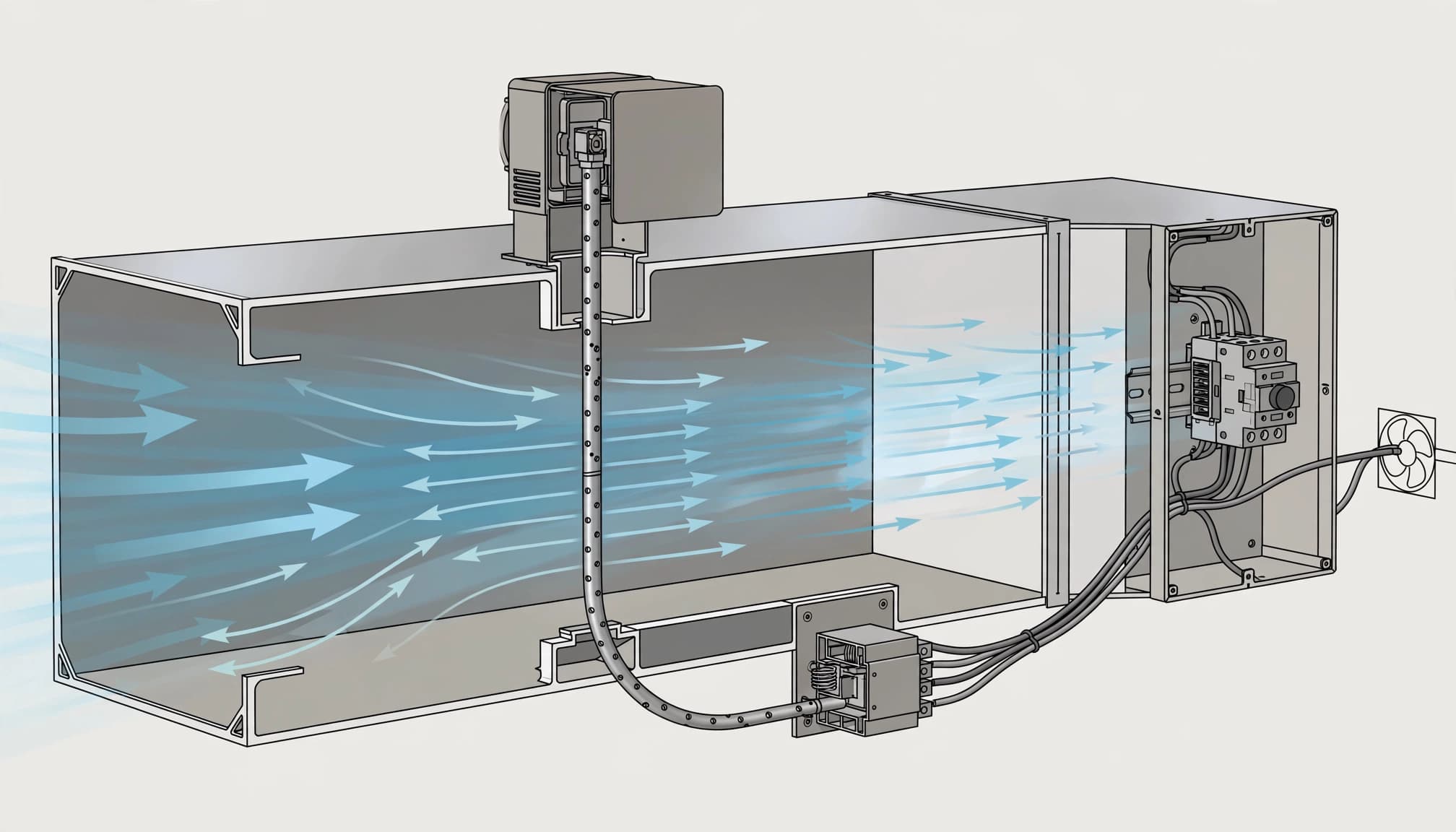
A duct smoke detector is a fire-safety device intended to detect smoke in HVAC ductwork. It addresses a separate concern from a room smoke alarm: smoke can enter a central air system and travel to other parts of a building.
A running blower can move contaminated air through return and supply ducts. Understanding that airflow helps homeowners and business owners in Southwest Florida respond safely when smoke appears.
What Is a Duct Smoke Detector?
A duct smoke detector is associated with a building's heating and cooling system. Its purpose is to detect smoke in the ductwork, where the HVAC system can carry air between rooms.
These devices are relevant to buildings with ducted air systems, including commercial properties. A central system can connect several occupied areas through one air handler, so smoke near one return path can affect rooms away from the source.
A duct detector is one part of a broader fire-safety plan. It doesn't extinguish a fire or replace the smoke alarms occupants rely on for warning.
How Smoke Moves Through an HVAC System
Central heating and cooling systems move air along two main paths. Understanding each one makes it easier to see how smoke can reach rooms far from its source.
Return ducts pull air toward the equipment
When the blower runs, return grilles draw indoor air into the return ductwork. That air travels toward the air handler, where the system filters and conditions it.
If smoke reaches a return grille, the fan can pull smoke particles and gases into the system. A fire near a return vent, air handler, garage, or attic can expose the ductwork to contaminated air.
Supply ducts carry air into other rooms
After air passes through the air handler, the blower pushes it into supply ducts and out through supply vents. Smoke that enters the system can travel with that airflow.
A closed bedroom door may slow smoke moving down a hallway, but it doesn't block air delivered through a supply vent. Our guide to how smoke can spread through HVAC ducts explains these paths in more detail.
Turning off a fan limits mechanical airflow. Smoke can still travel through open doors, gaps, and natural air currents, so an inactive system doesn't make an area safe during a fire.
Duct Smoke Detectors vs. Room Smoke Alarms
A duct smoke detector and a room smoke alarm address different parts of fire safety. The duct detector concerns smoke in the HVAC system. A room smoke alarm warns people of smoke in the space they occupy.
A detector associated with ductwork doesn't replace the alarms needed to warn occupants. Smoke may affect a room before it reaches a return grille, and people need to act when an alarm sounds or they see signs of fire.
A smoke alarm also doesn't replace a carbon monoxide alarm . Carbon monoxide is a colorless, odorless gas. If a CO alarm sounds, get everyone outside, call emergency services, and stay out until responders say it's safe to return.
Why Filters and Dampers Aren't Fire Protection
Filters and dampers affect airflow during normal HVAC operation. Neither should give you a reason to stay inside when smoke or flames are present.
Filters don't remove every smoke hazard
An HVAC filter can capture some airborne particles, depending on its fit, condition, and efficiency. However, a standard filter doesn't remove all fine smoke particles, gases, or toxic compounds.
Don't keep an air conditioner running in the hope that its filter will clean smoke-filled air. Smoke and soot can also reach the blower, coil, duct insulation, and other components.
Residential dampers aren't smoke barriers
Balancing dampers and motorized zone dampers direct air through different parts of a duct system. They aren't generally airtight, and a typical residential zone damper isn't a life-safety smoke-control device.
Some commercial systems have fire or smoke dampers designed for safety purposes. Ordinary residential dampers should never be treated as a way to contain a fire.
What to Do When You See Smoke
If you see heavy smoke or flames, get people and pets outside immediately. Call 911 from a safe location, and follow the instructions of emergency responders.
Don't delay your exit to inspect a vent, change a filter, or search for the HVAC switch. Once outside, stay out until responders say you can return.
A burning or electrical odor deserves attention even when you can't see smoke. The source could be HVAC equipment, wiring, an appliance, or another part of the building. If the smell persists, grows stronger, or comes with sparks, hot equipment, or breaker trips, leave the system off and seek professional help.
Inspect the HVAC System After Smoke Exposure
Don't restart HVAC equipment after a smoke event simply because the odor has faded. Running it can circulate soot and odors into additional rooms. It may also worsen damage if electrical components were involved.
After the fire department clears the property, a qualified HVAC technician can inspect the air handler, blower, electrical connections, filter area, coil, and accessible ductwork. Depending on the damage, a fire-restoration professional may also need to assess the property.
Soot can cling to internal surfaces, and a new filter alone doesn't establish that the system is safe to operate. Cleaning may be appropriate when contamination is found, but it doesn't replace an inspection for damaged equipment.
We offer HVAC repair and inspection in Fort Myers. Once the immediate danger has passed, you can Schedule an Estimate with a Valor Heating & Cooling technician for an assessment.
Keep Smoke Safety Ahead of HVAC Comfort
A duct smoke detector addresses smoke associated with an HVAC system, while room smoke alarms warn occupants. Both fit within a broader approach to fire safety.
If smoke or flames appear, leave first and call 911 . After responders clear the property, arrange an inspection before restarting smoke-exposed equipment.
Recent Posts