How to Inspect HVAC Before Signing a Commercial Lease
A commercial HVAC inspection can help you identify cooling problems and negotiate repair responsibilities before you sign a lease. Start with a walkthrough, arrange a professional evaluation, and put any agreed repairs in writing.
In Southwest Florida, a space that feels cool during one visit can still have moisture problems or aging equipment. Take these steps while you have time to address the findings with the landlord.
Key Takeaways
Inspect the space and visible equipment, then have a qualified HVAC professional evaluate the system under normal operating conditions. Ask for service history and a written report before deciding how to handle any problems.
Your lease should identify who pays for maintenance, repairs, and replacement. It should also describe any work the landlord agrees to complete before you move in.
Step 1: Arrange Access Before You Sign
Ask the landlord or property manager for permission to inspect the HVAC equipment before the lease becomes binding. Arrange a visit that includes the areas your business will occupy and the equipment that serves them.
The system may be on the roof, in a mechanical room, or behind a locked door. Some equipment may also be shared with neighboring tenants. Ask the property manager to identify each unit and explain which spaces it serves.
Let your HVAC contractor know how you plan to use the space. A crowded fitness studio, for example, places different demands on a building than a small office. Business hours, occupancy, exhaust equipment, and planned renovations can all affect comfort and ventilation.
If you plan to install equipment that produces heat or requires exhaust, mention that before the evaluation. A system that worked for the previous tenant may need changes for your operation.
Allow enough time for the contractor to prepare a report and for both parties to discuss the findings. If access is refused or the system can't be evaluated, document that limitation before making a commitment.
Step 2: Walk Through the Space and Look for Warning Signs
Your walkthrough won't replace a commercial HVAC inspection, but it can identify areas that deserve closer attention.
Look for moisture and airflow concerns
Walk through each room, including storage areas and rooms with doors that stay closed. Note spaces that feel stuffy, damp, or noticeably different in temperature. Look at accessible supply vents and return grilles for damage, heavy dust, or obstructions.
Water stains around ceilings or near indoor equipment deserve attention. So do damp insulation and persistent musty odors. These signs don't identify a cause on their own, but they give the contractor a place to investigate.
Observe the equipment exterior
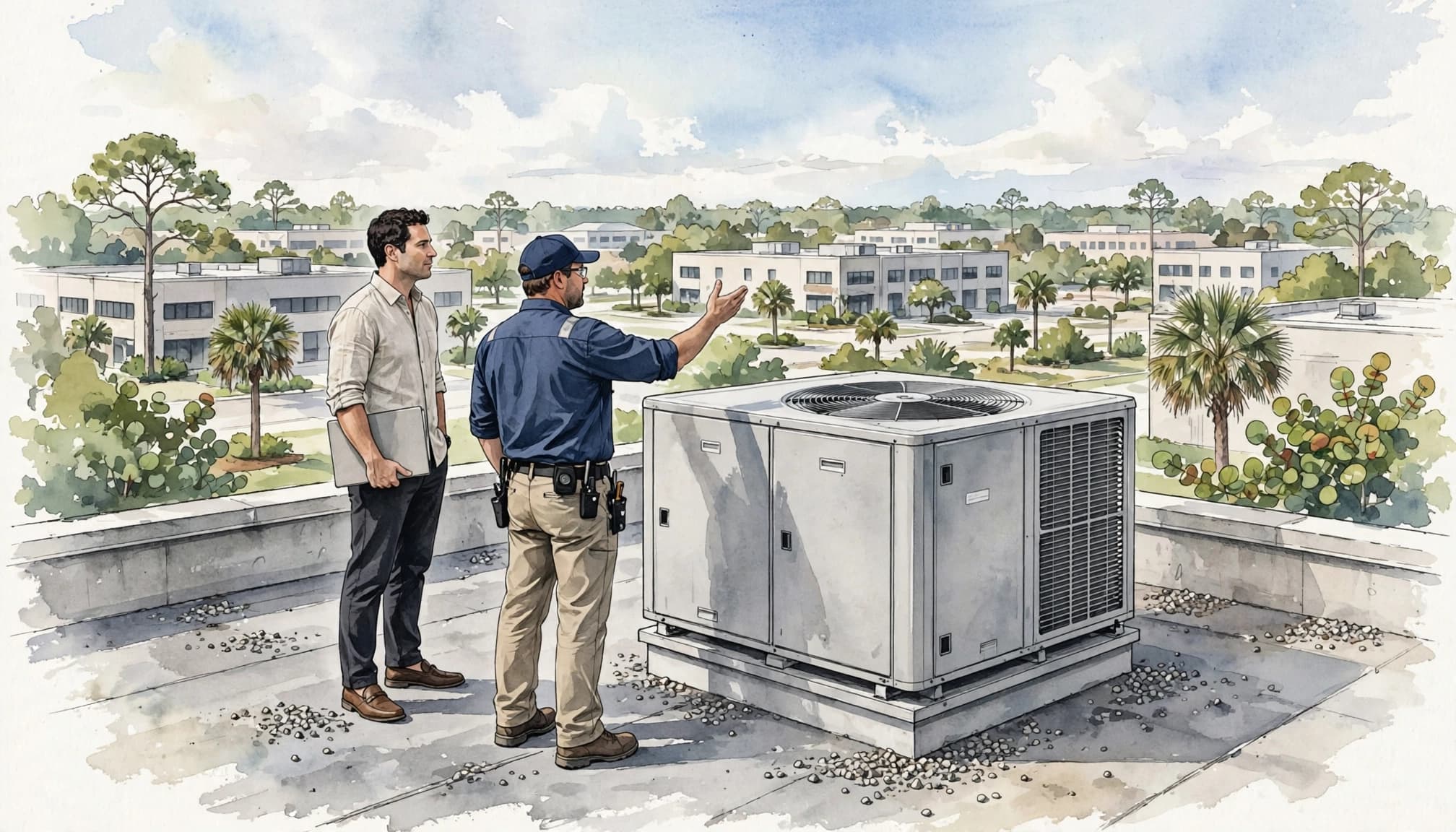
Where access is safe and permitted, look at the outside of the equipment. Rust, damaged insulation, oil stains, loose panels, and debris around outdoor units should go into your notes. Near the coast, salt exposure can accelerate corrosion on outdoor equipment.
Don't remove panels, touch wiring, or climb onto a roof without authorized, safe access. Leave equipment inspection to the HVAC professional.
Step 3: Test HVAC Operation With a Professional
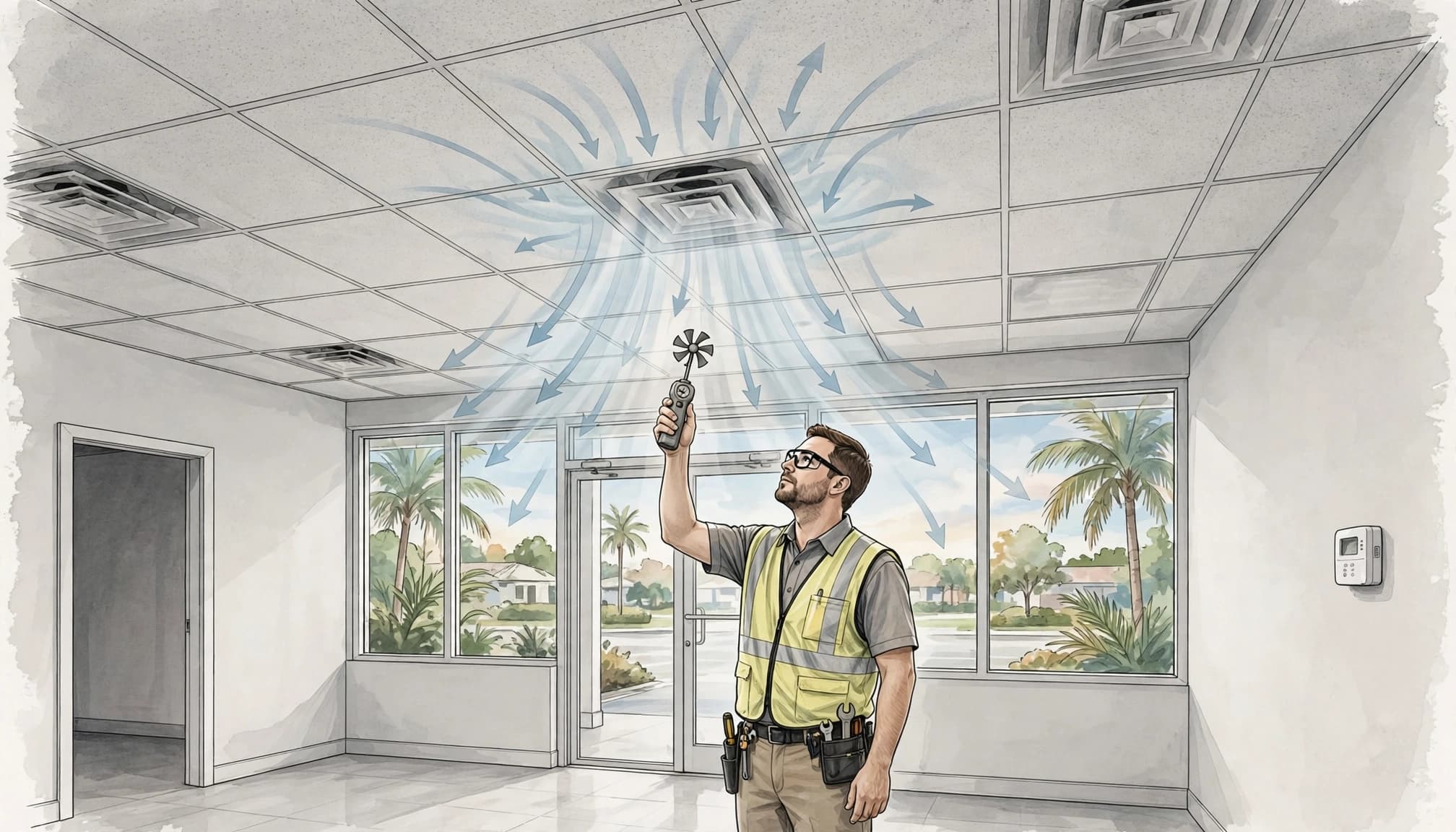
Ask the property manager to have the system operating during the visit. Observe whether the space cools and whether airflow and comfort appear consistent across the rooms you plan to use. Note unusual noises, odors, or areas that remain damp.
Observe normal operation
A brief visit provides a limited picture. If possible, arrange the evaluation during normal business conditions and tell the contractor about your expected hours and occupancy. An empty suite may place less demand on the system than an occupied one.
Ask whether the thermostat and any building controls give your business control during its operating hours. Also find out whether cooling continues after the building's standard schedule, if your business needs it.
Request a written assessment
Have a qualified commercial HVAC professional evaluate the equipment, airflow, controls, ventilation, and moisture concerns relevant to the space. If the building has shared equipment or restricted access, the report should identify what the contractor could and couldn't evaluate.
Ask for findings in writing, including failed items and recommended follow-up. A report that says only "checked OK" gives you little to discuss with the landlord.
If you notice smoke, a burning odor, sparks, or repeated breaker trips, stop the system and seek professional help. Don't open the unit or repeatedly reset a breaker.
Step 4: Request Installation and Service Records
Records help you understand what equipment is present and whether the owner has addressed recurring problems. Ask for copies before the inspection period ends, rather than relying on a verbal description of the system's history.
Gather equipment and installation details
Request the equipment schedule, model and serial numbers, installation date, manuals, and installation invoice if available. If the system includes separate air handlers, controls, or indoor air quality equipment, ask for records covering those components too.
For major installation or replacement work, request available permit details and final inspection documentation. Keep warranty paperwork together with the equipment records, including the terms and any registration documents.
Review maintenance and repair history
Ask for dated maintenance reports and repair invoices that describe the work performed. Look for records of replaced parts, drain problems, control repairs, and refrigerant-related work.
Repeated service calls for the same complaint deserve a conversation about the underlying cause and whether it was resolved. Missing records don't prove the system is faulty, but they leave gaps in its history.
Our commercial HVAC maintenance checklist outlines the kinds of tasks and records that can support an ongoing maintenance plan.
Step 5: Ask the Landlord Who Controls and Pays for Service
A working system is only part of the decision. You also need to understand who controls it, who arranges service, and what costs your business may take on.
Ask the landlord these questions during the lease discussion:
- Which equipment serves my space, and is any of it shared?
- Who arranges routine maintenance and filter changes?
- Who pays for repairs, emergency calls, and replacement?
- Are HVAC expenses included in rent or billed separately?
- Who controls the thermostat and operating schedule?
- How will technicians access the equipment when service is needed?
For shared systems, ask how costs are allocated among tenants and how a problem in one suite is reported. If the landlord uses a building service provider, find out how your business requests service and what happens outside normal hours.
You can also review commercial HVAC maintenance costs in Fort Myers as you plan for the expenses your lease may assign to you. The lease and service agreement should describe the actual scope and charges.
Step 6: Document Findings and Discuss Repairs
Keep the walkthrough notes, photos, service records, and contractor's report in one folder. Label each observation with its location and the date. When possible, connect it to the equipment that serves the affected area.
A useful report distinguishes the visible symptom from its known cause. For example, a ceiling stain tells you where to investigate; it doesn't establish whether a drain problem caused it. Ask the landlord to address the cause as well as any resulting damage.
Send the findings in writing and identify which items need a response before you sign. Request the proposed repair, the party responsible, and the expected completion date. If work is completed before occupancy, ask for documentation of what was done and any follow-up evaluation.
Some findings may call for a larger decision. Our guide to repair versus replacement in Fort Myers explains why repeated repairs and equipment condition deserve consideration together.
A verbal promise to fix the AC is difficult to use as a project plan. Put the equipment, work, deadline, and responsible party in the agreement.
Step 7: Put HVAC Responsibilities in the Lease
Ask a commercial real estate attorney to review the HVAC language before you sign. The lease should match what you and the landlord agreed to, including any inspection findings and promised work.
Define maintenance and repairs
Identify the covered equipment and assign responsibility for routine service, filters, repairs, and emergency calls. If the tenant must maintain the system, describe the required service and whether the landlord requires a particular contractor.
The agreement should also address reporting procedures and access. Your technician may need permission to enter a mechanical room or reach rooftop equipment. If access depends on building staff, include a process for arranging it.
Address replacement and pre-existing problems
Separate routine maintenance obligations from responsibility for major repairs and equipment replacement. If the inspection identifies an existing defect, describe who will correct it, when the work will be completed, and how completion will be documented.
Discuss what happens if equipment needs replacement during the lease, including how costs will be allocated. If your planned buildout requires HVAC changes, address their approval and payment before work begins.
For equipment that needs major work, we provide HVAC installation and replacement in Fort Myers. You can also Schedule an Estimate with our team to discuss an evaluation, repair, or replacement.
Frequently Asked Questions
Is a working air conditioner enough to approve the space?
A system that cools during a walkthrough gives you useful information, but it doesn't show its full service history or how it will perform for your business. A professional evaluation and available records provide a better basis for the lease discussion.
What if the landlord can't provide HVAC records?
Ask a qualified contractor to evaluate the accessible equipment and document the limits of the evaluation. Then discuss the missing history and any identified concerns with the landlord before agreeing to maintenance or replacement terms.
Make the HVAC Findings Part of Your Decision
A commercial HVAC inspection gives you a clearer picture of the equipment you're agreeing to use and the work it may need. The written report also gives both parties a starting point for discussing repairs.
Before signing, make sure the lease language covers the responsibilities and promises that matter to your business. Clear documentation now can prevent disagreements after you move in.
Recent Posts