Flooded AC Unit: What to Do Before Restarting
When floodwater reaches your outdoor air conditioner, getting the house cool again has to wait. A flooded AC unit can create electrical hazards even after the water recedes, so keep your distance and leave it off until a qualified HVAC professional inspects it.
For Fort Myers and Lee County homeowners, heavy rain and storm surge can leave equipment surrounded by contaminated water. Start with personal safety, then arrange an inspection before making any decision about restarting the system.
Key Takeaways
- Don't approach or touch the outdoor AC unit while standing water is present.
- Power should only be shut off from a dry, safe location.
- Normal rain or minor splashing differs from partial or complete submersion.
- Leave a flooded system off until a qualified HVAC professional has inspected it and cleared it for operation.
- Document what happened from a safe location, then contact your HVAC provider and insurer.
Put Safety First Around a Flooded AC Unit
An outdoor condenser contains electrical equipment. Floodwater around it may also conceal damaged wiring, debris, or an unstable equipment pad. You can't judge electrical safety by looking at the water or listening for the fan.
Stay Away While Standing Water Is Present
Don't approach or touch the unit while standing water remains. Don't wade toward it to inspect the cabinet, remove debris, or reach the nearby electrical disconnect.
Keep children and pets away from the area, too. A condenser that appears silent may still have electrical power available to it.
If you notice downed power lines, sparking, or another immediate electrical danger, stay clear and contact emergency services or the utility. An HVAC service appointment doesn't replace an emergency response to an active electrical hazard.
Shut Off Power Only From a Safe Location
Power should only be shut off from a dry, safe location . If reaching the electrical controls requires crossing water or entering a wet area, don't attempt it.
Contact your utility or a qualified electrical professional when safe isolation isn't possible. Don't handle a wet electrical panel or outdoor disconnect yourself.
A quiet condenser or a thermostat set to "off" doesn't prove that the outdoor equipment is electrically isolated.
Once the equipment is safely shut down, keep it off. Don't reset breakers or test whether it still runs. Valor's safe AC maintenance guidance also warns against turning on equipment that has been flooded or struck by debris.
Understand the Difference Between Rain and Submersion
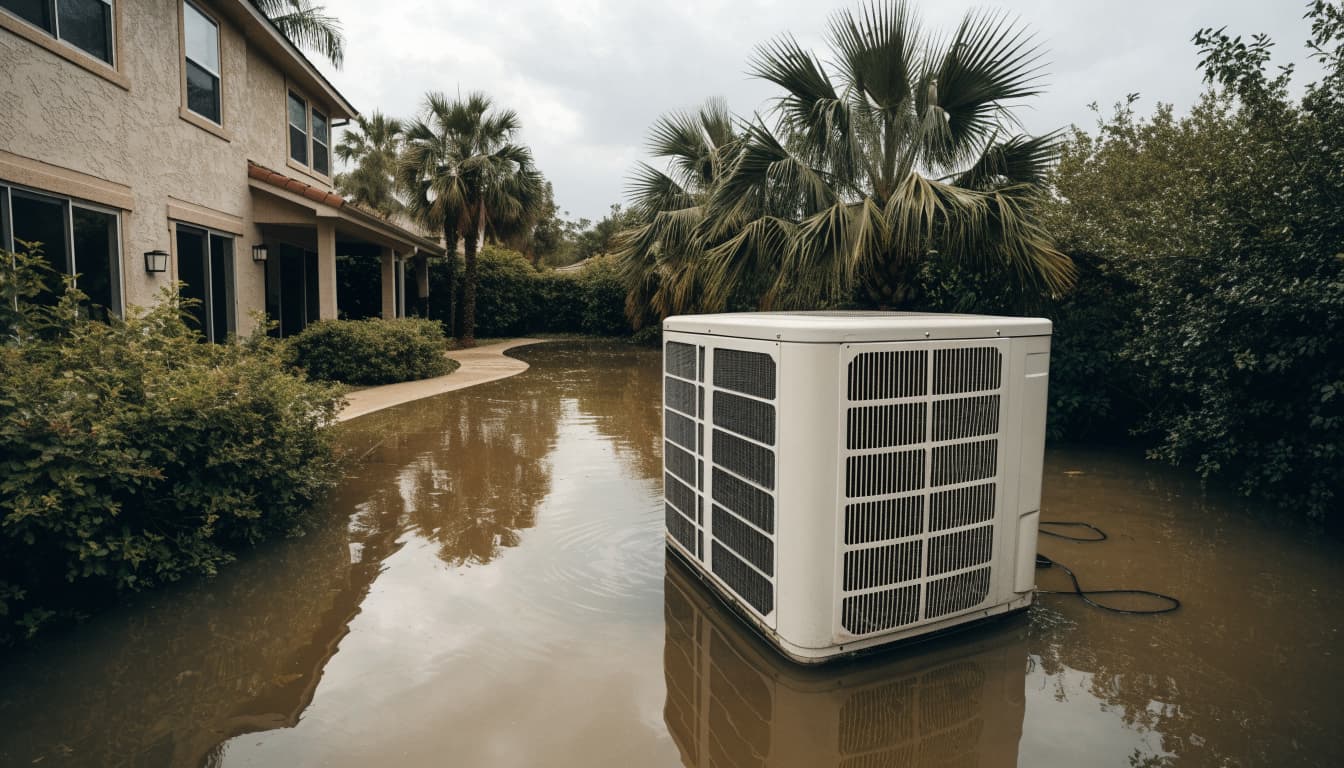
Outdoor AC equipment normally operates in rainy weather. However, standing floodwater creates different conditions than rainfall landing on the cabinet.
Minor Splash Exposure Isn't the Same as Flooding
Ordinary rain or brief splashing against the exterior doesn't automatically mean the condenser has flood damage. Outdoor equipment is designed for normal weather exposure.
Still, the distinction depends on what happened around the unit. Water accumulating against the cabinet, debris impacts, or uncertainty about the highest water level calls for caution.
Don't approach through standing water to determine which category applies. Your safety matters more than measuring the exposure. If you can't confirm whether water entered the equipment, leave it off and describe that uncertainty to the technician.
Partial Submersion Still Requires Professional Assessment
The entire cabinet doesn't need to disappear underwater for flood exposure to matter. What matters is whether water reached components that aren't intended for immersion.
Floodwater can also carry mud, sewage, chemicals, or salt. Along Southwest Florida's coast, storm surge may leave salt contamination that contributes to corrosion.
There's no universal safe water depth for every condenser. Equipment layouts differ, and the visible exterior doesn't reveal which internal parts were exposed.
A receded waterline also doesn't establish that the system is ready to run. Leave restart decisions to a qualified HVAC professional , regardless of whether the unit looks dry.
Arrange a Professional HVAC Inspection Before Restarting
Don't use a successful startup as proof that your flooded AC unit survived. The inspection needs to come before operation, rather than after a trial run.
Give the Technician an Accurate Exposure History
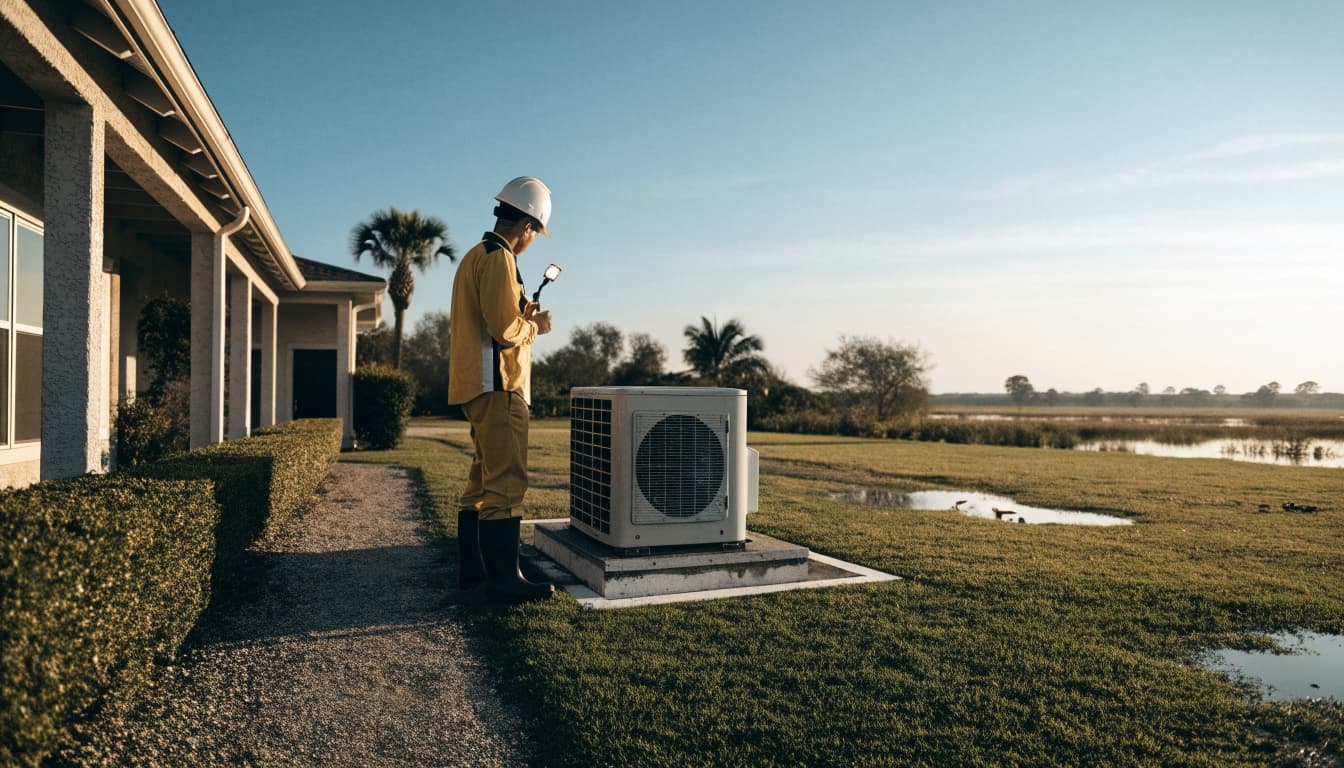
When scheduling service, explain whether water surrounded the cabinet, partially submerged it, or covered it completely. Mention whether the system was running when the flooding began, if you know.
Also report debris impacts, visible movement of the equipment, and any flooding inside the home. The indoor air handler and nearby electrical equipment may need separate attention if water reached those areas.
For local help, Valor Heating & Cooling provides HVAC repair and inspection in Fort Myers. Tell the service team about flood exposure when booking so they understand the situation before arriving.
Ask for Clear Findings and Restart Guidance
The technician should explain what the assessment found, what remains uncertain, and whether the equipment is safe to operate. Ask whether electrical hazards require an electrician or utility involvement.
Get clear guidance about the next step. That may mean further assessment, a repair recommendation, or a discussion about replacement. An inspection appointment doesn't automatically mean permission to restart.
Before the visit ends, confirm who will authorize or handle the return to operation. Don't assume that an apparently dry cabinet or restored neighborhood power provides that clearance.
If the technician recommends additional work, request a written explanation. It helps you understand the recommendation and communicate with your insurer.
Keep Your Household Safe While You Wait
In Southwest Florida, losing air conditioning can become uncomfortable quickly. Nevertheless, the heat doesn't make a flooded condenser safe to test.
Stay somewhere cooler if the home becomes unsafe, especially for older adults, young children, or anyone with a medical condition. Follow local emergency guidance about cooling locations and post-storm access.
Use temporary cooling equipment only where the electrical supply and surrounding area are safe and dry. Don't connect fans or portable equipment to water-damaged outlets or extension cords running through wet areas.
If you're using a portable generator during an outage, keep it outdoors and away from doors, windows, and vents. Never operate it inside a garage, even with the door open. Carbon monoxide creates a separate emergency risk.
Meanwhile, leave the condenser cabinet closed. Don't remove access panels, handle wiring, or attempt electrical repairs. Flood recovery is beyond routine homeowner maintenance.
Avoid covering the equipment in a way that could obscure its condition before the inspection. Instead, tell the service team about anything you notice from a safe location. You don't need to reach the unit to make the initial call.
Document the Flood Exposure Without Taking Risks
Good records help the service team understand what happened. They also support conversations with your insurer, but documentation never justifies entering standing water.
From a dry, safe location, photograph the area if you can do so without approaching the equipment. A wider image showing the surrounding yard may be more useful than a close-up that requires unsafe access.
Write down when you first noticed the flooding and when the water receded. Record the highest water level you observed, but don't guess at measurements you couldn't see clearly.
Also note whether the AC was operating during the event and whether anyone attempted a restart afterward. Be honest about uncertainty. A technician needs an accurate history, not a confident estimate.
Contact your insurer and ask what documentation it requires for the equipment claim. Confirm the applicable coverage, deductible, inspection requirements, and any approval process before authorizing non-emergency work.
Keep the HVAC assessment, estimates, invoices, and correspondence together. These records make it easier to track recommendations and distinguish inspection findings from assumptions.
If emergency work is necessary for safety, explain that to the insurer. Ask how to document the circumstances without delaying action needed to address an immediate hazard.
Compare Your Options After the Damage Assessment
A flooded AC unit doesn't have one predictable outcome. The recommendation depends on the equipment's condition, the exposure, and the manufacturer's requirements for affected components.
Ask the technician to explain the findings in plain language. You should understand which concerns relate to immediate safety and which affect future reliability.
Before approving work, request an estimate that identifies the proposed scope. Clarify what the price includes and whether further assessment could change it. Flood exposure varies too much for a generic repair price to be useful.
If replacement enters the discussion, ask why the technician recommends it rather than repair. Equipment age, existing condition, compatibility with the indoor system, and warranty terms all deserve attention.
Also ask whether flood-related damage affects any existing warranty. Don't assume ordinary equipment coverage applies to the event.
Avoid comparing proposals on total price alone. Two estimates may address different equipment or leave different uncertainties unresolved. A clear explanation of those differences helps you make a fair comparison.
Don't buy parts or authorize work based only on a visible waterline. The professional assessment should guide the decision, including whether further electrical evaluation is necessary.
Request Service With the Flood Details Up Front
When you call, lead with the flood exposure rather than saying only that the AC stopped cooling. Explain whether standing water remains and whether the service area is safely accessible.
Share any symptoms that occurred before shutdown, but don't restart the equipment to produce more information. Humming, clicking, or rapid starting and stopping after a storm warrants professional attention. Those symptoms don't establish a flood-specific diagnosis.
Valor Heating & Cooling offers 24/7 emergency HVAC service throughout Lee County. Call (239) 994-6272 to discuss the situation and service needs. Active flooding or unsafe access may affect when a technician can reach the equipment.
Once the site is safe, you can Schedule an Estimate with a Valor Heating & Cooling HVAC technician. Describe the water exposure and request an inspection before any restart.
Restore Cooling Only After Professional Clearance
A flooded AC unit needs professional clearance before it returns to service. Keep away while standing water remains, and allow power shutoff only from a dry, safe location.
Once access is safe, document the exposure and arrange the inspection. Minor rain splashes differ from submersion, but uncertainty is a reason to leave the system off.
Getting the house cool again starts with confirming that the equipment can operate safely.
Recent Posts