How to Check an AC Low-Voltage Fuse in Fort Myers
Your thermostat goes blank, the AC stops cooling, and the house starts warming up. An AC low-voltage fuse may be involved, but those symptoms don't prove it's blown. A thermostat setting, lost power, or another control problem can look similar.
You can make a few safe checks before calling for service. If the fuse needs inspection, turn off power to the HVAC system before opening equipment or removing anything. Here's how to tell what you can check and when testing belongs with a technician.
Key Takeaways
- A low-voltage fuse protects part of the AC control circuit. A blank thermostat or unresponsive outdoor unit may point to a problem, but neither confirms a blown fuse.
- Turn off HVAC power before opening a panel or removing a fuse. Turning the thermostat off isn't enough.
- A visual check may reveal obvious damage. A fuse that looks intact can still be faulty, so appearance alone isn't a reliable test.
- Never bypass a fuse. Replace one only with the exact same type and amperage , and call a technician if it fails again.
What the AC Low-Voltage Fuse Does
Many central AC systems have a small fuse that protects the low-voltage controls. Those controls help the thermostat communicate with equipment such as the indoor air handler and outdoor condenser.
Why a blown fuse can stop cooling
If the fuse opens, part of that control circuit loses power. Depending on the system, the thermostat may go blank, the outdoor unit may stay off, or the AC may stop responding to a cooling request. The indoor fan might still run on some systems.
A blown fuse is a clue, not a complete diagnosis. Replacing it without finding the cause can leave the system vulnerable to another failure.
What a fuse won't tell you
The same symptoms can come from a thermostat problem, a tripped breaker, a condensate safety switch, or an equipment fault. Also, a home's main AC breaker and a small control-board fuse protect different circuits.
If a breaker trips repeatedly, don't keep resetting it. Why an AC trips the breaker in summer explains why that symptom needs its own diagnosis.
Check the Basics Before Opening Equipment
In Fort Myers, losing cooling can feel urgent. Still, the quickest safe check starts outside the equipment cabinet. A few observations may help you describe the problem accurately without touching electrical parts.
Look at the thermostat and visible equipment
Confirm that the thermostat is set to cool and that its target temperature is below the room temperature. If it uses replaceable batteries and the display is blank, check those too.
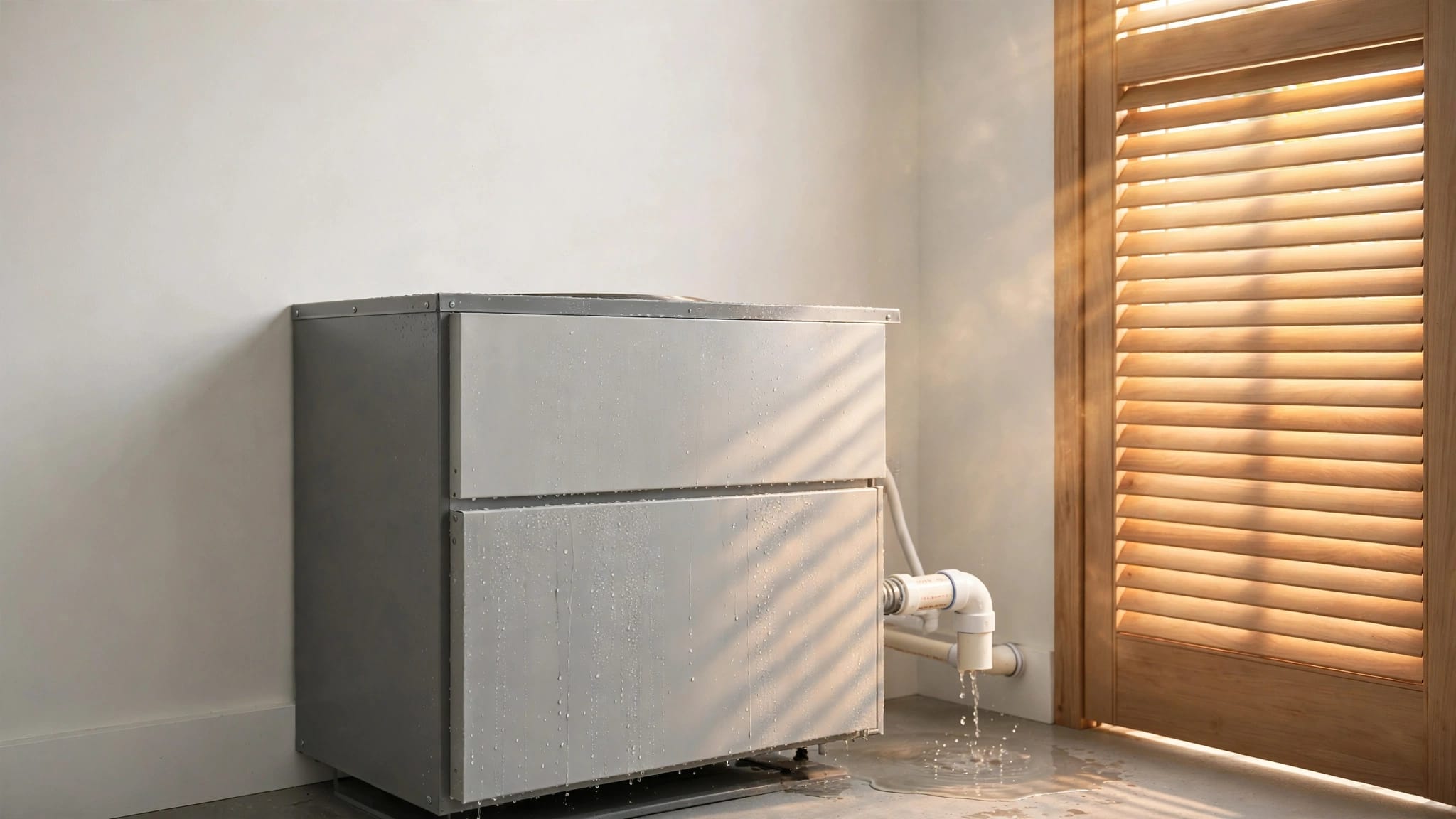
Listen for the indoor fan and look, without opening a cabinet, to see whether the outdoor unit is running. Note any water around the indoor unit, unusual sounds, or a burning smell. Water near an air handler may point to a condensate issue; it doesn't prove the fuse has failed.
For other homeowner-safe observations, see what to do while waiting for AC repair.
Treat power shutoff as the dividing line
Turn off power to the HVAC system before opening equipment or removing a fuse. A thermostat's off setting doesn't disconnect electrical power. HVAC systems may have separate power supplies for indoor and outdoor equipment, so don't assume one switch makes every component safe.
If you're unsure which breaker or disconnect supplies the cabinet, leave it closed. The same applies if you see damaged wiring, moisture near electrical parts, or signs of overheating. An observation made through a closed panel is more useful than taking an electrical risk.
Where to Find an AC Low-Voltage Fuse
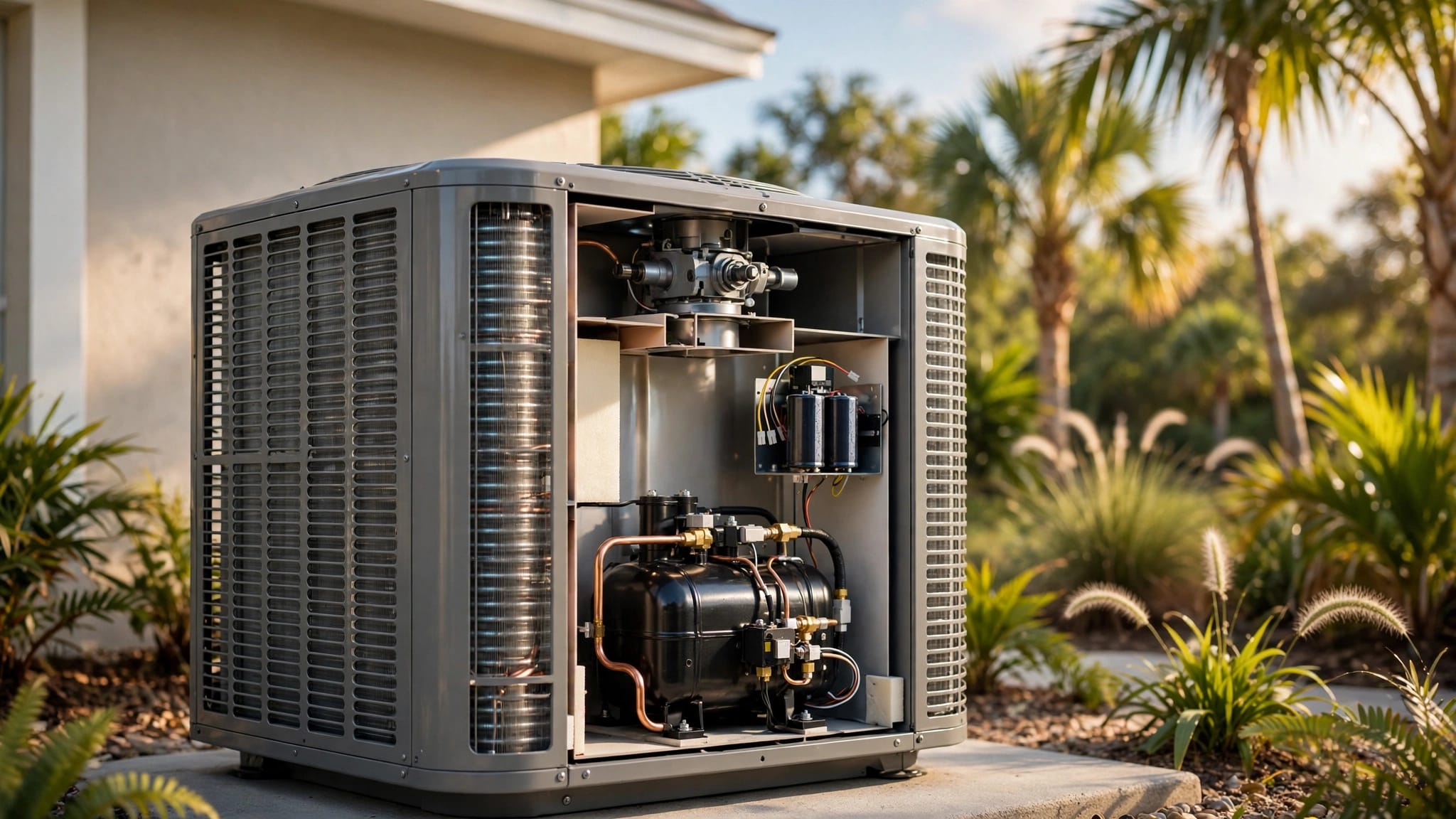
On many systems, the small fuse sits on the indoor air handler's control board. Some equipment uses a different arrangement, so your fuse may not match a photo or appear in the same spot. The model's documentation can help identify its components.
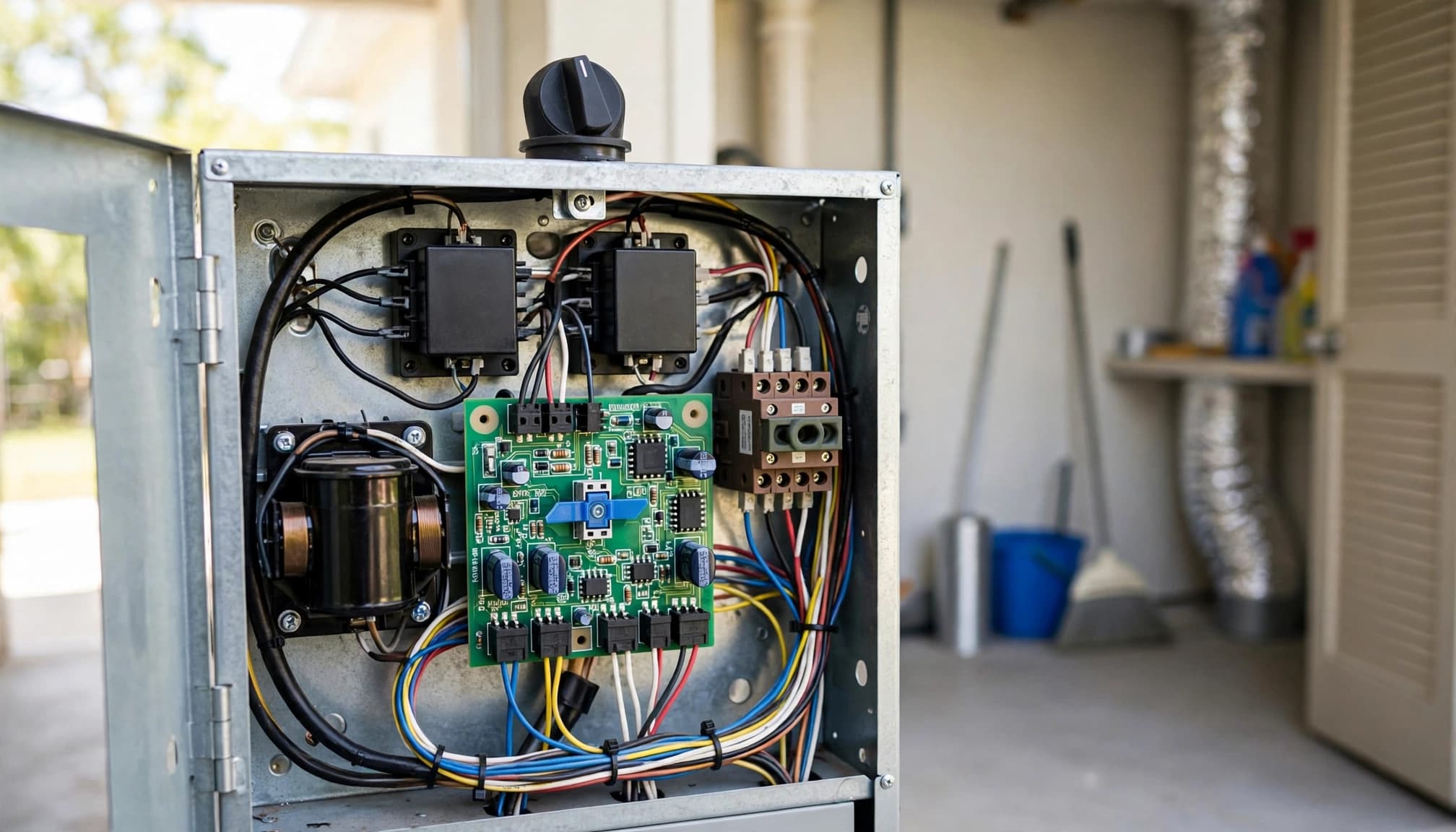
A control-board fuse is often a small plug-in component, unlike the larger electrical protection associated with the outdoor disconnect or household breaker panel. Don't pull a component based only on its shape. If you can't identify it confidently, leave the cabinet closed and arrange service.
Some systems place the indoor equipment in a garage, closet, or attic. Limited access makes identification harder, especially where light is poor or the cabinet sits close to stored belongings. Don't reach past wiring to look for a fuse, and don't open the outdoor unit to search for one.
How to Test an AC Low-Voltage Fuse Safely
There are two distinct checks: looking for visible damage and confirming the fuse electrically. The first can offer a clue. The second requires proper isolation and a meter, so a technician is the safer choice if you're unfamiliar with electrical testing.
What a visual inspection can show
Only inspect an accessible fuse after power to the HVAC system has been turned off. Look for obvious damage, such as a broken internal element or darkened plastic. If the fuse is difficult to identify or reach, stop rather than moving wiring aside.
An intact appearance doesn't confirm a working fuse . Damage can be hard to see, and the symptoms that led you to inspect it may have another cause. Also, never bridge the fuse's contacts with wire, foil, or another object. A bypass removes its protection and can damage equipment.
What an electrical test confirms
A technician can check whether current has a continuous path through the fuse after safely isolating the equipment. That check answers a narrower question than a full AC diagnosis: whether the fuse itself is open or intact.
If the fuse is intact, the technician can investigate elsewhere in the control circuit. If it's open, the next task is finding out why. Either result needs to be considered alongside the thermostat's behavior and the rest of the system. Don't use the fuse as a reason to probe an energized cabinet; the nearby equipment can carry dangerous power even though this is called a low-voltage fuse.
What to Do If the Fuse Is Blown
A confirmed blown fuse needs the exact same type and amperage for replacement. A fuse that fits the holder isn't necessarily the right one. Never install a higher-amperage fuse to keep the AC running, and never bypass the fuse.
If you can't verify the original specification, let an HVAC technician handle it. The same applies when the fuse holder, board, or nearby wiring looks damaged. Leave power off if you notice a burning smell or scorching.
A new fuse also isn't proof that the repair is complete. If it opens again, continued replacements can hide a wiring or equipment fault. Stop trying to restart the system and have the cause diagnosed before running it again.
Why a Low-Voltage Fuse May Fail Again
Repeated failures point to a problem somewhere in the circuit the fuse protects. The fault may appear only when a particular component operates, which makes a quick glance at the board inconclusive.
Wiring and control components need checking
Damaged insulation, a loose connection, or a short in a control wire can cause trouble. A thermostat wire can pass through walls and reach outdoor equipment, so the issue may be away from the indoor fuse.
Other controls connected to the system may need inspection too. A technician can trace the circuit and determine whether the fault sits in wiring, a connected component, or the equipment itself. Guessing at parts usually costs more time than identifying the source.
Timing gives the technician a useful clue
Note whether the thermostat went blank immediately, whether the outdoor unit attempted to start, or whether the failure happened after the system ran for a while. These details don't identify the failed part on their own, but they help narrow the diagnosis.
When to Call for AC Service in Fort Myers
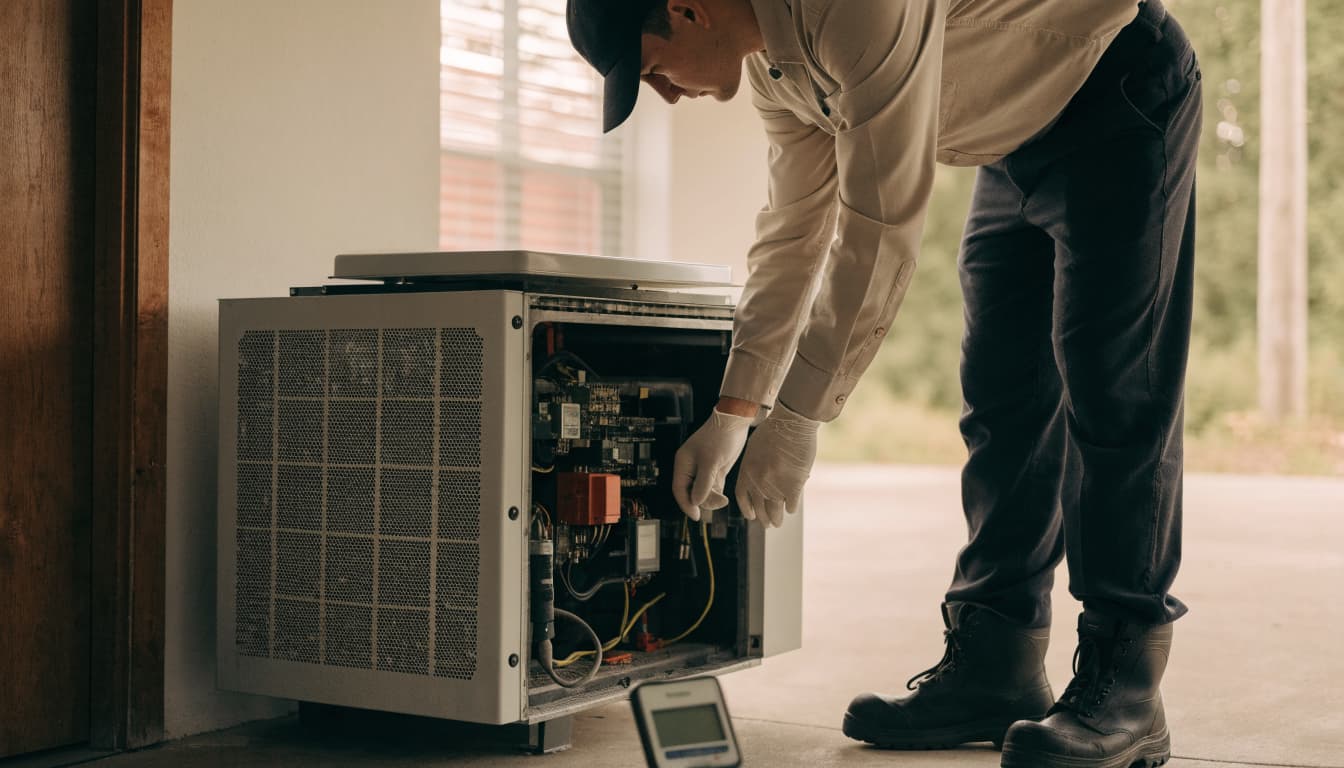
Call an HVAC technician when you can't safely identify the fuse, its condition is uncertain, or a replacement fails again. Request help sooner if there's a burning smell, visible electrical damage, or a breaker that keeps tripping.
Valor Heating & Cooling offers HVAC repair and inspection in Fort Myers. A technician can test the fuse as part of a broader diagnosis and explain what caused the loss of cooling. For a complete failure that needs prompt attention, the company also offers 24/7 emergency HVAC service throughout Lee County.
Before the visit, note the thermostat's behavior, which parts of the system appear to run, and whether anyone has already found a blown fuse. If you need help identifying the fault, Schedule an Estimate with Valor Heating & Cooling.
Frequently Asked Questions
Can a blown fuse make the thermostat screen go blank?
Yes, on some systems. A blown control-circuit fuse can interrupt power to the thermostat. But a blank screen can have other causes, including thermostat batteries on models that use them. The display alone can't confirm the fuse's condition.
Can I tell if the fuse is good by looking at it?
Not reliably. Obvious damage may tell you a fuse has failed, but an intact-looking fuse may still be open. Proper electrical testing can confirm its condition once the equipment is safely isolated.
Is it safe to put in a larger fuse if the new one blows?
No. Never use a larger fuse or bypass the existing one. Replacement must match the exact type and amperage. A second failure calls for diagnosis of the wiring or equipment fault, not another attempt to keep the system running.
Is the outdoor AC disconnect fuse the same thing?
No. A fuse in an outdoor disconnect, where one is present, isn't the small low-voltage control fuse discussed here. Don't open an outdoor electrical enclosure to check for a control-board problem. If you aren't sure which component you're seeing, ask a technician to identify it.
The Safest Next Step
An unresponsive AC doesn't automatically mean its low-voltage fuse has blown. Check the thermostat and visible symptoms first. Before anyone opens equipment or removes a fuse, power must be off .
A damaged fuse may be easy to spot, but a reliable test and a lasting repair require more than appearance. If the fuse fails again, leave the system off and have a technician find the fault.
Recent Posts