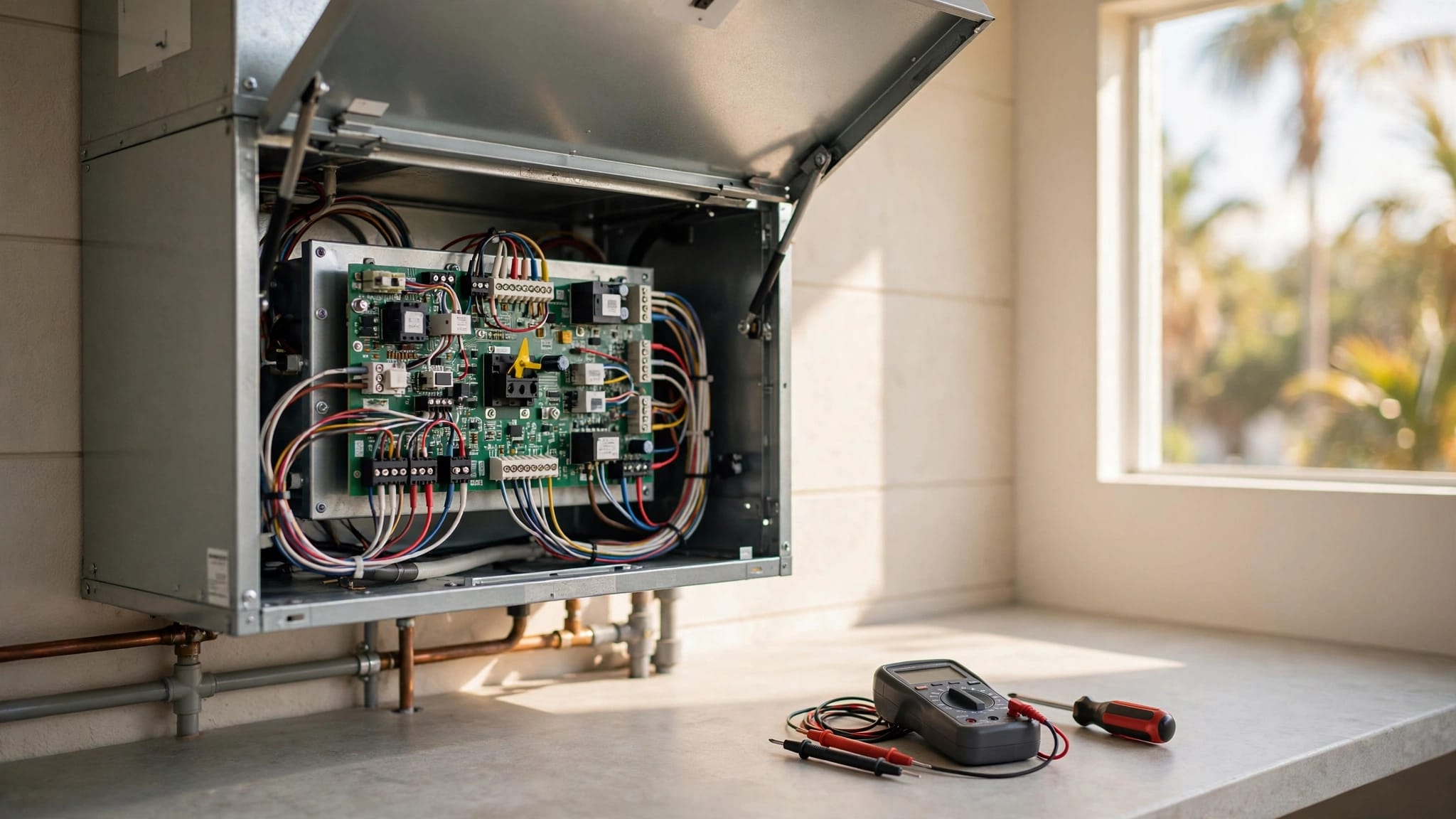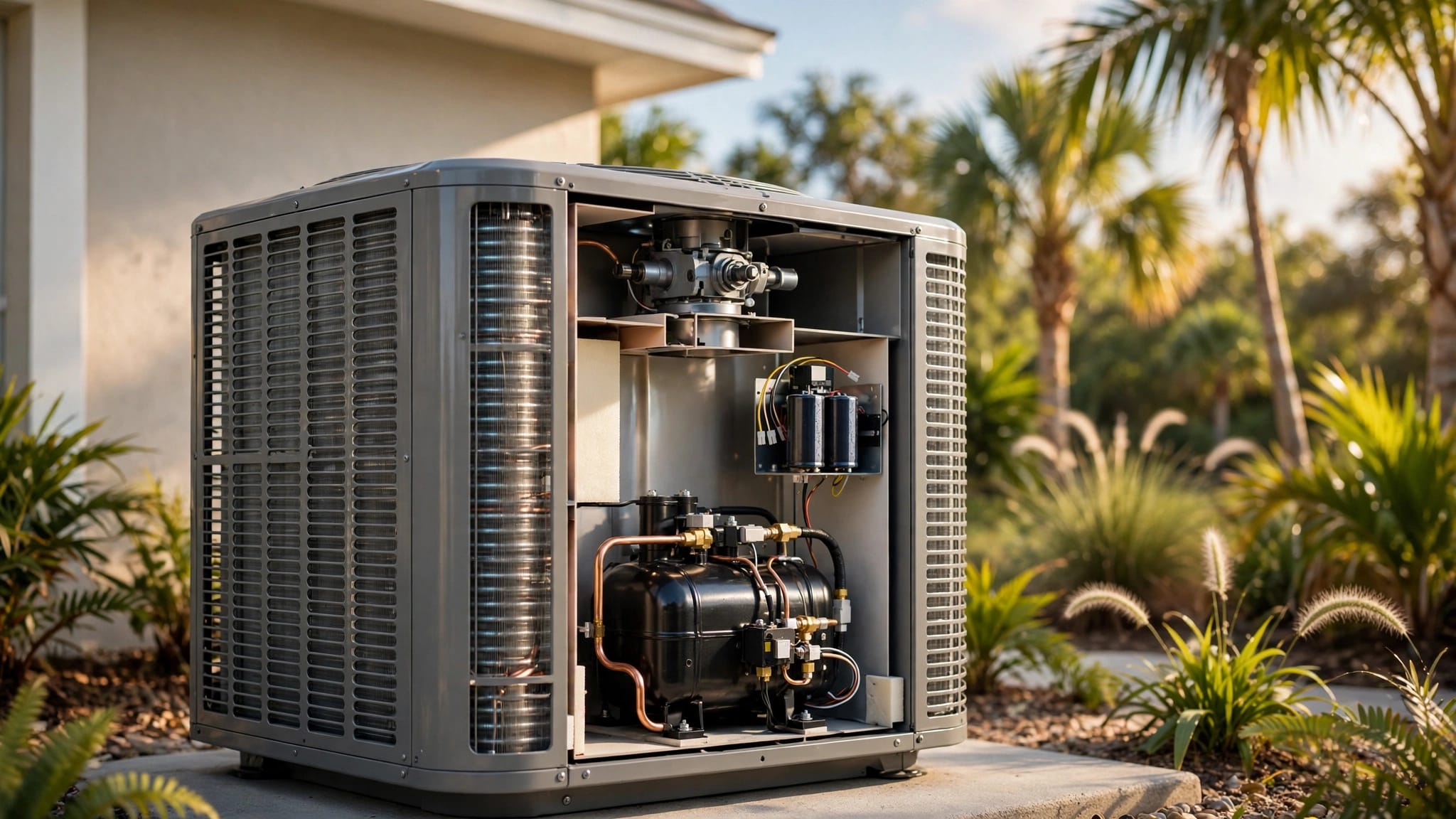
How to Tell If Your AC Supply Vents Are Too Small
One bedroom stays warm while the rest of your Fort Myers home cools down. Are your AC supply vents too small, or is something stopping air before it reaches that room?
A small-looking vent can raise a fair question, especially when the AC runs through a long Southwest Florida summer. But vent size alone won't tell you what needs fixing . Start with the pattern of airflow, then check the system that delivers it.
Why a small-looking grille doesn't settle the question
A supply vent is the opening where cooled air enters a room. The visible register, the duct behind it, and the airflow the room needs all matter. A large grille attached to a restricted duct can still deliver too little air.
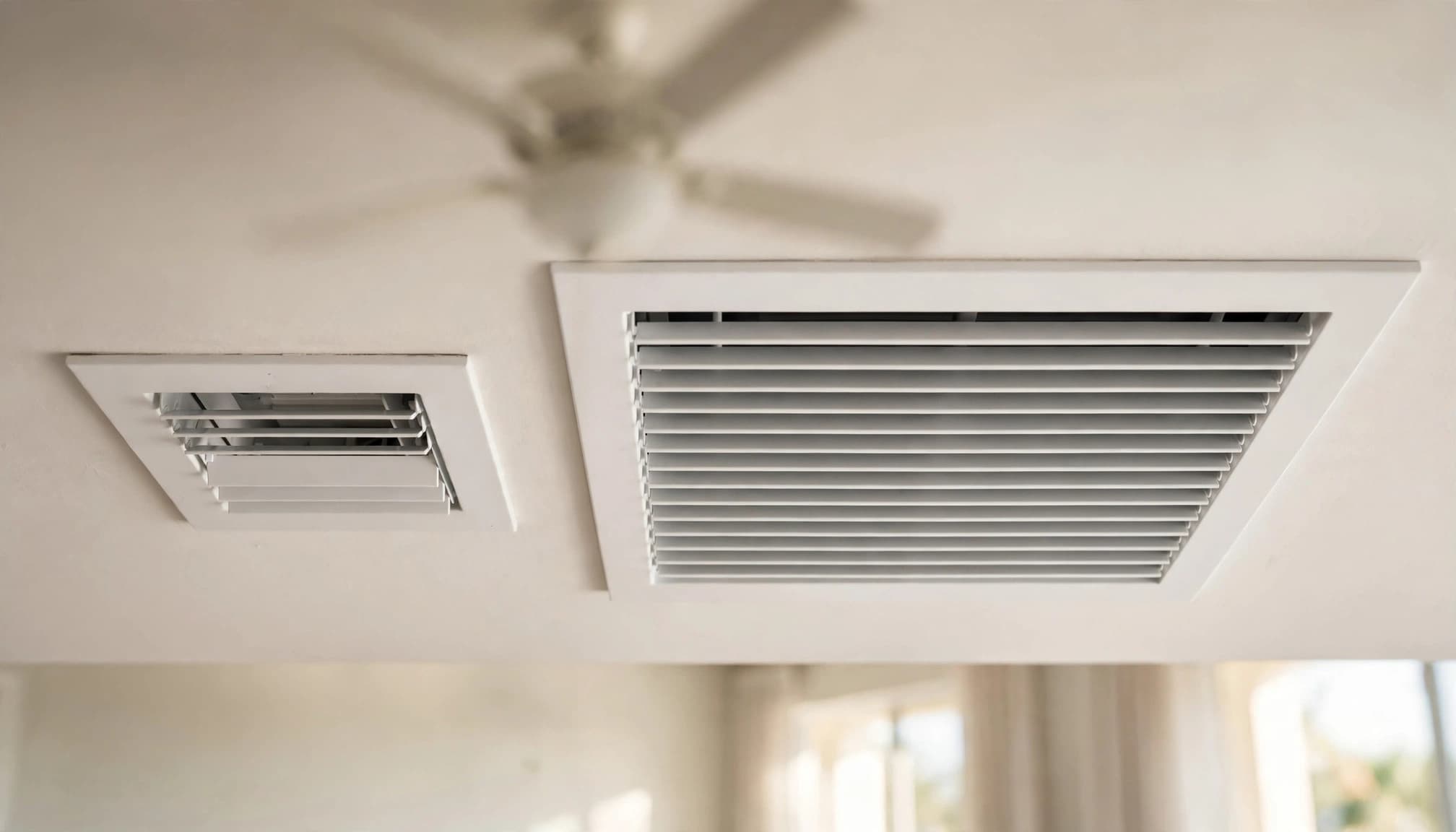
The register and duct do different jobs
The register's frame and adjustable blades affect how freely air leaves the duct. Its outside dimensions don't show how much open area air can pass through. A replacement that looks bigger may have a similar effective opening.
The duct connection behind the register matters too. If that connection or the duct run restricts airflow, changing only the face of the vent won't solve the underlying problem.
Rooms don't all need the same airflow
A sunny room with large windows may have different cooling needs than a shaded room of similar size. Duct length, layout, and equipment also affect how much air arrives.
That's why there isn't a reliable rule that every bedroom needs a particular vent size. The useful question is whether the register and duct can deliver the airflow that room requires without excessive restriction or noise.
Are your AC supply vents too small? Watch for patterns
Several clues can justify a closer look. None proves that the vent itself is undersized. Notice where the problem happens and whether it appears only during certain parts of the cooling cycle.
Weak airflow in one room
During a normal cooling cycle, compare the airflow at the problem room's supply vent with vents in nearby rooms. A noticeably weaker stream is useful information, especially if that room stays warm after the system has been running.
Still, air may be escaping through a loose duct connection or meeting a crushed section of flex duct before it reaches the register. Valor's guide to common causes of weak AC airflow covers other possibilities worth ruling out before changing a vent.
Noise or a persistent comfort gap
A sharp whistle or rush of air at one register can point to a restrictive grille or partly closed blades. Yet noise can also come from a damper, duct bend, or another restriction. Note whether the sound began after a register was replaced.
Uneven temperatures offer another clue. If one room feels warm while other rooms cool normally, its airflow deserves attention. If several rooms have the same problem, a system-wide issue becomes more likely.
Check airflow safely before changing anything
You can gather useful observations without opening equipment or climbing into a hot attic. Make each comparison while the AC is running under normal conditions, with the thermostat set as you typically use it.
Clear the easy obstructions
Check that furniture, rugs, and curtains aren't blocking supply or return openings. If the register has adjustable blades, make sure they aren't shut. Look at the air filter and replace it if needed, using the type and size recommended for your system.
Then give the AC time to run and compare the rooms again. A normal AC tune-up in Fort Myers can also catch airflow-related issues at the filter, coil, and blower before you pay for a duct change.
Write down what you notice
Note which rooms feel warm, which vents sound unusual, and whether the problem changes when bedroom doors are closed. Tell the technician if the trouble started after remodeling, a new register, or an equipment replacement.
Don't close other supply vents to push more air into the weak room. That can change pressure in the duct system without fixing the restriction. Avoid cutting a larger opening or altering ductwork based on a visual comparison. Leave attic inspections and work near electrical equipment to a professional.
Problems that can mimic undersized supply vents
If you ask, "Are my AC supply vents too small?" the answer depends partly on what happens upstream. A vent may be appropriately sized but receive too little air, or the room may lack an effective path for air to return to the system.
Duct leaks and damage
In many Southwest Florida homes, ducts run through hot attic spaces. A loose joint can release cooled air before it reaches the room. A crushed or sharply bent flex duct can restrict delivery, even when the register looks generous.
A technician may recommend duct leakage testing for Fort Myers homes when weak airflow and uneven cooling suggest hidden losses. Replacing the visible register won't recover air escaping into the attic.
Return-air and equipment issues
Supply air needs a route back to the air handler. A room that feels worse when its door is shut may have a return-air pathway issue rather than a small supply vent. The number and placement of returns are system-specific; return-air vent needs in Fort Myers homes deserve a separate assessment.
A dirty coil, blower problem, or other equipment fault can also reduce airflow across multiple rooms. If ice appears on the indoor unit or refrigerant line, turn cooling off and arrange service. Don't chip away ice or keep running the system in cooling mode.
How a technician tests the vent and the system
A trained technician can compare what the room needs with what it receives. That assessment looks beyond the grille, because an airflow reading at one vent cannot identify every restriction by itself.

Measurements beat a visual guess
A technician can measure airflow at the register, check system static pressure, and inspect the filter, blower, duct connections, and accessible duct runs. Static pressure helps show whether the system faces excessive resistance, but further checks are needed to locate the cause.
For a suspected duct problem, an inspection may include checking ductwork for leaks and damage. These findings help separate a restrictive register from a damaged duct or equipment problem.
Room needs shape the recommendation
The right register and duct depend on the room's cooling load and the system's design. HVAC professionals can use Air Conditioning Contractors of America methods, including Manual J for room loads, Manual D for duct design, and Manual T for air outlets, when a design review is warranted.
Ask what airflow the room requires, what the technician measured, and which part of the air path limits delivery. The question "Are the AC supply vents too small?" should lead to a clear explanation, not a guess based on grille dimensions. Valor Heating & Cooling offers HVAC repair and inspection in Fort Myers when the cause isn't visible at the vent.
A larger register can't restore air lost through a duct leak or remove a restriction deeper in the duct run.
Fix the restriction you actually have
Once the cause is clear, the repair may be simple or involve a duct-design change. Ask for the recommended work in writing so you can see which part addresses the measured problem.
When a register change makes sense
If the duct delivers adequate air but the register restricts it or creates objectionable noise, a suitable replacement may help. The technician should check the register's open area, connection size, and airflow pattern, not only its outer dimensions.
Air direction matters as well. A register should distribute air through the occupied part of the room without creating an uncomfortable draft. A bigger face isn't automatically a better match.
When the work is elsewhere
A leaking connection may need sealing. A crushed duct may need repair, while a return-air problem may call for a different airflow path. If the duct layout can't deliver the required air, replacing the register alone won't correct it.
For a warm room or noisy vent that persists after basic checks, Schedule an Estimate with Valor Heating & Cooling. Describe which rooms are affected and any changes you noticed; that history helps focus the visit.
Key Takeaways
- A small-looking grille is a reason to investigate, not proof that it's undersized.
- Compare rooms during a normal cooling cycle, and check filters and blocked openings first.
- Weak airflow can come from leaks, crushed ducts, return-air problems, or equipment faults.
- The right fix depends on measured airflow and the room's needs , not a universal vent dimension.
FAQ
Are my AC supply vents too small if one room is always warm?
Possibly, but a warm room has several potential causes. A duct leak, restricted duct, closed register, or return-air issue can produce the same result. Compare airflow during a cooling cycle and have the system checked if the difference persists.
Can I install a larger vent cover myself?
A cover that fits the existing opening may be easy to replace, but appearance alone can't tell you whether it will improve airflow. Don't cut a larger opening or change the duct without knowing the room's airflow needs and the system's design.
Does whistling mean a supply vent is too small?
Whistling suggests air is meeting a restriction somewhere, but it doesn't identify where. Check that the register blades are open and the opening is clear. If the sound continues, a technician can inspect the grille, damper, and duct run.
Will adding another supply vent cool a hot bedroom?
Only if the system and ductwork can deliver the needed air without taking too much from other rooms. An added outlet needs a design review, especially when the existing duct has leaks or restrictions. Measure the current airflow before deciding.
Conclusion
A warm room can make a small supply vent look like the obvious culprit. The reliable answer comes from checking where air slows down and how much the room needs.
Start with clear openings and a clean filter. If the comfort gap remains, have a technician measure airflow and inspect the full path before changing the vent.
Recent Posts