
How to Check Your AC Temperature Difference in a Florida Home

Valor HVAC • September 3, 2026

Share this article

A Florida AC can run for hours and still leave your home feeling sticky, uneven, or warmer than it should. Checking the AC temperature difference gives you a useful snapshot of how your system is moving heat and moisture.

This quick test won't diagnose every problem, but it can tell you when a professional visit makes sense. With two thermometers and a few minutes, you can collect a reading without opening your equipment.

Why the temperature split matters

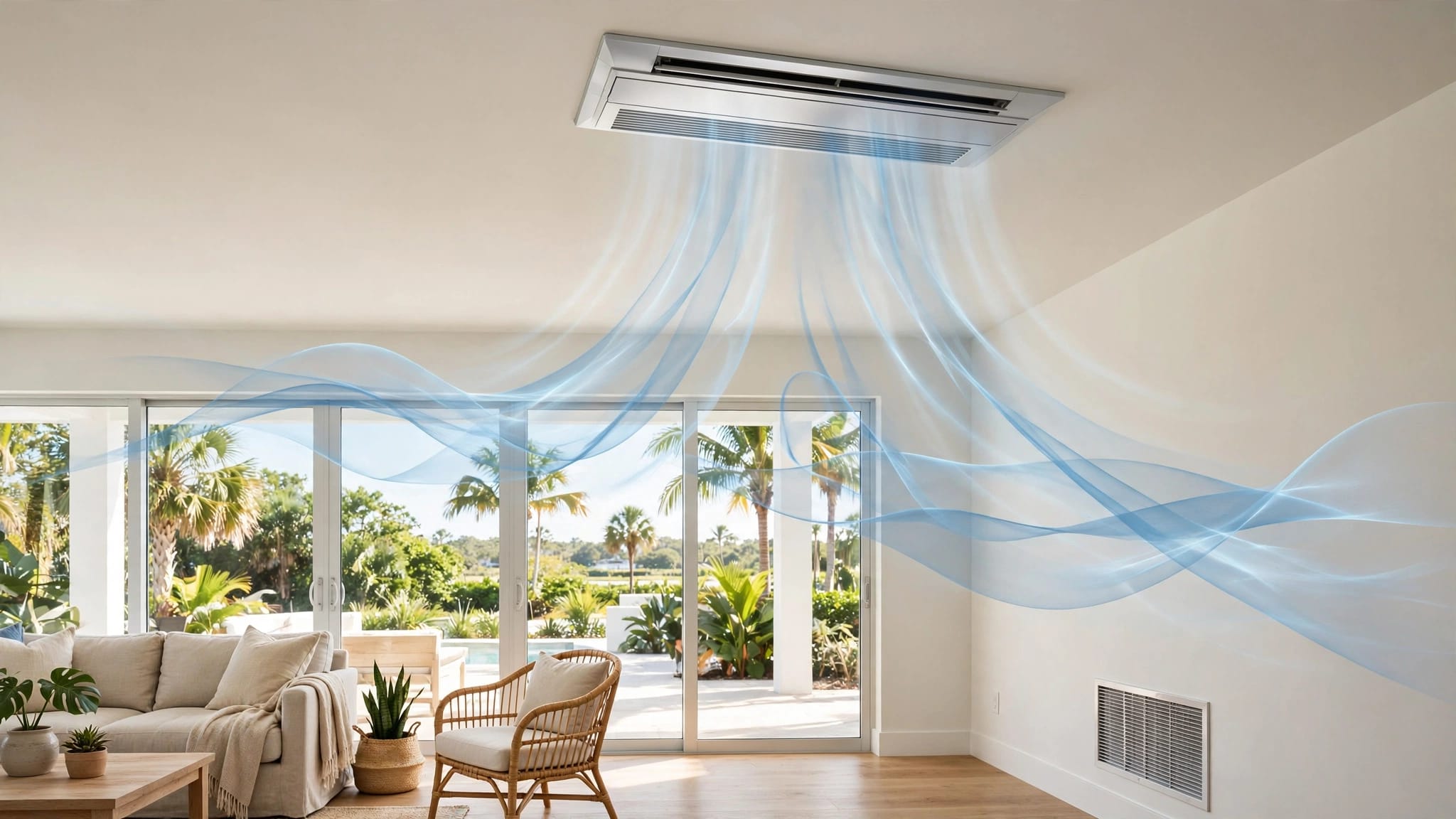
Your air conditioner pulls warmer indoor air through the return grille, cools it across the indoor coil, then sends cooler air back through supply vents. The difference between those two readings is often called the temperature split.

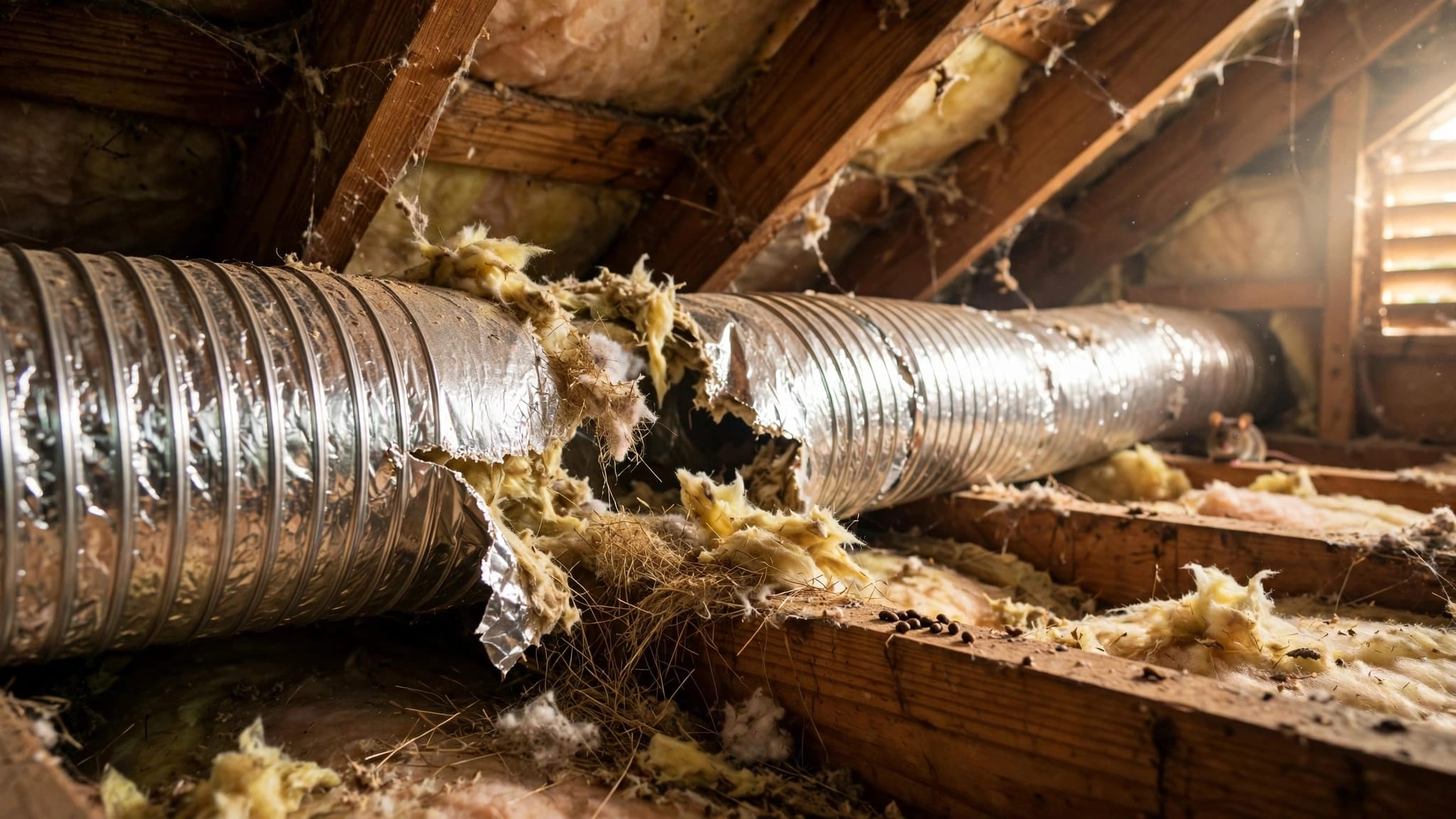
A reading outside the usual range can point to restricted airflow, a dirty filter, duct leakage, thermostat issues, or a mechanical concern. However, one number never tells the full story. Florida's humidity puts a heavy moisture-removal load on your system, especially during summer afternoons.

Return air and supply air are different readings

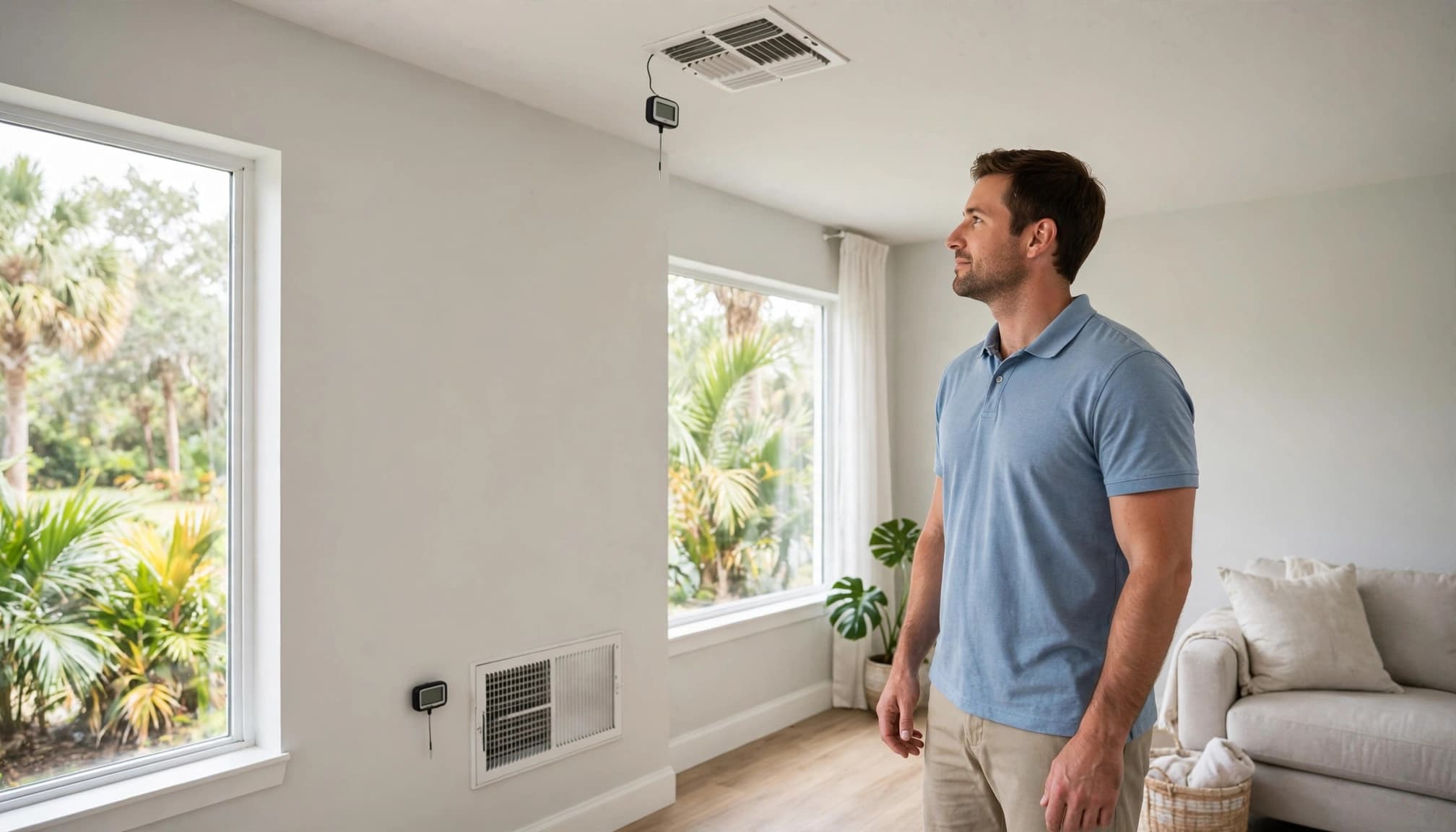
Return air is the air your system draws in through a large grille, often located in a hallway, ceiling, or central wall. Measure the air entering that grille, not the temperature of the grille itself.

Supply air is the cooled air blowing from smaller vents around the home. Use a supply vent closest to the indoor air handler when possible. A distant room may show a different reading because of duct length, attic heat, or weak airflow.

How to check AC temperature difference accurately

You need two reliable digital thermometers with probes, or one thermometer that you move between locations. Avoid infrared thermometers for this task because they measure surface temperature rather than the air stream.

Let the system settle first

Set your thermostat to cool and allow the AC to run for at least 10 to 15 minutes. Keep exterior doors and windows closed. Also, avoid checking immediately after cooking, showering, or bringing humid outdoor air inside.

Make sure the thermostat fan setting is on "Auto." A fan set to "On" may keep circulating air between cooling cycles and blur the result.

Take two air-temperature readings

Follow these steps while the compressor is actively cooling:

  1. Hold or place one thermometer in the return-air stream, a few inches from the grille.
  2. Place the second thermometer in the supply-air stream, without pushing it deep into the vent.
  3. Wait until each display stops changing, usually one to three minutes.
  4. Write down both readings, then subtract the supply temperature from the return temperature.

For example, return air at 78 degrees F and supply air at 60 degrees F creates an 18-degree AC temperature difference.

Measure air moving through the grille or vent, not the painted wall, metal register, or thermostat housing.

Don't remove the air-handler panel, touch wiring, or reach into a running unit. If a vent is dusty or sharp-edged, wear gloves and keep the thermometer probe clear of moving fan parts.

Is a 15 to 20 degree difference normal?

A commonly cited target is a 15 to 20 degree AC temperature difference , but treat it as a general guideline rather than a pass-or-fail score. A properly operating system may fall outside that range under certain conditions.

For instance, a variable-speed system can adjust airflow and capacity as conditions change. High indoor humidity can also affect the temperature split because the system spends energy removing moisture. Outdoor heat, dirty filters, closed vents, duct restrictions, refrigerant charge, and thermostat settings all influence the numbers.

Photo by Vitaly Gariev

Check comfort along with the number

A reading is more useful when paired with what you notice at home. If rooms cool evenly, humidity feels controlled, and the system cycles normally, a slightly unusual split may not be urgent.

On the other hand, a 17-degree split does not rule out a problem if the AC runs constantly, produces weak airflow, or leaves some rooms muggy. Track readings over several days at similar thermostat settings before assuming the system has failed.

What to do when your readings seem off

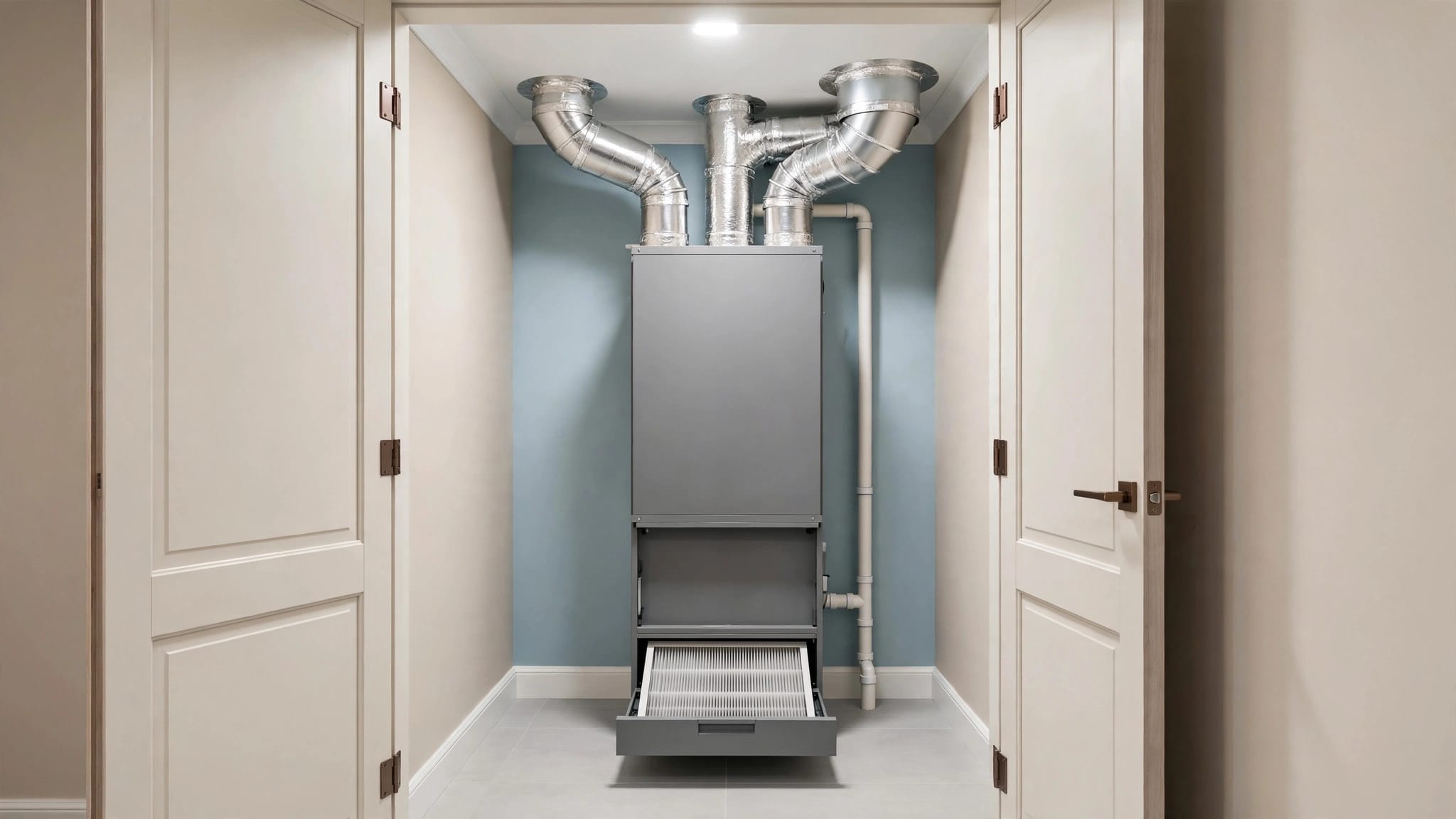
Start with the easy checks. Replace a clogged filter with the size and type your system requires. Then confirm that supply vents and return grilles are open and unobstructed by furniture, rugs, or drapes.

Look for ice on the refrigerant line near the indoor unit or outdoor condenser. Turn the cooling system off if you see ice, but leave the fan setting on "Auto." Continuing to run a frozen system can damage the compressor.

Call for AC service when warning signs appear

Schedule service if the temperature difference stays below about 15 degrees during a steady cooling cycle, particularly when your home also feels warm or humid. A very high split with weak airflow also needs attention.

Other warning signs include water around the indoor unit, repeated breaker trips, burning smells, loud new noises, or warm air from multiple vents. A technician can check airflow, coils, drain components, electrical parts, and refrigerant conditions safely. For persistent comfort problems, Schedule an Estimate with Valor Heating & Cooling.

A practical baseline for Florida comfort

An AC temperature difference is a simple home check, not a complete system diagnosis. Measure return and supply air after a steady cooling run, then compare the result with how the home feels.

Florida heat and humidity can shift the numbers, so focus on recurring patterns instead of one isolated reading. Consistent cooling, healthy airflow, and controlled humidity matter more than a perfect temperature split.

FAQ

Can I check the temperature difference at any supply vent?

Yes, although a vent closer to the air handler usually gives a cleaner reading. Compare the same return grille and supply vent each time so your results stay consistent.

Does a dirty filter lower the AC temperature difference?

It can. A clogged filter restricts airflow across the indoor coil, which may change the supply-air temperature and reduce comfort. Replace the filter before treating an unusual reading as a major repair issue.

Should I test my AC during a Florida heat wave?

You can, but outdoor heat and high humidity may affect the result. Test again on another day and note the thermostat setting, indoor humidity, and whether the system ran continuously.

Recent Posts

By Valor HVAC September 2, 2026
A failed air conditioner can turn a Southwest Florida rental into a dangerous place fast. Yet Florida rental AC responsibilities are not as simple as "the landlord always fixes it" or "the tenant always pays." Florida law sets a baseline, while the lease, the cause of the fail...
By Valor HVAC September 1, 2026
A small crack under your indoor AC unit can become a stained ceiling, wet insulation, or damaged flooring. In Southwest Florida, a condensate drain pan handles a steady flow of moisture for much of the year, so small drainage problems can build quickly. Florida heat and humidi...
By Valor HVAC August 31, 2026
A failing air conditioner in Fort Myers can turn a normal afternoon into a stressful rush. The search for an HVAC contractor Fort Myers homeowners can trust often starts when comfort is already gone, which makes it easier to accept a vague estimate or a fast sales pitch. You d...