How Manual T Shapes HVAC Airflow in Florida Homes
A room can feel warm and stuffy even when the thermostat says the house is cool. In many cases, the issue is how conditioned air reaches the room and returns to the system.
Manual T HVAC design addresses air distribution, including supply register and return grille selection and placement. It works alongside other design methods, because it does not determine duct sizing or choose the system's capacity. In Southwest Florida, good air distribution matters through long periods of heat and humidity.
What Manual T covers in a home
Manual T is an ACCA method for air distribution. It guides the selection and placement of supply outlets and return grilles so air can move through occupied rooms as intended.
How air distribution affects comfort
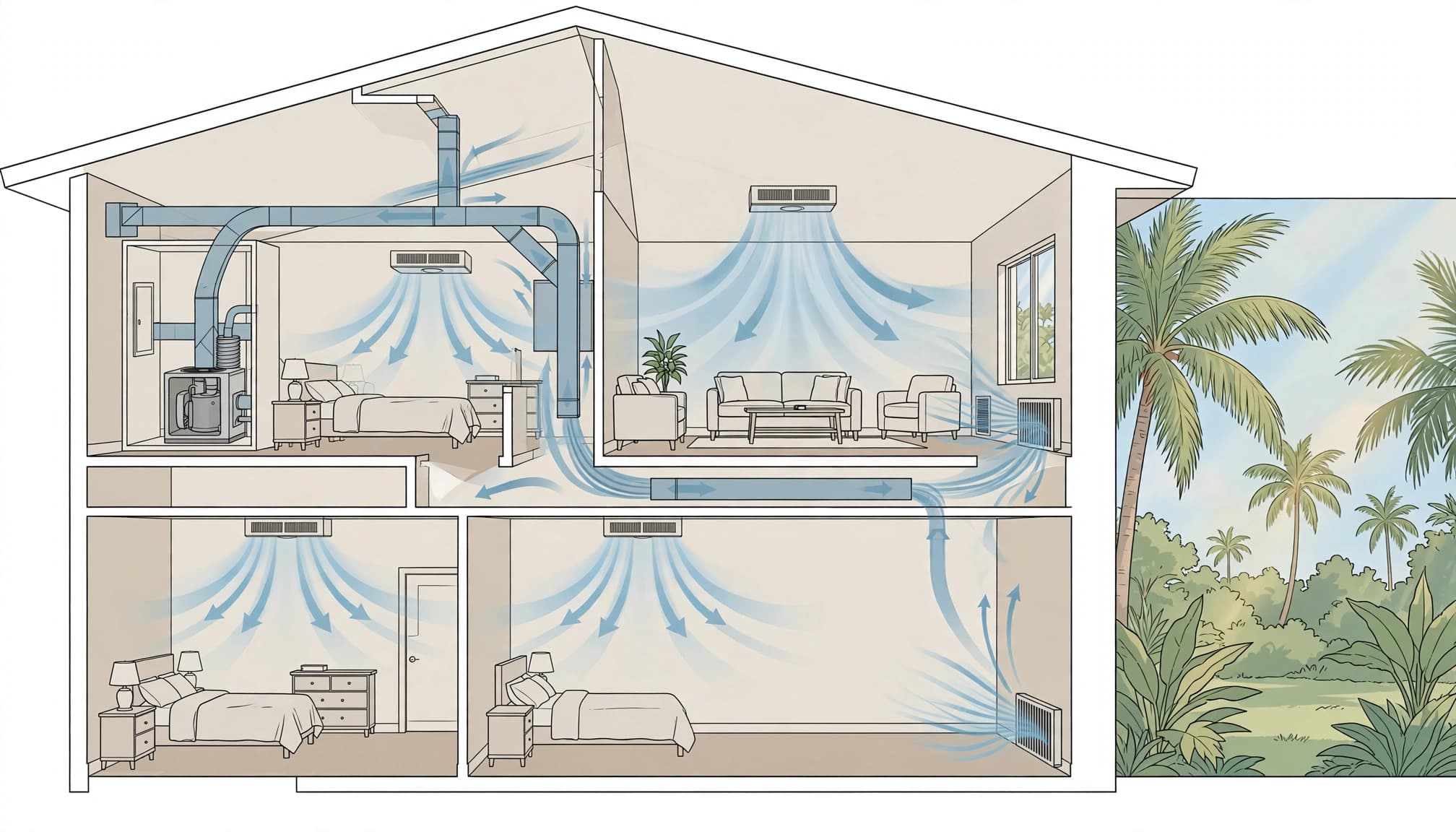
A supply register releases conditioned air into a room. Its style, location, and direction influence how that air spreads and mixes with the room air. The return grille gives air a path back to the system.
When the supply and return paths work together, air can circulate through the living space. A poorly placed or obstructed outlet may leave parts of a room under-served, even when the equipment is operating.
What Manual T does not determine
Manual T is one part of HVAC design. It does not, by itself, calculate the home's heating and cooling load, select equipment capacity, or size the duct system.
Those tasks connect to other design steps. ACCA Manual J calculates heating and cooling loads, Manual S supports equipment selection, and Manual D addresses duct design. Manual J load calculations for Fort Myers homes help show why equipment sizing is separate from the question of where air enters each room.
How supply and return air work together
A central system moves air in a loop. The air handler sends conditioned air through supply ducts to registers, and return grilles carry room air back toward the equipment.
Supply registers deliver conditioned air
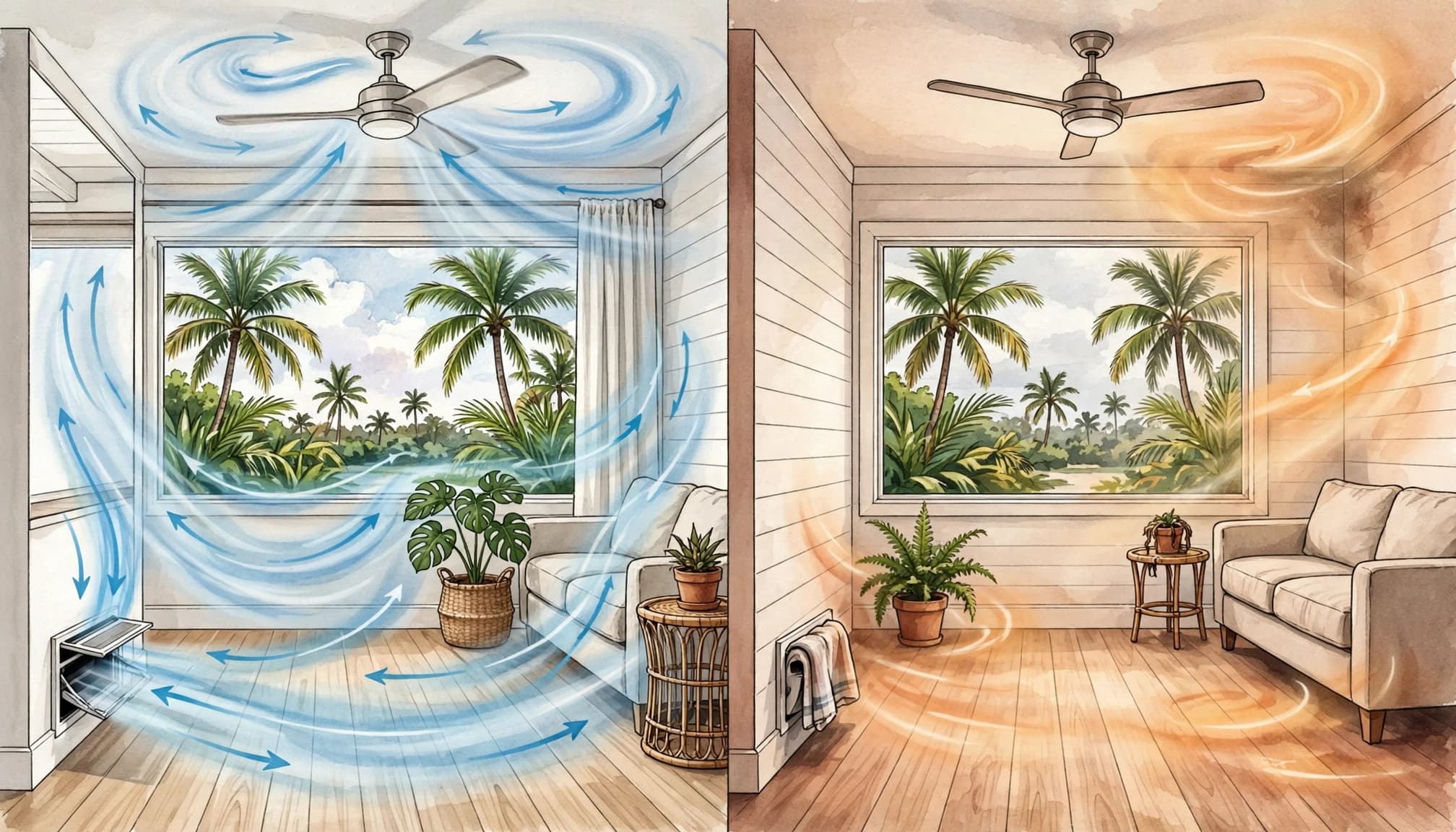
A register is the visible outlet where air enters a room. Its location and direction affect how the air travels and mixes. A couch, curtain, or storage item placed directly in front of it can interfere with that movement.
The amount of air reaching the outlet also depends on the duct path and system operation. A well-chosen register cannot compensate for a damaged or restricted duct.
Return grilles complete the air path
Return grilles aren't simply extra vents. They help air move back to the air handler, and their arrangement needs to suit the system and home. A closed bedroom door, blocked grille, or inadequate return path can affect circulation.
Return design must also work with the blower, filter, coil, ductwork, and equipment capacity. Return air grille sizing and placement explains why a grille is only one part of the return-air path.
Why register and grille placement matters
The right outlet in the wrong location can still leave a room uncomfortable. Manual T considers how supply outlets and return grilles distribute air within the home, rather than treating every vent as interchangeable.

Room layout affects airflow
Furniture placement, doors, windows, and room shape can all influence air movement. For example, a large piece of furniture directly beneath a supply register may block air from spreading across the room. An outlet that sends air toward a nearby wall may not mix air as effectively as one placed to suit the room.
These details matter in bedrooms, additions, and rooms at the end of a duct run. A design should account for how the space is actually used, not only its floor area.
Grille choice is part of the design
Different registers and grilles direct air in different ways. The selection should suit the outlet location and the room's air-distribution needs. Replacing a grille with a different style may change how air moves, but it won't correct a duct restriction or solve a system-level airflow problem.
For that reason, choosing a register by appearance alone can miss the source of uneven comfort. The grille, duct, return path, and equipment all need to work together.
How Florida heat and humidity affect airflow concerns
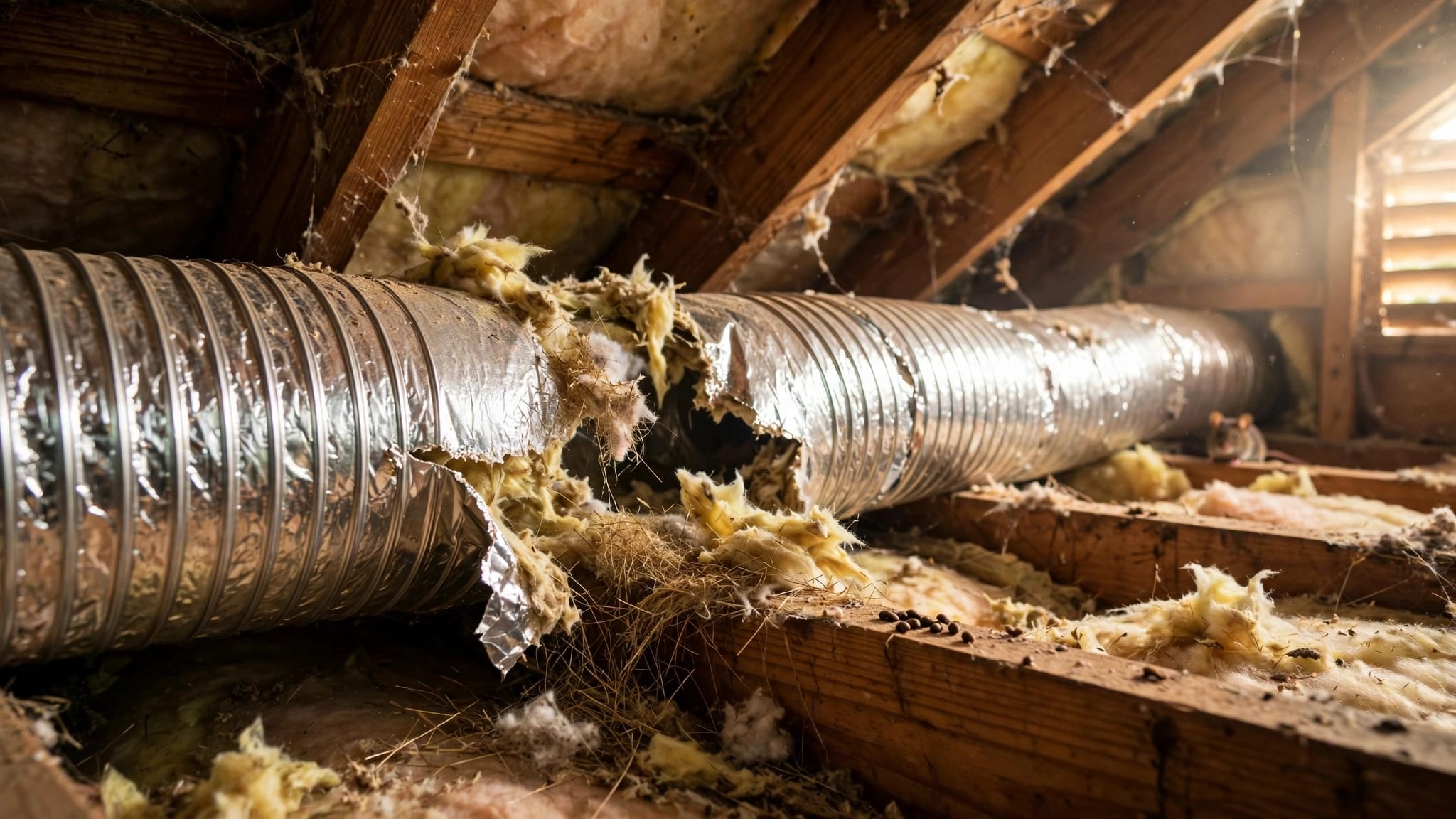
Southwest Florida homes face long cooling seasons, and ducts may run through hot, humid attic spaces. If ducts leak or lack effective insulation, they can gain heat, lose cooled air, or allow moisture into areas where it can cause damage.
Airflow and humidity are related, but different
Good air distribution helps conditioned air reach rooms. It does not guarantee that the home's humidity will stay comfortable. Moisture control also depends on system sizing and operation, ventilation, duct condition, and moisture entering the home.
A room can reach the thermostat's temperature while still feeling damp. Likewise, changing register placement won't fix a leak, excess outdoor moisture, or an equipment problem. The design needs to treat temperature, airflow, and humidity as related concerns with distinct causes.
Hot attics can affect delivered air
In a vented attic, ducts carry cool air through a space that can be much hotter and more humid than indoors. Damaged insulation, poor sealing, or duct leaks can reduce how much cooled air reaches a room. Those issues can undermine an otherwise sensible air-distribution plan.
The material of the duct alone doesn't determine performance. Installation, support, insulation, routing, sealing, and condition matter too. Duct insulation and sealing in hot Florida attics covers the local conditions that can affect duct performance.
Signs your home may need an airflow review
A room that stays warmer than the rest of the home can point to an air-distribution issue, but it doesn't identify the cause on its own. Afternoon sun, weak insulation, a long duct run, a leak, or poor return airflow can create similar symptoms.
Pay attention to repeated patterns: a bedroom that stays uncomfortable every afternoon, a weak supply register, or a room that feels different when its door is closed. These clues can help an HVAC technician assess the system.
Keep supply registers open and clear, and don't block return grilles with furniture or curtains. Closing vents to force more air into another room can increase resistance and shift the problem elsewhere. How static pressure affects HVAC airflow explains why restrictions can affect the whole system.
During an airflow evaluation, a technician may run the system and measure conditions at selected supplies and returns. Readings can include airflow volume, temperature differences, and external static pressure, along with checks of blower operation. The home should be in its normal condition during testing, with vents open and unobstructed unless the technician directs otherwise. See how HVAC air balancing can improve room temperatures.
How Manual T fits with the rest of HVAC design
A comfortable home depends on more than a well-positioned register. Design methods answer different questions, and each piece needs to fit the others.
Load and equipment selection come first
Manual J evaluates the home's heating and cooling needs, including factors such as windows, insulation, orientation, and ceiling height. Manual S helps select equipment to meet those calculated loads. Correct equipment selection matters because the system must match the home's needs, rather than relying on vent changes to compensate for a mismatch.
Ducts and air outlets need to coordinate
Manual D addresses duct design, while Manual T addresses the distribution of air through outlets and grilles. In practice, a duct route, a register, and a return path affect one another. A new register won't solve a crushed duct, and a new air conditioner won't automatically correct a poor return path.
For a replacement or new installation, the design should consider the full system: load, equipment, ducts, air outlets, and returns. That gives the technician a clearer basis for diagnosing comfort problems than changing one vent at a time.
What homeowners can do before calling
Start with simple observations. Check whether supply registers are open and unobstructed, and make sure return grilles have clear space. Note which rooms feel different, when the problem occurs, and whether closing a door changes the comfort.
Avoid closing multiple supply vents to redirect air. That approach can add resistance without fixing a duct leak, return-air issue, or room heat gain. Also, don't assume that a replacement register will solve weak airflow if the duct behind it is restricted or damaged.
If a room remains uncomfortable, or the system has weak airflow across several areas, an inspection can help identify the cause. For a new build, major renovation, or persistent airflow concern, Schedule an Estimate with an HVAC technician to assess how the equipment, ducts, supplies, and returns work together.
Key takeaways
- Manual T guides air distribution, including supply register and return grille selection and placement.
- It does not calculate system capacity or replace duct design.
- Florida's heat and humidity make duct condition and delivered airflow important comfort factors.
- Blocked vents and closed registers can restrict airflow rather than fix an uneven room.
- A recurring comfort issue calls for a whole-system assessment, not guesswork with vent settings.
FAQ
Does Manual T size my air conditioner?
No. Manual T focuses on air distribution. ACCA Manual J calculates heating and cooling loads, and Manual S supports equipment selection based on those loads.
Does Manual T determine duct size?
No. Duct design is addressed separately, commonly through ACCA Manual D. The duct system and air outlets still need to coordinate so the planned airflow reaches each room.
Can a new register fix a warm room?
Sometimes a register choice or location is part of the issue, but it may not be the only cause. Duct restrictions, leaks, return-air problems, insulation, and sun exposure can also affect room comfort.
Better airflow starts with the whole system
Manual T helps shape how conditioned air enters and moves through a home. In Southwest Florida, that design matters alongside properly considered loads, equipment, ductwork, and return paths.
When a room stays hot or feels stuffy, changing one vent may only move the problem. A full airflow review can help identify whether the cause lies at the register, in the duct, or elsewhere in the system.
Recent Posts