How Rodents Damage HVAC Ducts in Florida Attics
Rodents can chew through flexible ductwork, tear its insulation, and leave droppings or nesting material nearby. In a Southwest Florida home, a damaged duct can waste cooled air and affect comfort, but a smell or warm room alone doesn't confirm the cause.
Look for visible damage alongside changes in airflow, unusual sounds, or signs of pests in the attic. Because Florida attics are hot and humid, exposed or leaking ductwork may also face moisture problems. Here's how to spot possible rodent damage to HVAC ducts and decide when to call for help.
Key Takeaways
- Gnawed duct jackets, loose insulation, droppings, nesting material, and persistent odors can signal a rodent problem, but an inspection is needed to confirm damage inside a duct.
- Holes and disconnected joints can let conditioned air escape into the attic, making some rooms harder to cool.
- In a hot, humid attic, damaged insulation or an open outer jacket can also contribute to moisture collecting around ductwork.
- Cleaning doesn't repair a hole or prevent rodents from returning. The entry point and damaged materials need attention.
- Avoid handling droppings, nesting material, or contaminated insulation without proper protection. Contact pest-control and HVAC professionals when there are clear signs of activity or duct damage.
How Rodents Reach Attic Ductwork
Attics offer shelter and places to nest, while HVAC ducts often run through areas that are difficult to see from the living space. Rodents may enter the attic through openings around roof edges, vents, utility penetrations, or other gaps in the building. Once inside, they can move along framing and come into contact with ductwork.
What they can damage
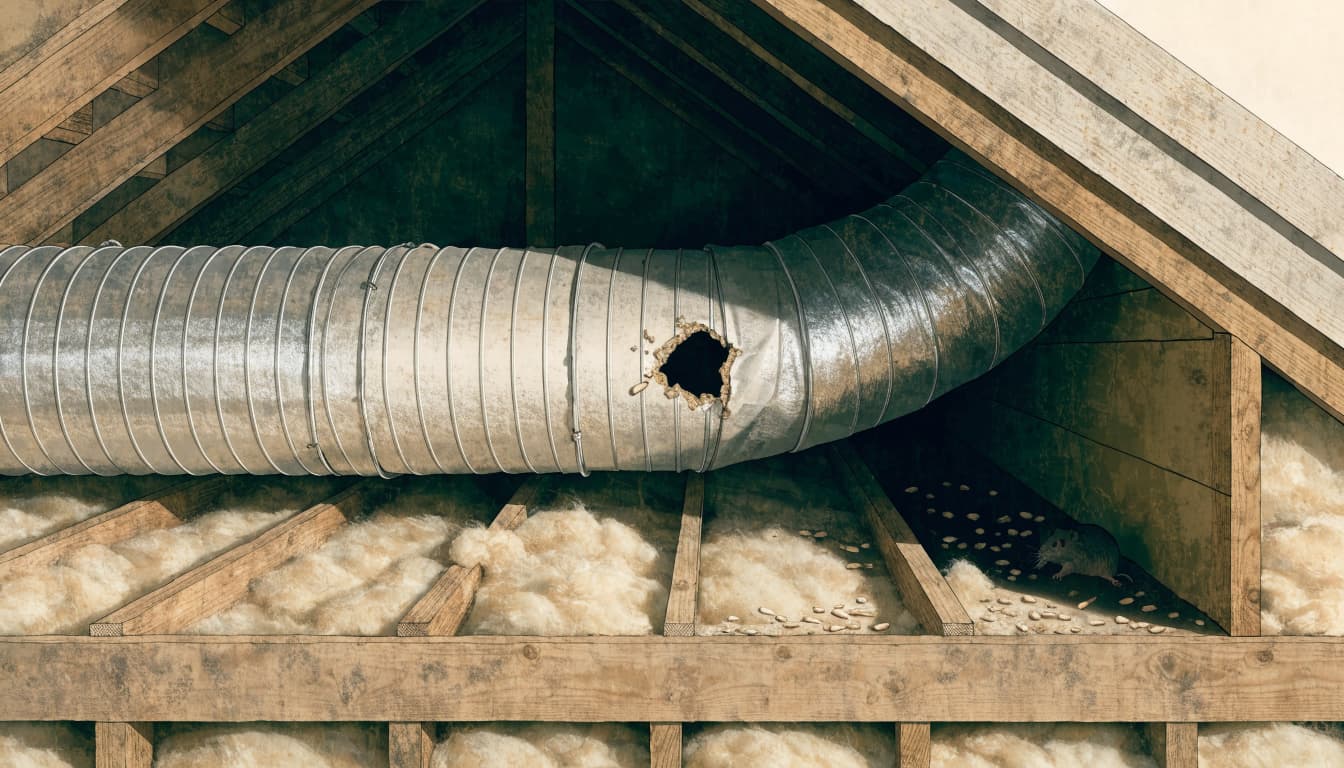
Flexible ductwork has an outer jacket, insulation, and an inner air-carrying liner. Gnawing can puncture or tear one or more layers. Rodents can also disturb insulation, loosen a connection, or leave nesting material near the air handler or ducts.
Damage varies. A small tear in the jacket doesn't necessarily mean the inner liner is open, while a hole through the air-carrying layer can leak conditioned air. A visual clue is a reason to inspect, not a complete diagnosis.
Why duct location matters
Attic ducts are out of sight, so damage may continue before anyone notices it. A problem near a branch connection can affect one room, while a larger tear on a main duct may affect airflow to several areas. The duct's condition and location determine what repairs may be needed.
Common Signs of Rodent Damage to Attic Ducts
Rodent activity can leave more than one clue. Look for signs in the attic and changes inside the home, but don't assume any single clue proves duct damage.
Visible damage and pest evidence
A torn or chewed duct jacket, displaced insulation, and loose pieces of duct material are reasons to arrange an inspection. Droppings, nesting material, gnaw marks, or an unpleasant odor can point to pest activity nearby. However, those signs don't show by themselves whether rodents entered the duct's airflow passage.
Avoid touching suspected waste or insulation. Keep children and pets away from the area, and don't sweep or vacuum droppings. Disturbing contaminated material can spread dust. A professional can assess the area and recommend safe handling.
Changes in comfort or system behavior
A room that has become warmer, weaker airflow at a register, or an air conditioner that runs longer than usual may indicate an airflow problem. These symptoms have other possible causes, including a dirty filter, a closed register, or an equipment issue. A new odor when the system runs is another clue to investigate, especially if pest evidence is also present.
A musty or animal-like smell is a clue, not proof. A technician can inspect the ducts and nearby equipment to identify where the odor comes from.
Why Florida Attic Conditions Can Worsen Duct Problems
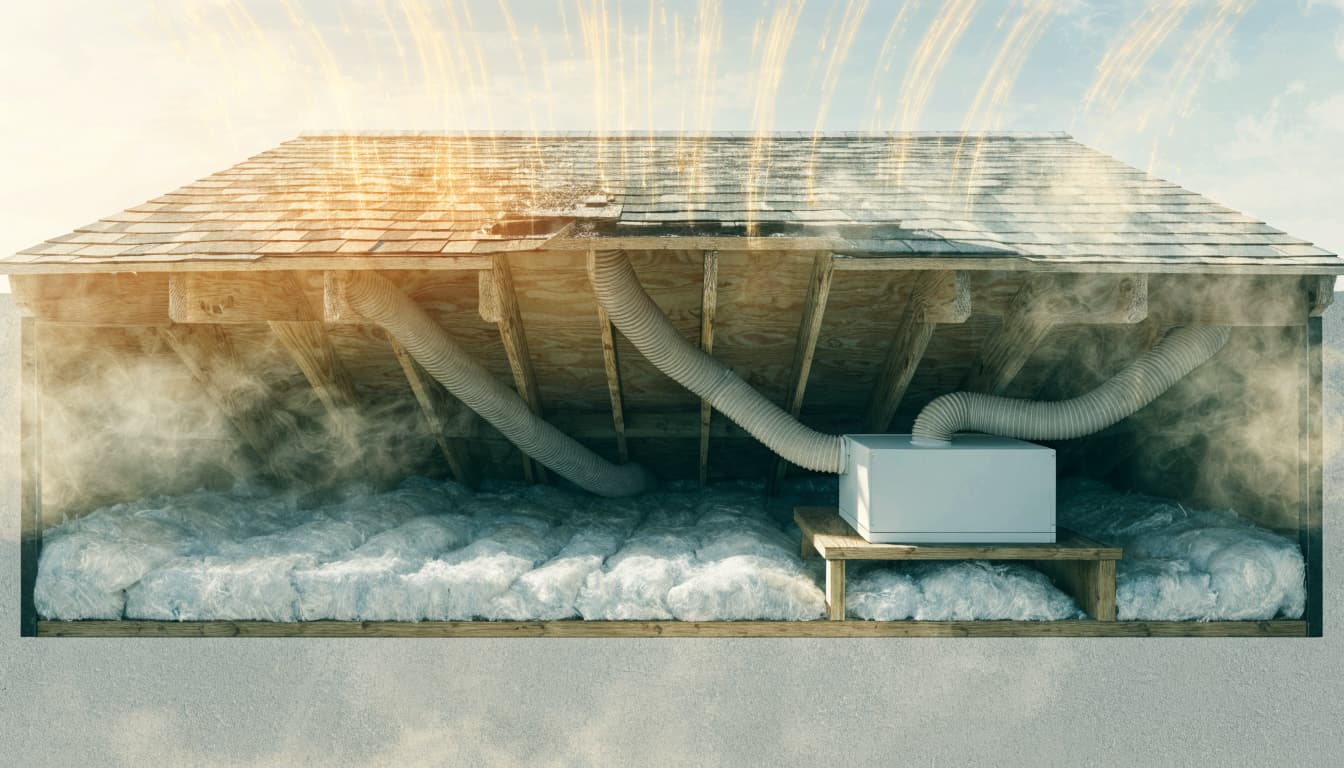
Southwest Florida homes rely on air conditioning through long, hot periods. Attic air can be much warmer and more humid than the air inside the home, while supply ducts carry cooled air. That difference makes intact insulation and sealed duct connections important.
Heat increases cooling demand
If a duct has a hole, cooled air can escape into the attic instead of reaching a room. Heat from the attic can also affect air inside a damaged or poorly insulated duct. The system may then need to run longer to maintain the thermostat setting, and rooms served by the damaged section may feel less comfortable.
A Florida attic's high temperatures don't cause rodent damage on their own. They can, however, make an existing leak or insulation problem more noticeable during the cooling season.
Humidity raises a moisture concern
When a duct's insulation jacket is torn, compressed, or open, warm humid attic air may contact colder surfaces. Under those conditions, moisture can collect around the duct or nearby ceiling materials. Rodent damage can expose the insulation or vapor-retarder facing, so the inspection should look for both pest evidence and moisture.
See our explanation of duct insulation for hot, humid attics for more on why insulation condition matters in Southwest Florida.
How Damaged Ducts Affect Airflow and Comfort
A duct opening can leak conditioned air before it reaches the rooms. The impact depends on the size and location of the damage, how the duct is routed, and whether other parts of the system are in good condition.
Airflow may become uneven
If a branch duct serving a bedroom is torn or disconnected, that room may receive less air. Other rooms might still feel normal, which can make the cause harder to spot. A leak in a larger duct can affect more of the home.
Poor airflow isn't always caused by rodents. A technician may also check the filter, blower, coil, and duct connections. Duct material alone doesn't determine performance: both flex duct and sheet metal can leak when poorly installed or sealed. Read about flex duct vs. sheet metal ductwork for a comparison of the materials.
The system may work harder
When cooled air escapes in the attic, the thermostat may take longer to reach its setting. Longer cooling cycles can increase energy use, though the actual effect depends on the size of the leak and the system. Damage can also affect insulation performance, which may add heat gain to the air moving through the duct.
A technician can inspect the damaged section and assess airflow rather than assuming the air conditioner itself needs replacement.
Indoor Air Quality: What to Watch For
A hole in a supply duct doesn't automatically mean attic air or pest waste is entering the home. The risk depends on where the tear is, whether the inner liner is open, and how the system moves air. Return-side leaks can draw air from the attic into the system, while damaged supply ducts may release cooled air outward.
If droppings, nesting material, or debris appear inside a duct or near a register, avoid disturbing it. Don't reach into the duct, brush material away, or run a household vacuum over suspected waste. People with asthma, allergies, or other sensitivities should stay clear of the affected area while it's assessed.
Duct cleaning may be appropriate when an inspection finds pest waste inside the ductwork. However, cleaning alone doesn't stop rodents from returning or repair a torn duct. The entry point must be addressed, and damaged flex duct or insulation may need repair or replacement. Learn more about investigating debris or pests in ductwork.
What to Do If You Suspect Duct Damage
Start by noting what you've observed: which rooms feel different, when odors occur, and whether you've seen pest signs. If you can see damage from a safe location, take a photo without touching the duct or entering an unsafe attic area. Don't remove equipment panels or climb over unstable framing to investigate.
Avoid disturbing contaminated materials
Droppings, nesting material, and affected insulation can release dust when handled. Don't sweep, vacuum, or pull apart suspected contaminated materials without appropriate protection and safe procedures. Keep others away from the area and arrange a professional assessment if signs are present.
Don't treat cleaning as the full repair
Removing debris won't seal a duct opening or keep pests out. A complete response may involve pest exclusion, removal of contaminated material, and repair or replacement of damaged duct sections. The right work depends on what an inspection finds, so avoid sealing over a problem before its extent is known.
When to Call an HVAC or Pest-Control Professional
Contact pest control when you find droppings, nesting material, gnaw marks, or recurring animal sounds in the attic. A pest-control professional can assess activity and address entry points. Rodent removal without exclusion may leave the underlying access route open.
Call an HVAC professional if you see a tear, disconnected duct, damaged insulation, or debris inside a duct, or if airflow or comfort has changed. An HVAC technician can inspect duct condition, identify air leaks, and determine whether repair, replacement, or further cleaning is appropriate. If there's evidence of both active pests and duct damage, both types of service may be needed.
We provide HVAC repair and inspection service in Southwest Florida. If you're seeing signs of damaged ductwork, Schedule an Estimate with our team.
Frequently Asked Questions
Can rodents chew through HVAC ducts?
Yes. Rodents can gnaw through flexible duct material, insulation jackets, or other duct components. The type and extent of damage vary, so visible chewing doesn't always confirm that the inner air passage has been punctured.
Will damaged ducts always make a room warm?
No. A leak can reduce airflow to the room it serves, but the change may be subtle or affect several rooms. Warm rooms also have other possible causes, so an inspection helps distinguish duct damage from equipment or airflow issues.
Does a bad odor mean there are rodents inside the ducts?
No. Odors can come from nearby pest activity, moisture, or other sources. If the smell occurs with droppings or visible damage, arrange an inspection rather than assuming the duct itself is contaminated.
Is duct cleaning enough after rodent activity?
Not if the duct is damaged or rodents can still enter. Cleaning may address pest waste inside the duct, but the source of entry and any damaged insulation or duct sections also need attention.
Protecting Your Ductwork and Comfort
Rodent signs in an attic deserve attention, especially when you also notice duct damage, uneven cooling, or unusual odors. In Florida's hot, humid conditions, a torn jacket or leaking connection can affect both airflow and moisture around the ducts.
Avoid handling suspected contaminated material. A pest-control professional can address rodent activity, while an HVAC technician can inspect the ductwork and recommend repairs based on what's actually damaged.
Recent Posts