Signs Your Condenser Fan Motor Is Failing in Fort Myers
When your AC runs but the house still feels warm, the trouble may be outside. A weak condenser fan motor can keep the outdoor unit from getting rid of heat, and that creates problems fast.
That matters in Fort Myers. Heat, humidity, salt air, and long cooling seasons put nonstop stress on outdoor equipment, so small warning signs can turn into a full breakdown before you expect it. The good news is that most fan motor problems leave clear clues.
What the condenser fan motor does on a hot Fort Myers day
A condenser fan motor spins the outdoor fan blade and pushes heat away from the system. That airflow helps the refrigerant release heat so the AC can keep cooling.
A condenser fan motor in Fort Myers works harder than one in a cooler climate. The outdoor unit deals with long run times, wet air, and frequent storms. Grass clippings, palm debris, and salt exposure also make the job harder.
When the motor starts to weaken, the whole system feels it. The indoor blower may still run, but the house cools slower, the outdoor unit sounds strained, and the AC may cycle on and off more often.
The warning signs homeowners notice first
The earliest signs usually show up at the outdoor unit. Some are loud. Others are easy to miss until the house starts feeling sticky and warm.
The symptoms below are the ones most homeowners notice first.
| Symptom | What you may notice | Why it matters |
|---|---|---|
| Outdoor fan will not spin | The unit hums, but the blade stays still | The motor may be stuck, worn out, or losing power |
| Squealing or grinding noise | The noise starts when the unit turns on | Bearings may be wearing down |
| Fan spins slowly or unevenly | Air from the outdoor unit feels weak | The motor may be struggling to keep speed |
| Warm air inside the home | The thermostat keeps calling for cooling | The condenser cannot dump heat fast enough |
| Frequent shutdowns | The AC starts, stops, then starts again | The system may be overheating |
| Higher electric bill | The AC runs longer than usual | A weak fan makes the whole system work harder |
If the fan does not start, starts late, or sounds rough, pay attention. A fan motor rarely gets better on its own.
If the outdoor fan stops moving while the system keeps trying to cool, the unit is already under strain.
One symptom can point to more than one cause. Still, a fan that will not spin, screeches on startup, or keeps tripping the system is a strong sign that something needs attention soon.
Why Southwest Florida weather wears the motor down faster
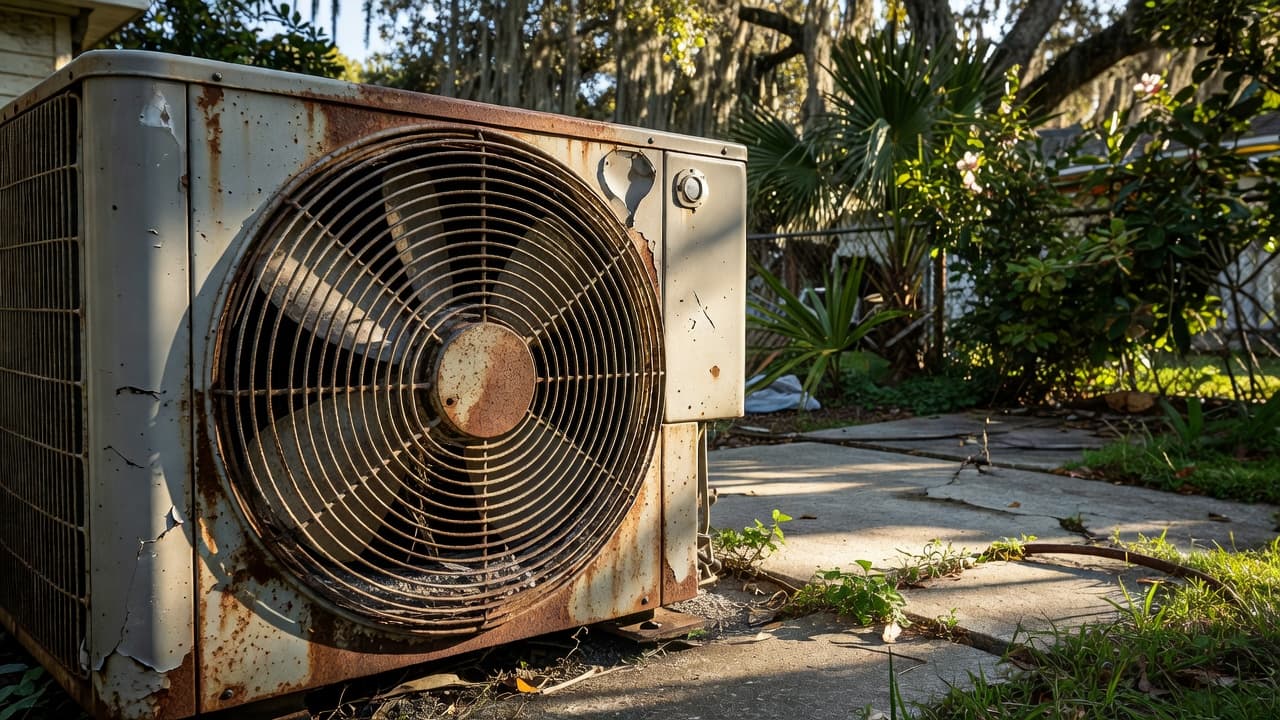
Fort Myers weather is hard on outdoor equipment. Salt in the air can corrode connections. High humidity can help rust form on fasteners and motor parts. Afternoon storms can blow debris into the coil and cut airflow.
That matters because electric motors run hotter when they cannot move air well. A dirty coil, bent fan blade, or failing capacitor can make the motor work overtime. Once the motor overheats, it can start acting up again the next time the AC runs.
You might notice the unit seems fine in the morning, then sounds rough by late afternoon. That pattern is common in peak summer. After several long cooling cycles, the motor loses strength and the symptoms get harder to ignore.
Delaying repairs in Florida can turn a fan issue into a bigger problem. If the outdoor unit cannot release heat, the compressor takes on extra stress too. That can lead to more costly damage, and the system may stop cooling when you need it most.
What to do when the outdoor unit starts acting up
Turn the thermostat off for a short time if the outdoor unit sounds wrong or stops cooling. Do not keep restarting it over and over. That adds heat and strain.
Do not open the outdoor cabinet, tap the motor, or test electrical parts yourself. The condenser contains live voltage, and a failing motor can look a lot like other problems. A trained technician can check the fan motor, capacitor, wiring, and control parts in a safe order.
If the AC is noisy, shutting down, or blowing weak air, professional HVAC repair and inspection can narrow down the cause before the compressor gets hurt. That matters because a small repair is easier to handle than a full system failure.
If you want a local technician to look at it, Schedule an Estimate before the next hot stretch pushes the system harder.
A fast diagnosis also helps when the home already feels warm or damp. Across Lee County, these problems often show up during the hottest part of the year, when the AC has the least room to fail.
How to lower the risk of a summer breakdown
Regular maintenance will not prevent every motor failure, but it can lower the odds. A clean condenser coil helps the fan move heat out of the unit. Clear space around the outdoor cabinet helps air move freely. Tight electrical connections also cut down on heat at the terminals.
A quick inspection can catch wobble, slow startup, and unusual noise before the motor quits. If your system is older or has already had fan trouble once, that check matters even more before peak summer hits.
A few simple habits help too. Keep grass clippings and mulch away from the unit. After a storm, look for bent fins, loose debris, or anything blocking the fan. Listen for new sounds when the AC starts. If the fan hesitates or labors, that is a clue worth acting on.
Another warning sign is uneven comfort inside the home. If one room feels warm while the rest of the house is fine, the outdoor unit may not be pulling heat out fast enough. That is often when homeowners first notice the bill climbing too.
Conclusion
A failing condenser fan motor usually gives you a warning before it gives out completely. Loud noise, slow spinning, frequent shutdowns, weak cooling, and rising bills all point to trouble outside.
In Fort Myers, those signs matter fast because the AC works so hard for so many months of the year. Watch the outdoor unit, trust what you hear, and get the system checked before a small fan issue turns into a much bigger repair.
Recent Posts