
AC Expansion Valve: What It Does and Why It Fails
When your car's AC suddenly blows warm air, the compressor often gets the blame. Yet an AC expansion valve can cause the same complaint by starving the evaporator of refrigerant or allowing too much through.
Because the valve sits inside a sealed, pressurized circuit, its failure isn't a safe driveway repair. Knowing what the component does helps you recognize a real fault and ask for the right diagnosis. First, it helps to see where the valve fits.
How an AC expansion valve controls refrigerant
The expansion valve sits between the high-pressure liquid line and the evaporator. In many vehicles, you'll find it near the firewall where the refrigerant lines enter the passenger compartment. The exact design varies by vehicle, but its job stays the same: control how much refrigerant enters the evaporator.
The compressor sends refrigerant through the system. After the condenser removes heat, the refrigerant reaches the valve as a high-pressure liquid. The valve narrows the passage, causing a sharp pressure drop. As a result, the refrigerant becomes colder and begins to boil inside the evaporator.
That phase change allows the evaporator to absorb heat from the air moving through the vehicle's cabin. The blower then sends that cooled air through the vents.
Most expansion valves in automotive systems are thermostatic expansion valves, or TXVs. A sensing element monitors the evaporator outlet temperature and adjusts the valve opening. When the evaporator needs more refrigerant, the valve opens farther. When the evaporator gets too cold, it restricts flow.
This control protects the compressor from receiving a large amount of liquid refrigerant. Compressors are designed to compress vapor, not liquid. The valve also helps the system maintain the right cooling balance as engine speed and cabin temperature change.
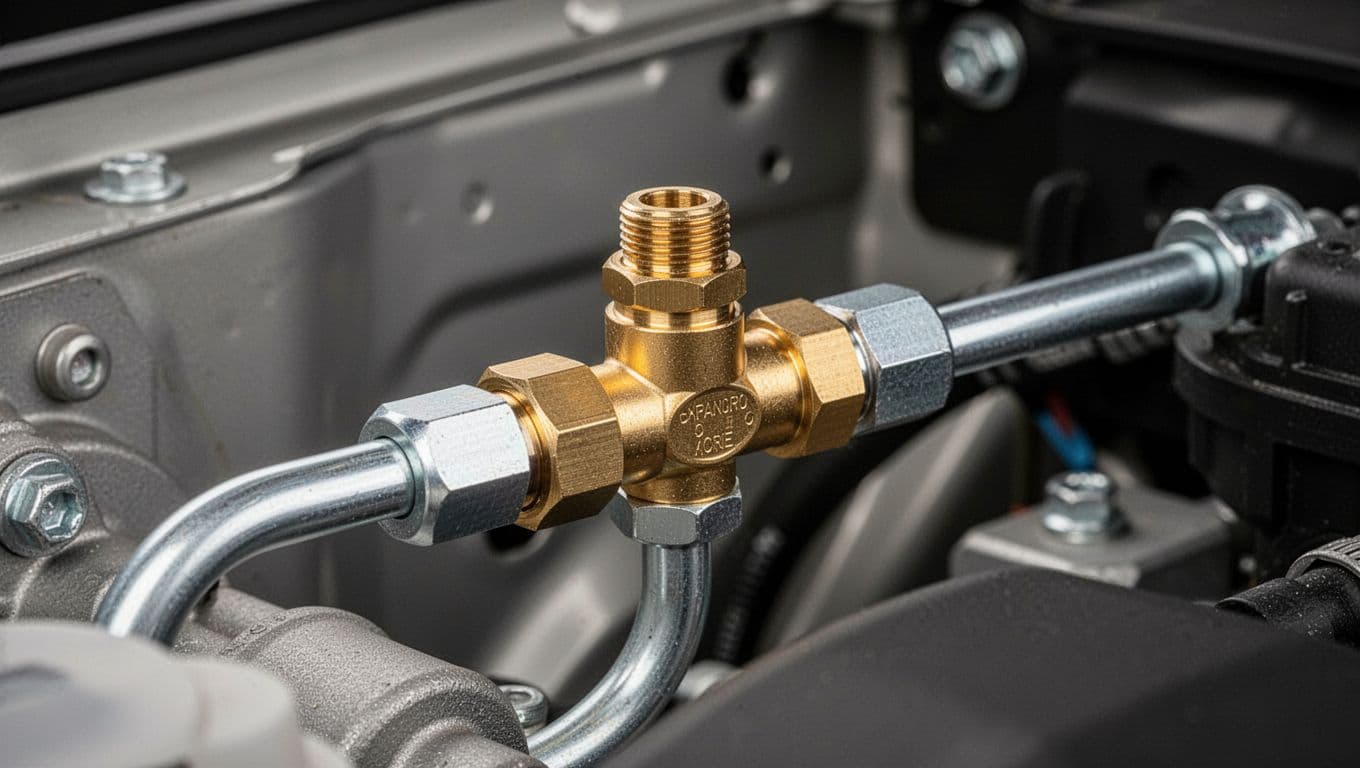
Expansion valves and orifice tubes are different
Not every vehicle uses an expansion valve. Some automotive AC systems use a fixed orifice tube instead. An orifice tube has a set opening, while a TXV adjusts refrigerant flow based on operating conditions.
That difference matters during diagnosis. A technician must identify the system design before testing or ordering parts. Installing the wrong component can leave the system undercharged, overfed, or unable to control evaporator temperature.
AC expansion valve symptoms and likely causes
A failing valve can create symptoms that look like other AC problems. Low refrigerant, a weak compressor, a blocked condenser, poor airflow, and electrical faults can all produce warm air. Pressure readings and temperature tests help separate these possibilities.
| Symptom | Possible causes |
|---|---|
| Warm or mildly cool air from the vents | Restricted valve, low refrigerant, weak compressor, or poor condenser airflow |
| Very low suction pressure | Restricted valve, low charge, or a blockage in the refrigerant circuit |
| High discharge pressure with low suction pressure | A restriction near the expansion valve, contaminated refrigerant, or a blocked filter screen |
| Cooling that comes and goes | Moisture freezing at the valve, a failing temperature sensor, low charge, or compressor control trouble |
| Evaporator or suction line icing | Incorrect refrigerant flow, low airflow, low charge, or a valve that overfeeds the evaporator |
A valve stuck nearly closed can starve the evaporator. The cabin air stays warm because too little refrigerant reaches the part that absorbs heat. The low side may show unusually low pressure, while the high side rises because refrigerant cannot move through the restriction.
A valve stuck open creates a different problem. Too much refrigerant can enter the evaporator, raising suction pressure and reducing the system's ability to control temperature. In severe cases, liquid may travel farther through the circuit than it should.
Intermittent cooling often points to moisture or debris. Water in the system can freeze at the small metering passage, temporarily blocking flow. When the ice melts, the AC may work again until the restriction returns.
A pressure reading can point toward a restriction, but it cannot prove that the expansion valve is bad by itself.
Why automotive expansion valves fail
Contamination is one of the most common causes of a restricted valve. Compressor wear can send fine metal particles through the system. Deteriorated hoses can release material, and a damaged receiver-drier or accumulator can release desiccant pellets. The valve's small passages and screens can then clog.
Moisture causes a separate problem. If a system stays open during a repair or a technician skips proper evacuation, water vapor remains in the refrigerant circuit. That moisture can freeze at the metering point and create intermittent cooling. It can also combine with refrigerant and oil to form acids that damage internal parts.
Leaks usually occur at connections rather than inside the valve body. O-rings flatten with age, fittings loosen, and seals can suffer damage during installation. A leaking valve connection lowers the refrigerant charge over time. A recharge may restore cooling briefly, but the leak will continue until someone repairs it.
The temperature-sensing element can also lose accuracy or suffer physical damage. If it sends the wrong signal to the valve, the component may open or close at the wrong time. A crushed sensing tube, incorrect installation, or damaged insulation can affect its response.
Using the wrong refrigerant or oil creates additional risk. Older vehicles may use R-134a, while many newer models use R-1234yf. These refrigerants require different service equipment and must not be mixed. Stop-leak products can also clog small passages and complicate future repairs.
Age, vibration, and repeated heat cycles contribute to wear. Still, technicians should look for the cause of failure before installing a new valve. Replacing the valve without correcting contamination or moisture can lead to another failure.
How a technician confirms a failing valve
Automotive refrigerant systems remain under pressure, even when the engine is off. Refrigerant can cause frostbite and eye injuries, and releasing it into the air is illegal. A qualified automotive AC technician should recover the refrigerant and use equipment designed for the vehicle's refrigerant type.
Diagnosis starts with basic checks. The technician may verify compressor operation, condenser fan performance, blower speed, cabin filter condition, belt condition, and electrical controls. A blend-door problem can also make the vents blow warm air even when the refrigerant circuit works correctly.
Next, the technician checks high-side and low-side pressures along with vent temperature, ambient temperature, and refrigerant line temperatures. The readings must match the vehicle manufacturer's specifications under controlled conditions. A single gauge reading does not tell the full story.
If the system contains too little refrigerant, the technician should recover and weigh the remaining charge. That information helps separate a leak from a metering problem. An electronic leak detector, approved UV dye, or a regulated dry-nitrogen pressure test may help locate the leak. Shop air and oxygen are not safe substitutes for nitrogen in this work.
When the readings point to a restriction, the technician may inspect the valve, line screens, receiver-drier, accumulator, and compressor. If the compressor has shed metal, replacing only the expansion valve may leave contamination in the rest of the system.
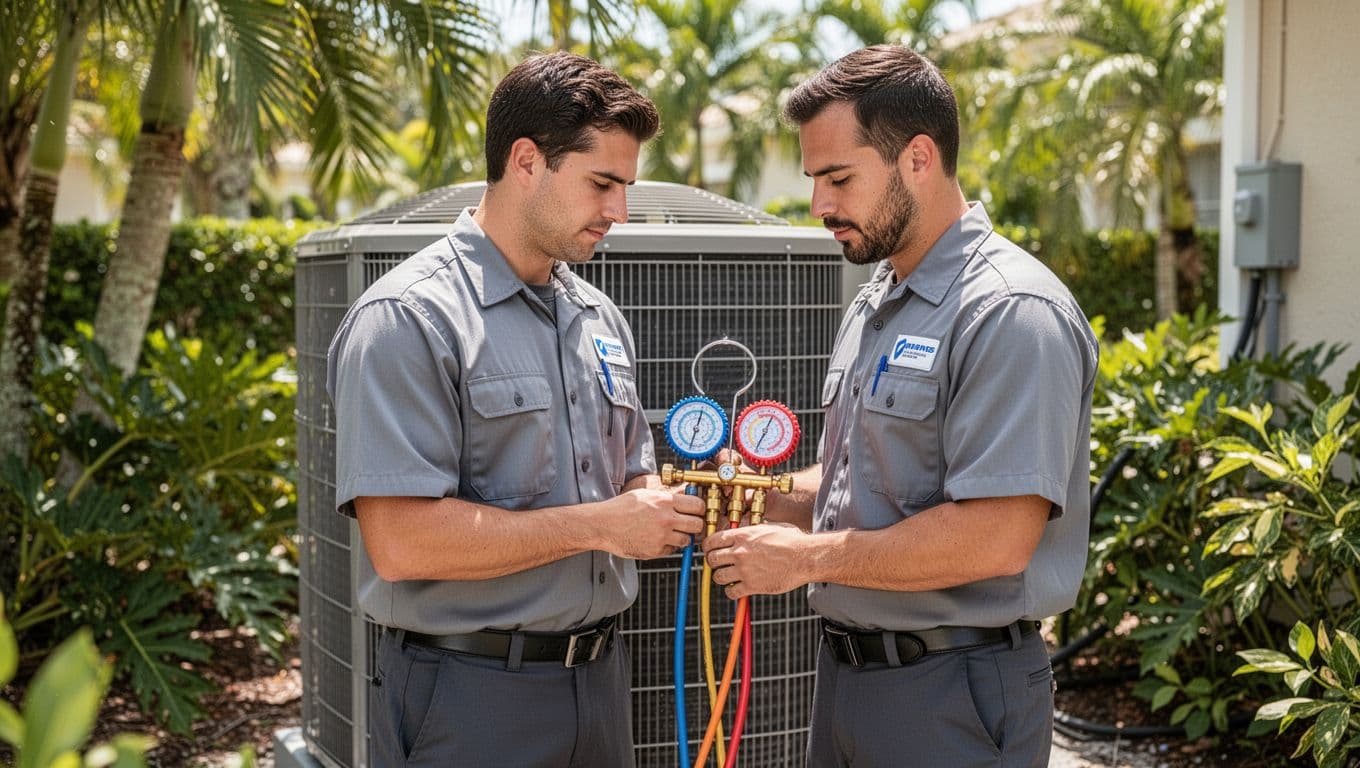
Pressure and temperature readings require trained interpretation and the correct service equipment. A careful inspection also prevents a faulty compressor, fan, or control module from being mistaken for an expansion valve problem.
If the AC problem is in your home rather than your vehicle, Valor Heating & Cooling provides HVAC repair and inspection services in Fort Myers and Lee County. You can also Schedule an Estimate for residential service. Vehicle refrigerant work still belongs with an automotive AC technician.
Why evacuation and recharge matter after replacement
Replacing the valve is only one part of the repair. The technician must keep dirt and moisture out of the open lines, install the correct seals, apply the approved refrigerant oil, and tighten each connection to the manufacturer's specifications.
The receiver-drier or accumulator may need replacement whenever the system has been open. If contamination caused the original failure, the technician may also need to flush approved components and inspect the compressor. Expansion valves, compressors, and driers generally require different handling, so a full system flush isn't appropriate for every part.
After assembly, the system needs proper evacuation with a vacuum pump. Evacuation removes air and moisture that would interfere with refrigerant flow and raise operating pressure. The technician then isolates the system and checks whether the vacuum remains stable. A pressure leak test may still be needed because some leaks appear only when the system has positive pressure.
Finally, the system must receive the exact refrigerant charge listed on the vehicle label or in its service information. Adding refrigerant until a gauge "looks right" can leave the system undercharged or overcharged. The correct charge is measured by weight.
The technician should then confirm vent temperature, system pressures, compressor operation, and cooling performance. With R-1234yf systems, the service shop also needs compatible recovery and charging equipment. Correct procedures protect the compressor and help the replacement valve work as designed.
A small valve can cause a major AC problem
An AC expansion valve controls the refrigerant entering the evaporator, so a restriction or overfeeding problem can affect the entire cooling system. Warm air, icing, unstable cooling, and unusual pressure readings can point to valve trouble, but those symptoms overlap with several other faults.
Because the system operates under pressure, diagnosis and repair should go to a qualified automotive AC technician. Proper recovery, leak testing, evacuation, and weight-based recharging matter just as much as installing the new component. A replacement valve works best when the rest of the refrigerant circuit is clean, dry, sealed, and correctly charged.
Recent Posts