Are AC Coil Coatings Worth the Cost in Florida?
Salt air can damage an air conditioner long before the system looks old. If you live near the Gulf, you may wonder whether AC coil coatings are worth the cost or whether regular cleaning offers enough protection.
The honest answer depends on your equipment's condition, distance from saltwater, exposure to wind and moisture, coating quality, and application method. A coating can help protect a sound coil, but it can't repair leaks or reverse advanced corrosion. Start with the conditions affecting your system before comparing prices.
Are AC coil coatings worth the cost for coastal homes?
Sometimes, yes. A professionally applied coating may make financial sense when your outdoor condenser faces regular salt exposure and the coil is still in good condition. Coastal air carries salt particles that settle on metal surfaces. Moisture then helps those deposits speed up corrosion.
The coating creates a protective barrier over the coil's metal surfaces. That barrier can reduce direct contact with salt, water, and other contaminants. However, the result depends heavily on preparation and application. A technician must clean the coil, remove buildup, inspect for damage, and apply a compatible product at the correct thickness.
A low-quality application can produce disappointing results. Dirt left beneath the coating can continue causing trouble, while excessive material may interfere with airflow or heat transfer. The product also needs to match the coil and the manufacturer's requirements.
The cost is easier to justify when the alternative is premature coil replacement. It is harder to justify when the system is already nearing replacement, has a serious refrigerant leak, or shows extensive fin loss.
A coil coating protects existing metal. It does not restore metal that corrosion has already removed.
Why Southwest Florida puts AC coils under pressure
Southwest Florida gives outdoor air conditioners a difficult working environment. Fort Myers, Lee County, Cape Coral, Bonita Springs, and nearby coastal communities experience high humidity, strong sun, heavy rain, and salt carried inland from the Gulf.
Beachfront homes usually face the greatest exposure, but inland properties aren't automatically protected. Wind direction, nearby waterways, open lots, and the placement of the condenser all affect how much salt reaches the equipment. A unit near a canal or open waterfront may face more exposure than one located farther inland behind walls and landscaping.
Salt deposits can collect between the narrow fins of a condenser coil. Over time, corrosion can weaken aluminum fins and affect the connections between dissimilar metals. The coil may still cool the home while the damage develops, so homeowners often discover the problem during a service visit or after a refrigerant leak appears.
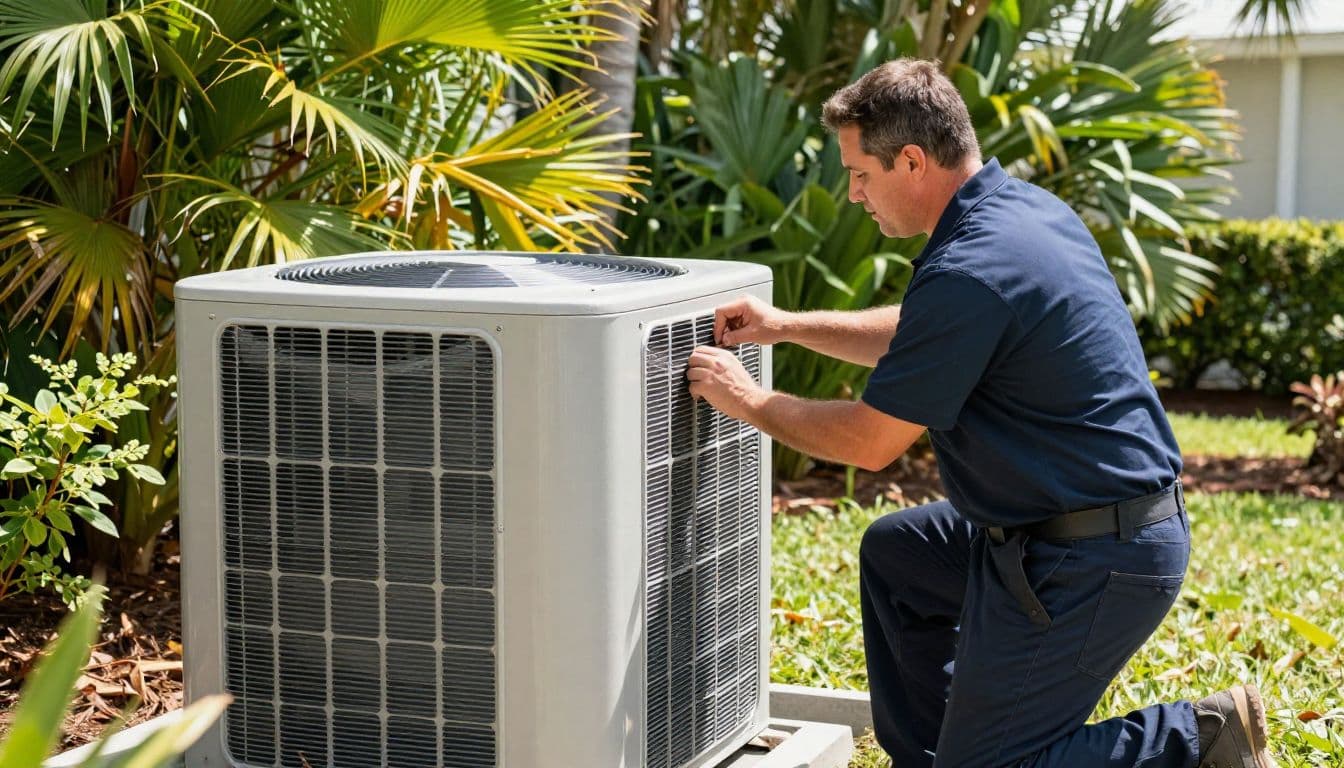
Outdoor salt isn't the only concern. Dust, grass clippings, leaves, pool chemicals, irrigation spray, and harsh cleaning solutions can also damage coil surfaces. Routine inspection helps identify the source instead of treating every problem as a coating issue.
Homeowners can review routine HVAC maintenance options to keep coils, electrical components, filters, and drainage parts in better condition. Maintenance won't remove the need for repairs, but it can help catch corrosion before it causes a larger failure.
How AC coil coatings work
AC coil coatings use a thin protective layer designed for HVAC heat exchangers. Products vary by manufacturer and may use acrylic, epoxy, polymer, or other corrosion-resistant formulations. The important question isn't the product name alone. The technician must confirm that the coating is suitable for the coil's metal, location, and operating conditions.
A proper application usually begins with a detailed inspection. The technician checks for bent fins, oil spots, refrigerant leaks, weakened tubing, heavy deposits, and blocked airflow. Cleaning and drying follow because a coating needs a stable surface to bond correctly.
After preparation, the technician protects nearby electrical parts and applies the product according to the manufacturer's instructions. Some coatings require controlled curing time before the system returns to normal operation. The process may take longer when the condenser is difficult to access or has heavy contamination.
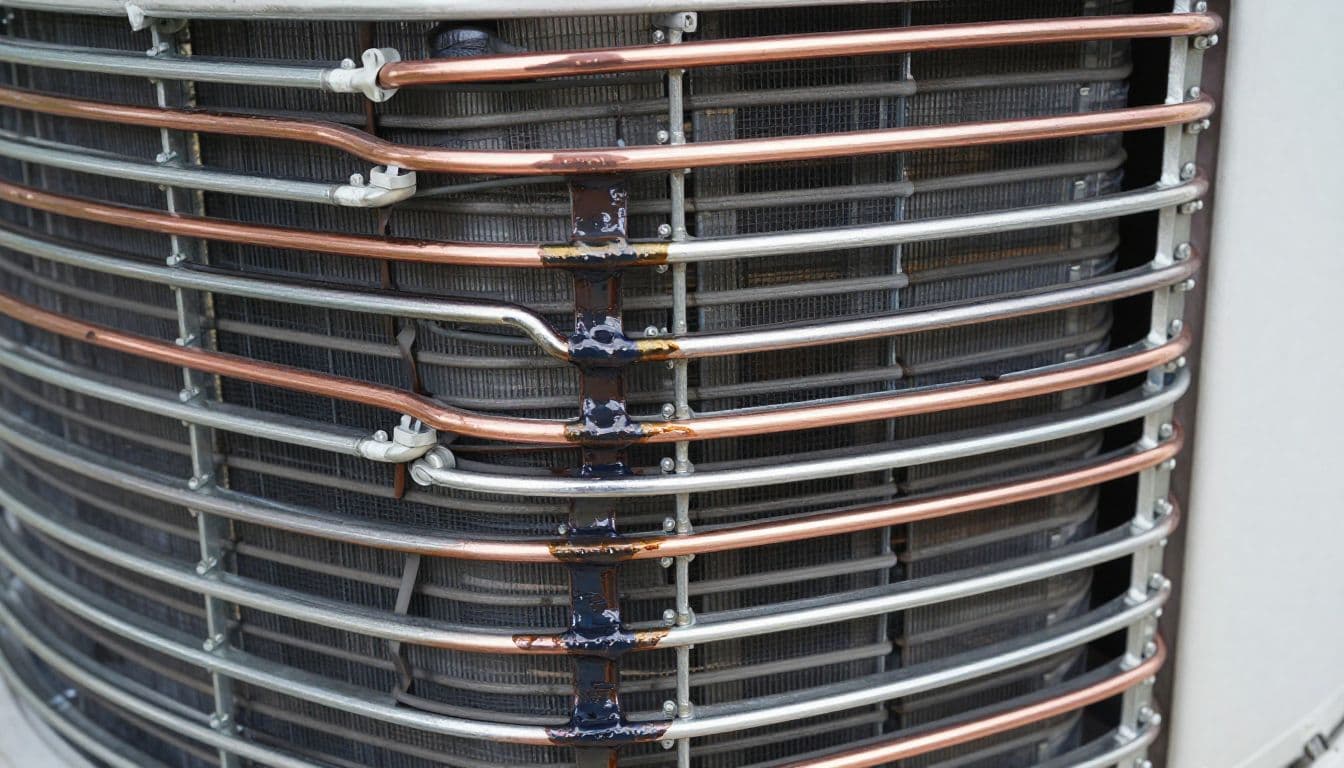
A coating can cover exposed metal and slow additional contact with corrosive contaminants. It doesn't seal a refrigerant leak, straighten severely damaged fins, or replace missing sections of the coil. If corrosion has already created a hole, the system needs a repair or replacement evaluation.
Ask which coil the technician plans to coat. Outdoor condenser coils are the most obvious target in a coastal home, while indoor evaporator coils face a different mix of moisture and contaminants. Product compatibility and manufacturer requirements matter for both.
When a coil coating makes financial sense
Coating is more likely to be worth considering when the equipment is otherwise reliable. A newer or well-maintained system with light surface corrosion may benefit because the owner wants to protect a costly component before the damage becomes severe.
Local exposure also matters. A condenser beside a Gulf-facing wall, boat canal, or saltwater pool may need more protection than an identical unit in a sheltered inland location. Two homes in the same ZIP code can have different corrosion risks because of placement and airflow.
The investment may also make sense when replacement would disrupt the property or require a larger project. Commercial equipment, rooftop units, and systems serving difficult-to-access areas can have added replacement challenges. A professional must still confirm that the coil has enough remaining service condition to justify treatment.
Look for these signs that a coating discussion is reasonable:
- The coil has surface corrosion but no confirmed leak.
- The system still provides dependable cooling.
- The condenser receives repeated salt or chemical exposure.
- The equipment has been cleaned and maintained properly.
- The manufacturer allows the proposed product or doesn't prohibit it.
A coating should be part of a broader protection plan. Correct installation, suitable drainage, clean airflow, and regular inspections all affect the result. Coating a dirty condenser and leaving the source of contamination in place won't solve the underlying problem.
When coating may not be worth the cost
A coating may offer little value when the coil already has major corrosion damage. Missing fins, visible holes, repeated refrigerant loss, and heavy deterioration can indicate that replacement is a better use of money. Applying a protective layer to failing metal doesn't restore its strength.
System age also affects the decision. If the air conditioner already needs frequent repairs or has poor performance, spending money on one component may postpone a larger replacement without improving the rest of the equipment. Ask the technician to evaluate the full system, not only the coil.
Warranty terms deserve attention as well. Some manufacturers have requirements for approved treatments, installation records, or replacement parts. An aftermarket coating may affect coverage if the product or application doesn't meet those terms. Get the information in writing before work begins.
Be cautious when a quote promises a fixed number of years, a guaranteed energy reduction, or complete protection in every coastal condition. AC coil coatings don't produce identical results in every home. Salt exposure, maintenance, weather, product quality, and application technique all change the outcome.
If the main problem is dirt, blocked airflow, or irrigation spray, correcting that problem may matter more than coating the coil. A qualified technician can separate corrosion damage from maintenance issues during an on-site inspection.
What determines the cost and performance?
The price of a coating project depends on more than the product inside the container. Labor, preparation, access, coil size, corrosion severity, masking, cleaning, and curing requirements all affect the final quote.
A technician may need to remove panels, protect wiring, clean between tight fins, or address a damaged cabinet before applying anything. Rooftop equipment and units installed in narrow side yards can take more time than an easily accessible condenser.
When comparing estimates, ask for details rather than choosing the lowest number. The proposal should identify:
- Which coil will receive the coating.
- What preparation and cleaning the work includes.
- Which product the technician plans to use.
- How the application affects the equipment warranty.
- What maintenance the coating requires afterward.
- What conditions would call for repair or replacement instead.
Coating quality matters, but application quality matters just as much. A reputable technician should explain the condition of the coil and show why treatment fits the equipment. You should also receive a clear statement that the coating is corrosion protection, not a guarantee against future leaks.
Regular maintenance remains important after application. Keep vegetation away from the condenser, prevent sprinkler spray from hitting the coil, and arrange professional cleaning when dirt or salt buildup appears. Avoid high-pressure washing because it can bend delicate fins. Follow the product and equipment manufacturer's care instructions.
How to make the right decision for your AC system
Start with an inspection before requesting a coating price. The technician should document corrosion, check refrigerant performance, examine electrical components, and review the system's repair history. That information shows whether the coil is worth protecting.
Next, consider your property's exposure. A home directly exposed to sea air may have a different recommendation than one several miles inland. The unit's location, nearby water, wind patterns, landscaping, and maintenance history all belong in the assessment.
Ask whether cleaning and exposure control could address the problem first. If the coil is healthy and salt is the primary concern, a coating may be reasonable. If the coil leaks or the system has several major issues, replacement may provide a better long-term decision.
For a property-specific evaluation, you can Schedule an Estimate with a qualified HVAC technician. A written recommendation should compare coating, repair, and replacement when more than one option fits.
Conclusion
AC coil coatings can be worth the cost for a sound condenser exposed to Southwest Florida's salt air. Their value depends on proper cleaning, compatible materials, careful application, and continued maintenance.
They make less sense for a leaking or heavily damaged coil, an unreliable system, or equipment close to replacement. The right choice comes from an on-site assessment that considers the coil's condition and your property's actual exposure. A coating can protect a good coil, but it can't turn failing equipment into dependable cooling.
Recent Posts