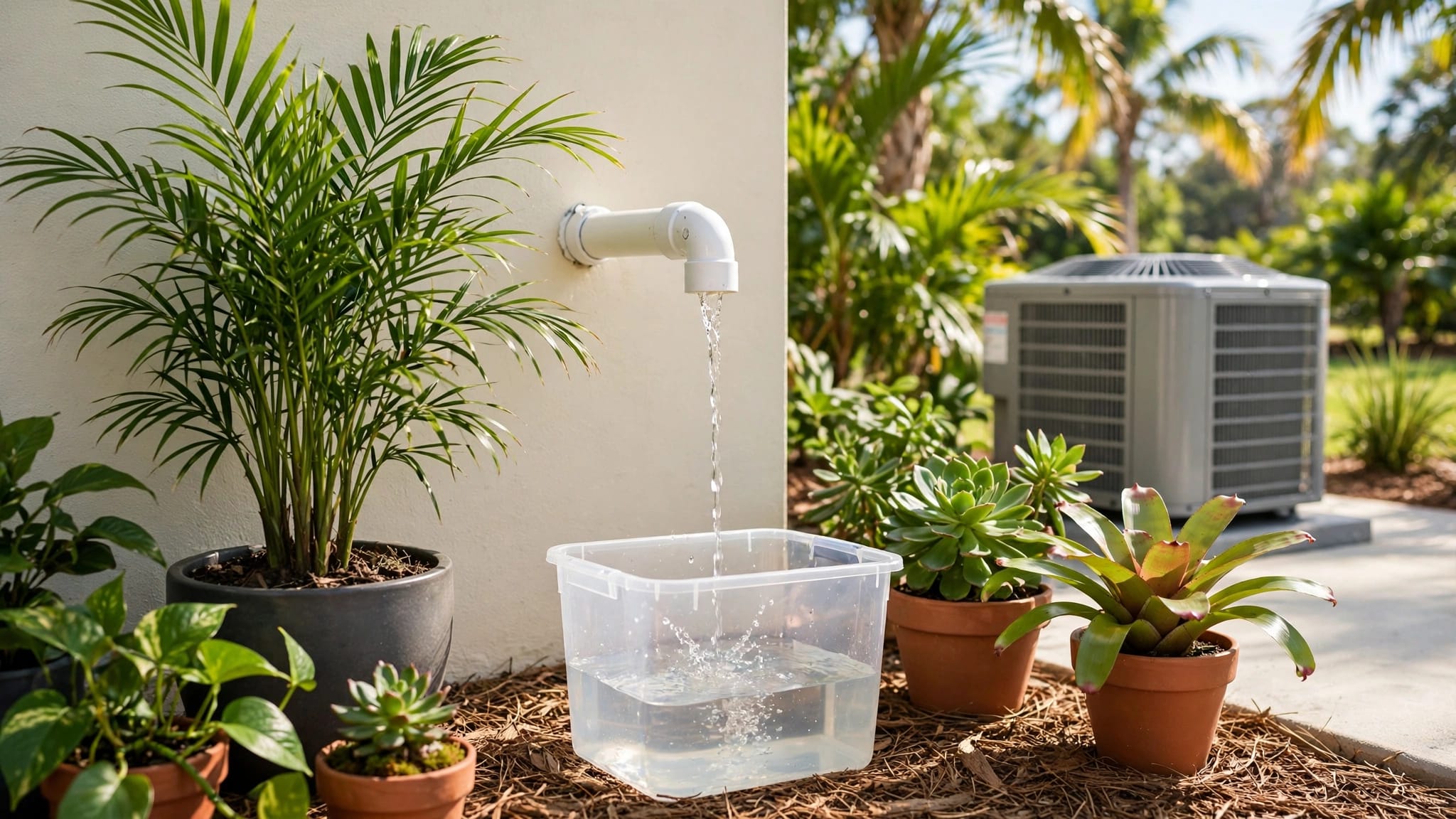
Single-Stage vs Two-Stage AC for Fort Myers Homes
In Fort Myers, your AC works harder than it does in most places. That makes the choice between a single-stage and a two-stage system about comfort, humidity, noise, and monthly bills, not just equipment specs.
A home that feels fine in a mild climate can feel sticky and uneven here. The best fit depends on your house, your thermostat, and how you use the space day to day.
How single-stage and two-stage AC cool your home
A single-stage system has one cooling output. It turns on at full power, then shuts off when the thermostat reaches the set temperature. That setup is simple, familiar, and usually less expensive upfront.
A two-stage AC has two levels of cooling. It runs on a lower stage most of the time, then switches to a higher stage when the home needs a faster pull-down. In a place like Fort Myers, that lower stage can make a real difference because the AC often runs for long stretches.
The difference sounds small, but it changes how the house feels. Single-stage cooling can create sharper on-and-off cycles. Two-stage cooling feels steadier, more like a slow cruise than stop-and-go traffic.
That matters in Southwest Florida, where the AC is part of daily life for much of the year. The more even run time can help the home feel less jumpy from room to room.
Why Fort Myers humidity changes the comfort equation
Heat is only part of the story here. Humidity is the other half, and it often decides whether a house feels comfortable or damp.
Air conditioners remove moisture best when they run long enough. A single-stage system may cool the air quickly, then shut off before it has pulled out as much humidity as you want. The room can hit the right temperature and still feel a little clammy.
Two-stage systems often do better in that situation because the low stage runs longer. That gives the coil more time to pull water from the air. For many Fort Myers homes, that means fewer cold-but-sticky afternoons.
The gain is not automatic, though. An oversized two-stage unit can still cycle too often. Poor ductwork can also spoil the result. If the system moves air badly, even the best equipment will struggle.
Occupancy patterns matter too. A home that stays full all day may benefit from the steadier feel of two-stage cooling. A house that sits empty until evening may not need the extra comfort layer as much.
In humid climates, a longer run time can matter as much as raw cooling power.
That is why the right choice is often about how you live, not just how hot it gets outside.
Efficiency, sound, and wear over time
Energy use is where many homeowners get stuck. Two-stage systems can be more efficient in daily use, but the savings depend on the full setup. Equipment size, duct design, thermostat control, and installation quality all affect the result.
A two-stage AC often uses less energy during mild parts of the day because it can stay on low stage. It does not have to blast at full power every time the thermostat calls for cooling. Over a long month, that can help smooth out electric use.
Still, no system should be sold as a guaranteed bill cutter. A well-sized single-stage unit can cool a Fort Myers home reliably. A poorly sized two-stage unit can waste energy and leave rooms uneven. The label matters less than the match between the unit and the house.
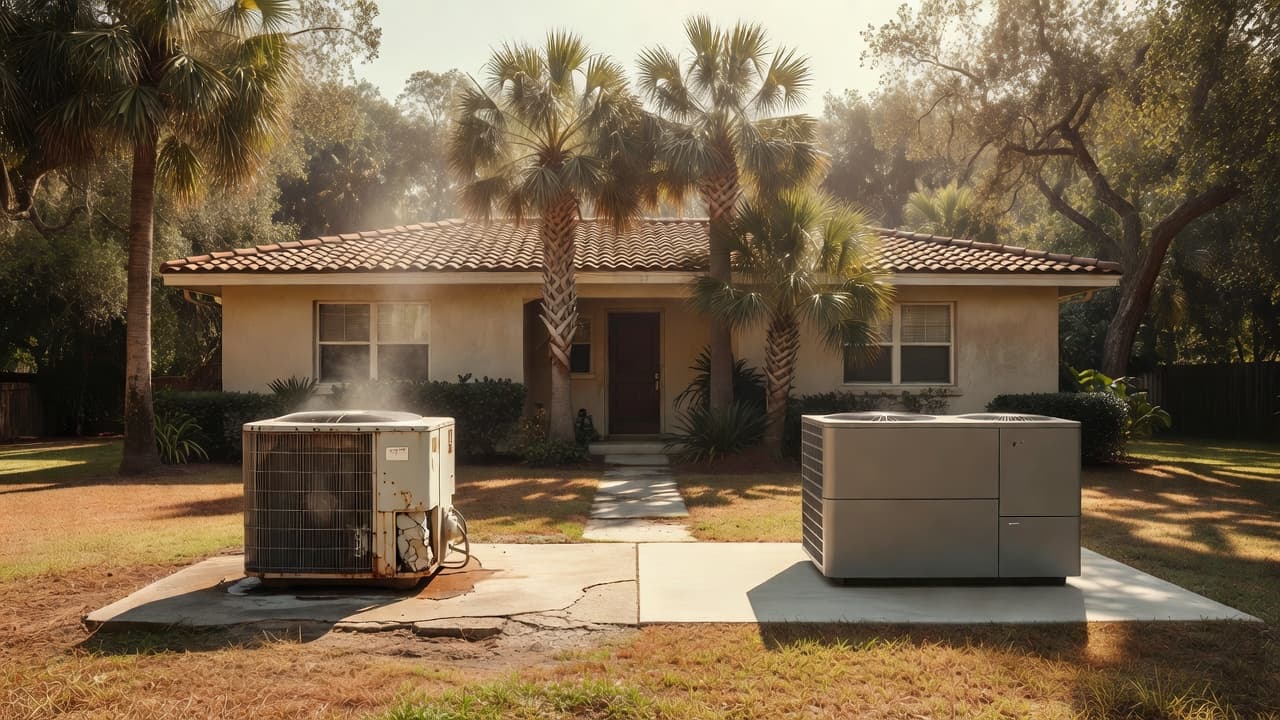
Noise is easier to compare. Single-stage systems usually sound louder when they start because they jump straight to full output. Two-stage systems are often quieter on low stage, which helps if the outdoor unit sits near a patio or bedroom window.
Wear and tear also changes with staging. Fewer hard starts can be easier on parts, and longer cycles can reduce some stress. Even so, maintenance still matters. Dirty coils, clogged filters, and weak airflow can shorten the life of either system.
If you want monthly cooling performance that feels smoother, two-stage can help. If your main goal is straightforward cooling at a lower purchase price, single-stage still has a place.
Which system fits your house and budget
A quick side-by-side view makes the tradeoffs easier to see.
| Factor | Single-stage AC | Two-stage AC |
|---|---|---|
| Upfront cost | Lower | Higher |
| Cooling output | Full power or off | Low stage and high stage |
| Humidity control | Good, but shorter cycles can limit it | Often better in long run cycles |
| Noise | Usually louder at start-up | Often quieter on low stage |
| Wear on parts | More start-stop cycling | Fewer hard starts, depending on sizing |
| Thermostat needs | Basic thermostat is often enough | Needs compatible staging control |
A smaller home with good insulation may not need the extra comfort layer of a two-stage unit. If the house is tight, shaded, and easy to cool, single-stage can be enough.
Larger homes often tell a different story. So do homes with wide sun exposure, older windows, or uneven rooms. In those cases, the steadier output of a two-stage AC Fort Myers homeowners choose can feel easier to live with, especially in late summer.
Thermostat compatibility matters here as well. A two-stage system needs controls that can call for both stages. If the thermostat cannot communicate properly, you may not get the comfort you paid for.
Budget should stay in the conversation too. If replacement costs are stretching the plan, a solid single-stage system may be the better move today. That can be the smart choice when the home is simple and the budget is tight.
If you work from home, keep the AC running most of the day, or want fewer temperature swings, two-stage often earns its place. If the home is occupied in shorter blocks and you want a simpler system, single-stage may be enough.
Installation details matter more than most people expect
The best AC type can still disappoint if the install is weak. Proper sizing, airflow, and duct condition shape daily comfort just as much as the equipment itself.
That is why HVAC installation and replacement in Fort Myers should start with the house, not the model number. A good installer checks the load, looks at insulation, reviews the ducts, and makes sure the new system fits the space.
Ductwork deserves special attention in older homes. Leaks, bad returns, or undersized ducts can make a two-stage system behave like a single-stage unit with extra cost. On the other hand, clean and well-sealed ducts can help either system run as designed.
Thermostat setup matters too. Some homeowners want simple controls. Others want more detailed staging and fan control. The right thermostat should match the system, not fight it.
If you're comparing replacement options now, Schedule an Estimate so the recommendation is based on your home's real cooling load, not a guess.
Conclusion
Fort Myers heat puts every AC choice to the test. A single-stage system can be a good fit for smaller or simpler homes, while a two-stage unit often makes more sense when comfort, humidity control, and quieter operation matter more.
The strongest choice is usually the one that matches your home size, ductwork, thermostat, and budget. When those pieces line up, your AC works better through the hottest months, and the house feels more even day after day.
Recent Posts