Why Your AC Smells Like Burning Plastic
A burning-plastic odor from your air conditioner deserves attention, especially if your AC smells like burning plastic soon after the system starts. This specific burning odor can point to an overheating wire, motor, capacitor, or plastic component.
Turn the system off if the odor is strong, persistent, or paired with smoke, sparks, unusual noises, or a tripped breaker. A short inspection can prevent a small electrical problem from damaging the unit or creating fire hazards. The likely causes become easier to understand once you know what the smell is telling you.
Key Takeaways
- A burning plastic smell often points to an overheating electrical part or damaged wiring.
- Turn off the AC at the thermostat and circuit breaker when the odor is strong or continues.
- Burning plastic differs from the brief dusty smell that can occur when an AC starts after sitting unused.
- Don't reset a tripped breaker repeatedly or open electrical panels yourself.
- Southwest Florida humidity, salt air, and long cooling cycles can add stress to heating and cooling equipment.
What It Means When Your AC Smells Like Burning Plastic
An air conditioner doesn't burn fuel during normal cooling. Therefore, a strong plastic odor usually comes from a component that is overheating, melting, or allowing another material to heat up nearby.
Overheating wires or electrical connections
Faulty wiring and loose electrical connections create resistance. Resistance produces heat, and that heat can damage wire insulation or nearby plastic parts. Melted insulation is a common result that you might notice while the compressor, blower motor, or outdoor fan runs.
A damaged wire may also leave brown discoloration or a scorched mark. However, you shouldn't remove panels or inspect wiring while the system has power. Electrical components can remain dangerous even after the thermostat is switched off.
A failing blower motor or capacitor
The indoor blower motor moves cooled air through your ductwork. When its bearings wear out or the motor struggles against a clogged filter, it can run hot. Plastic around the motor may smell as it warms.
A weak capacitor can also make a motor work harder during startup. You might hear humming, delayed startup, buzzing, or repeated cycling along with the odor. These symptoms require professional testing because capacitors can hold an electrical charge after power is disconnected.
A damaged contactor or control board
Outdoor units use contactors and a control board to manage electrical power. A worn contactor can arc, overheat, or develop burned contacts. Electrical components that suffer from damage may produce a sharp electrical smell that resembles hot plastic.
The odor could come and go at first. That doesn't make the problem harmless. Intermittent electrical faults can worsen during long cooling cycles, which are common during hot Southwest Florida afternoons.
Plastic near moving or hot components
Plastic debris, a loose piece of packaging, insulation, or another object can contact a fan or warm surface. The blower may pull a lightweight object into the return, while outdoor debris can enter areas around the condenser fan motor.
Keep the area around the outdoor unit clear, but don't reach inside the cabinet. If the smell began after installation, construction, or other work near the unit, tell the technician what happened.
The odor may come from somewhere else
Sometimes the air handler and your ductwork distribute an odor that started in another part of the home. A burning plastic smell might originate from a nearby appliance, power strip, outlet, attic material, or garage item before it enters the return-air system.
Check the general area without touching suspicious equipment. If the smell is strongest near an outlet or another appliance, shut off that device if you can do so safely and contact a qualified electrician. When the smell is strongest at vents or directly around the AC equipment, schedule an HVAC inspection.
Burning Plastic Is Different From Dust or Mustiness
A brief dusty smell can occur when an air conditioner starts after sitting unused. Dust on the blower or other surfaces may warm up and create a dry, dusty odor. That smell should fade quickly and shouldn't resemble melting plastic.
Musty odors have a different source. High humidity can allow microbial growth on damp coils, drain pans, insulation, or duct surfaces. A musty AC smell often resembles wet towels or stale air. It calls for cleaning, moisture control, or drain service rather than an electrical diagnosis.
A burning plastic smell tends to smell sharper and more chemical. It may linger in the room or grow stronger as the system operates. Treat that change as a warning, particularly when the system also makes a buzzing, grinding, clicking, or crackling sound that points to potential mechanical problems.
A dusty smell may fade during startup, but a burning odor that returns with every cooling cycle needs professional attention.
If you aren't sure which odor you're noticing, shut the system off and describe the smell to the technician. Avoid running the AC repeatedly to see whether the odor disappears. Continued operation can turn an overheated connection into a larger repair.
What to Do When Your AC Smells Like Burning Plastic
Safety comes first. If the odor is strong, persistent, or accompanied by smoke, sparking, unusual noises, or a tripped circuit breaker, switch the system off at the thermostat. Then turn off the air conditioner's breaker at the electrical panel if you can identify it safely.
Don't touch wires, capacitors, circuit boards, or other internal parts. Don't remove access panels, pour water on the unit, or repeatedly reset a breaker. If smoke continues, you see flames, or the smell comes from inside a wall, leave the home and call 911. Contact a qualified service technician once the immediate danger has passed for a professional inspection.
For a mild odor that appears briefly, switch the HVAC system off and note where you smelled it. Check whether the smell came from a supply vent, return grille, indoor unit, or outdoor condenser. Also note whether it began during startup, after several minutes of cooling, or when the system switched between cycles.
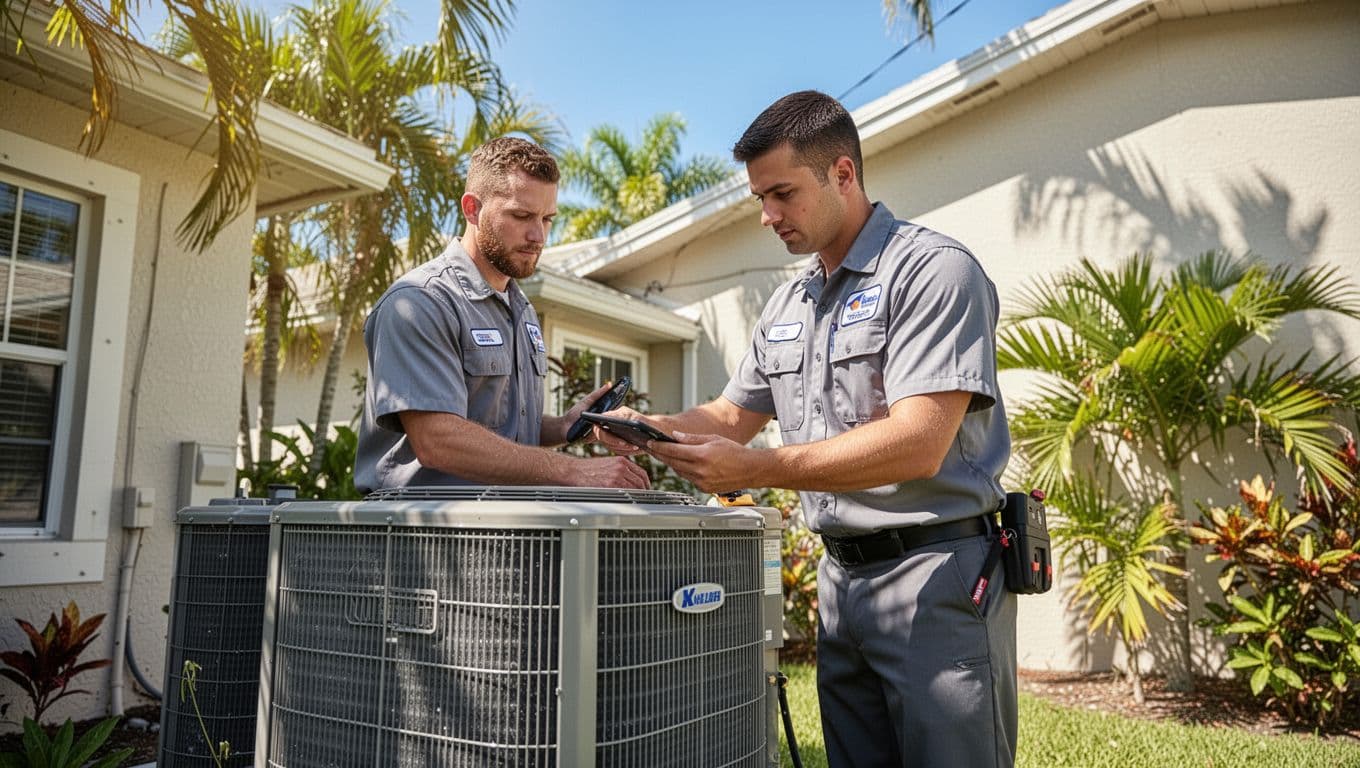
A technician can inspect the equipment without exposing you to energized components. Valor Heating & Cooling provides HVAC repair and inspection for homes and businesses in Fort Myers and Lee County.
Before the visit, gather useful details:
- Whether the system is a central AC, heat pump, or ductless mini-split
- The age of the equipment, if known
- Any recent filter changes, repairs, or electrical work
- Sounds that happen at startup or during operation
- Whether the breaker has tripped
- The location and timing of the odor
These details help the technician choose a safe starting point. They also help separate an HVAC fault from an odor entering through the return system.
How an HVAC Professional Finds the Source
A qualified service technician starts with a visual inspection and a review of the symptoms. They may check the indoor air handler, outdoor condenser, thermostat operation, filter, blower compartment, and electrical connections to uncover hidden electrical issues. The exact process depends on the equipment and the reported odor.
The technician can test voltage, current draw, motor operation, capacitors, and connection condition with appropriate meters. They may look for heat damage, melted insulation, pitted contactor points, abnormal motor load, or signs of overheating components.
A dirty air filter can restrict air movement and increase blower strain due to restricted airflow. Replacing a standard air filter won't repair a damaged motor or electrical connection on its own. Likewise, a new component may solve a starting problem while a separate wiring defect remains, potentially leading to system failure. A proper diagnosis identifies the failed part instead of relying on the smell alone.
The repair may involve replacing a capacitor, contactor, motor, damaged wire, control board, or affected plastic component. In some cases, the technician may recommend replacement when an older system has extensive electrical damage or several failing parts. Ask what failed, why it failed, and whether the repair addresses the cause.
If your AC smells like burning plastic but still cools the home, don't use cooling performance as proof that the system is safe. Electrical parts can deteriorate before the unit stops producing cold air. Early service can also help you avoid a no-cooling emergency during a hot week.
Why Southwest Florida AC Systems Need Prompt Attention
Air conditioners in Fort Myers and across Lee County often run for long periods. High heat and humidity keep every HVAC system working hard, while coastal air can expose outdoor equipment to salt and moisture. Corrosion can affect electrical connections and fasteners over time.
Heavy runtime also exposes airflow problems. A dirty air filter, blocked return, closed supply registers, or dirty coil can make the blower and compressor work harder, creating restricted airflow and potential mechanical problems. Routine maintenance helps identify these conditions before they contribute to overheating.
Replace disposable filters according to the air filter manufacturer's guidance and check your air filter more often during heavy use, remodeling, or dusty conditions. Keep at least two feet of open space around the outdoor condenser, remove leaves from the surrounding area, and keep lawn equipment from blowing debris into the coil.
Don't spray cleaners into the unit or try to wash internal electrical components. Professional heating and cooling maintenance can include electrical checks, airflow evaluation, coil inspection, drain testing, and a review of system performance.
If the equipment is aging, repairs keep returning, or the smell follows repeated breaker trips, discuss replacement options with a qualified contractor. A properly sized, efficient HVAC system can reduce strain and improve comfort, but installation should follow a complete load and equipment assessment. If you need help comparing repair and replacement choices, you can Schedule an Estimate with Valor Heating & Cooling.
When to Call for Immediate AC Service
Call for prompt HVAC service when the odor returns, lasts longer than a brief startup period, or comes with unusual operation. A tripped breaker, buzzing sound, visible damage, smoke, or loss of cooling raises the priority and points toward potential electrical issues.
A strong odor from the outdoor unit can indicate a compressor, contactor, fan motor, or wiring problem. A smell near the indoor air handler may involve the blower motor, capacitor, control board, or fan motor. Either location needs a professional inspection before you turn the system back on to rule out a refrigerant leak or severe system failure.
You can also review other early warning signs of AC failure, such as weak airflow, warm air, strange noises, or rising energy bills. These symptoms often appear before a system stops cooling completely.
Frequently Asked Questions
Why does my AC smell like burning plastic when it turns on?
A burning plastic smell typically indicates an overheating electrical component, damaged wiring, or a struggling motor inside the system. If the odor persists or is accompanied by unusual sounds or smoke, turn off the system immediately.
Is a burning plastic smell the same as a dusty AC odor?
No, a dusty odor is usually brief and happens when dust burns off heating elements or warm surfaces during initial startup. A burning plastic smell is sharper, more chemical, and usually points to an electrical issue that requires professional attention.
Should I keep running my AC if I notice a burning plastic odor?
You should turn off your air conditioner at the thermostat and the circuit breaker if the smell is strong or continues. Running the system with an electrical fault can increase damage and create a serious fire hazard.
What should I do before an HVAC technician arrives to inspect the smell?
Note whether the odor came from the vents or the unit, check if any breakers tripped, and gather details about the age of your system and recent maintenance. Avoid opening electrical panels or touching internal components yourself.
Conclusion
When your AC smells like burning plastic, turn it off and treat the odor as a possible electrical warning. A burning plastic smell differs from musty air or a short burst of dusty odor, and continued operation can increase the damage while pointing toward underlying electrical issues.
Shut off the thermostat and breaker when the smell is strong, persistent, or paired with smoke, sparks, unusual noises, or a tripped breaker. Consulting a local heating and cooling professional ensures that a trained technician can find the source safely and explain whether repair or replacement makes sense for your home.
Recent Posts