
What to Do While Waiting for Emergency AC Repair in Fort Myers
When your AC quits in Fort Myers, the house can heat up fast. Add Gulf Coast humidity, and even a short delay feels longer than it should.
The good news is that you have a few safe steps to take while you wait for emergency AC repair in Fort Myers . Small actions can protect your family, your pets, and your home without making the problem worse.
The goal is simple, keep people safe, reduce stress on the system, and avoid risky repairs until a technician arrives.
Start with the safest quick checks
Before you panic, do the basics. A surprising number of "broken" cooling problems turn out to be a thermostat setting, a tripped breaker, or a clogged filter.
Check the thermostat first. Make sure it's set to cool and the temperature is lower than the room temperature. If the screen is blank or acting odd, replace the batteries if your model uses them.
Next, look at the air filter. A dirty filter can choke airflow and make the system struggle. If the filter is packed with dust, replace it with the right size, then wait and see whether the system responds.
You can also check the circuit breaker. If the AC breaker has tripped, reset it once. If it trips again, leave it alone and call for service. That points to a deeper electrical issue.
Finally, make sure the vents inside the home are open and not blocked by furniture, rugs, or curtains. Clear airflow matters when the system is already under stress.
Do not open HVAC panels, touch wiring, or try to fix refrigerant problems yourself. Those steps can be dangerous and can make the repair more expensive.
Keep indoor heat from building up
Once you know the AC needs a pro, shift your focus to damage control. The main threat in Fort Myers is not only temperature, it's heat plus humidity. That mix can drain energy quickly and make rooms feel sticky and heavy.
Close blinds and curtains on sunny windows. If you have ceiling fans, use them to move air across occupied rooms. Fans don't cool the air, but they help your body shed heat more easily.
Avoid heat sources that make the house warmer. Skip the oven, use the microwave or grill outside if it's safe, and keep heavy appliances off when you can. Even a dryer can add more heat than you'd expect.
Drink water before anyone feels thirsty. Set a simple habit, a few sips every 15 to 20 minutes. Cold drinks help, but plain water is usually the best choice for steady hydration.
A cool shower or damp washcloth can also help. That matters when the indoor temperature keeps rising and the AC is still down.
If the house is warming quickly, move everyone into the coolest room. Often that's the room with the least sun and the best airflow. Keep doors shut to hold the cooler air where people are sitting.
Put people and pets first
Some homes can wait a little longer than others. Others can't. Infants, older adults, pregnant people, and anyone with heart, lung, or mobility concerns should not stay in a hot house for long.
Pets need the same care. Dogs and cats can overheat faster than many people realize, especially if they have thick coats or are used to sleeping near the vents. Keep water bowls full and check on them often.
If the house feels muggy and temps keep climbing, think about leaving for a few hours. A relative's home, a neighbor's place, or an air-conditioned public space can give everyone a break. That's especially smart when babies or medically vulnerable residents are in the house.
A few simple signs mean the temperature has crossed from uncomfortable to unsafe. Look for dizziness, nausea, headache, confusion, heavy sweating, or skin that feels hot and dry. If those signs appear, cool the person down and get medical help if needed.
Keep pets in the coolest room you have, and never leave them in a parked car, even for a short time. If your home is still holding heat after sunset, temporary relocation is often the safer move.
A home can wait for repair. A child, senior, or pet should not have to tough it out just to avoid a short drive.
Protect food, floors, and the equipment
While you wait, reduce the chance of a second problem. If the AC failed during a hot afternoon, your refrigerator and freezer may be working harder too. Keep doors closed as much as possible, and avoid opening them again and again.
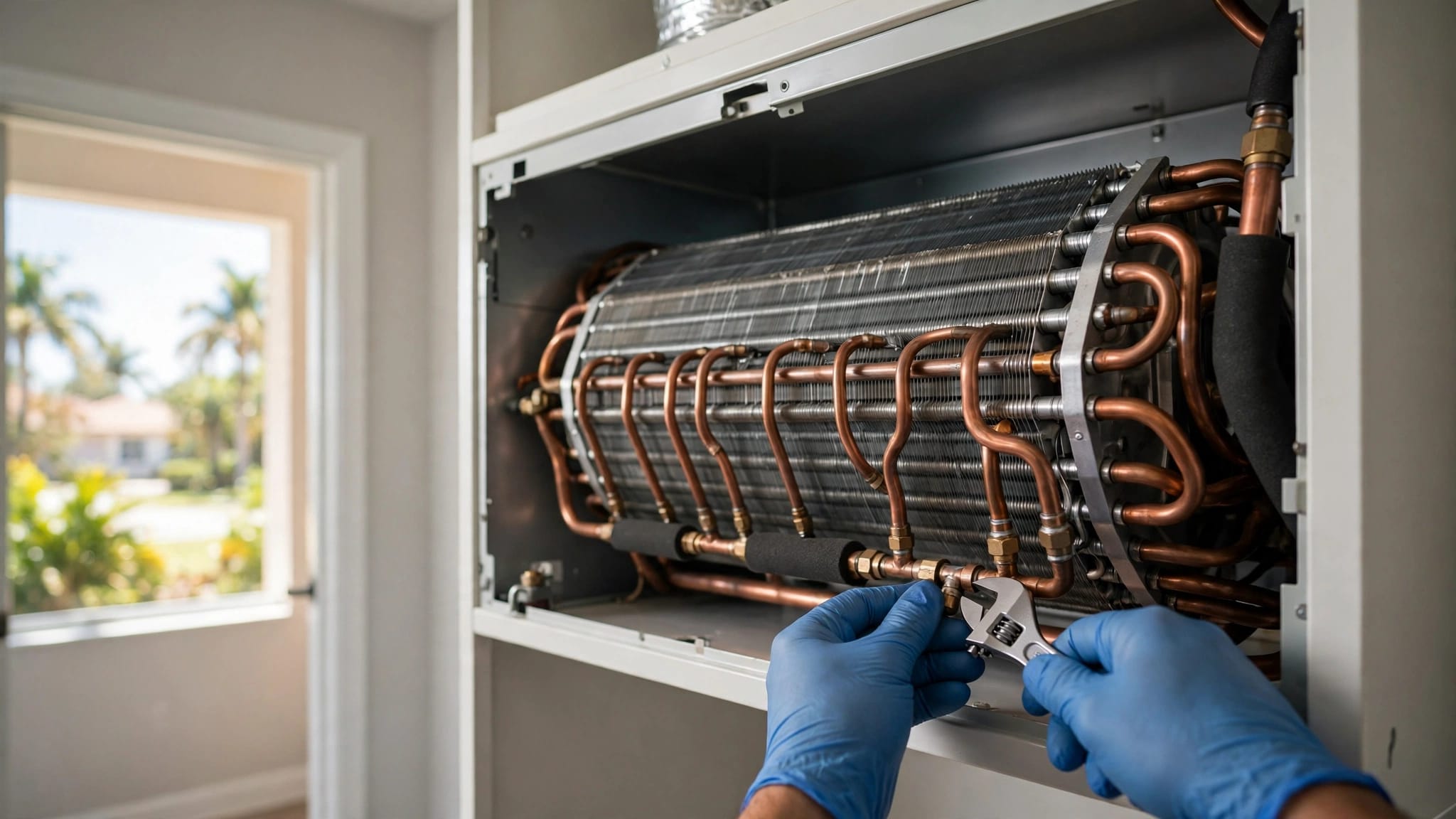
If you hear dripping or see water near the air handler, place towels where needed and keep the area clear. Water around HVAC equipment can point to a clogged drain, frozen coil, or other issue that needs a trained eye.
Don't pour chemicals down drains or try to flush lines unless a technician tells you to. It's easy to make a small issue worse.
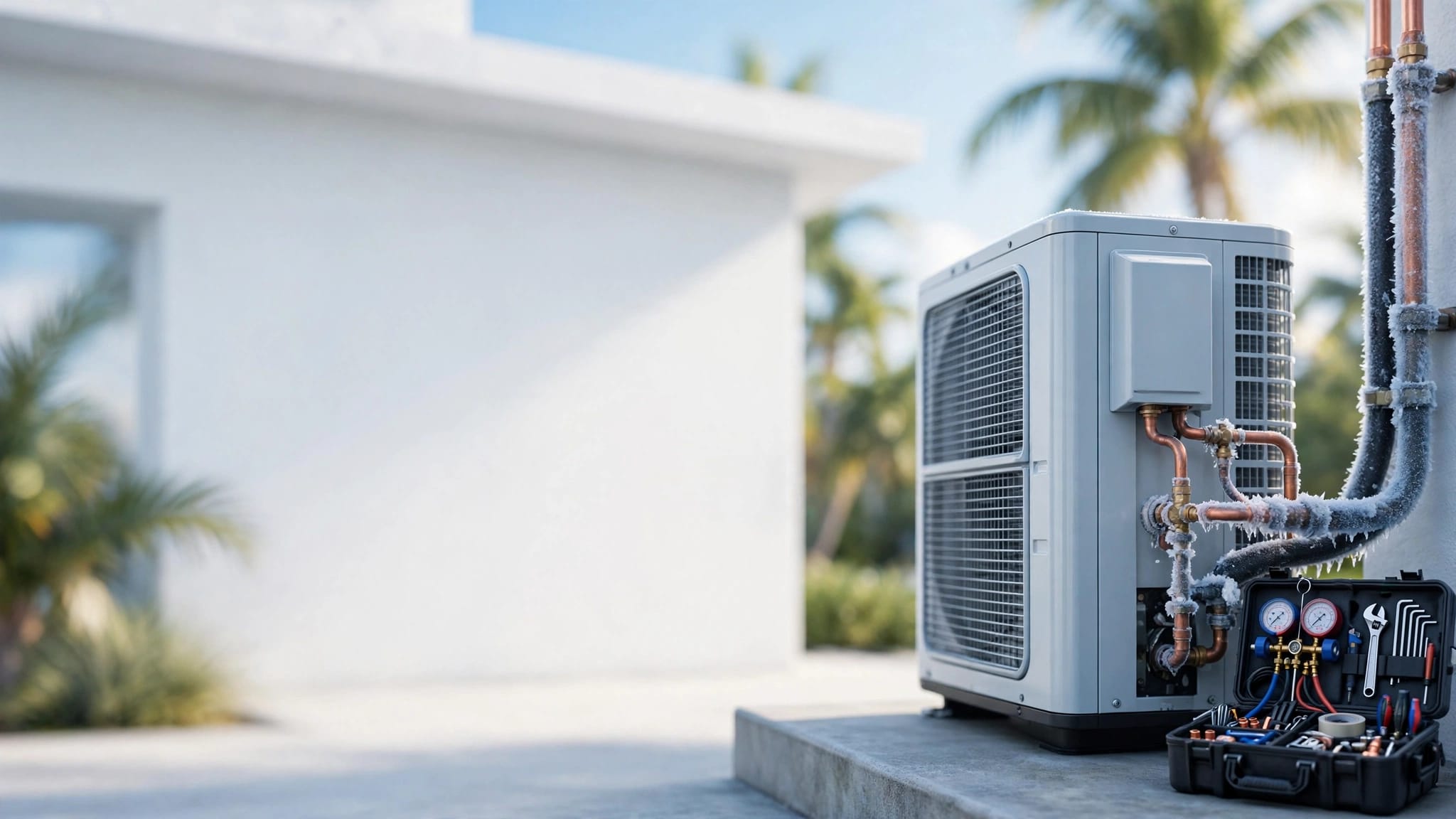
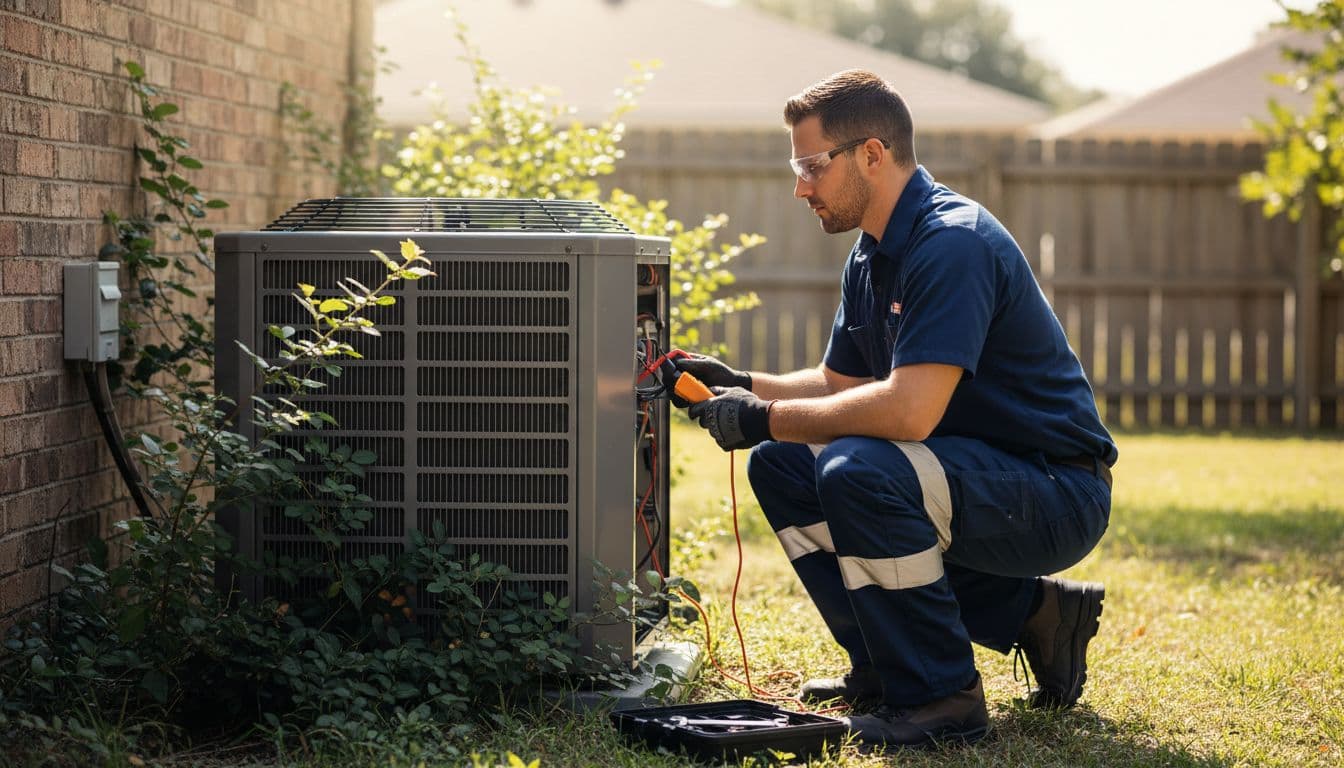
Outside, keep the area around the condenser clear if it's safe to do so. Move away leaves, branches, toys, or yard debris that might block airflow. You don't need to touch the unit itself. Just give it space.
Also, resist the urge to keep resetting the system. Repeated restarts can stress failing parts and sometimes turn a repair into a bigger job. One reset is enough if a breaker tripped. After that, wait for the technician.
If your system has been breaking down more than once, it may need more than a quick fix. Once the emergency is handled, professional HVAC maintenance services can help catch worn parts, weak airflow, and drain issues before the next hot spell.
Know when to leave and what to ask next
Sometimes the smartest move is to step away for a while. If indoor temperatures keep rising, the AC is down for hours, or someone in the home is vulnerable, find a cooler place until service is restored.
Use this quick guide to decide:
- Stay put if the home is still fairly cool, everyone feels fine, and help is already on the way.
- Leave for a few hours if the house is getting stuffy and someone is tired, sweaty, or uncomfortable.
- Leave sooner if there are infants, seniors, pets, or anyone with a medical condition that heat can aggravate.
While you wait, keep your phone nearby and make sure the technician can reach you. Clear a path to the thermostat, indoor unit, and outdoor condenser if you can do that safely. That helps the visit go faster once help arrives.
If the AC has been unreliable for more than a day or two, ask about the age of the system, the cost of the repair, and whether replacement may make more sense later. A good technician will explain the options in plain language.
When you want a clear next step, you can Schedule an Estimate and get a better picture of what the system needs after the emergency is under control.
Conclusion
Waiting on AC repair in Fort Myers is never fun, especially when the air feels heavy and the house starts to warm up. The safest response is simple, check the thermostat, filter, breaker, vents, and batteries, then stop there.
After that, focus on comfort and safety. Keep people hydrated, protect pets, reduce indoor heat, and leave the house if the temperature becomes too much for babies, seniors, or anyone with health risks.
The right response during a breakdown is calm, not complicated. A few smart steps can carry you through the wait until the system is back online.
Recent Posts