When to Replace Your Air Handler in Fort Myers
An air handler does a lot more work in Fort Myers than many homeowners realize. It moves cooled air, pulls moisture out of the home, and keeps the system steady through months of heavy use.
If you are weighing air handler replacement Fort Myers options, the biggest clue is often not a single breakdown. It is a pattern of repairs, weak airflow, and rising utility bills that never seem to settle down.
The decision gets easier when you know how Southwest Florida's heat, humidity, and salt air change the picture. Start with the signs your system gives you.
Why Fort Myers air handlers wear out faster
Fort Myers homes put HVAC equipment through a long, hard season. The air handler may run for much of the year, and that constant use leaves less room for rest or recovery.
Humidity keeps the drain pan busy
High humidity means the air handler has to pull a lot of moisture from the air. That moisture travels through the coil, drain pan, and condensate line.
When those parts stay wet for long stretches, small problems grow fast. A clogged drain can send water where it does not belong. A cracked pan can lead to leaks. Mold can build on damp surfaces and send a musty smell through the house.
A unit can be cleaned and repaired, but repeated moisture trouble is a warning sign. Regular HVAC maintenance can catch drain issues early, yet it cannot undo rust, corrosion, or a worn-out blower motor.
Salt air and long runtime speed up wear
Homes closer to the coast deal with more salt in the air. That salt settles on metal parts and can eat away at connections, fasteners, and the cabinet over time.
Long runtime adds another layer of stress. The blower motor, control board, and electrical parts work harder when the cooling season stretches on. The result is simple, the unit ages faster than the calendar suggests.
That is why two homes with the same equipment age can have very different results. One home may still be running well. Another may already be ready for replacement.
Warning signs that repair may not be enough
Some symptoms point to a small fix. Others point to a system that is getting near the end of its useful life. A quick comparison helps separate the two.
| Symptom | What it often means | Better move |
|---|---|---|
| Weak airflow in several rooms | Blower wear, dirty coil, or duct issues | Inspect first, then decide |
| Water around the air handler | Drain trouble, cracked pan, or rust | Repair only if the damage is minor |
| Musty or stale odor | Moisture buildup or possible mold growth | Check the whole unit, not just the filter |
| Rising power bills | Longer run time or falling efficiency | Compare repair cost to replacement value |
| Repeated part failures | The unit is wearing out as a whole | Replacement may make more sense |
When two or three of these problems show up together, a simple part swap usually is not enough.
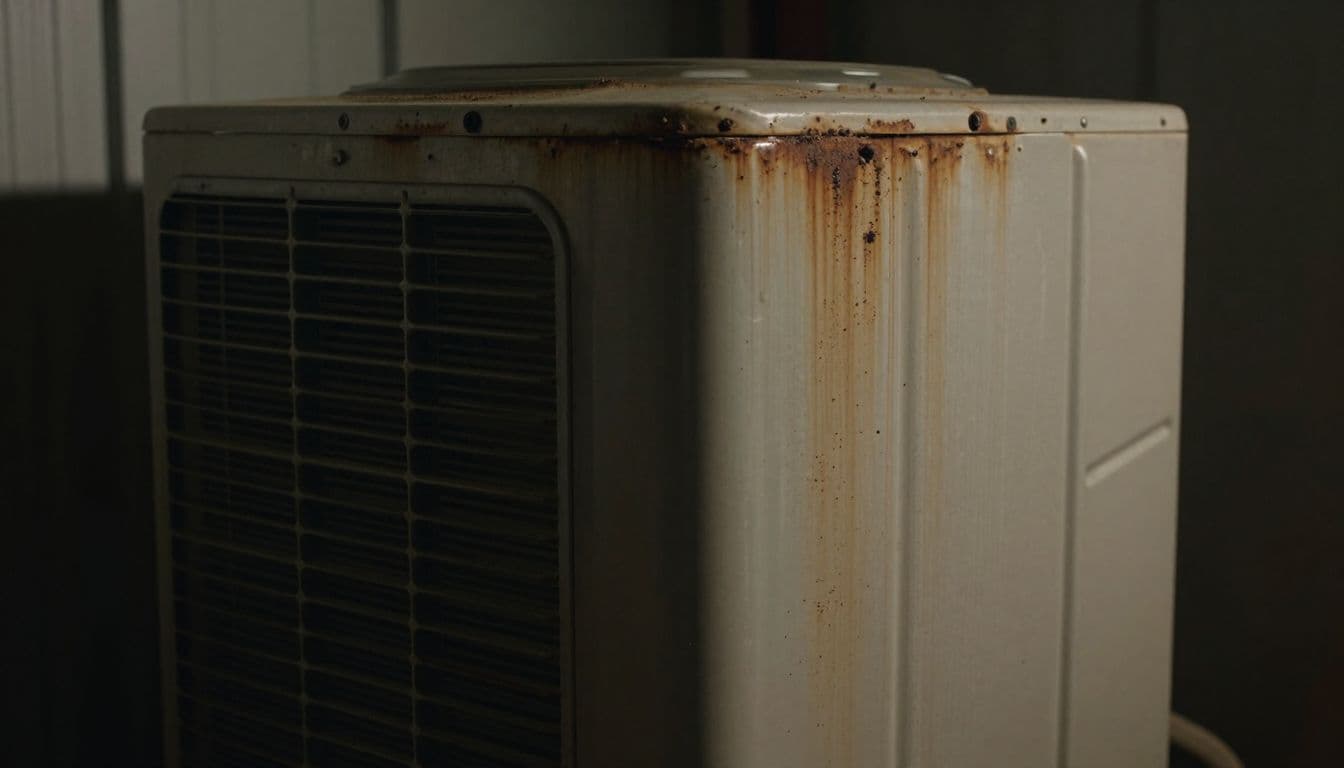
Rust on the cabinet, a noisy blower, and weak airflow are not separate accidents. They are often signs of one aging system. If the same issues keep returning, another repair may only buy a little time.
How to weigh repair against replacement
Age matters, but age alone does not make the call. A newer air handler with one failed part may still be worth fixing. A well-used unit with several weak points is a different story.
A few questions help:
- Has the same issue come back more than once?
- Does the unit cool one area but leave other rooms sticky or warm?
- Are you seeing water, rust, or corrosion near the cabinet?
- Does the blower sound louder than it used to?
- Has the system become expensive to run for no clear reason?
If the answer to several of those questions is yes, replacement starts to look better than another repair.
An aging air handler also changes the comfort in small ways. The house may still get cool, but it may feel damp. The system may run longer to reach the set temperature. That extra runtime puts more wear on the rest of the equipment.
If you are comparing repair and replacement options, the full HVAC services page can help you see how inspection, repair, and replacement fit together. The right path depends on what the unit is doing now, not just on its age.
What a new air handler should improve in Southwest Florida
A replacement should do more than bring back cold air. It should solve the real problem behind the breakdown.
The best replacement plan usually focuses on a few things:
- Airflow that matches the size of the home
- Better moisture control during long humid stretches
- Drainage that helps prevent overflow and musty smells
- Parts and cabinet materials that hold up better near the coast
- Equipment that works well with the outdoor unit and duct system
A good installer will also look at the ductwork, not just the box in the closet or attic. Leaky or undersized ducts can make a new air handler look bad when the real problem sits elsewhere.
That is why a complete replacement review matters. If the indoor unit is failing, but the duct layout, drain setup, or electrical connections also need attention, a full plan often gives better value than a patchwork fix.
What affects the replacement estimate
Replacement cost is not one flat number. Several things shape the final estimate, and each one affects the value of the job.
The main factors are usually:
- Equipment size and efficiency level
- Condition of the ductwork
- Access to the air handler, such as attic or closet placement
- Drain line and condensate pan repairs
- Electrical updates or code-related work
- Whether the outdoor unit also needs a check
That means two homes can have very different replacement needs, even if both need a new air handler. A simple changeout is one thing. A job that includes rust cleanup, drainage repair, or duct fixes is another.
If your system is already showing recurring problems, rising energy bills, uneven cooling, or obvious age, it makes sense to Schedule an Estimate. A clear inspection can show whether repair still has life left or whether replacement is the smarter move.
Conclusion
Fort Myers heat and humidity do not give an air handler much of a break. Add salt air, long run times, and constant moisture, and wear shows up sooner than many homeowners expect.
When repairs keep piling up, the better choice is often a full replacement instead of another short-term fix. If your system is old, rusted, noisy, or struggling to keep the house evenly cool, an inspection can show whether it is time to move on.
Recent Posts