Whole-Home vs Portable Air Purifier: Which Fits Your Home?
A whole-home vs portable air purifier decision usually comes down to coverage. If you want steady filtration throughout a central-air home, a properly sized HVAC-integrated purifier is usually the stronger long-term fit. If one bedroom, office, or living area needs attention, a portable unit provides focused filtration without changing your HVAC system.
Southwest Florida homes also face humidity, pollen, dust, and long cooling seasons. The right choice depends on filter type, airflow, installation quality, equipment sizing, and regular filter replacement. Start with the main difference between these two systems.
Choosing a whole-home vs portable air purifier setup
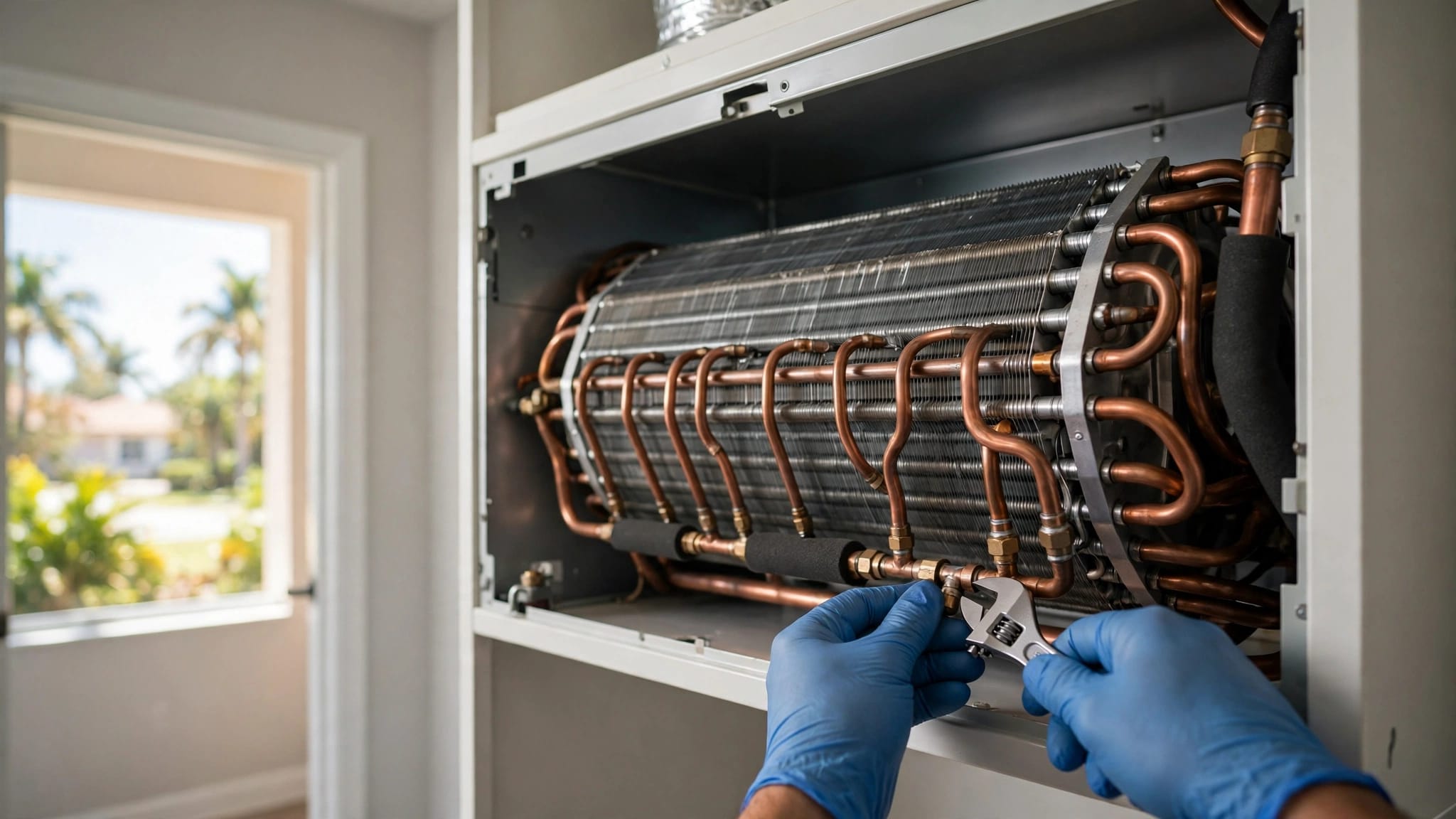
A whole-home system connects to your home's central HVAC equipment. In many installations, a media filter or air-cleaning cabinet sits near the return side of the air handler or furnace. When the blower moves air through the ductwork, the purifier filters that recirculated air before it returns to the living spaces.
A portable purifier works independently. Its fan pulls air from one room through a filter, then releases cleaner air back into that room. Its impact decreases beyond the space listed in the manufacturer's coverage guidance, especially when doors are closed or the layout blocks airflow.
A whole-home purifier depends on central HVAC airflow. A portable purifier depends on room-level airflow and proper placement.
Whole-home coverage also has limits. A guest room with a closed door may receive less filtered air than an open living area. Likewise, a central unit won't clean outdoor air entering through open doors, leaky windows, or poorly sealed ductwork.
The difference affects installation, maintenance, and daily use. A central system requires compatibility checks and professional installation. A portable unit needs the right clean air delivery rate, a suitable location, and regular filter care.
What a whole-home air purifier does well
A whole-home purifier can treat air across a house that already relies on central cooling. It stays out of bedrooms and walkways, so you won't need extra floor units in every occupied room.
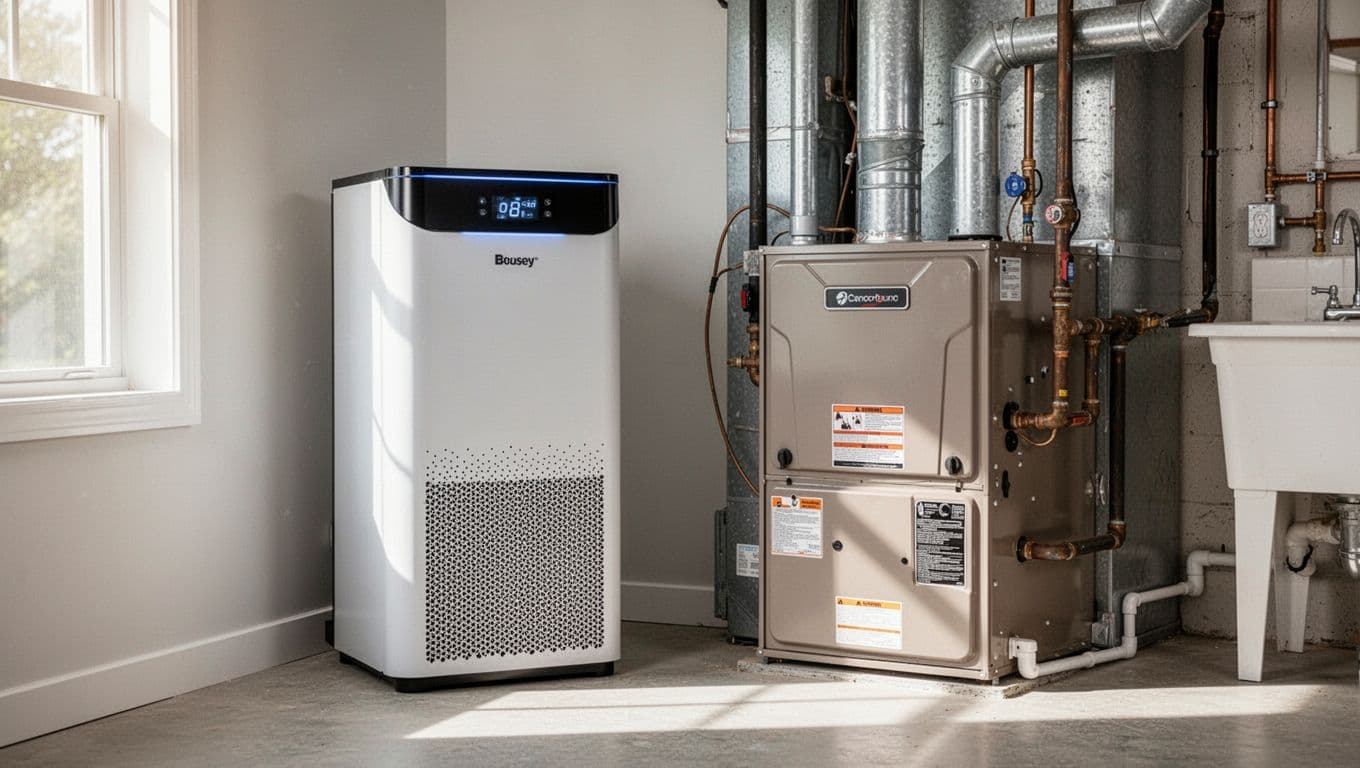
For homeowners with pets, seasonal allergies, or several occupied rooms, that broad reach is easier to manage. The system can provide a consistent filtration baseline whenever the HVAC blower runs.
The filter still matters. A high-efficiency media filter can capture many airborne particles, but the HVAC system must support its resistance to airflow. MERV 11 or MERV 13 may fit some systems, while another air handler may need a different rating. A higher rating isn't automatically better if it causes weak airflow, coil icing, or extra blower strain.
Some installations add an electronic air cleaner or UV-C component. These technologies target different concerns, and UV-C isn't a substitute for particle filtration. Ask what each component is designed to address and how it fits the existing equipment.
Installation quality affects results just as much as the purifier itself. The cabinet should fit the filter correctly, seal against bypass air, and preserve the airflow the HVAC equipment needs. Air that slips around the filter won't receive the intended treatment.
Whole-home filtration usually costs more upfront because the project may require a new cabinet, controls, or duct modifications. During a replacement project, homeowners can discuss options for HVAC installation and replacement. A technician should review equipment capacity, filter dimensions, static pressure, and blower settings before recommending a model.
When a portable air purifier is the better fit
A portable unit works well when the concern is concentrated in one room. You can run it in a bedroom at night, near a home office, or in the living room where your household spends most of the day. Renters and homeowners who don't want ductwork changes also get a simpler setup.
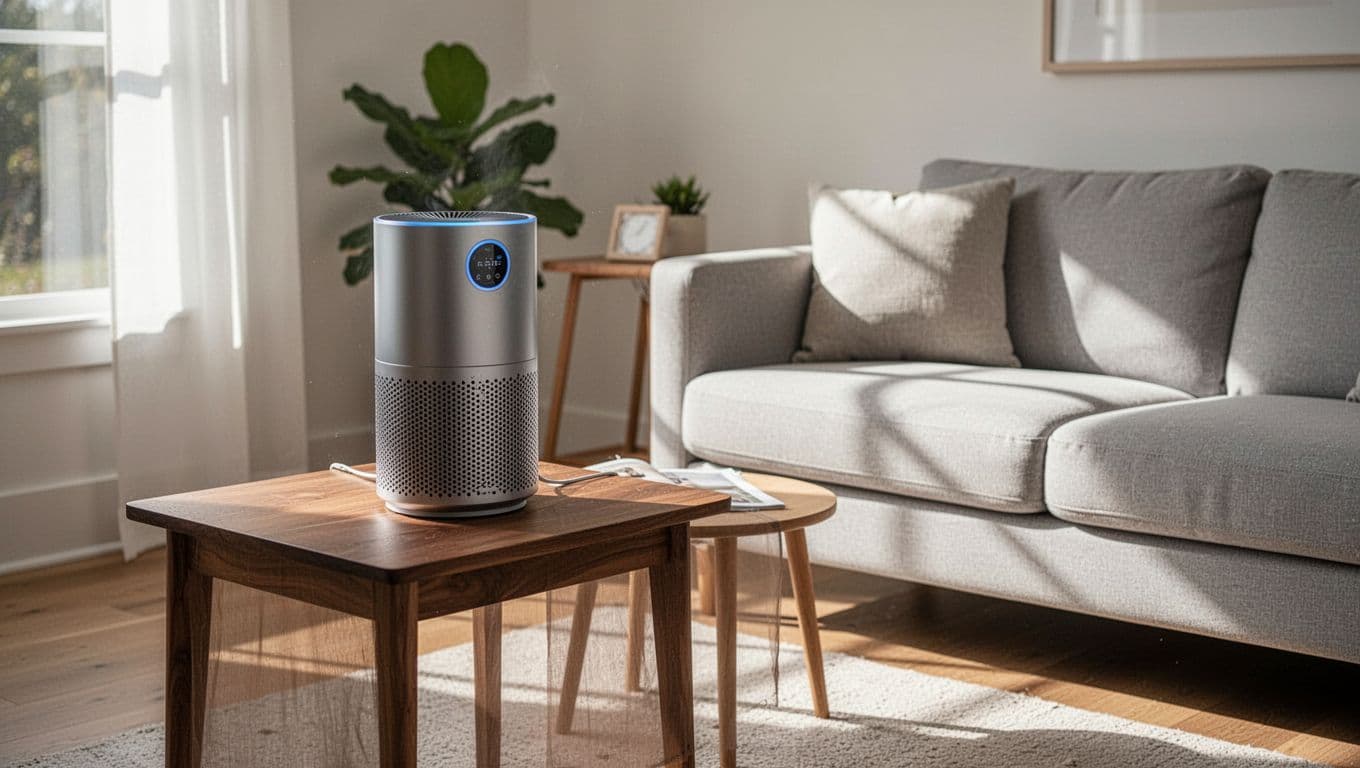
Look for a true HEPA filter when particle removal is the priority. A true HEPA filter is commonly rated to capture 99.97% of 0.3-micron particles under test conditions. Activated carbon can help with some odors and gases, but a thin carbon layer has limited capacity and won't solve every odor source.
Use CADR, or clean air delivery rate, when comparing models. A larger room or higher ceiling needs more clean-air delivery. Run the unit at a speed you can tolerate for long periods, because a purifier that stays off provides no filtration.
Placement affects performance. Keep intake and outlet openings clear of curtains, walls, and furniture. Place the unit in the room you want to treat, with the door closed when targeted cleaning matters. Moving one device between rooms can help, but other rooms remain untreated while the purifier is elsewhere.
Portable systems have a lower starting cost, yet multiple rooms may require multiple machines. Each unit also adds filter replacements, fan noise, floor space, and electrical use. Avoid products that intentionally generate ozone, since ozone can irritate the lungs and doesn't replace particle filtration.
For smoke, renovation dust, or a child's bedroom, direct room-level control may outweigh limited coverage. A portable purifier can also supplement a whole-home system when one room needs additional filtration.
Whole-home vs portable air purifier: side-by-side
This quick comparison shows where each system fits best.
| Factor | HVAC-integrated whole-home system | Portable room unit |
|---|---|---|
| Coverage | Multiple rooms connected to the central duct system | One room or nearby open area |
| Installation | Professional cabinet, duct, and control work may be needed | Plug in, position, and operate |
| Filter choices | Media filters, electronic cleaners, and some HEPA or UV-C designs | HEPA, activated carbon, or combination filters |
| Airflow | Depends on blower runtime, duct design, and filter resistance | Depends on fan speed and CADR |
| Best use | Consistent baseline filtration across a home | Targeted filtration in one room |
| Upfront cost | Usually higher, but one system covers the home | Usually lower, though costs increase for several rooms |
| Ongoing care | Filter changes and HVAC maintenance | Filter changes, intake cleaning, and placement checks |
The best whole-home vs portable air purifier choice depends on how your home is used. A homeowner with central air, several occupied rooms, and a compatible air handler may benefit more from an integrated system. A renter, homeowner with a single problem room, or person seeking a quick solution may prefer a portable model.
Both options can work together. A whole-home unit can provide general filtration, while a portable purifier adds extra support in a nursery, bedroom, or room with a closed door. The combination makes more sense when each unit has a clearly defined job.
What determines real-world air purifier performance
The equipment label is only the starting point. Performance depends on several practical details that are easy to overlook.
Sizing affects airflow. A whole-home filter must match the air handler's capacity and available filter surface. A portable unit must have enough CADR for the room. An undersized device may run constantly without moving enough filtered air.
Filter type determines what the system can capture. MERV-rated filters focus on particle filtration. HEPA filters offer high particle capture but may require equipment designed for their resistance. Carbon helps with some odors and gases, while UV-C addresses different concerns. No single filter handles every indoor air problem.
Airflow must reach the filter. Central systems only clean air that enters the return duct and passes through the purifier. Leaky ducts, blocked returns, dirty coils, and closed doors can reduce circulation. Portable units need open intake and outlet areas, plus enough operating time.
Installation quality prevents bypass air. A poorly fitted cabinet can let air travel around the filter. Incorrect filter dimensions or excessive static pressure can also reduce performance. If airflow feels weak or the system develops icing, the purifier may not be the only issue. HVAC repair and inspection services can help identify the cause.
Filter replacement keeps the system working. Check a filter monthly, especially during dusty periods or after construction. Replace it according to the manufacturer's guidance, or sooner if it looks loaded. A clogged filter restricts airflow and makes the HVAC system work harder.
Southwest Florida's humidity needs separate attention. An air purifier doesn't lower moisture or correct a condensate problem. Musty odors, visible mold, or persistent dampness call for source control, HVAC inspection, duct repairs, or dehumidification. If you're unsure whether your current system can support higher-efficiency filtration, Schedule an Estimate for an equipment and airflow review.
Conclusion
A whole-home purifier is usually the better fit for broad, consistent filtration through a central HVAC system. A portable purifier is more practical for one room, a rental, or a specific short-term concern.
The best whole-home vs portable air purifier decision comes down to coverage, equipment compatibility, filter type, airflow, and maintenance. In Florida's long cooling season, proper sizing and regular filter replacement matter just as much as the purifier you choose.
Recent Posts