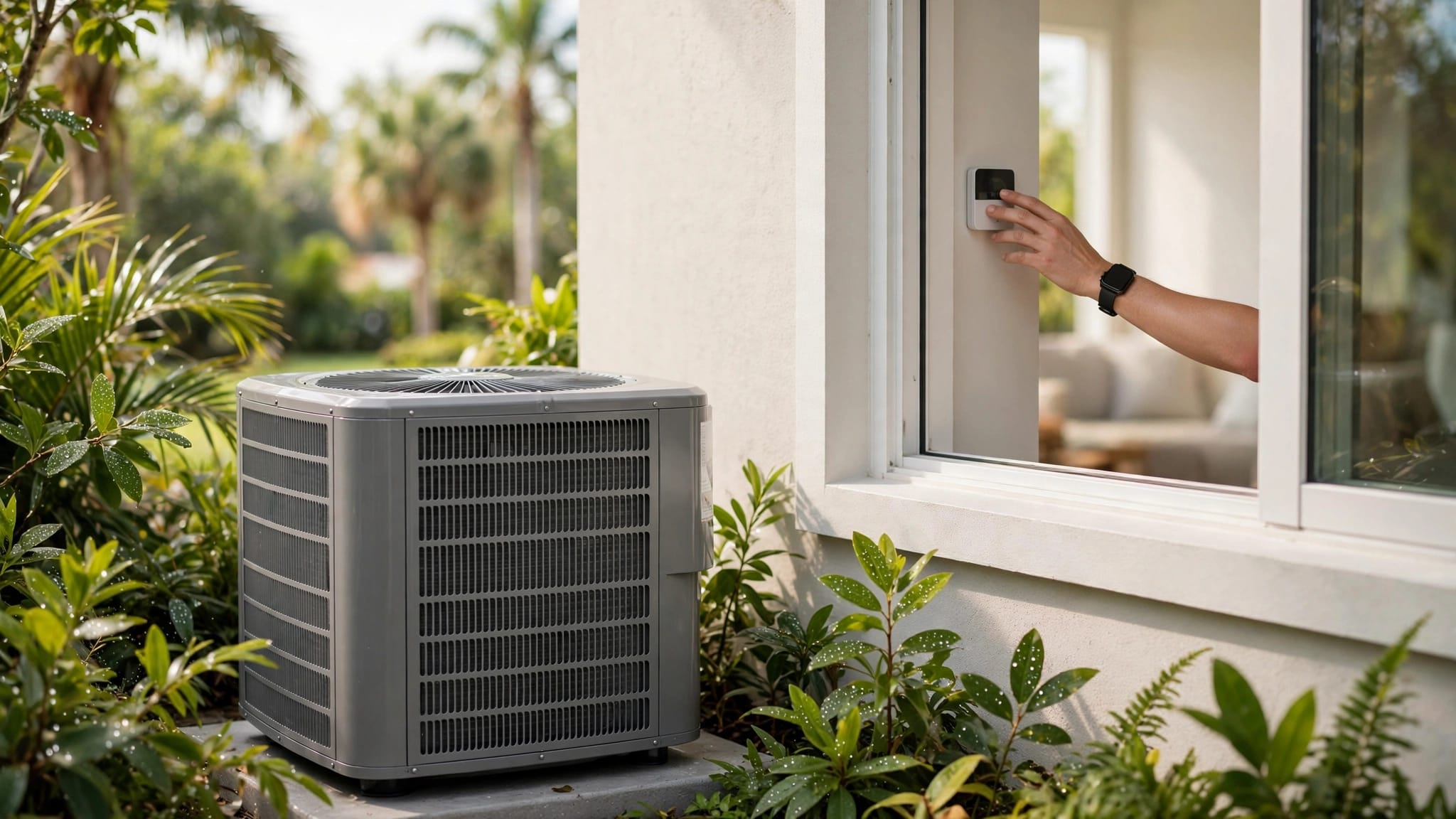
Whole-House Dehumidifier vs AC for Florida Humidity
Florida humidity can make a house feel sticky long before the thermostat says it is too warm. That is why many homeowners start comparing an AC with a whole-house dehumidifier for Florida humidity when the indoor air never feels quite right.
The short answer is that air conditioning cools first and removes moisture as part of the process. A whole-house dehumidifier is built for humidity control, which matters in Southwest Florida, where long cooling seasons and muggy shoulder months can leave a home damp even when the temperature is comfortable.
If your rooms feel clammy, your closets smell musty, or you keep lowering the thermostat just to feel dry, the difference between the two systems matters fast.
Why Florida homes feel sticky for months
In Fort Myers, Cape Coral, and across Lee County, humidity hangs around for much of the year. Homes stay closed up to hold in cool air, but that also traps moisture from showers, cooking, laundry, and daily living.

On mild spring or fall days, the AC may not run long enough to dry the air. You can still feel that heavy, damp sensation even when the temperature is not high. That is when condensation on windows, damp bathroom mirrors, or a sour smell in a closet starts to show up.
Humidity does not always announce itself with visible water. Sometimes it shows up as rooms that feel a little off, especially upstairs, in guest rooms, or in spaces with weak airflow. Over time, that damp feel can make a home less comfortable and can create conditions that help mold grow on wet or porous surfaces.
This is not only a summer issue. In Southwest Florida, humidity can stay high even when cooling demand drops, so the house may need moisture control in months when the AC is not working very hard.
What your AC does, and where it stops
An air conditioner removes heat by moving warm indoor air across a cold evaporator coil. As that air cools, moisture condenses on the coil and drains away. So yes, AC does dehumidify.
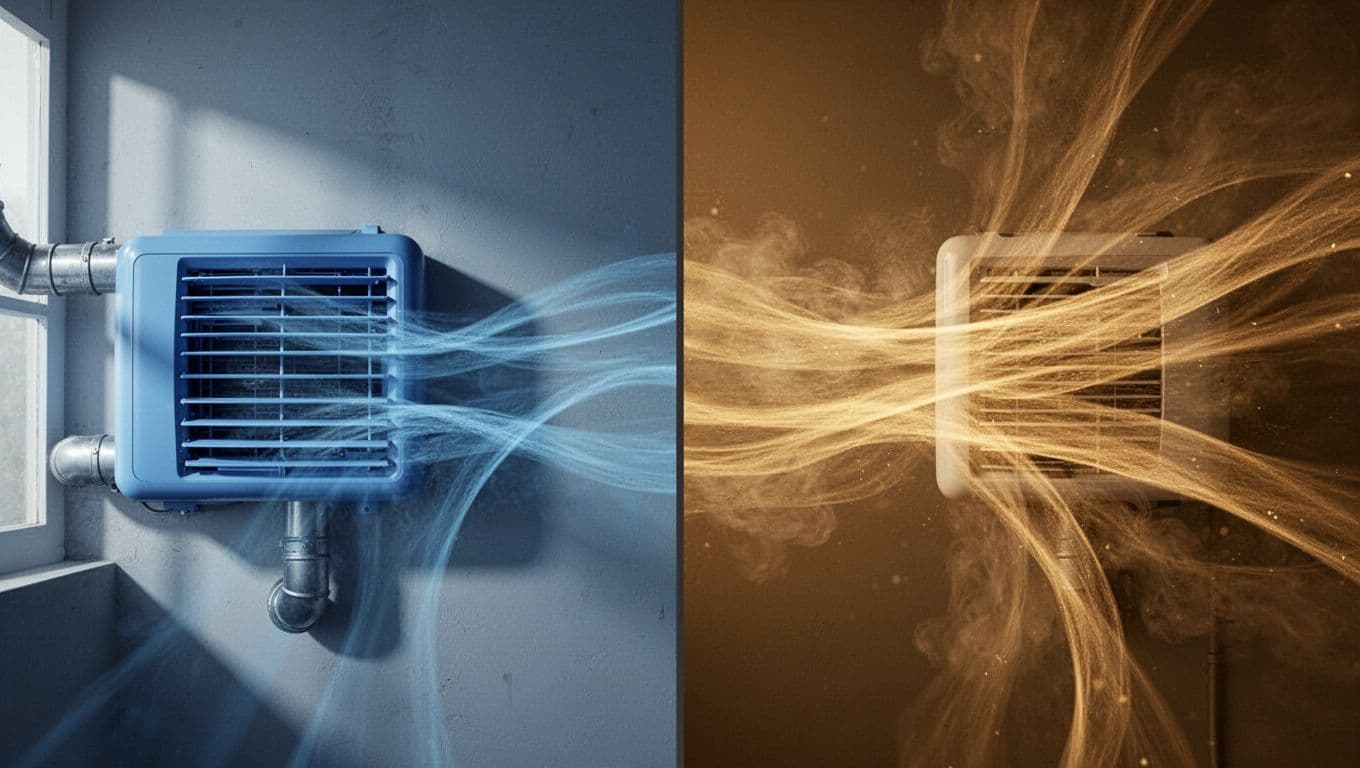
The catch is runtime. If the system cools the house quickly and shuts off, it may not pull much moisture out of the air. Short cycling, oversized equipment, dirty filters, weak airflow, and a clogged drain line can all leave a home feeling cool but still sticky.
That is why routine HVAC maintenance matters. Clean coils, clear drains, and correct airflow help the system remove water the way it should.
In a Florida home, a well-tuned AC may be enough during the hottest months. During shoulder seasons, though, the house can stay humid while the thermostat barely calls for cooling. That is where AC starts to miss part of the job.
If your system is healthy, you should notice steady comfort without having to set the thermostat lower and lower just to dry the air.
Why size and airflow change the answer
Humidity control depends on how long the system runs and how well air moves through it. An AC that is too large for the home often cools the air too fast, then shuts off before it has pulled much moisture out. The house feels cold for a moment, then damp again.
Dirty filters and weak return airflow can create a similar problem. Less air passes over the coil, so less water leaves the air. Drain issues matter too, because a clogged line can affect the system's ability to keep moisture moving out of the house.
Duct balance plays a role as well. One room may feel fine while another stays clammy, especially on a second floor or in a closed guest room. That is why a humidity problem is sometimes a system problem, not just a comfort complaint.
Before adding another piece of equipment, it helps to know whether the AC is already doing its job as well as it should. If the system is undersized, oversized, or neglected, a dehumidifier can help, but it will not fix the root cause.
When a whole-house dehumidifier earns its place
A whole-house dehumidifier handles moisture as its main job. It ties into the HVAC system and pulls water from the air without needing a big temperature drop. That matters when you want the air drier, but you do not want the house colder.
For many homeowners, the clearest signs are simple:
- The home feels damp even after the AC has run.
- Closets, bathrooms, or guest rooms smell musty.
- Windows, doors, or vents collect condensation.
- You keep lowering the thermostat just to feel comfortable.
If that list sounds familiar, a dedicated system may make sense. It can help you stay comfortable at a higher thermostat setting, which matters in Florida because every extra degree of cooling adds to energy use. Many people also find that drier air lets ceiling fans and normal airflow do more of the work.
If the AC cools the house but the air still feels heavy, humidity control is still unfinished.
A whole-house unit is also useful when the cooling load is low but the air is still wet. That is common in spring, fall, and rainy stretches. In those periods, the AC may barely run, but the house can still hold moisture long enough to leave fabrics, cabinets, and walls feeling clammy.
Portable dehumidifiers can help one room. A whole-house dehumidifier helps the entire house, which is a better fit when the problem is spread across the home instead of limited to one space.
AC vs. whole-house dehumidifier, side by side
A quick comparison makes the tradeoffs easier to see.
| Factor | Air conditioner | Whole-house dehumidifier |
|---|---|---|
| Main job | Cools indoor air | Removes moisture from indoor air |
| How it helps humidity | Dehumidifies as a side effect | Dehumidifies on purpose |
| Best fit | Hot weather and long cooling runs | Sticky shoulder months and homes with persistent dampness |
| Common limits | Can short-cycle and leave air clammy | Costs more to add and maintain |
| Comfort result | Cooler air, with some moisture removal | Drier air, often with less need to overcool |
The table points to a simple pattern. If your home mostly needs cooling, the AC may be enough. If the temperature is fine but the air still feels wet, a dehumidifier fills the gap.
A dehumidifier also adds its own filter, drain, and service needs, so it is not a no-maintenance fix. The payoff is better control when the AC is not running long enough to dry the house.
In many Southwest Florida homes, the smartest setup is not choosing one system forever. It is making sure the AC does its job well, then adding dedicated moisture control if the home still feels sticky.
How to choose the right setup for your home
Start with what you feel, then check the system. If the house gets cool but stays damp, the issue may be humidity control. If the AC struggles to cool at all, the problem is bigger than moisture.
Look at these clues together:
- Is the air sticky even when the thermostat is low enough?
- Do you notice musty odors after rain or on mild days?
- Do some rooms stay more humid than others?
- Does your AC run in short bursts instead of steady cycles?
If the answer keeps pointing to humidity, a whole-house dehumidifier is worth a closer look. If the problem started after a repair, filter change, or new thermostat setting, the AC may need service first. Airflow, drain issues, and dirty coils can all interfere with moisture removal.
The right answer also depends on how your home is used. A house with closed-off rooms, a second floor, or uneven airflow often needs a different fix than a small open layout. That is why a quick inspection can save a lot of guesswork.
The goal is comfort without overcooling the house. In Florida, that often means pairing solid cooling equipment with better humidity control, then setting the thermostat where the home feels good instead of icy. If you want help deciding which path fits your home, Schedule an Estimate.
Conclusion
Florida humidity can make a house uncomfortable even when the temperature looks fine. That is why the AC vs dehumidifier question matters.
If your AC cools well and the house feels dry enough, you may not need anything extra. If the air still feels sticky, especially in shoulder months or closed rooms, a whole-house dehumidifier can solve a problem the AC was never built to handle on its own.
The best choice is the one that keeps your home comfortable without forcing you to keep the thermostat too low. In Southwest Florida, that usually means paying attention to both cooling and moisture, not just one or the other.
Recent Posts