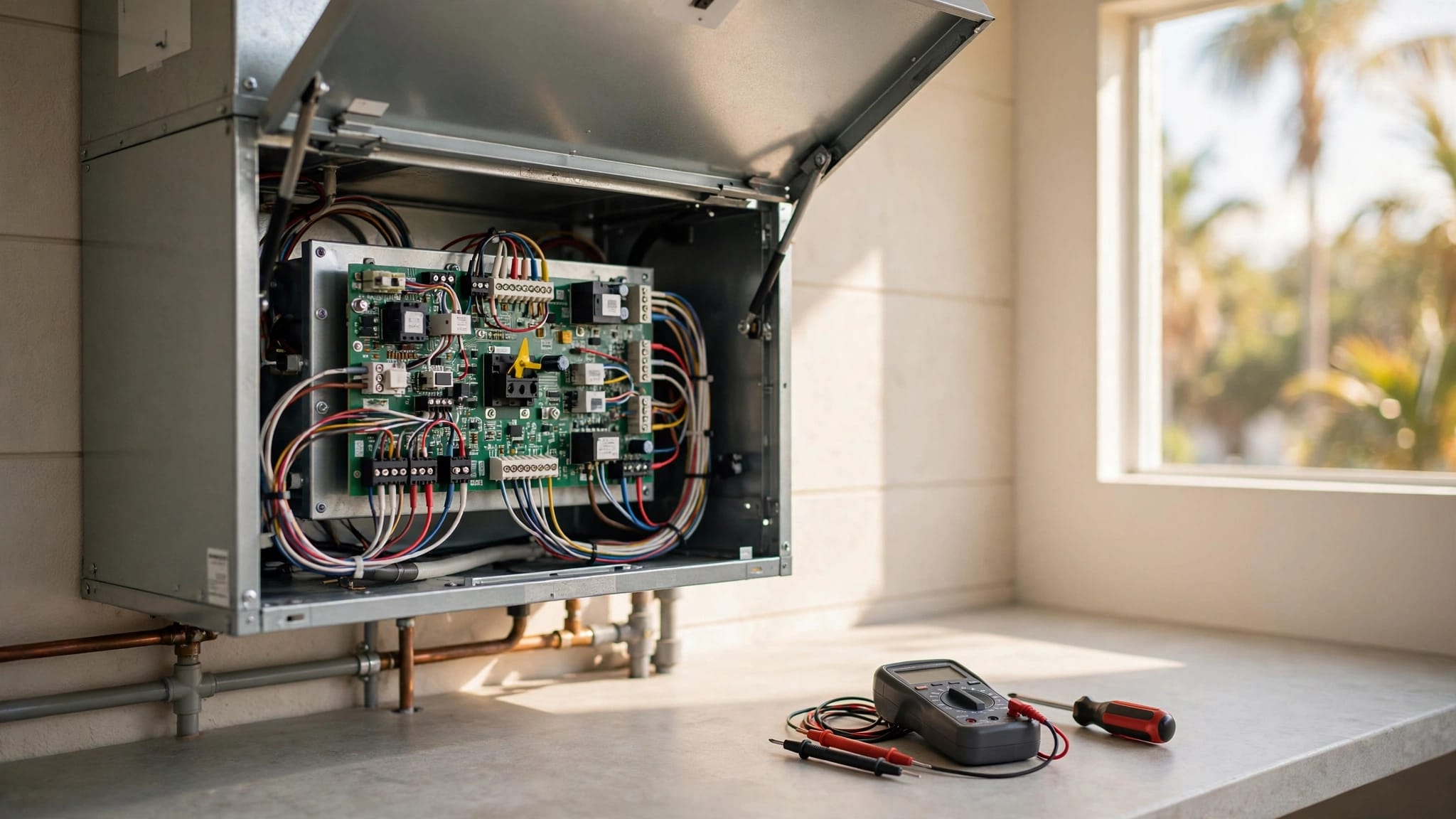
Duct Insulation R-Values for Hot Florida Attics
Florida attics can turn a well-sized air conditioner into a harder-working system when duct insulation is thin, compressed, or damaged. For homeowners in Fort Myers, Cape Coral, and nearby Lee County communities, understanding duct insulation R-values helps separate a code question from a real comfort problem.
R-value measures how well insulation resists heat flow. The right number depends on whether the duct sits in a hot attic, a garage, a conditioned chase, or another part of the building. It also depends on duct size, construction, system type, and the current code path. Start with the attic rule, then look at sealing and duct condition.
Why Hot Florida Attics Make Duct Insulation Matter
A vented Florida attic can become much hotter than the living space below it. Supply ducts carry cooled air through that space, so heat can move through the duct jacket before the air reaches a room. The longer the duct run and the hotter the attic, the more that heat gain can affect comfort.
Thin or compressed insulation makes the air conditioner work harder. Rooms at the end of a duct run may feel warmer, the system may run longer, and the home may develop uneven temperatures. These problems can also increase the cooling load on equipment that already operates for much of the year.
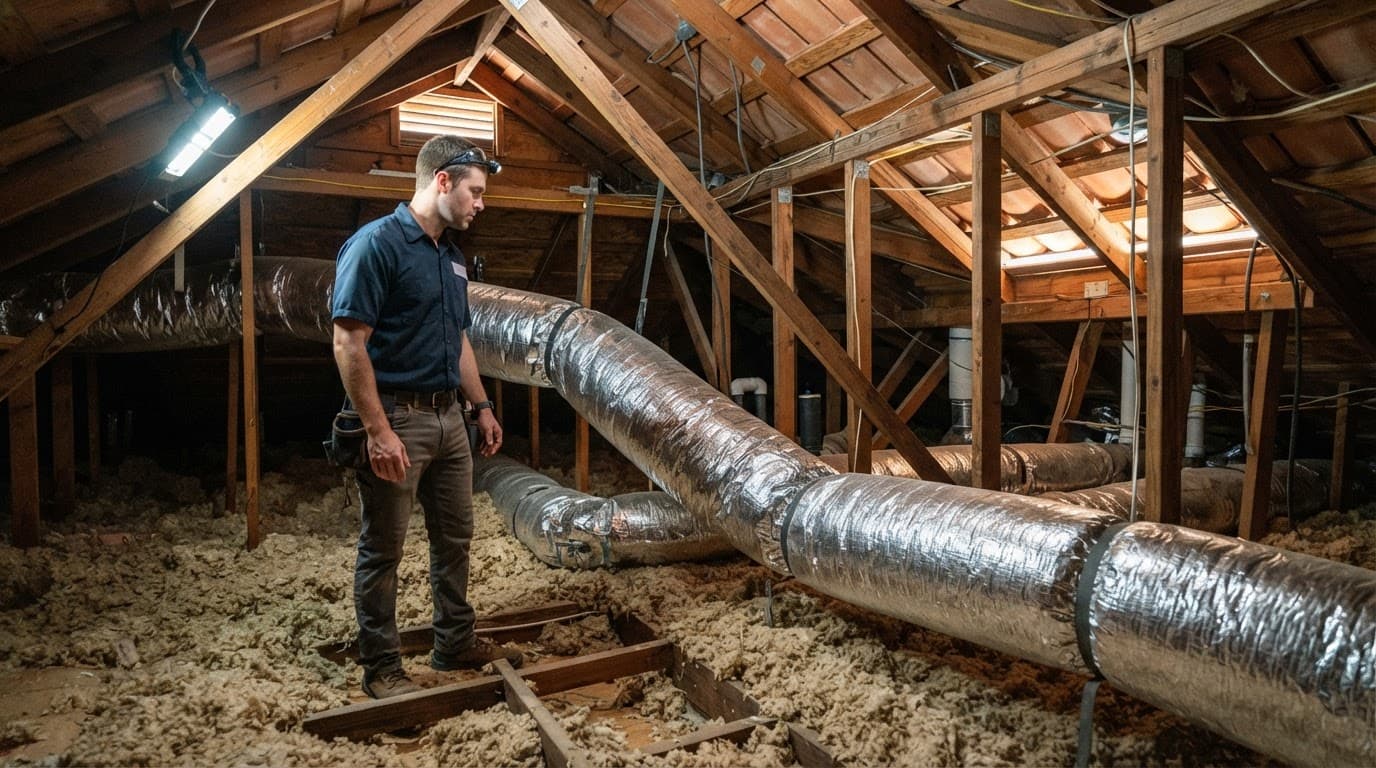
Insulation also helps keep the outer duct surface warmer than the cold air inside. That matters in Southwest Florida, where hot, humid attic air can contact cold duct surfaces. If the insulation jacket is torn or the vapor-retarder facing is open, moisture can collect around the duct or nearby ceiling components.
A duct can have the right insulation rating and still perform poorly if air leaks through its connections or the insulation has been crushed.
The goal is a complete duct system with adequate insulation, sealed joints, good airflow, and no moisture damage. R-value is one part of that inspection, not the entire diagnosis.
R-6 vs. R-8: Florida Duct Insulation R-Values Explained
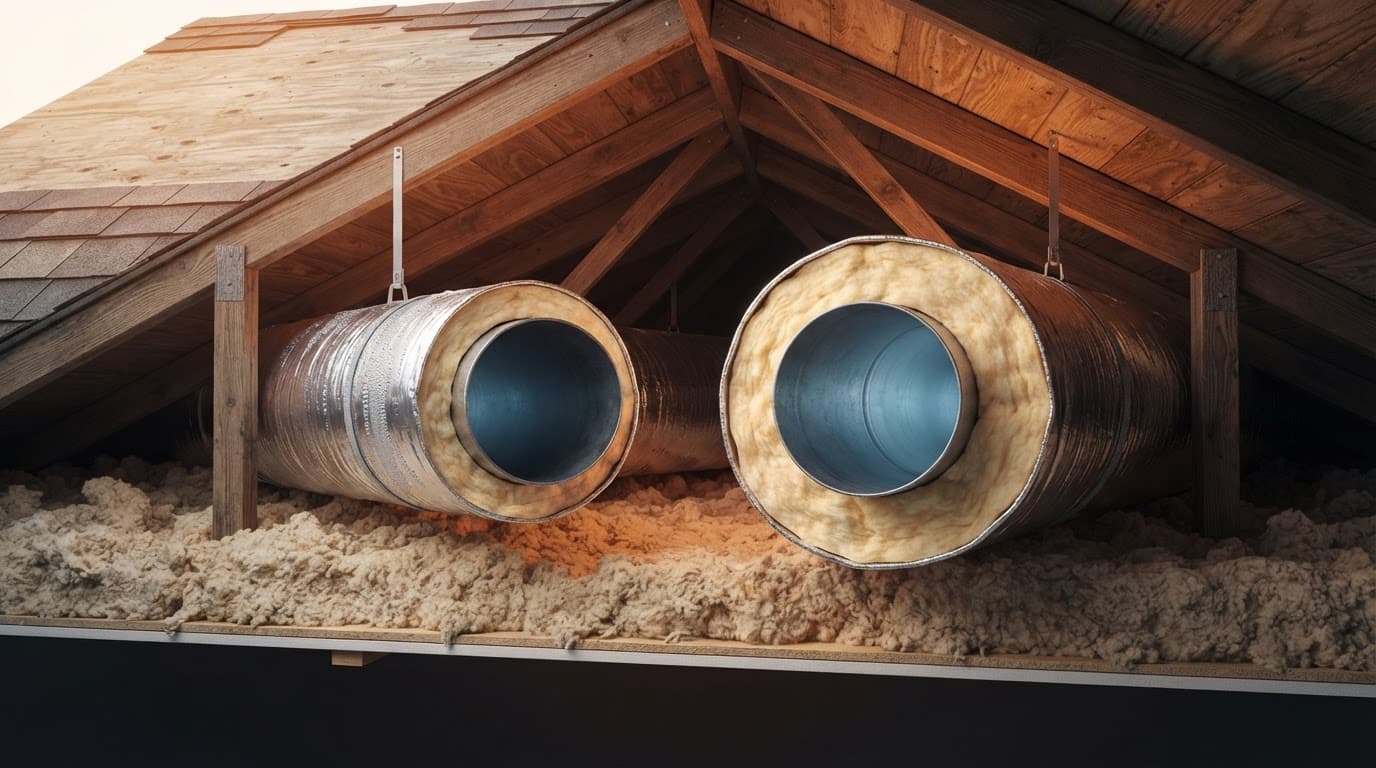
For most single-family homes following the current Florida residential energy code, the attic requirement depends on duct diameter. The 2023 Florida Building Code, Energy Conservation, 8th Edition, uses R-8 for attic supply and return ducts that are 3 inches or larger . Attic ducts under 3 inches require R-6 .
The comparison below shows the common residential requirements for ducts outside the building thermal envelope.
| Duct location | Duct size | Residential minimum |
|---|---|---|
| Unconditioned attic | 3 inches or larger | R-8 |
| Unconditioned attic | Under 3 inches | R-6 |
| Other unconditioned area | 3 inches or larger | R-6 |
| Other unconditioned area | Under 3 inches | R-4.2 |
| Completely inside thermal envelope | Any size | This outside-envelope provision does not apply |
A typical 7-inch or 8-inch flexible supply duct in a vented attic therefore falls under the R-8 requirement. A small branch runout under 3 inches can fall under R-6. A duct in a garage ceiling or another unconditioned area may follow the separate R-6 or R-4.2 requirements instead.
Location and system type change the answer
The attic rule doesn't apply automatically to every duct in every building. A duct fully inside the home's thermal envelope may not need insulation under this outside-envelope provision. That can happen when ductwork runs inside conditioned space or within a properly designed conditioned attic assembly.
A residential split system and a residential heat pump generally use the same supply and return duct insulation framework when those ducts sit in an unconditioned attic. However, commercial buildings follow separate energy-code tables. A commercial rooftop unit, office system, or large packaged system may have different requirements based on duct location and system design.
The code also addresses site-wrapped supply ducts under certain performance and Energy Rating Index compliance paths. When those ducts aren't completely inside the thermal envelope, the requirement can be R-8. This is one reason an installer should identify the duct type and compliance path before recommending an insulation upgrade.
As of August 2026, the 2023 Florida code remains an important reference for current residential work, but permit scope, local enforcement, amendments, and later code updates can affect a project. Ask a qualified HVAC professional to verify the requirements that apply to your home.
Insulation, Air Sealing, and Vapor Control Work Together
Higher duct insulation R-values reduce heat transfer, but insulation can't stop conditioned air from escaping through gaps. Connections at plenums, takeoffs, dampers, boots, and equipment cabinets need proper sealing. A duct system with R-8 insulation and loose joints can still waste cooling before air reaches the rooms.
Technicians commonly look for separated connections, damaged flex duct, loose insulation jackets, and openings around ceiling boots. They may use approved mastic or appropriate listed tape for duct connections. Ordinary cloth-backed duct tape often loses its grip in hot, dusty attic conditions, so it isn't a reliable long-term repair.
Vapor control also matters. Flexible duct insulation usually includes an outer vapor-retarder jacket that helps limit humid air contact with the cold duct surface. A torn jacket, open seam, or poorly sealed end can allow moisture to reach the insulation and reduce its performance.
The facing doesn't count as insulation value. Florida's mechanical code bases duct insulation R-values on the insulation itself, excluding air films, vapor retarders, and other duct components. Installation also affects the result. Duct wrap can be compressed, and code calculations may account for that compression by using less than the product's full nominal thickness.
A contractor should also inspect the duct's physical condition. Flex duct that is crushed, sharply bent, sagging, wet, or disconnected may need repair or replacement rather than another insulation layer. Adding insulation around a damaged duct can hide the problem while leaving airflow and leakage issues unresolved.
Signs Your Attic Ductwork Needs Attention
Some duct insulation problems appear as comfort complaints rather than visible damage. If one bedroom stays hot while nearby rooms feel comfortable, the cause may include a crushed run, restricted airflow, a leaking connection, or insufficient insulation over a long attic section.
Watch for these signs:
- The air conditioner runs for long periods, yet some rooms remain warmer than the thermostat setting.
- Supply air feels weak at distant registers compared with nearby rooms.
- The outer duct jacket is torn, flattened, sagging, or separated at a connection.
- You see moisture near a ceiling vent, duct boot, or attic duct surface.
- Energy bills rise without a clear change in thermostat settings or household use.
- A room becomes uncomfortable after ductwork, insulation, or roofing work in the attic.
Sweating vents deserve prompt attention in a humid climate. Leaky ductwork can draw damp attic air toward the system, while thin insulation can leave a cold vent boot exposed to humid air. You can read more about why AC vents sweat in Southwest Florida if recurring moisture is part of the problem.
A professional inspection should include more than a quick look at the insulation. The technician can check airflow, static pressure, duct connections, insulation coverage, return-side leakage, and the condition of the air handler. Those measurements help show whether the repair should focus on insulation, sealing, duct layout, or the HVAC equipment itself.
When to Repair, Reinsulate, or Replace Ductwork
Reinsulating can make sense when the duct is structurally sound, the insulation jacket is damaged in limited areas, and the run still has the right size and route. Sealing joints and restoring the vapor-retarder jacket may solve the issue without replacing the entire system.
Replacement is more appropriate when flex duct has collapsed, the inner liner has separated, insulation is wet or contaminated, or several connections have failed. A long, poorly supported run may need a new route rather than a thicker insulation wrap. The technician should also confirm that the replacement duct matches the required airflow and equipment capacity.
Ductwork deserves an inspection before an air conditioner replacement. A new system can't deliver its rated comfort when old ducts leak, restrict airflow, or lose too much cooling in the attic. Valor Heating & Cooling explains the questions homeowners should ask in its guide to replacing ductwork with a new AC system.
If your home has hot rooms, sweating vents, or visible attic duct damage, schedule an evaluation instead of guessing at the insulation rating. You can Schedule an Estimate with a local HVAC technician to review the duct system and current requirements.
Conclusion: Check the Whole Duct System
For a typical Florida home, attic ducts 3 inches or larger generally require R-8 under the current residential code, while smaller attic ducts may require R-6. Ducts in other unconditioned areas can follow different values, and ducts fully inside the thermal envelope may fall outside that provision.
The best repair addresses more than the label on the insulation. Duct insulation R-values, air sealing, vapor control, airflow, and duct condition all affect comfort in a hot Southwest Florida attic. A qualified HVAC professional can verify the current local requirements and identify the repair that fits your home.
Recent Posts