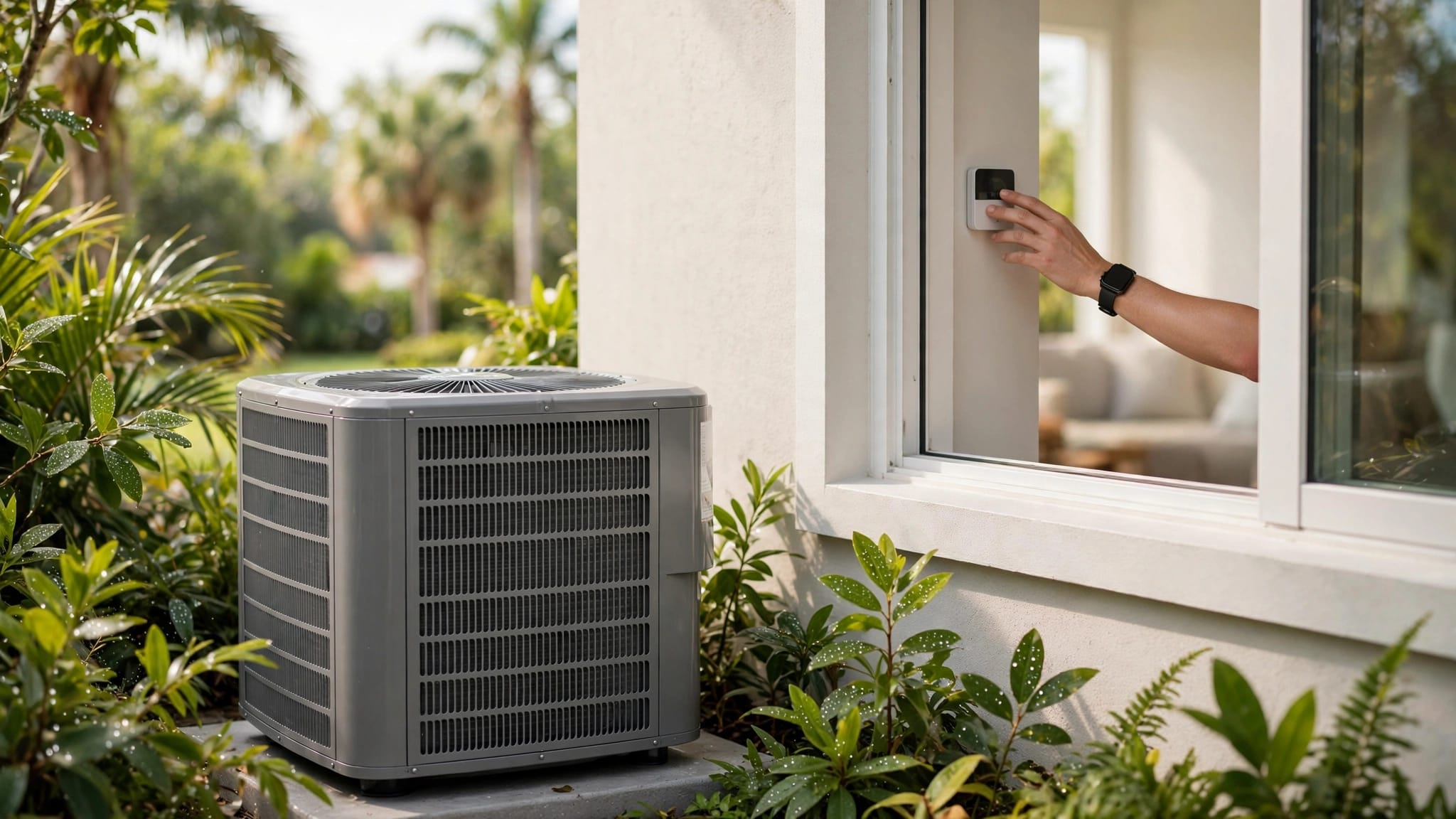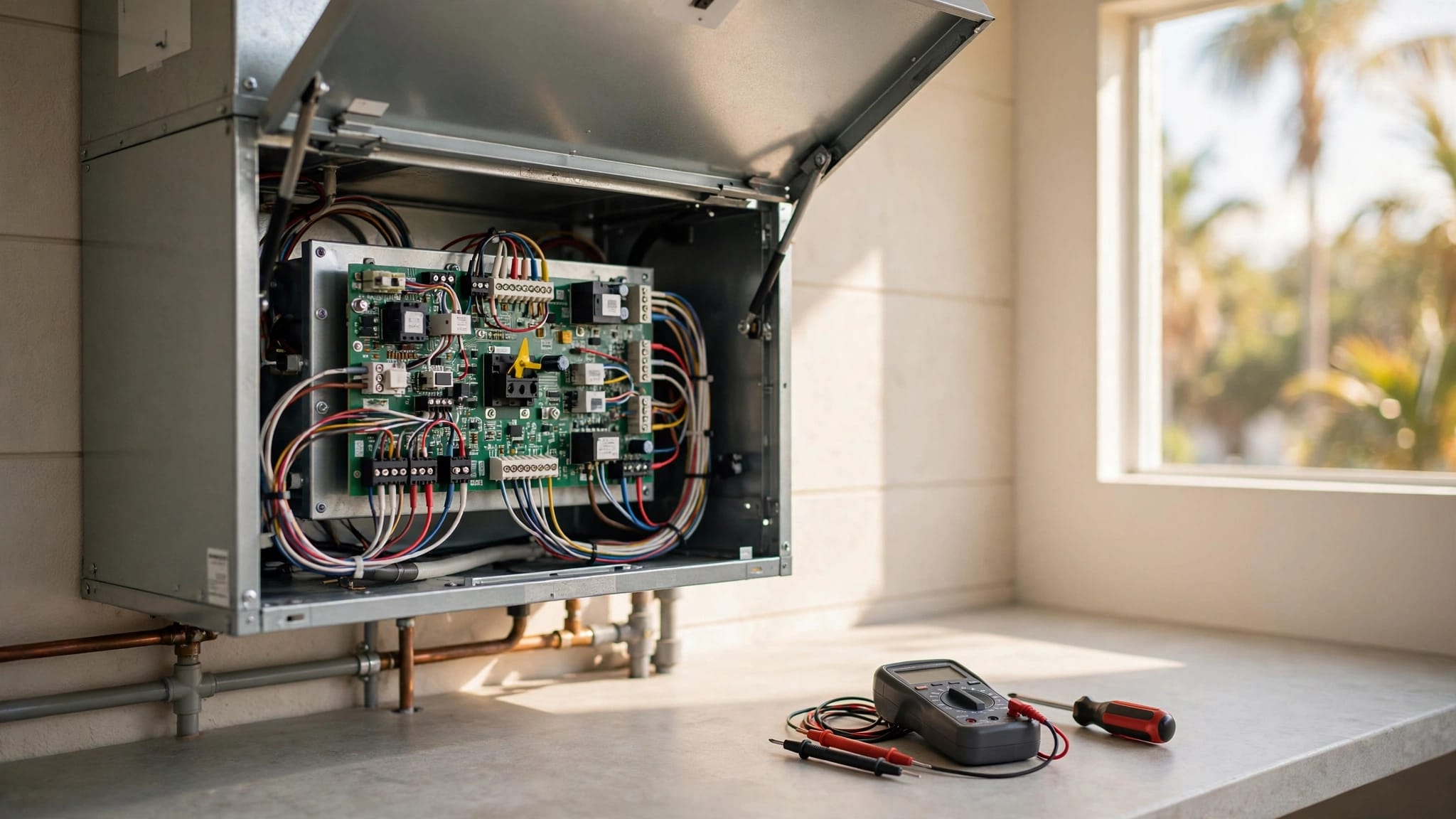
Air Conditioner Electrical Requirements for a New System
Your new central air conditioner may fit the same pad as the old one and still need electrical changes. The air conditioner electrical requirements depend on your home's main service rating, existing loads, panel condition, available breaker space, and the new equipment's nameplate data.
In Southwest Florida, a replacement may also involve a heat pump, electric backup heat, or equipment with different startup demands. A panel marked 200 amps doesn't automatically prove it can support the next system. The answer comes from a load review and an on-site inspection.
Panel size is only the starting point
Panel capacity cannot be determined by panel size alone. A 200-amp label tells you something important, but it doesn't show how much capacity your home already uses or whether the service equipment matches that rating.
Check the main service rating
Start with the main breaker, service conductors, and panel rating. Many homes have 100-amp, 150-amp, or 200-amp service. However, the panel bus, main disconnect, meter equipment, and conductors must also support the service rating.
For example, installing a panel with a 200-amp bus does not turn a 100-amp electrical service into a 200-amp service. An electrician must review the complete service, not only the metal cabinet mounted inside the home.
Older Southwest Florida homes may also have corrosion, heat damage, outdated wiring, or a panel that no longer provides a reliable connection. Coastal moisture can make these problems worse.
Separate breaker space from electrical capacity
An open breaker space means you may have room to install a circuit. It does not prove the service can handle the added load.
A new central AC or heat pump usually needs a dedicated branch circuit. If the panel is full, a listed panel expansion or replacement may be possible, but tandem breakers are not a universal solution. The panel manufacturer, circuit arrangement, and local code all matter.
An electrician should also check for loose connections, double-tapped terminals, damaged breakers, and signs of overheating before adding equipment.
A load calculation shows whether the service can handle the system
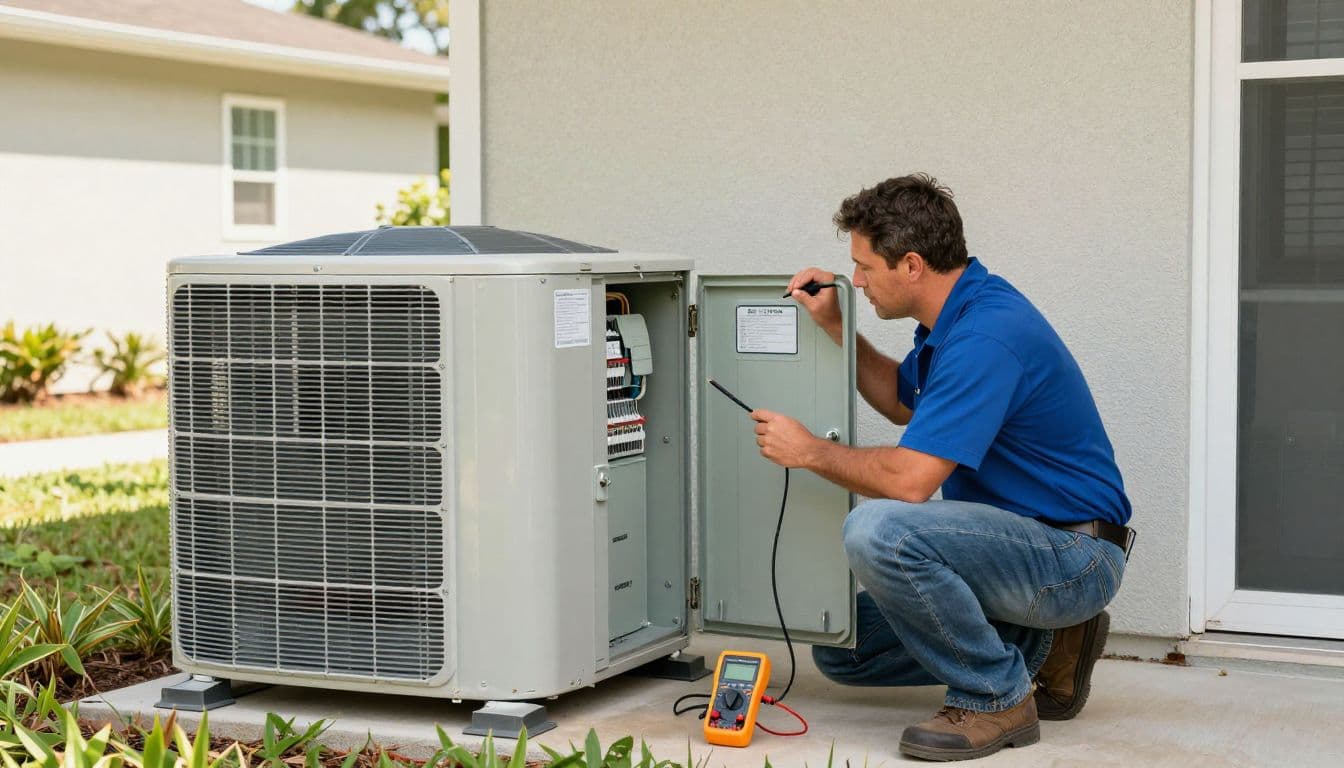
An electrical load calculation estimates the demand placed on the home's service under expected operating conditions. It considers the proposed HVAC equipment along with existing appliances and major electrical loads.
The calculation may show that a 200-amp service has enough capacity, or it may identify a need for an upgrade. A homeowner can't make that determination by adding every breaker number together because breakers don't all run at full rating at the same time.
Existing equipment affects the answer
An electrician may review an electric range, water heater, clothes dryer, pool pump, spa, well pump, electric vehicle charger, and other large loads. A heat pump with electric auxiliary heat can add a substantial demand during colder weather.
The home's service may support a standard central AC but struggle with a heat pump that includes electric strip heat. A correctly sized HVAC branch circuit doesn't automatically mean the whole service has enough capacity.
Startup and operating demands are different
Compressors can draw more current when they start than they use during normal operation. Modern variable-speed equipment may ramp up differently from an older single-stage compressor, so the new unit can have different startup and operating demands.
That difference doesn't automatically mean modern equipment needs more power. It does mean the installer must review the actual model data instead of copying the old breaker size. The load calculation should also account for the equipment type and any indoor electric heat.
Check the air conditioner electrical requirements at the nameplate
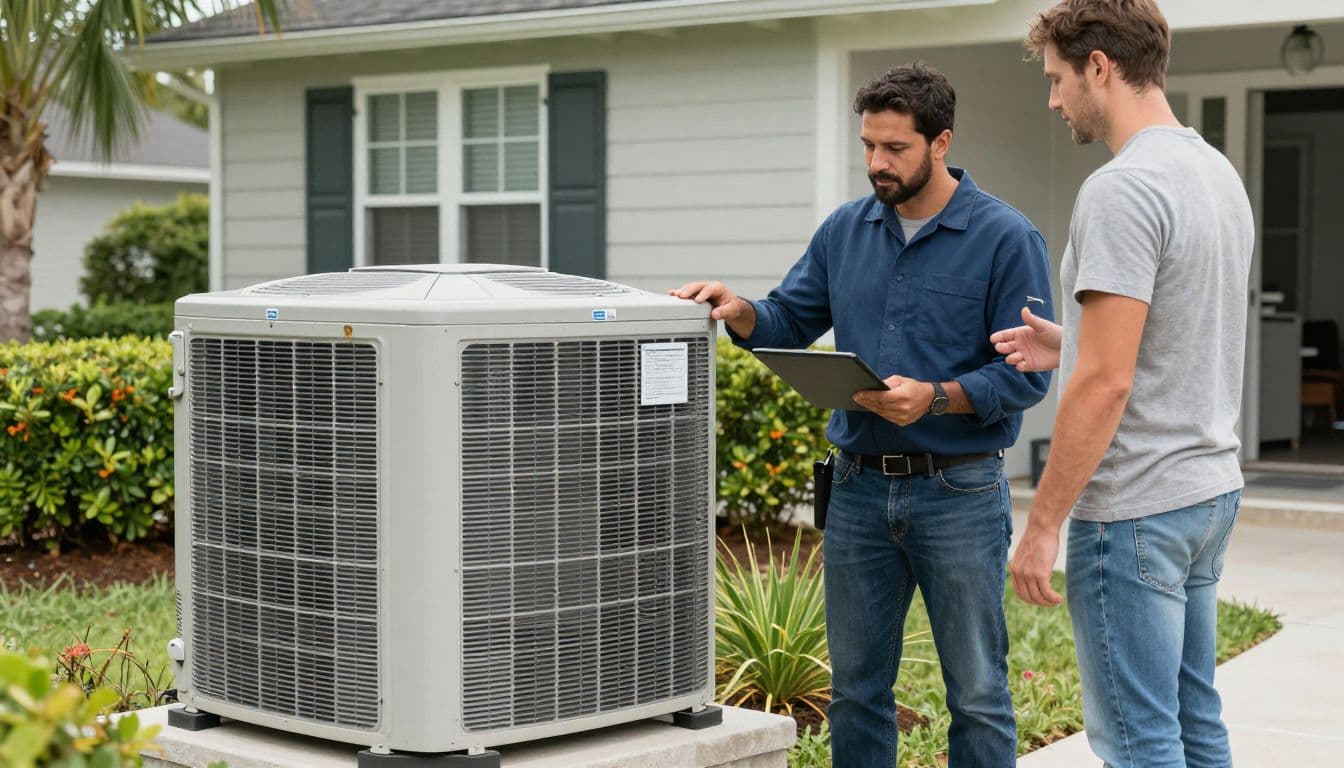
The equipment nameplate provides the model-specific information needed to size the circuit. These air conditioner electrical requirements can vary between brands, capacities, compressor types, and heat pump configurations.
| Nameplate item | What it tells the installer |
|---|---|
| MCA | Minimum Circuit Ampacity, used to size branch-circuit conductors |
| MOCP or MOP | Maximum permitted fuse or circuit breaker size |
| Rated voltage | The supply voltage the equipment requires |
| Compressor data | Information that helps evaluate operating and startup characteristics |
MCA is not the breaker size. It is the minimum ampacity used for selecting the circuit conductors. MOCP is the largest overcurrent protection permitted for that equipment. The breaker must not exceed the nameplate limit.
Many residential outdoor units use a dedicated 208/230-volt circuit, but the nameplate controls the actual voltage and circuit requirements. The disconnect must also be properly rated and located within sight of the outdoor equipment.
The indoor air handler may need its own circuit, especially when the system includes electric auxiliary heat. The installer should compare the outdoor unit and indoor unit requirements before work begins.
A larger breaker does not give an air conditioner more capacity. If it exceeds the nameplate MOCP, it can leave the circuit improperly protected.
Warning signs that an electrical upgrade may be needed
These signs don't prove that you need a new panel, but they justify a professional electrical review before ordering equipment:
- Your home has 100-amp or 150-amp service and already uses several large electric appliances.
- The proposed system has a higher MCA than the old air conditioner.
- The panel has no open spaces for a dedicated HVAC circuit.
- Breakers trip often, lights flicker when equipment starts, or the panel makes buzzing sounds.
- You see rust, corrosion, burn marks, melted insulation, or a warm panel cover.
- The new heat pump includes electric backup heat that wasn't part of the previous system.
- The home also has a pool, spa, EV charger, workshop, electric water heater, or recent addition.
- The panel contains old fuses, damaged breakers, or wiring that an electrician cannot identify confidently.
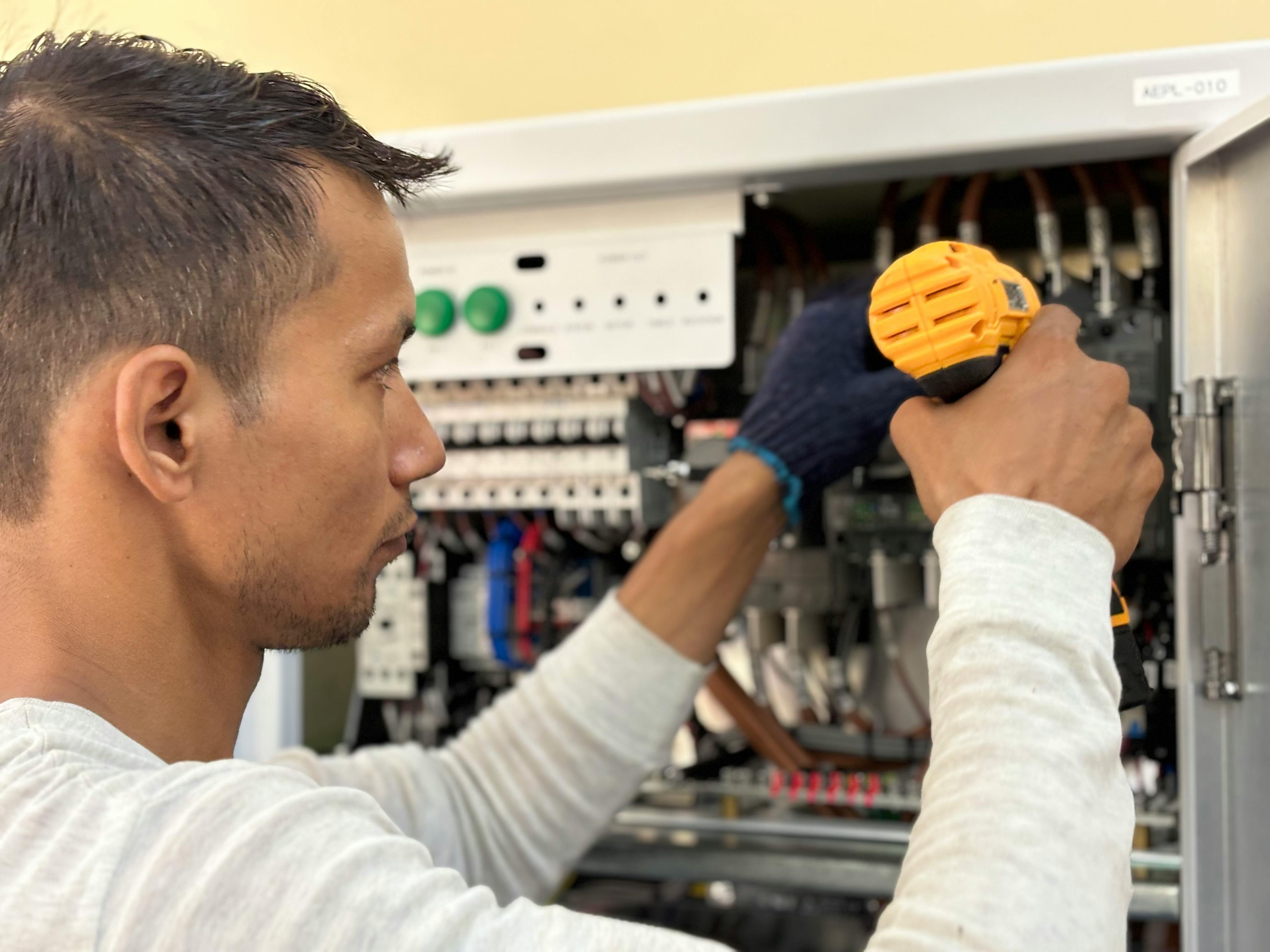
Photo by ranjeet .
Don't remove the panel cover or install a breaker yourself. Parts of the panel can remain energized even when the main breaker is off. Have a licensed electrician handle panel work, conductor changes, disconnects, and service upgrades.
Florida permits and local code requirements matter
Florida's current statewide framework is the 2023 Florida Building Code, 8th Edition, based on the 2021 I-Codes. Local building departments apply that code through their own permitting and inspection processes.
The electrical requirements also include the applicable Florida Electrical Code provisions for air-conditioning equipment. NEC Article 440 covers important HVAC circuit issues, including conductor sizing, overcurrent protection, and disconnecting means.
Florida HVAC permit documentation may require a heating and cooling load calculation. ACCA Manual J is commonly used to calculate the home's load, while Manual S helps match equipment to that load. Building size alone isn't enough because windows, insulation, orientation, ductwork, and air leakage affect cooling demand.
A rule of thumb such as one ton of cooling for every 500 square feet cannot replace a proper calculation. Oversized equipment can run in short cycles and may not control humidity well, which matters in Fort Myers and throughout Lee County.
A full air conditioner or heat pump replacement usually requires a permit. Review the current process for Lee County AC replacement permits, especially if you live inside Fort Myers, Cape Coral, or another municipality with its own building department.
Requirements vary by equipment and jurisdiction. Ask who will pull the permit, which electrical work the proposal includes, and who handles corrections if an inspection identifies a problem. When comparing proposals, review what to look for in an AC replacement quote.
A practical checklist before installation
Before approving a central AC or heat pump replacement, confirm these items with the HVAC contractor and licensed electrician:
- Ask for the proposed model numbers, rated voltage, MCA, and MOCP from the equipment documentation.
- Have the electrician verify the main service rating, panel bus, service conductors, main disconnect, and panel condition.
- Request a whole-house electrical load calculation when the service has limited spare capacity or the system includes electric heat.
- Confirm the dedicated HVAC circuit, conductor size, breaker, grounding, and outdoor disconnect.
- Check whether the indoor air handler or auxiliary heat requires a separate circuit.
- Get the permit responsibilities, inspection process, and electrical upgrade costs in writing.
A home visit gives the contractor better information than a phone estimate. For a Fort Myers or Lee County property, you can Schedule an Estimate so the HVAC setup and electrical concerns can be reviewed before equipment is ordered.
Conclusion: Get the panel checked before buying equipment
A new air conditioner can require more than a simple equipment swap. Panel capacity depends on the service rating, existing household demand, available circuit space, equipment nameplate data, and local code requirements.
The safest answer comes from an on-site review by qualified HVAC and electrical professionals. With the load calculation, circuit requirements, and permit details confirmed first, you can choose a system that fits your home without unexpected electrical work after installation begins.
Recent Posts