
Should You Replace Ductwork With a New AC System?
Replacing an air conditioner is the right time to ask a second question, what shape is the ductwork in? A new system can only cool well if the ducts move air without leaks, blockages, or weak insulation.
In Southwest Florida, that matters even more because attics stay hot and cooling runs for much of the year. If you're planning an AC replacement, the ducts should be inspected before anyone says yes or no to new ductwork.
When a new AC system exposes duct problems
A new unit doesn't automatically mean the ducts need to go too. If the existing ductwork is sealed, sized right, and in solid shape, it may work fine with the new equipment.
The problem starts when the old ducts fight the new system. A high-efficiency air conditioner can still struggle if the ducts are leaking, undersized, kinked, or badly insulated. That is why homeowners who are already deciding between AC repair and replacement should ask about the duct system at the same time.
New equipment can also change airflow needs. A variable-speed air handler, a different tonnage, or a change in the return setup may expose issues that the old unit tolerated for years. The system may run, but it won't run as well as it should.
A proper evaluation looks at the whole path the air takes, not just the condenser outside.
Warning signs your ductwork may need more than a tune-up
Some duct problems hide for years. Others show up fast, and the warning signs are easy to spot once you know what to watch for.
Look for these issues before you replace the AC:
- Uneven cooling : One room feels comfortable, while another stays warm no matter how low the thermostat goes.
- High energy bills : The system runs longer because cooled air escapes before it reaches the rooms.
- Excess dust : Gaps in return ducts can pull attic dust, insulation fibers, or debris into the airflow.
- Noisy airflow : Whistling, rattling, or booming sounds can point to restrictions, loose joints, or poor sizing.
- Hot and cold spots : If some parts of the home swing wildly in temperature, the duct layout may be part of the problem.
- Sticky humidity : In Southwest Florida, bad ductwork often makes the home feel damp even when the AC runs.
One sign alone doesn't prove the ducts need full replacement. A pattern of these problems usually means the system deserves a closer look.
Why old or undersized ducts hurt comfort and efficiency
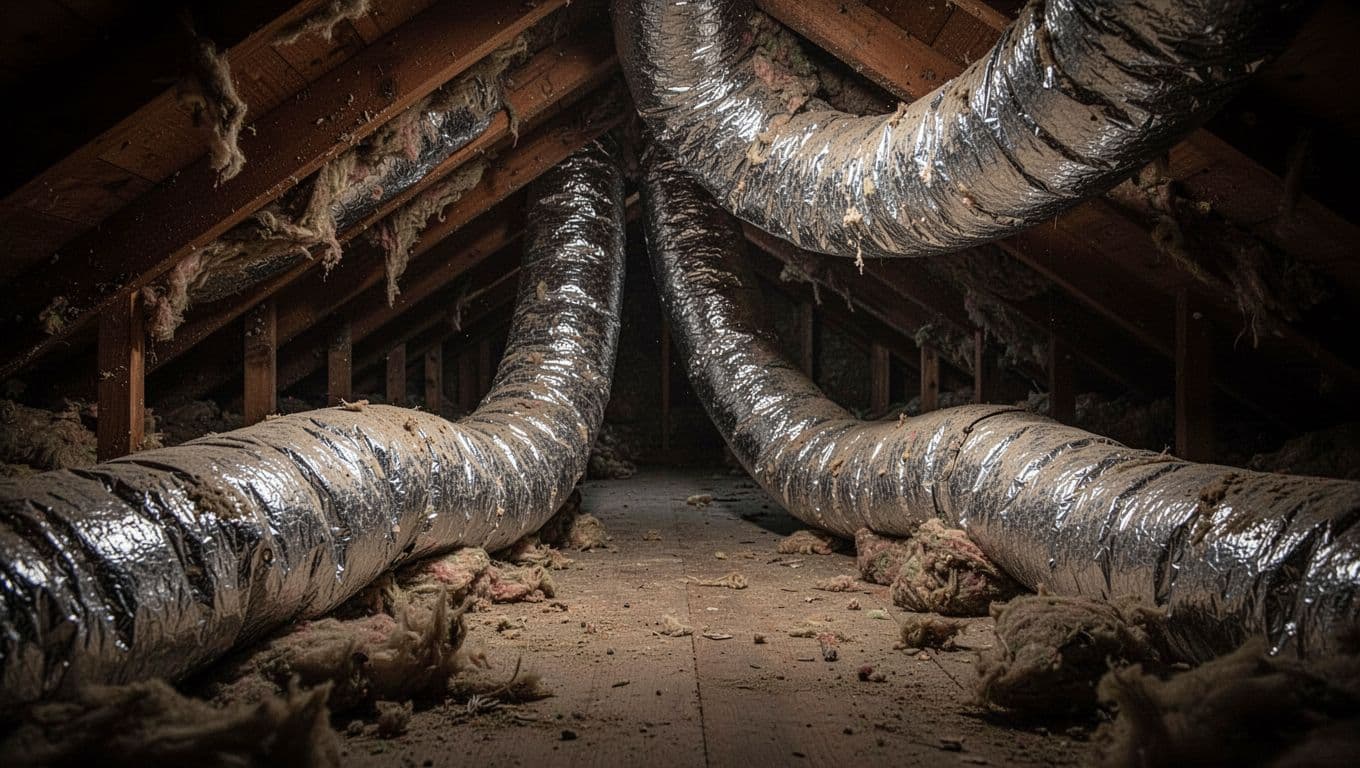
Ductwork ages in the same house for different reasons than the AC equipment does. Heat, vibration, pests, poor installation, and years of tape repairs all take a toll.
Old ducts can leak cooled air into the attic, and in Fort Myers that attic heat can be brutal. Poor insulation lets supply air warm up before it reaches the room. Loose joints and damaged flex duct waste airflow, which forces the system to run longer to reach the set temperature.
Undersized ducts create a different problem. The blower has to push air through a tighter path, so pressure rises and airflow drops. That can lead to weak room temperatures, louder operation, and more strain on the system.
A new AC can't overcome leaky or undersized ducts. It can only cool the air that actually reaches the rooms.
Indoor air quality can suffer too. Return leaks may pull in attic dust, while contaminated ducts can circulate mold, rodent debris, or heavy buildup that has collected over time. If the ducts are dirty inside and the insulation is failing outside, the home may never feel as clean or as cool as it should.
When replacing ductwork makes sense
There is no single rule that says every new AC needs new ducts. The better question is whether the duct system still matches the house and the equipment.
This quick comparison helps show how professionals usually think about it:
| Duct condition | Common path forward |
|---|---|
| Small leaks, loose joints, worn tape | Seal and repair |
| Good layout, but weak insulation | Re-insulate or improve insulation |
| Crushed, torn, or disconnected runs | Repair or replace damaged sections |
| Heavy dust, mold, or rodent contamination | Strong case for replacement |
| Ducts that are too small for the new system | Redesign or replace |
| Major airflow imbalance in the home | Inspection, balancing, and possible replacement |
A few damaged runs can often be fixed without tearing out the whole system. On the other hand, badly sized or contaminated ductwork usually costs more to patch than to replace the right way.
If the new AC is a different size than the old one, the ductwork deserves extra attention. Bigger equipment does not solve airflow issues by itself. Smaller equipment can also suffer if the duct path is still restrictive.
What a professional evaluation should check
A good inspection starts with the basics, age, visible damage, insulation quality, and signs of air leakage. After that, the technician should look at supply and return balance, duct sizing, and how the system will handle airflow under load.
In Southwest Florida, attic conditions matter a lot. Ducts that sit in hot spaces need solid insulation and tight connections, or they lose performance fast. If the home has multiple additions, converted spaces, or rooms that always run hot, the duct design may not match the way the house is used now.
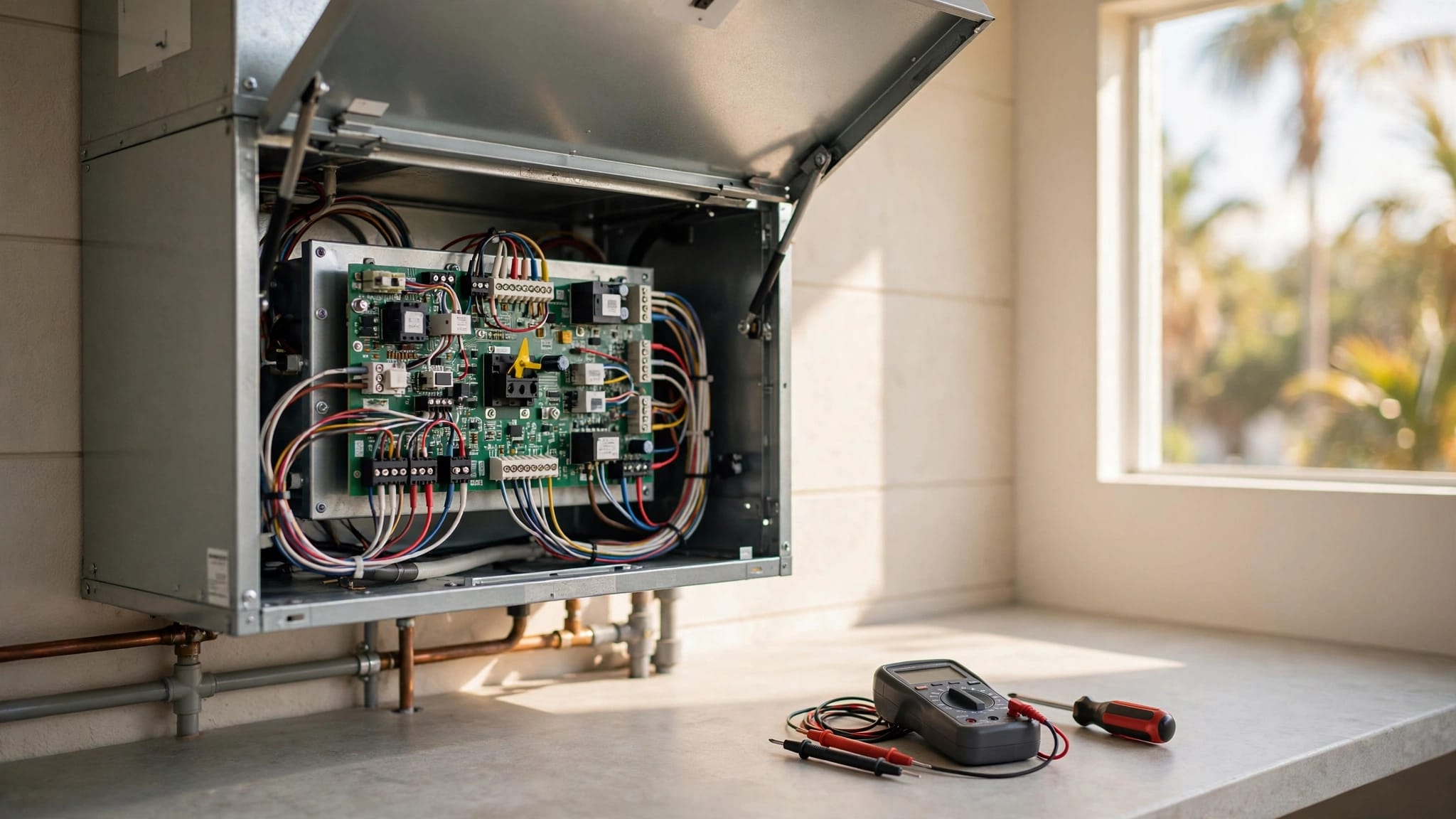
A professional HVAC repair and inspection can show whether sealing, partial replacement, or a full duct redo makes sense before the new AC goes in. That kind of review can also spot contamination, collapsed flex, damaged boots, and return problems that are easy to miss from a quick visual glance.
If you want a clear answer for your home, Schedule an Estimate with a technician who can look at the ducts and the new system together.
Conclusion
You do not need to replace ductwork every time you replace an AC system. You do need to inspect it carefully, because leaking, undersized, damaged, or contaminated ducts can drag down even a new unit.
If the ducts are in good shape, sealing and minor repairs may be enough. If they are old, noisy, inefficient, or poorly matched to the new equipment, replacement can make the whole system work better.
The smartest choice starts with the ducts, not just the box outside.
Recent Posts