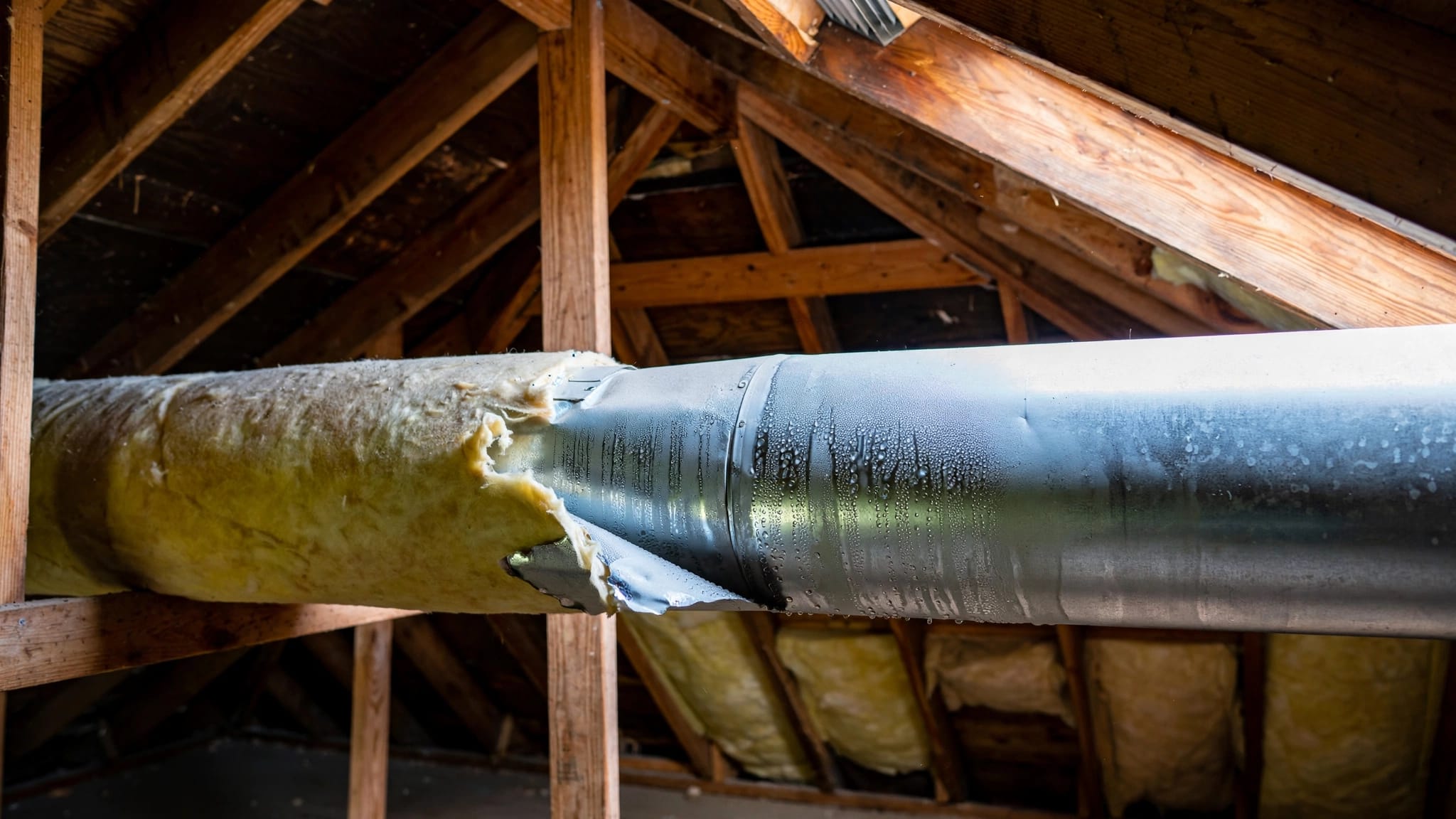
How Flex Duct Sag Restricts AC Airflow in Florida Attics
Flex duct sag can restrict AC airflow by creating bends, compressing the inner liner, and increasing resistance. In Southwest Florida, that restricted path can leave rooms warm even while your air conditioner keeps running.
The problem often involves more than a loose support strap, because excess duct length, tight turns, and damaged insulation can occur together. Restoring airflow starts with evaluating the entire duct path , rather than adjusting the thermostat.
Key Takeaways
- Sagging flex duct can distort the air passage and add resistance, especially when combined with compression or sharp bends.
- Florida attic heat and humidity add heat-gain and condensation concerns when insulation or the outer jacket is damaged.
- Proper support, shorter routing, sealed connections, and airflow measurements help address the problem without unnecessary equipment replacement.
How Flex Duct Sag Restricts Airflow
Flexible duct has a wire-supported inner liner, surrounding insulation, and an outer protective jacket. Its shape matters because air must travel through that liner before reaching your rooms.
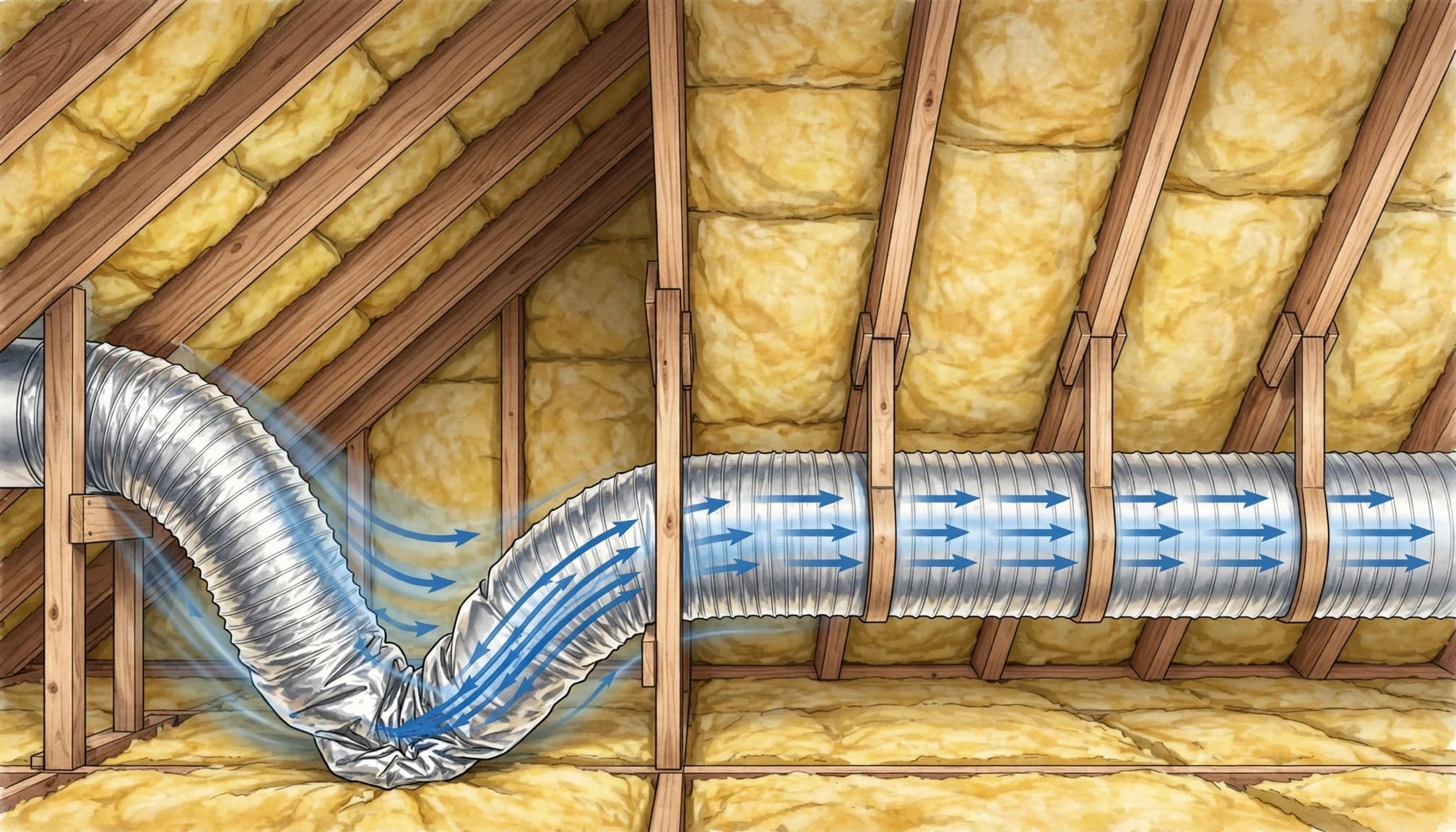
Drooping Changes the Air Passage
When a duct hangs too far between supports, it develops a low belly. Air must turn downward and upward, while the liner may bunch or flatten near those transitions.
A gentle curve differs from a pronounced droop with pinched edges. However, the outer jacket doesn't always reveal the liner's condition. Insulation can hide a compressed or poorly extended interior.
As a result, a duct can look connected and intact while delivering too little air to the room it serves.
Added Resistance Changes Air Delivery
The blower moves air against resistance throughout the system. A restricted branch makes that room's airflow path harder to push through.
Depending on the blower and duct layout, airflow can drop or shift toward less restrictive branches. Some blower controls compensate within their operating limits, but they can't correct damaged duct geometry.
Understanding how duct restrictions affect static pressure helps explain why an operating blower doesn't guarantee adequate airflow at every register.
Compression, Sharp Bends, and Extra Length
Flex duct sag often appears alongside other installation problems. Each restriction adds to the resistance the blower must overcome.
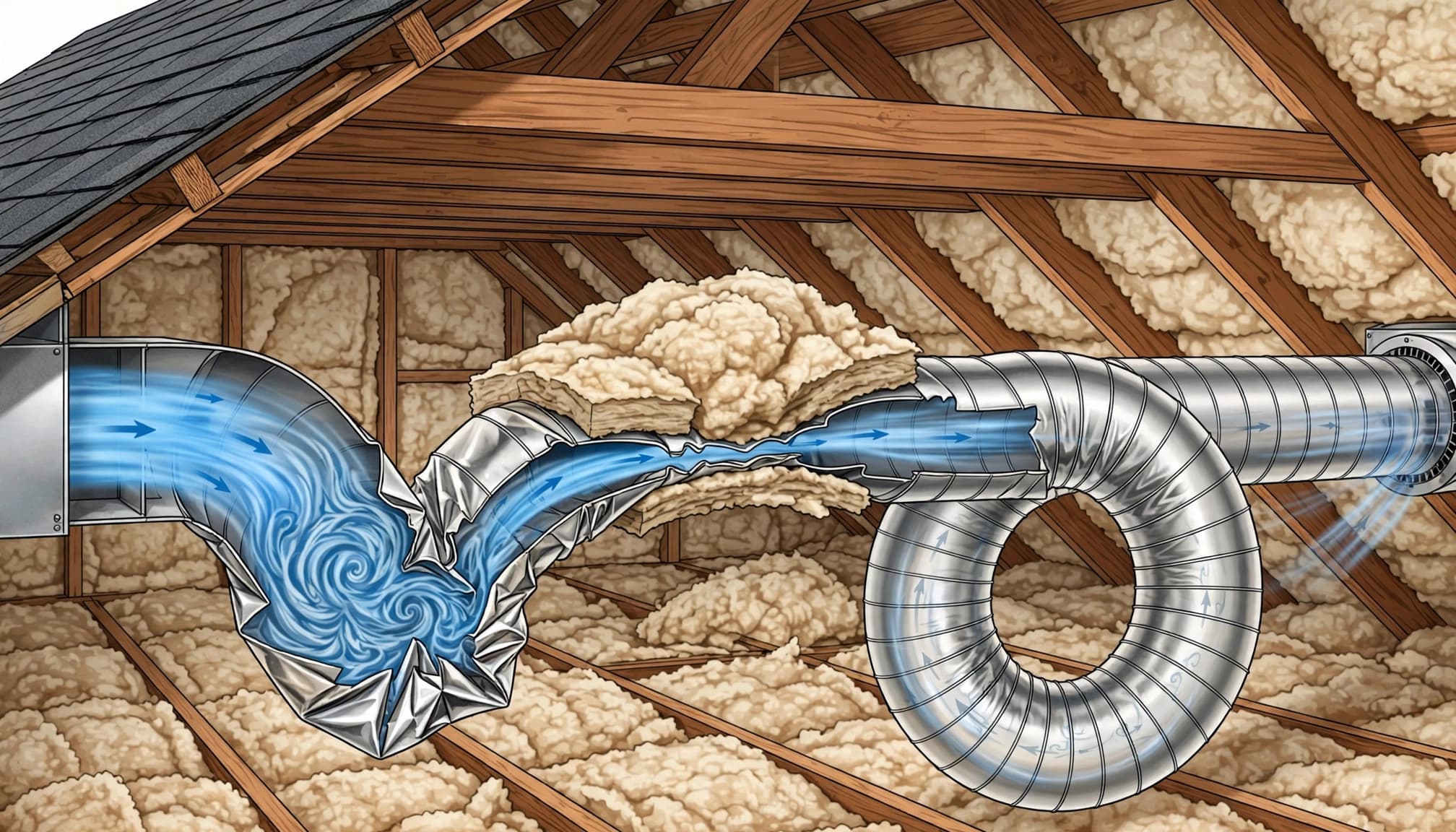
Compression Bunches the Inner Liner
Flexible duct should be extended along its intended route without unnecessary bunching. When installers leave it compressed lengthwise, the liner's corrugations crowd together and increase friction.
Physical crushing creates another restriction. A storage box, framing contact, or overly tight hanger can flatten the duct and reduce its open area.
These conditions need different corrections. Extending a bunched liner addresses lengthwise compression, while a crushed section may need rerouting, better support, or replacement. Simply lifting the outside jacket won't necessarily restore the interior passage.
Tight Turns Pinch the Airway
A sharp bend near a supply boot or plenum can pinch the inside of the turn. The wire helix may deform, leaving a narrow passage where air changes direction.
This often matters in tight attic spaces where ductwork wraps around framing or turns immediately after a connection.
Broad, supported curves preserve the duct's shape better. Where space doesn't allow a suitable flex bend, a properly selected rigid fitting may provide a better transition. The fitting and surrounding duct still need insulation and sealed connections.
Unnecessary Length Adds Friction
Every additional section of duct adds resistance. Extra material left in loops also creates more opportunities for sagging, bends, and insulation damage.
The useful route is generally short and direct, with enough room for gradual turns and secure connections.
However, pulling a duct tight between two points can strain its joints. Proper routing removes unnecessary length while preserving the shape and support the duct needs.
Why Florida Attics Make Duct Problems Worse
Southwest Florida homes depend on cooling through long stretches of hot, humid weather. Ductwork in a vented attic carries cool air through a much hotter environment.
Damaged Insulation Allows More Heat Gain
Sagging and poor support can occur alongside compressed insulation, torn jackets, and loose joints. These defects affect performance differently.
A restricted liner reduces airflow. Meanwhile, inadequate insulation allows more attic heat to reach the supply air before it enters your home.
A distant bedroom can therefore receive both less air and warmer air. That combination becomes more noticeable during heavy afternoon cooling demand, even when the air conditioner itself is operating.
Humidity Adds Condensation Concerns
Condensation can form when humid attic air reaches a surface colder than its dew point. Damaged insulation or gaps in the protective jacket can expose cold duct components to that moisture.
Moisture near a duct boot or ceiling register deserves attention, but it doesn't prove sagging caused the problem.
Leakage can also affect comfort. Supply leaks waste cooled air, while return leaks can draw hot, dusty attic air into the system. The signs your AC ducts need sealing can overlap with symptoms of restricted airflow, so both conditions deserve evaluation.
Symptoms You May Notice Indoors
A restricted supply branch often affects the room it serves. You might notice a bedroom staying warmer than nearby spaces or a register delivering noticeably weaker airflow.
The pattern matters. If one room becomes uncomfortable after roofing, insulation, or other attic work, displaced or compressed ductwork deserves attention. If airflow weakens throughout the house, the return path, filter, blower, or coil may also be involved.
Long cooling cycles provide another clue when the system still can't reach its setting. However, runtime alone doesn't establish a duct problem. Florida cooling systems can run for extended periods during high demand.
Rising electric bills can accompany poor air delivery, but weather, thermostat settings, and equipment condition also affect consumption. Similarly, musty odors or wet ceiling areas require a broader moisture investigation.
The common causes of weak air conditioning airflow include several problems beyond sagging ducts. Symptoms help locate the concern, while inspection and measurements identify its cause.
What Homeowners Can Safely Check
Start indoors before looking toward the attic. You can gather useful information without handling ductwork or entering an unsafe space.
- Inspect the air filter and replace it if it's dirty, using the size and type specified for your system.
- Make sure supply registers are open and furniture, rugs, or curtains aren't blocking supply or return grilles.
- Note which rooms have weak airflow, whether closed bedroom doors change comfort, and when the problem began.
- From a safe attic access point, look for obvious duct droops, flattened sections, tight turns, torn jackets, or disconnected ends.
Use a flashlight rather than moving insulation or tugging on ducts. Also, note dark or wet areas around connections and ceiling boots.
Attics contain fall hazards, electrical wiring, sharp fasteners, and intense heat. Don't step onto ceiling drywall or enter an attic without safe access and footing. Leave inaccessible sections to an HVAC professional.
A connected outer jacket doesn't prove the inner liner is open, properly extended, or securely attached.
Photographs taken from a safe position can help show visible damage. However, a visual check can't measure airflow or establish whether duct sizing is adequate.
How Proper Support and Routing Restore Airflow
The repair should address the restriction's cause. Raising one low section won't solve excessive length, a damaged liner, or an undersized branch.
Support the Duct Without Crushing It
Proper supports carry the duct's weight without squeezing its air passage or insulation. Broad support surfaces distribute that load better than narrow materials that pinch the jacket.
The duct should maintain its intended shape between supports and through changes in direction. Connections also need secure attachment rather than carrying the weight of a hanging run.
If the liner is torn or permanently deformed, replacement of the affected section may be more appropriate than adding hangers. When comparing flex duct vs. sheet metal ductwork, remember that either material needs correct sizing, support, insulation, and sealing.
Improve the Route and Measure the Result
A technician can remove unnecessary loops, replace sharp turns with suitable transitions, and keep ductwork clear of crushing hazards. Connections need appropriate sealing, such as mastic or listed duct-sealing products.
Afterward, airflow measurements show whether the correction improved delivery. A manometer measures static pressure, while an airflow hood can measure air volume at registers.
ACCA Manual D provides residential duct-design methods when sizing or layout needs attention. Finally, balancing airflow for even comfort can help distribute the available air appropriately after physical restrictions are corrected.
Frequently Asked Questions
Does Sagging Mean All My Ductwork Needs Replacement?
Localized damage may need only support improvements, rerouting, or replacement of one section. A whole-system replacement decision should account for liner condition, leakage, insulation, sizing, and the overall layout.
If several runs are deteriorated or poorly sized, adding straps alone won't resolve those separate problems. However, sound ductwork elsewhere doesn't need replacement simply because one branch has a correctable droop. The repair scope should match the actual defects.
Does Flex Duct Need to Be Perfectly Straight?
Flexible duct can follow gradual curves when the installation preserves its shape. The concern is an abrupt turn, kink, compressed liner, or unsupported bend that creates unnecessary resistance.
A perfectly straight appearance also doesn't prove correct installation. The inner liner still needs proper extension, connections need sealing, and insulation must remain intact. Those details matter alongside the visible route through the attic.
Restore the Air Path Before Replacing Equipment
Flex duct sag deserves attention because a distorted air path can limit comfort even when the AC equipment operates. Effective repairs address support and routing while also correcting liner damage, insulation gaps, or leaks.
We provide HVAC repair and inspection services in Fort Myers and across Southwest Florida. If weak vents or persistent hot rooms suggest a duct problem, Schedule an Estimate with our team to identify the restriction and discuss the appropriate repair.
Recent Posts