Buying a Home With Old AC: Questions to Ask First
A home with old AC can look like a smart buy until the first hot afternoon exposes weak airflow, high humidity, or an aging compressor. In Southwest Florida, air conditioning affects comfort, indoor moisture, and monthly ownership costs almost every day.
The seller's general home inspection may mention the unit's age, but that note won't tell you everything. Before you commit, ask for service records, arrange an independent HVAC inspection, and obtain written replacement quotes. Start with the system's actual condition and history.
Can a home with old AC still be a good buy?
Yes, an older air conditioner doesn't automatically make a property a bad purchase. The condition of the equipment, the home's ductwork, the electrical setup, and the sale price all matter.
A system near the end of its service life may still cool properly. However, it can also require replacement soon after closing. Since no technician can promise an exact remaining life, your decision should account for both today's performance and tomorrow's possible expense.

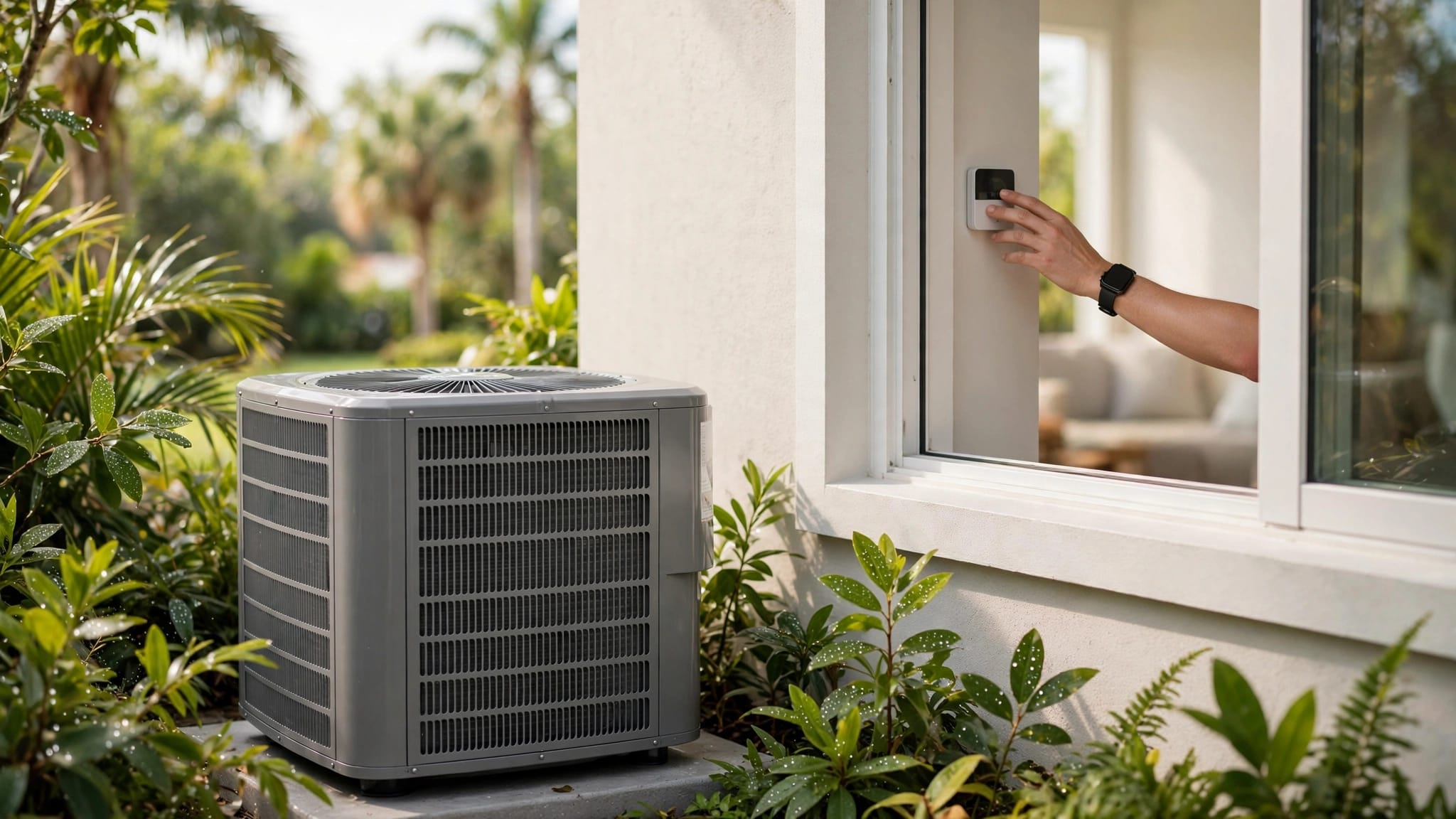
Photo by Maria Orlova
How old is the equipment?
Ask for the manufacturer, model number, serial number, and installation date . The serial number can help a qualified technician verify the unit's age, but records are still useful because equipment may have been installed after the home was built.
Check both major components:
- The outdoor condenser may have a different installation date than the indoor air handler.
- The evaporator coil, blower, thermostat, and heat strips may have been replaced separately.
- A mismatched indoor and outdoor setup can affect comfort, efficiency, and future replacement planning.
Age is only one part of the picture. A well-maintained system in a dry, protected location may perform better than a newer unit that suffered neglect, corrosion, or poor installation.
What repairs has the system needed?
Request invoices for service calls, parts, refrigerant work, coil cleaning, drain-line clearing, and previous repairs. Repeated calls for the same issue deserve attention, especially when they involve refrigerant leaks, electrical components, airflow, or a compressor.
Look for patterns rather than one isolated repair. A new capacitor or thermostat may be a routine fix. Several expensive repairs in recent years could point to broader wear.
A seller's statement that the AC is "working fine" describes one moment. It doesn't replace a written inspection or repair history.
If the unit has a current problem, ask whether the seller plans to repair it, replace it, or offer a credit. Get the agreement in writing and confirm who will perform the work.
Why an independent HVAC inspection matters
A general home inspection is useful, but it isn't the same as a dedicated air conditioning evaluation. The general inspector may identify visible damage, unusual sounds, or a lack of cooling. An HVAC technician can test the system in greater detail and review how the equipment fits the home.
Choose an independent technician who isn't working for the seller, listing agent, or contractor involved in the transaction. You can also review guidance on AC repair or replacement in Fort Myers before scheduling the visit.
What should the technician check?
Ask for a written report that covers the equipment and the conditions affecting performance. The technician should inspect:
- Cooling performance, temperature split, airflow, and thermostat operation.
- Refrigerant pressures and signs of a leak, where testing is appropriate.
- Electrical connections, disconnects, breakers, capacitors, and contactors.
- The evaporator coil, condenser coil, blower assembly, and air filter setup.
- Condensate drains, drain pans, float switches, and signs of water damage.
- Duct connections, insulation, returns, supply registers, and restricted airflow.
- Corrosion on outdoor components, especially in coastal areas exposed to salt air.
The technician should also note whether the system struggles under normal operating conditions. A unit that cools an empty house during a short visit may behave differently during a hot, humid Southwest Florida afternoon.
Which inspection findings are red flags?
Some findings need immediate follow-up before you waive inspection concerns. These include active refrigerant leaks, a failing compressor, unsafe electrical conditions, repeated drain overflow, severe rust, damaged ductwork, or a system that cannot control indoor humidity.
A missing service history isn't proof of a problem, but it limits what you can verify. Be cautious when the seller refuses access to the equipment, won't allow an HVAC inspection, or gives verbal promises without documentation.
Visible water stains near the air handler also deserve attention. They may come from a clogged drain, a damaged pan, poor installation, or a longer moisture problem. Ask for the cause, not only a cosmetic repair.
What AC documents should a buyer request?
Paperwork helps you separate a maintained system from one that has received occasional emergency repairs. Ask the seller or listing agent for copies before the inspection period ends.
Service records and installation paperwork
Request the original installation invoice if it's available. It may identify the equipment model, efficiency rating, warranty terms, contractor, and date of installation. Later invoices can show whether the system received regular maintenance or only received repairs after failures.
Useful records include:
- Annual maintenance visits and tune-up reports.
- Repair invoices with parts, labor, and technician notes.
- Refrigerant additions or leak-repair documentation.
- Coil, blower, duct, thermostat, or drain-line replacement records.
- Manufacturer warranty information and proof of registration.
- Receipts for permits, inspections, or major electrical work.
Ask whether the current thermostat belongs to the system and whether any smart thermostat installation changed the wiring. A thermostat upgrade doesn't prove that the rest of the equipment is in good condition.
Warranty, permits, and replacement plans
Find out whether any part of the system remains under a manufacturer or labor warranty. Confirm whether the warranty transfers to a new owner, because terms vary by manufacturer and installation company.
Permit paperwork can also provide useful history. Local requirements vary by project and jurisdiction, so don't assume an older replacement had the same permit process as a new installation. If the home is in Fort Myers, Cape Coral, or another Lee County community, review the current information on Lee County AC replacement permits and confirm details with the appropriate local office or contractor.
Ask directly whether the seller has received a replacement recommendation. A quote sitting in a drawer may reveal that the owner knew about a major issue but chose not to disclose it clearly.
What could a future AC replacement involve?
Buyers often compare only the price of a new outdoor unit. That approach can miss work needed to make the entire cooling system function correctly.
In Southwest Florida, humidity control matters as much as reaching the thermostat setting. The replacement must match the home's size, insulation, duct design, electrical service, and daily use.
Will the ducts, drain, or electrical system need work?
Older homes may have leaky ducts, compressed flex duct, undersized returns, damaged insulation, or supply registers that don't match the current layout. Ducts in a hot attic can lose performance when connections separate or insulation breaks down.
Ask the HVAC contractor to inspect the duct system before recommending equipment. A new unit won't solve every comfort problem if air escapes before it reaches the rooms. This guide on ductwork inspection before AC replacement covers issues that buyers often miss.
Drainage and electrical work can also change the project scope. The contractor may need to address a condensate drain, drain pan, float switch, disconnect, breaker, wiring, or pad. Coastal corrosion can affect outdoor electrical components even when the system still runs.
Is the proposed system sized for this home?
Bigger isn't automatically better. An oversized air conditioner may cool the thermostat quickly while running too briefly to remove enough moisture. An undersized system may run for long periods and still struggle during peak heat.
Ask how the contractor will evaluate the home's size, layout, insulation, windows, ductwork, and sun exposure. The recommendation should account for actual conditions, not only the size of the old unit.
Also ask about the proposed efficiency rating, humidity control, thermostat compatibility, and indoor comfort. SEER2 ratings can help compare equipment, but the rating alone doesn't predict the home's final utility bills. You can review SEER2 ratings for Fort Myers AC replacement before comparing proposals.
How should you budget and negotiate?
A home with old AC doesn't always require the buyer to reject the deal. You need clear numbers and a fair plan for handling the risk.
Should the seller repair the system or offer a credit?
A repair may make sense when the problem is limited and the system has a strong service history. Replacement may be more practical when the equipment has major component failure, repeated breakdowns, serious corrosion, or poor compatibility with the home.
Don't accept a vague promise that the seller will "take care of the AC." The contract should state the agreed work, the contractor, the equipment or parts involved, and the documentation you will receive.
A credit may give you more control, but make sure it reflects the replacement quotes you obtained. Credits can also be affected by the purchase contract, lender rules, and negotiation terms. Your real estate professional can explain those transaction details.
What should a written replacement quote include?
Obtain at least two written quotes before finalizing the purchase when replacement appears likely. Compare the full scope, not only the equipment price. A useful quote should identify:
- Equipment model, capacity, efficiency rating, and warranty terms.
- Removal and disposal of the existing equipment.
- Labor, startup testing, thermostat work, and cleanup.
- Duct repairs, sealing, electrical updates, drainage work, or pad replacement.
- Permit handling, inspection steps, and warranty registration.
- Any exclusions that could create an additional charge.
Prices vary by system, home design, climate exposure, location, access, equipment selection, and condition. A quote for a straightforward replacement may not resemble the price for a coastal home with damaged ducts or difficult attic access. Use this guide to compare Fort Myers AC replacement quotes and ask each contractor to price the same scope.
If you want an on-site review before making an offer or completing the purchase, Schedule an Estimate with a qualified HVAC technician.
Final thoughts
Buying a home with an older air conditioner becomes easier when you replace guesswork with documentation and independent testing. Confirm the equipment's age, review repair records, inspect the full system, and price a realistic replacement before closing.
The strongest decision is based on the home's total condition, not the AC label alone. With a written inspection and clear quotes, you'll know whether to negotiate, budget for replacement, or move forward with confidence.
Recent Posts