Best Thermostat Setting When You Leave Florida for Summer

Valor HVAC • July 7, 2026

Share this article

Leaving a Florida home empty changes the thermostat question fast. The goal is not to keep the house cold, it's to keep it dry enough to avoid mold, mildew, and that stale smell that shows up after a few hot weeks.

For most homes, the right Florida thermostat setting when you're away lands in the upper 70s. The best number depends on your HVAC system, insulation, and anything sensitive inside the house, so the smart move is to balance moisture control, energy use, and indoor protection.

Key Takeaways

  • Start with 78 to 80 degrees for most empty Florida homes.
  • Humidity matters more than the exact temperature, and below 60% is the target to watch.
  • Older homes, weak insulation, and sensitive contents may need a slightly lower setting, around 74 to 76 degrees .
  • Smart thermostats, clean filters, blinds, and humidity checks make the setting work better.
  • Never turn the system off completely if you want to avoid moisture problems.

What temperature works best when the house is empty?

For a vacant Florida home, 78 to 80 degrees is a solid starting point. That range usually gives the air conditioner enough runtime to pull moisture out of the air without turning your electric bill into a shock.

If the home is well sealed and the HVAC system is in good shape, that range often works well for a summer trip or a seasonal stay away. If you're gone for more than a few weeks, the goal stays the same, keep the house stable, dry, and protected.

Do not shut the system off. Florida heat and humidity can push indoor moisture up fast, especially in July and August.

Here's a simple way to think about it:

Home situation Suggested thermostat setting Why it works
Newer home, good insulation, healthy HVAC system 78 to 80°F Helps control humidity without heavy cooling costs
Older home, weak insulation, leaky windows 74 to 76°F Gives the system more runtime and better moisture control
Sensitive contents inside, such as art, papers, or wood furniture 74 to 76°F Helps protect items that react to heat and moisture

If your home sits in the hotter parts of Southwest Florida or gets strong afternoon sun, the lower end of the range may make more sense. The house only needs to stay safe, not feel comfortable for people.

Why humidity matters more than the number on the thermostat

Humidity is the real issue in Florida. Temperature matters, but moisture decides whether a house smells fresh or turns musty.

A Florida house can feel fine on the thermostat and still be too damp inside.

An air conditioner removes water while it runs. If the setting stays too high, the system may not cycle enough to dry the air. That is how mold, mildew, and sticky walls show up even when the house doesn't feel hot.

A good target is indoor humidity below 60% , with 45% to 55% being a better range when you can hold it. A small hygrometer makes this easy to check. If humidity starts climbing, lower the setting a few degrees and watch what happens over the next day or two.

If the home smells stale when you return, the thermostat likely wasn't the only problem. Poor airflow, a clogged drain, or a dirty coil can also leave moisture behind.

Small steps that help the setting do its job

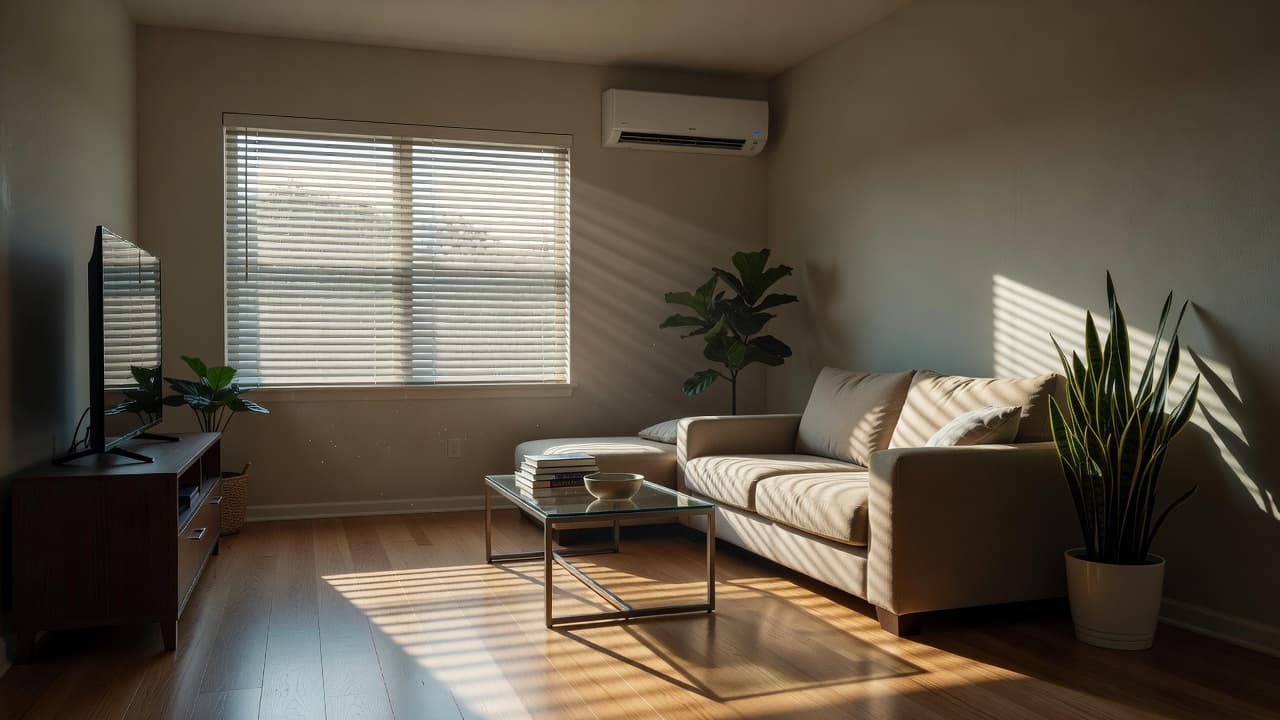
A good thermostat setting works better when the rest of the house helps. Start by closing blinds and curtains on the sunniest windows before you leave. In a Southwest Florida summer, that can reduce heat gain during the hottest part of the day.

Smart thermostats help too. They let you check the temperature from anywhere, change the setting if the weather shifts, and get alerts if the system stops cooling the way it should. If your thermostat gives humidity readings, use them. Temperature alone doesn't tell the whole story.

Ceiling fans can help move air in stuffy rooms, but they don't dry the house. If nobody is there, they can stay off unless you want a bit more circulation in a problem area.

Air filters matter more than people think. Replace the filter before you leave, because a dirty filter can slow airflow and make moisture removal less effective. If your system has been acting up, a quick checkup before summer pays off. A pre-trip inspection and benefits of regular HVAC system tune-ups can catch clogged drains, low refrigerant, and airflow issues before they turn into a mess.

When to set it a little lower

Some homes need a slightly lower setting than the usual Florida thermostat setting range. That's common when insulation is weak, windows leak air, or the HVAC system is older and less efficient.

The same goes for homes with sensitive contents. Wood furniture, musical instruments, artwork, family photos, and important documents all handle steady conditions better than wild swings in heat and humidity. A setting around 74 to 76 degrees can give those items a better chance.

If your unit struggles to keep the house dry or the temperature swings a lot, don't wait until you return to deal with it. A technician can check airflow, drainage, and system capacity before you head out. If you want that looked at before summer starts, Schedule an Estimate with a HVAC technician from Valor Heating & Cooling.

Conclusion

For most empty Florida homes, 78 to 80 degrees is a smart place to start. It keeps the house from baking, gives the AC enough runtime to fight moisture, and helps hold down energy costs.

If your home is older, leaky, or filled with items that hate heat and humidity, go a little lower and watch the humidity, not just the thermostat. In Florida, a dry house is a protected house, and that matters more than chasing one perfect number.

Recent Posts

By Valor HVAC July 6, 2026
A new AC can still run poorly if the refrigerant lines behind it are the wrong size, damaged, or dirty. Sometimes the old line set can stay, but replacement is often the smarter choice when the copper is old, leaking, contaminated, or not a match for the new equipment. That ma...
By Valor HVAC July 5, 2026
A new AC doesn't always need a new thermostat, but skipping the check can cause trouble fast. If the control and the equipment don't match, you may end up with uneven cooling, short cycling, or a system that never feels quite right. In Southwest Florida, your thermostat gets a...
By Valor HVAC July 4, 2026
Yes, a portable generator can run central air, but only if it can handle the compressor's startup surge and the system's running load. In Southwest Florida, that matters even more when a storm knocks out power and the house heats up fast. Central air is tougher than a lamp or...
By Valor HVAC July 3, 2026
An AC breakdown in Southwest Florida can turn into a fast-moving expense. The sticker shock usually comes from a simple question: what does the warranty cover, and what does it leave out? That answer matters because parts warranty coverage and labor warranty coverage are often...
By Valor HVAC July 2, 2026
Closing air vents usually does not save meaningful money on cooling costs, and in many central HVAC systems it can make the system work harder. If one room feels too warm or too cold, the cause is usually airflow balance, duct design, or insulation, not the vent itself. In Sou...
By Valor HVAC July 1, 2026
Florida humidity can make a house feel sticky long before the thermostat says it is too warm. That is why many homeowners start comparing an AC with a whole-house dehumidifier for Florida humidity when the indoor air never feels quite right. The short answer is that air condit...
By Valor HVAC June 30, 2026
Replacing an air conditioner is the right time to ask a second question, what shape is the ductwork in? A new system can only cool well if the ducts move air without leaks, blockages, or weak insulation. In Southwest Florida, that matters even more because attics stay hot and...
By Valor HVAC June 29, 2026
Garage conversions can look simple on paper, but comfort is where many projects fall apart. A room that feels fine in the morning can turn sticky by afternoon, or stay cold near the floor and hot near the ceiling. When you turn a garage into a bedroom, office, gym, or studio,...
By Valor HVAC June 28, 2026
A float switch that keeps tripping is usually doing its job. It's warning you that condensate water isn't draining the way it should, and in Fort Myers that can happen fast. High humidity, long cooling runs, and warm weather put extra strain on your AC system. If you keep rese...
By Valor HVAC June 27, 2026
An air handler does a lot more work in Fort Myers than many homeowners realize. It moves cooled air, pulls moisture out of the home, and keeps the system steady through months of heavy use. If you are weighing air handler replacement Fort Myers options, the biggest clue is oft...
Show More