How to Choose the Right Thermostat Location in Florida
One sunny wall can make your air conditioner run longer than it should. A search for thermostat location Florida advice often starts with a simple question: where should the wall control go? In Southwest Florida, the answer depends on sunlight, humidity, airflow, and the room your system is meant to represent.
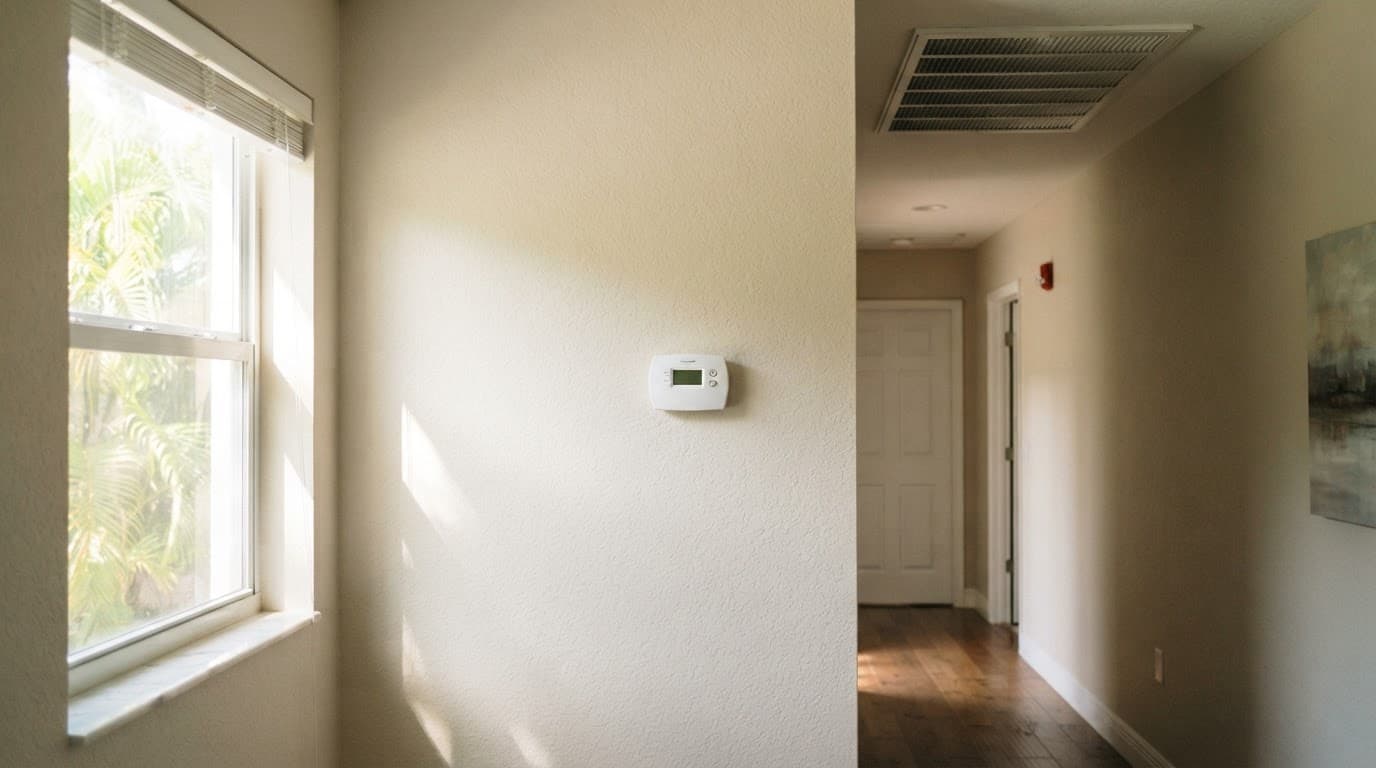
The safest starting point is an interior wall in a lived-in area, about five feet above the floor, away from windows, doors, vents, fans, and appliances. That location works for many homes, but room layout and zoning can change the recommendation. Start by understanding what skews a reading, then evaluate the actual wall.
Why Thermostat Placement Matters More in Florida
Your thermostat measures the air around its sensor. It doesn't know that a bedroom across the house feels warmer, or that afternoon sun is heating the wall behind it. If the surrounding air is unusually warm or cool, the system responds to a misleading reading.
Florida homes face this problem often because air conditioning runs for long periods. A small placement issue can affect comfort, cycling, and energy use during a hot afternoon.
Heat and solar gain distort readings
Direct sunlight can heat the thermostat and the wall around it. A south- or west-facing window may raise nearby temperatures during the afternoon, even when the rest of the room feels comfortable.
Exterior walls can also absorb heat through masonry, stucco, or poorly insulated sections. A thermostat mounted there may sense a warmer surface and cause the AC to run longer.
Keep the thermostat away from:
- Direct sunlight through windows or glass doors
- Walls that receive strong afternoon heat
- Lamps, televisions, and other heat-producing electronics
- Kitchens, ovens, and refrigerators
- Supply vents that blow conditioned air directly across the sensor
Humidity and airflow add another variable
Florida's humidity affects how comfortable a room feels, even when the temperature looks normal. A thermostat may display indoor humidity, but the sensor still reads the air immediately around the wall control.
Air movement can create another false reading. A ceiling fan, return grille, open doorway, or supply register may cool the thermostat faster than the rest of the room. The AC could then shut off while distant rooms remain warm and sticky.
Thermostat location Florida: the best general placement
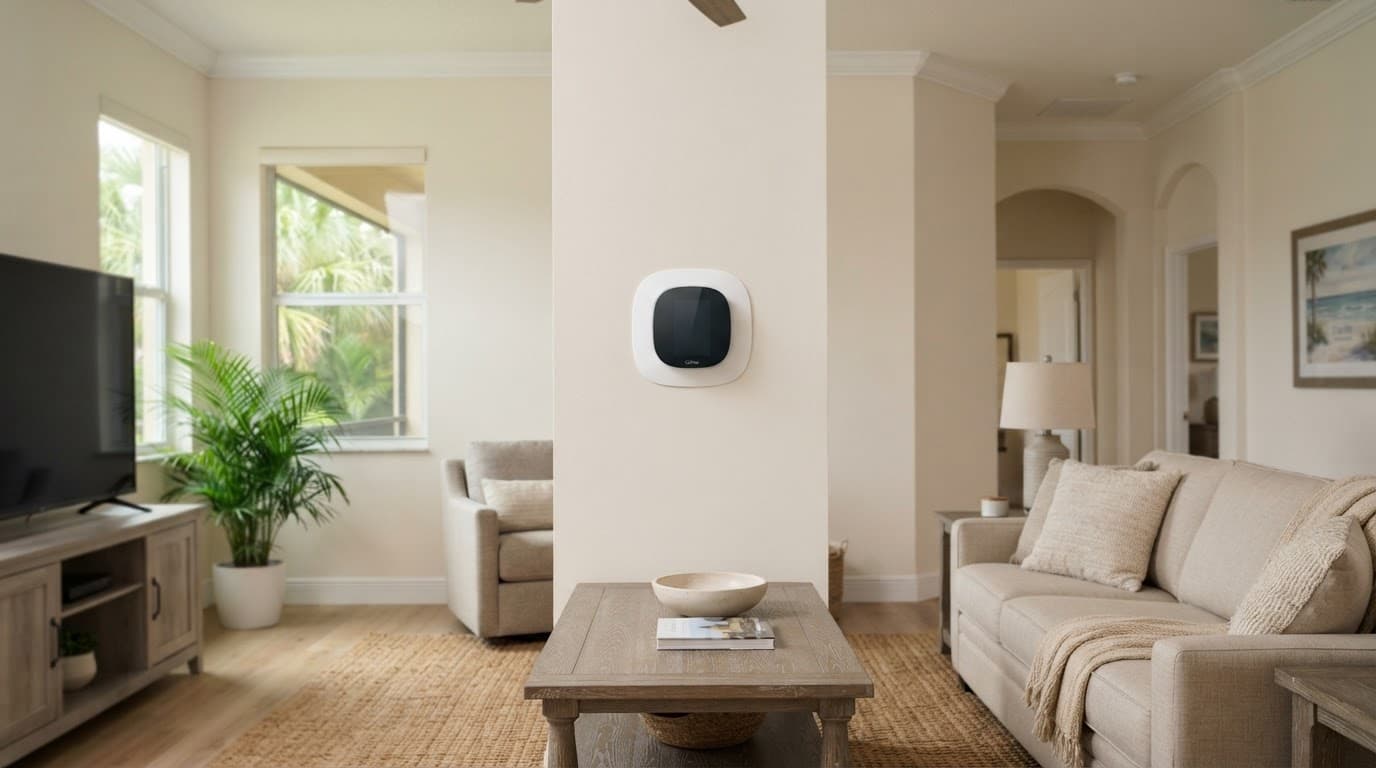
For many single-story homes, the best starting point is an interior wall in a central living area . A hallway near the main return-air path may work well, provided it doesn't receive drafts from open doors or nearby vents.
Mount the thermostat at roughly five feet above the floor. This height keeps it near the average occupied breathing zone and away from floor-level drafts. Avoid placing it behind furniture, curtains, or decorative items that restrict air around the sensor.
Choose a representative living area
The thermostat should represent the temperature where your household spends most of its time. In an open floor plan, that may be the family room rather than a hallway. In a smaller home, a central wall between the living room and bedrooms may provide a reasonable average.
Look for a wall with steady airflow and normal daily use. A room that stays closed most of the day may not represent the home's overall comfort. Likewise, a rarely used formal dining room can lead to poor decisions if the rest of the house follows a different temperature pattern.
The thermostat location Florida homeowners choose should match the system's control zone, not simply the most convenient wall for wiring.
Keep the sensor clear
Leave open space around the thermostat. Don't place a bookshelf, cabinet, couch, or tall plant directly below or beside it. These objects can block natural room air or create pockets of heat.
A thermostat also needs protection from accidental contact. Avoid walls where furniture, doors, or household traffic could bump the control. If children or pets can reach it easily, use a protective setting or choose a safer wall.
Room Layout Can Change the Right Answer
A generally good location doesn't work equally well in every Florida home. The correct placement depends on the equipment, duct design, floor plan, and how residents use each room.
Open floor plans and central living areas
Open layouts usually give a thermostat more representative air, but large windows can still create hot spots. Place the control far enough from glass doors and windows to avoid direct solar gain. It should also stay away from the kitchen if cooking heat regularly spreads into the living area.
If the home has high ceilings, a loft, or strong airflow between floors, a single thermostat may not balance every space. The lower level may feel comfortable while an upstairs bedroom remains warm. In that case, thermostat placement alone won't solve the difference.
Bedrooms, additions, and zoned systems
A bedroom thermostat can make sense when that room has a dedicated zone or separate air handler. It may be the wrong choice when one central system controls the entire home. The AC would satisfy the bedroom first, even if the living areas still need cooling.
Additions can also confuse the reading. A converted garage, enclosed lanai, or newly finished room often has different insulation and solar exposure than the original home. If it shares ductwork with the rest of the house, ask an HVAC technician to assess airflow before moving the thermostat.
| Home situation | Location that may work | Main concern |
|---|---|---|
| Small, single-story home | Central interior living area | Avoid drafts and direct sun |
| Open floor plan | Main occupied zone near balanced airflow | Keep away from kitchen heat and glass |
| Two-story home | Zone-specific control or planned central location | One thermostat may not represent both floors |
| Home addition | Dedicated zone when appropriate | Different insulation and duct performance |
| Room with strong afternoon sun | Interior wall away from the window | Solar gain can raise the reading |
The table points to a practical rule: the thermostat must represent the area it controls . A room-specific solution may be better than forcing one sensor to manage several different conditions.
How to Evaluate a Wall Before Installation
Before choosing a location, watch how the room behaves during a normal hot day. Notice where sunlight lands, where air moves, and which spaces stay comfortable when the AC cycles off.
Check temperature and airflow patterns
Use the room for several hours before making a decision. A wall that feels neutral in the morning may become warm after two o'clock. Southwest Florida homes often receive strong afternoon heat through west-facing windows and sliding doors.
Stand near the proposed wall while the system runs. You shouldn't feel a direct stream of conditioned air across the thermostat. Also check for drafts from exterior doors, stairwells, return grilles, and poorly sealed wall penetrations.
If one room feels different from the rest, compare several areas with a separate room thermometer. A noticeable difference may point to duct leakage, insulation problems, restricted airflow, or an undersized system. Moving the thermostat could hide the symptom instead of fixing the cause.
Confirm the wall is practical and safe
The wall should allow secure mounting and safe wire access. Avoid locations close to plumbing, electrical wiring, or areas where condensation could reach the control. Bathrooms, laundry rooms, and utility spaces usually have too much moisture or temperature variation for a central thermostat.
Turn off power to the HVAC equipment before removing an existing thermostat. Most central systems use low-voltage controls, but some equipment and wiring arrangements require extra care. Never connect wires based only on color, and don't work on the system if you aren't sure which breaker or disconnect controls it.
When installing a new control, a technician can check the wiring, system type, fan operation, and safety controls at the same time. This is especially important for heat pumps, dual-fuel equipment, and systems with emergency heat.
Common Thermostat Location Mistakes
Some placement errors are easy to spot. Others produce intermittent comfort problems that appear to be caused by the AC itself.
Avoid direct heat and cold sources
A thermostat shouldn't sit above or beside a supply vent. Conditioned air may cool the sensor quickly, causing the system to stop before the room reaches the selected temperature.
Keep it away from ceiling fans as well. Moving air can make the sensor react to a local breeze rather than the room's average condition. Lamps, televisions, computers, and chargers can also add heat to a small area.
Kitchens are usually poor locations because ovens, stovetops, dishwashers, and frequent door opening change the nearby temperature. A hallway beside the kitchen may work only if the wall stays outside that heat path.
Avoid exterior doors, windows, and wet areas
An exterior door can expose the thermostat to repeated bursts of hot, humid air. The same issue occurs near a frequently used garage entry. The sensor may read those short temperature swings and keep calling for cooling.
Windows and sliding glass doors create solar gain, even when blinds are closed part of the day. On the other hand, a thermostat beside a poorly sealed window may react to outdoor heat or drafts.
Bathrooms and laundry rooms bring moisture and temperature changes. Garages, porches, enclosed lanais, and unfinished spaces have even less stable conditions. These areas rarely reflect the temperature of the occupied rooms that the system serves.
When the Thermostat Isn't the Real Problem
A poor thermostat location can cause inaccurate readings, but it isn't the only reason a Florida home feels uncomfortable. The system may have an airflow, drainage, electrical, or equipment problem that no wall change can correct.
Look for signs of a system issue
Uneven temperatures, short cycling, weak airflow, ice on refrigerant lines, repeated breaker trips, or water near the air handler deserve an HVAC inspection. Sticky indoor air can also point to a moisture-control or cooling-performance problem.
A dirty filter may restrict airflow. Blocked returns, leaking ducts, a failing blower motor, low refrigerant, and a clogged condensate drain can create similar symptoms. Lowering the thermostat won't repair any of these conditions.
After placement is corrected, use a consistent temperature schedule and avoid frequent manual changes. For more guidance on summer settings, review these best thermostat settings for Fort Myers.
Know when professional evaluation makes sense
Call an HVAC professional when the thermostat reading disagrees with room conditions, the system runs almost nonstop, or the control repeatedly loses power. A technician can test the sensor, verify low-voltage wiring, inspect airflow, and compare supply and return temperatures.
Routine service can also reveal whether the thermostat is reacting to a larger problem. A professional AC inspection in Fort Myers may include thermostat response, temperature split, electrical components, filters, and condensate safety controls.
Get help before moving wires if the thermostat is line-voltage, the wiring is damaged, or the system includes unfamiliar accessories. For a new system, remodeled room, or persistent comfort imbalance, you can Schedule an Estimate with a local HVAC technician who can evaluate placement and equipment together.
A Practical Thermostat Placement Checklist
Use these questions before approving a location:
- Is the wall inside the conditioned space?
- Does it represent the main area controlled by the system?
- Is it about five feet above the floor?
- Does it avoid direct sun and exterior-wall heat?
- Is it away from supply vents, returns, fans, lamps, and appliances?
- Will furniture, curtains, or doors block the sensor?
- Is the area dry and free from frequent drafts?
- Can the wiring be accessed without disturbing plumbing or electrical components?
If the answer to several questions is no, choose another wall or request an evaluation. The most convenient wiring path isn't always the best place for accurate control.
Conclusion
The right thermostat location in Florida is usually an interior wall in a regularly occupied area, positioned away from sunlight, drafts, vents, fans, appliances, and moisture. That general rule works well for many homes, but zoning, additions, two-story layouts, and unusual airflow can change the answer.
A thermostat can only respond to the air around its sensor. If the home still has hot rooms, high humidity, short cycling, or weak airflow after placement is corrected, the underlying AC system needs attention. Choose a location that represents the space being controlled, then have a professional check the equipment when the readings and comfort don't match.
Recent Posts