Should You Upgrade Attic Insulation Before Replacing AC?
Should you upgrade attic insulation before replacing AC? In many Southwest Florida homes, the answer is yes, or at least you should evaluate the attic first. Better insulation and air sealing can lower the cooling load, which keeps a new system from being sized for a house that leaks heat all day. Poor attic insulation makes the AC run longer, struggles to pull out humidity, and pushes utility bills higher. A replacement plan works best when the attic, ducts, and equipment are all considered together.
Key Takeaways
- Weak attic insulation raises the cooling load, so your AC runs longer and often struggles more with humidity.
- Air sealing and duct leaks can change the right AC size, which is why a load calculation matters before replacement.
- If the AC is dead, unsafe, or failing hard in peak heat, replace it first and fix the attic right after or at the same time.
- Bundling insulation, duct sealing, and AC replacement often gives the best comfort in Southwest Florida homes.
How attic insulation changes cooling performance
In Southwest Florida, the attic can become a heat source instead of a buffer. Thin or settled insulation lets that heat move down into the rooms below, so the AC has to fight the house all day.
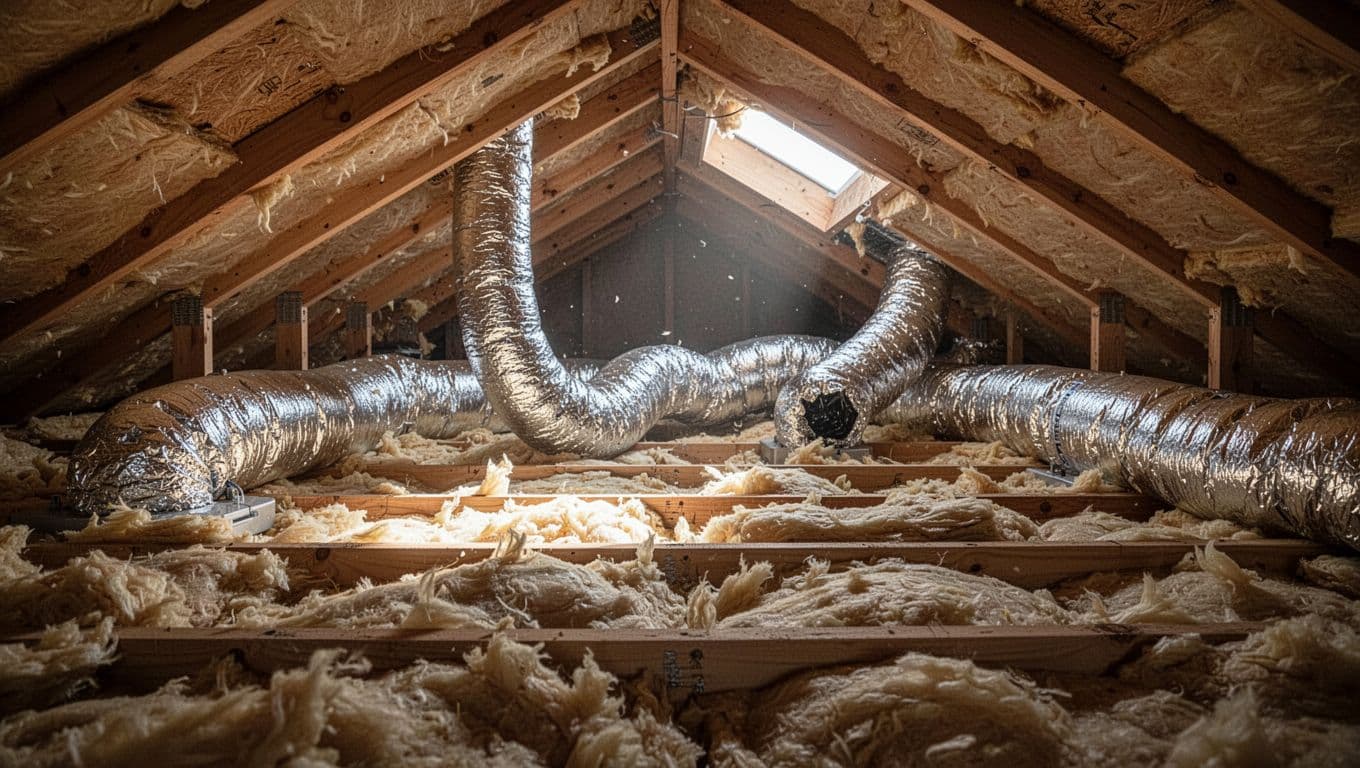
Sun beats on the roof for hours, and that heat keeps moving into the living space long after the afternoon peak passes. A weak attic holds onto that heat like a sponge, then releases it into the home every evening. That is why some houses never seem to catch up, even when the thermostat is set low.
When the attic is hot, the system runs longer to reach the thermostat setting. Longer run times are not always bad, but they become a problem when the unit never quite gets ahead of the heat or strips enough moisture from the air.
That is where the importance of ductwork and attic insulation comes into focus. If ducts run through a scorching attic, leaks and poor wrapping can waste cool air before it ever reaches the living space. Air sealing around attic access panels, plumbing gaps, wiring holes, and recessed lights matters too, because hidden leaks let hot air push back into the home.
The signs often show up in daily life before they show up on a bill. Upstairs rooms feel sticky, one bedroom stays warmer than the rest, and the AC seems to run without fixing the discomfort. That is usually a house problem, not just an equipment problem.
Why a load calculation should come before replacement
A new AC should be sized for the home you have after attic and duct improvements, not for the home you tolerated for years. A proper room-by-room load calculation, often called a Manual J calculation, looks at insulation, air leakage, duct condition, windows, and sun exposure. It gives the contractor a real picture of how much cooling the house needs.
Here is how the order of work can change the decision.
| Home condition | What it changes | Best next step |
|---|---|---|
| Thin or uneven attic insulation | Raises heat gain and cooling load | Upgrade insulation and seal leaks before final AC sizing |
| Ducts in the attic with leaks or poor wrapping | Wastes cooled air and hurts comfort | Repair or seal ducts before replacement, if possible |
| Old AC plus weak attic insulation | Can push the contractor toward a larger system than needed | Evaluate the attic first, then size the new system |
If insulation, air sealing, or duct work improve the house envelope, the needed AC size can change enough to matter. That is especially true in a humid climate, where the system has to do more than lower temperature. It also has to remove moisture at a steady pace.
A bigger AC can't fix a leaky attic. It only hides the problem until the next hot afternoon.
The order also matters for humidity. A system sized for a leaky attic may cool the thermostat quickly, then shut off before it removes enough moisture. A home can feel cool and still feel damp. Once the attic and ducts are tightened up, the load drops and the replacement plan can change with it.
When attic insulation should come first
If your AC still runs and the main complaint is comfort, insulation usually deserves first look. That is especially true when the attic is old, patchy, or clearly under-insulated.
- The attic insulation is thin, compressed, or missing in spots.
- Rooms under the roof stay hot even after the AC has been running for a while.
- The system reaches temperature but the air still feels sticky.
- Ducts run through the attic and you can see loose joints, weak insulation, or signs of leakage.
When those signs show up together, the attic is stealing comfort from the system. Fixing it first can lower the cooling load, reduce runtime, and give the new AC a fair chance to perform the way it should.
If the current unit still has life left, timing the replacement for a cooler stretch can help too. The best season for HVAC installation is usually easier to manage after insulation work is done, especially if you want to avoid a rushed summer decision.
When the AC needs to be replaced first
Some situations do not leave room for a wait-and-see approach. If the compressor fails, the system has a major refrigerant problem, or the unit stops cooling in the middle of a Southwest Florida summer, replacement has to move fast.
An AC that is shorting out, tripping breakers, or sending repeated service calls across the calendar is also a strong candidate for immediate replacement. In that case, comfort and safety come first. You can still review the attic, air sealing, and ducts during the same project or right after the new equipment is installed.
A replacement now makes sense when the house is at risk of losing cooling entirely. Waiting to finish insulation work first may leave you with days of poor comfort, indoor humidity, and more wear on an already failing system.
The smart move is to replace the failed equipment without ignoring the rest of the house. A good contractor should flag attic and duct problems during the estimate, then build those fixes into the plan if they affect performance.
When bundling insulation and AC replacement makes the most sense
Bundling the jobs is often the cleanest option when the home has several weak spots at once. That happens a lot in older Southwest Florida homes, where attic insulation has settled, duct sealing has never been updated, and the AC is near the end of its life.
A bundled project helps in two ways. First, the insulation and air sealing can lower the cooling load before the final AC size is chosen. Second, one coordinated job is easier to plan than two separate visits that fight each other.
Bundling also helps when attic work requires access that would be harder after a new system is in place. If the air handler, ducts, or insulation are all being touched, one project avoids duplicate labor and keeps the install team working from the same plan.
Ask for separate line items for insulation, air sealing, duct repairs, and the new system. That makes it easier to compare bids and avoid missing work that should have been included. If you are collecting multiple estimates, how to review cooling system quotes can help you spot the details that matter most.
If you want the attic, ducts, and equipment looked at together, Schedule an Estimate and ask for a full assessment before you commit to a new unit.
Conclusion
The safest answer is simple. If the attic is weak and the AC still works, evaluate insulation, air sealing, and ducts before you lock in a replacement size. If the AC has failed or is close to it, replace it now and address the attic as part of the same plan.
Before you get quotes, check the attic insulation depth, note any hot rooms, and ask for a room-by-room load calculation with itemized pricing. That gives you a better shot at buying the right system, not just a new one.
Recent Posts