Do You Need a New Line Set for AC Replacement?
A new AC can still run poorly if the refrigerant lines behind it are the wrong size, damaged, or dirty. Sometimes the old line set can stay, but replacement is often the smarter choice when the copper is old, leaking, contaminated, or not a match for the new equipment.
That matters even more in Southwest Florida, where heat, humidity, and salt air can wear on parts you never see. The right answer depends on the line set's condition, its size, its length, and the type of system going in.
Key Takeaways
- An existing line set can sometimes be reused if it is the right size, leak-free, and clean enough for the new system.
- Replacement is often the safer choice when the copper is old, damaged, hidden, or contaminated.
- Compressor burnout, line size mismatch, and refrigerant changes can make reuse a bad idea.
- A proper inspection includes testing, cleaning, and checking whether the new equipment really matches the old tubing.
What the line set actually does
The line set is the pair of copper lines that moves refrigerant between the indoor and outdoor parts of your AC. One line carries liquid refrigerant, and the other returns vapor back to the system. If that path is restricted, leaky, or dirty, the new unit cannot perform the way it should.
That is why the line set matters as much as the condenser or air handler. A homeowner may see shiny new equipment outside and assume the whole system is fresh, but older tubing can still cause trouble. In many homes, the line set runs through an attic, a wall, or another hidden space, so damage is easy to miss.
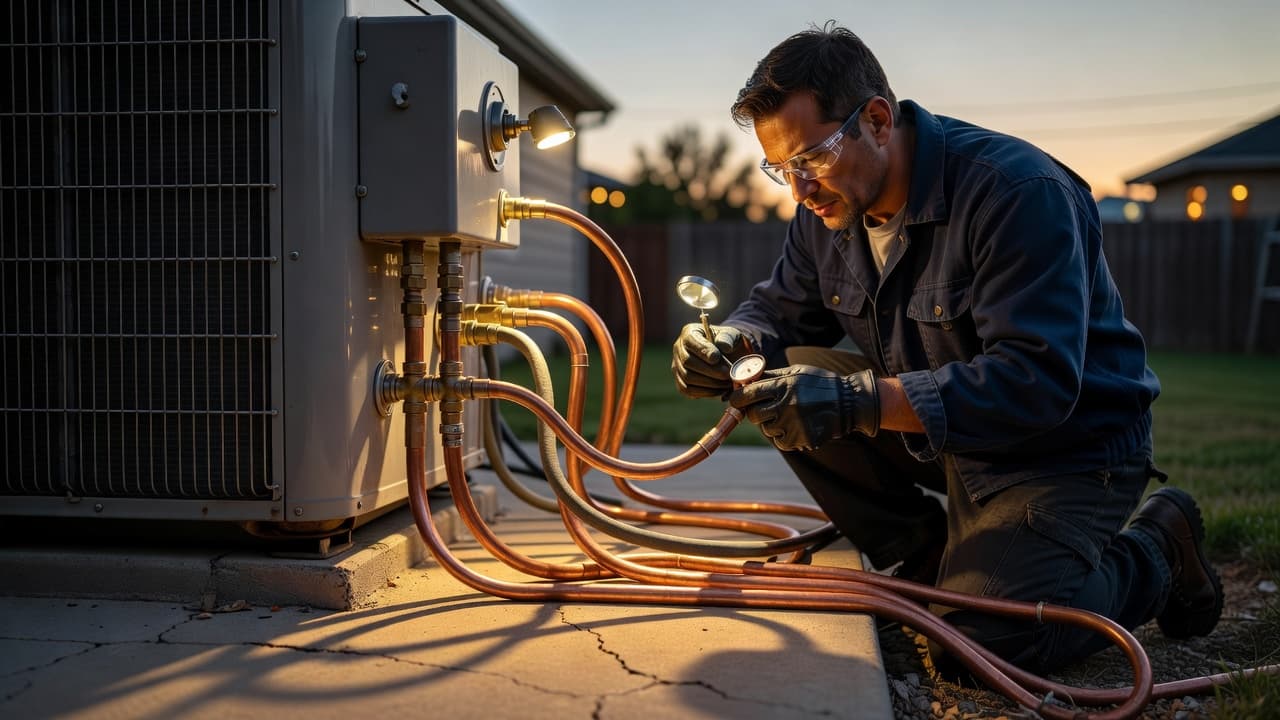
A new system can only work as well as the path it uses to move refrigerant.
When the existing line set can stay
Reuse makes sense when the tubing is the correct size, the run is not too long, and the copper is in good shape. A line set that has no leaks, no heavy corrosion, and no signs of old repairs may be a reasonable candidate for another system.
Condition matters more than age alone. Some line sets are older but still usable because they were installed well and stayed protected. Others look fine at the ends but hide problems in the middle, especially when they run through hot attics or hard-to-reach spaces.
A technician should also check whether the insulation is intact and whether the line set was previously sealed from dirt and moisture. If the old equipment was removed recently and the tubing stayed clean, reuse is easier to justify. Pressure testing and evacuation still matter, because a line set should never be assumed good just because it looks fine.
Reuse can also work when the new system is close in size and uses equipment that matches the existing tubing requirements. In that case, the old line set may save labor without hurting performance.
When replacement is the safer call
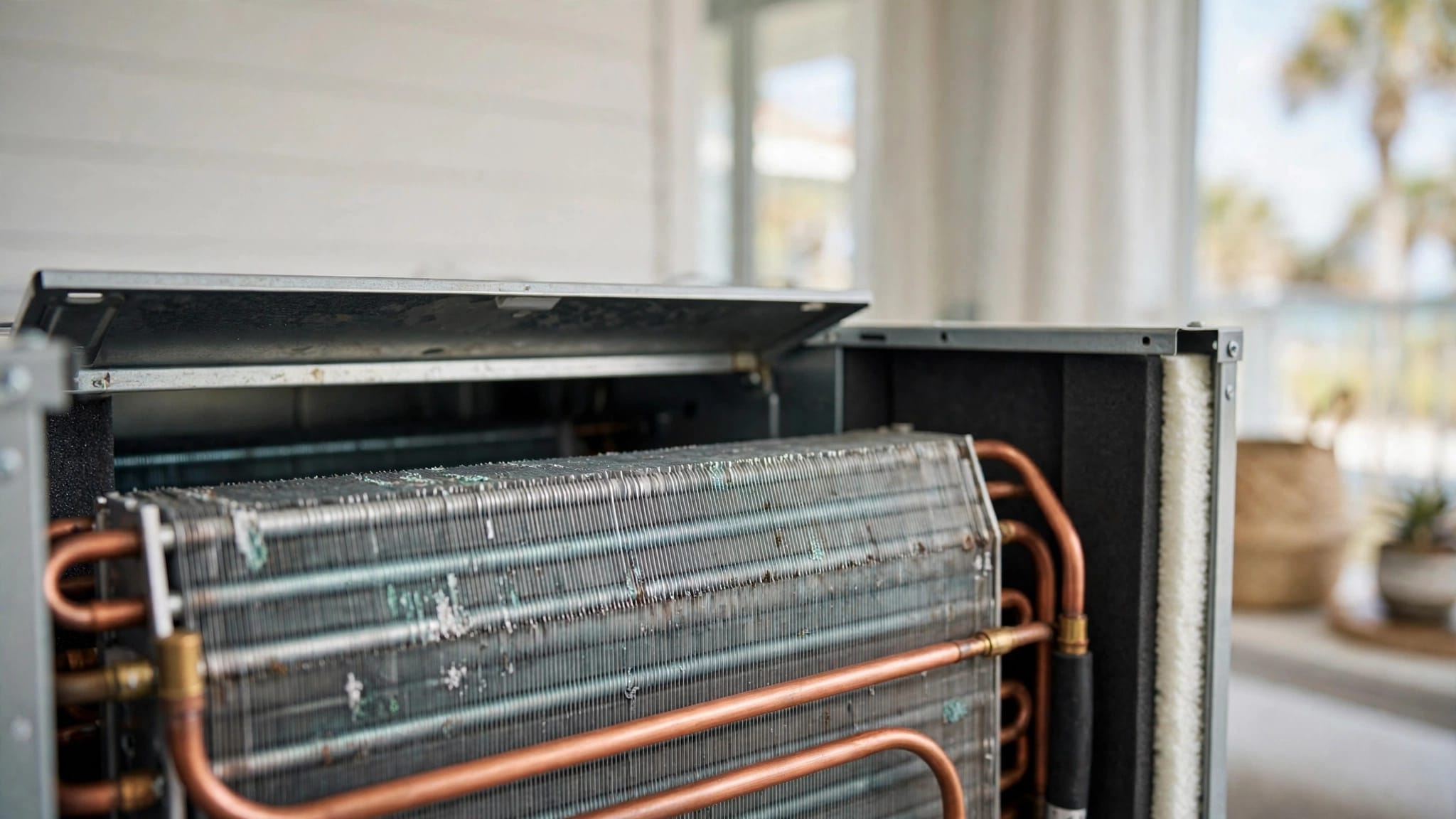
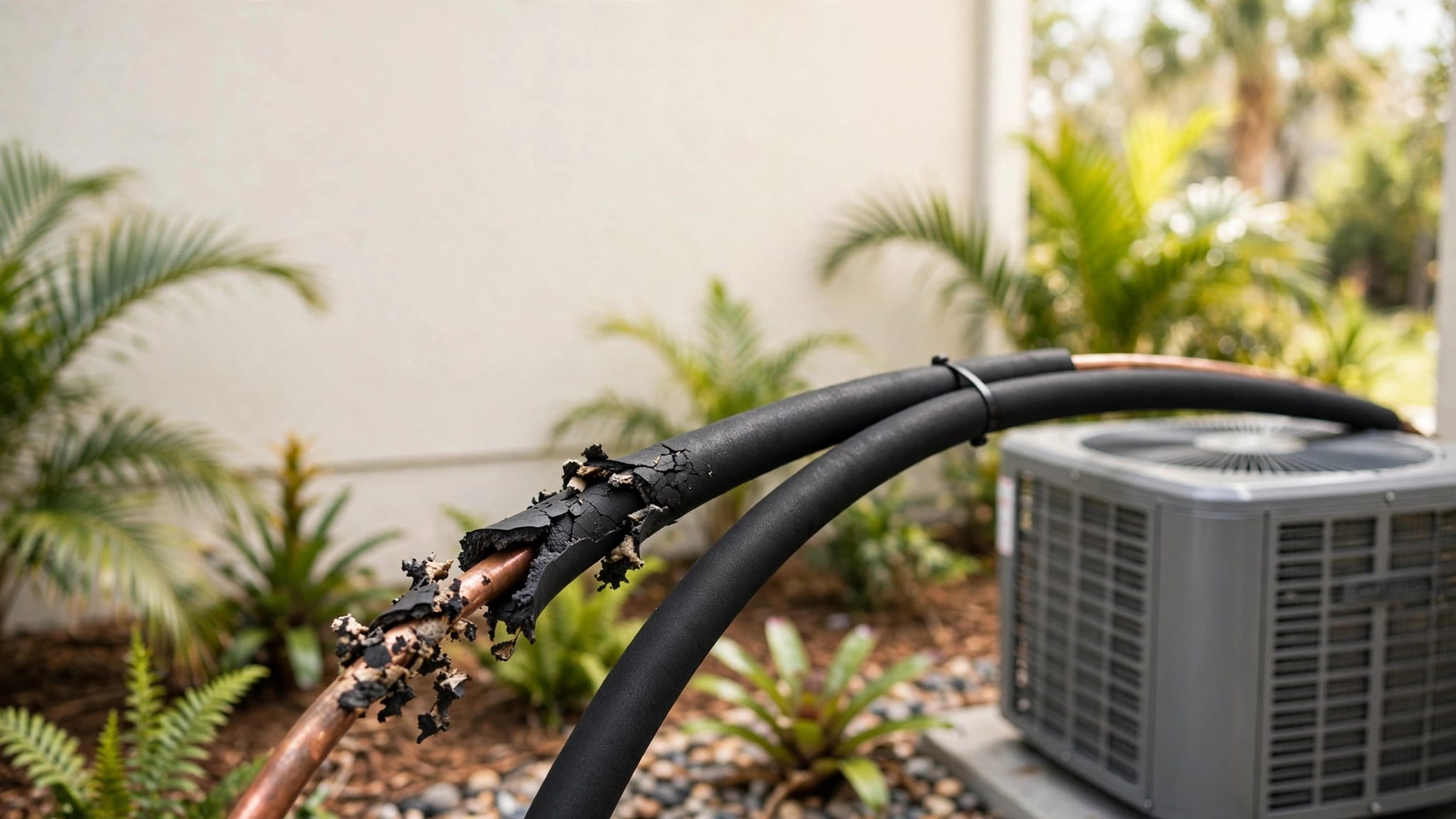
Replacement is the better move when the copper is damaged, undersized, oversized, or full of unknowns. Kinks, flattened spots, oil stains, patched sections, and corrosion are all warning signs. In Southwest Florida, that can show up on older homes where attic heat and humidity have beaten up the insulation and fittings over time.
A compressor burnout is another big red flag. When a compressor fails badly, it can send debris, acid, and sludge through the system. That contamination may linger inside the tubing even after the old equipment is gone. If the new compressor connects to the same dirty line set, the problem can come back fast.
Line size mismatch also creates trouble. If the tubing diameter does not match the new equipment, refrigerant flow can suffer and the compressor can be stressed. That can affect efficiency, comfort, and reliability. It can also complicate warranty support if the installation does not follow the manufacturer's requirements.
Newer systems can make the decision even stricter. Some use refrigerants and oil combinations that are less forgiving when older residue is still inside the lines. In those cases, the line set may need to be cleaned, flushed, or replaced depending on the equipment and the manufacturer's instructions.
Reuse vs. replacement, side by side
The choice usually comes down to risk, access, and how much confidence you have in the existing copper. This quick comparison helps put the tradeoffs in plain view.
| Option | Best when | Upside | Tradeoff |
|---|---|---|---|
| Reuse the existing line set | The tubing is the right size, leak-free, clean, and accessible | Lower upfront cost, less labor, less disruption | Hidden damage can stay hidden, and old contamination can cause repeat problems |
| Install a new line set | The old copper is damaged, mismatched, contaminated, or hard to trust | Cleaner start, better reliability, easier compatibility with new equipment | More labor, more access work, higher upfront cost |
The cheapest choice is not always the least expensive over time. A reused line set that causes efficiency loss or repeated repairs can erase the savings quickly. A new line set costs more on day one, but it can protect the new system from old problems.
Southwest Florida homes have a few extra concerns
Coastal air, humidity, and long cooling seasons put more pressure on HVAC parts here than in milder climates. That does not mean every old line set must go. It does mean a homeowner should be more careful about hidden damage and old insulation that has broken down in a hot attic.
Homes with additions or past remodels also deserve extra attention. Line sets in those homes are sometimes routed in awkward ways, then patched or extended over the years. If the tubing disappears into a wall or ceiling, replacing it later can be far more involved than replacing it during the AC swap.
If you are planning a full system change, professional HVAC installation and replacement services should include a line-set review before the final quote is approved. That inspection can save you from paying twice, first for the new equipment and later for avoidable repairs.
What a good technician should check
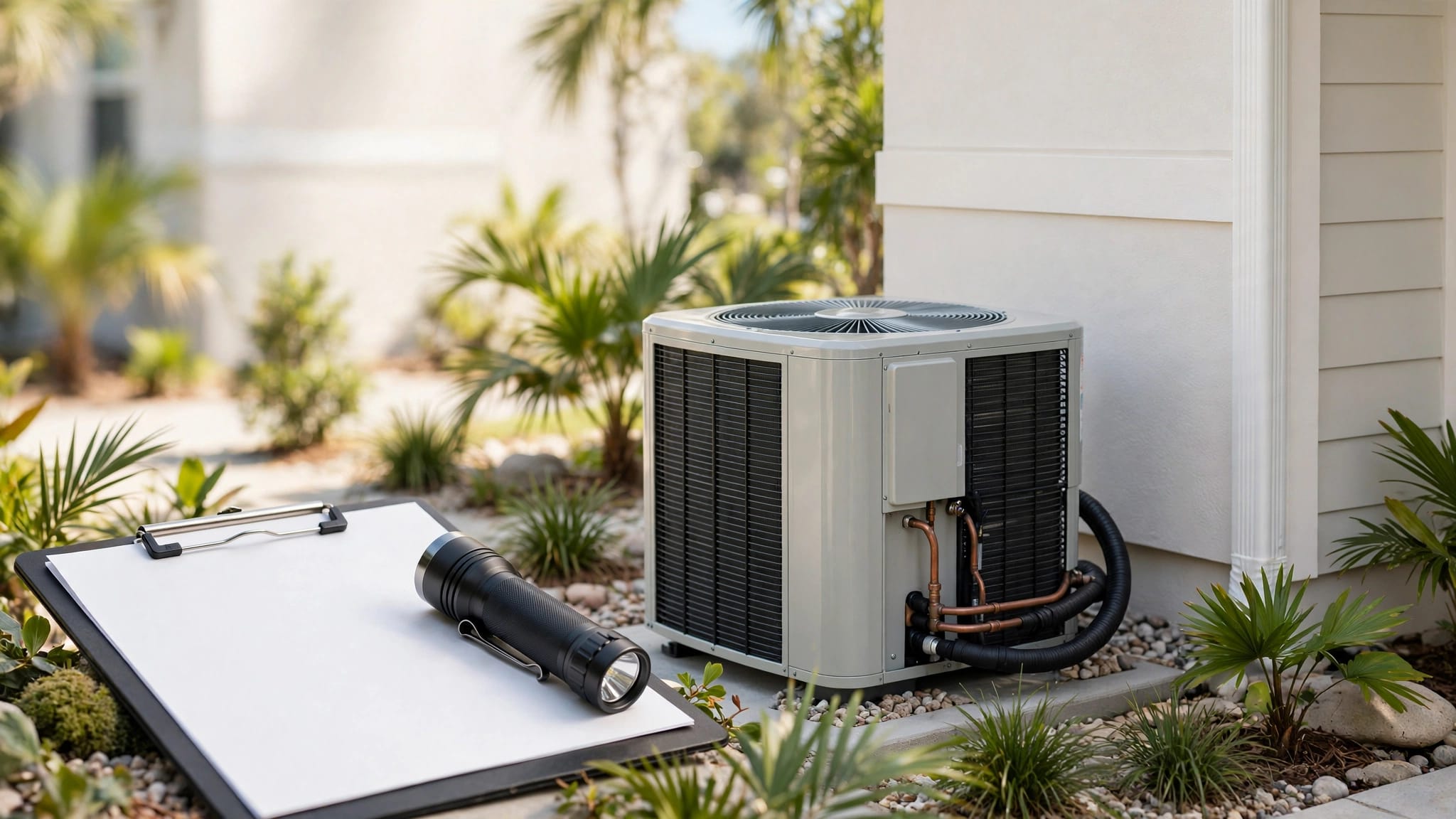
A solid inspection covers more than a quick look at the ends of the copper. The technician should check the line size, length, insulation, visible corrosion, and all connection points. They should also ask about past compressor failure, prior refrigerant problems, and any history of leaks.
If the line set is hidden, testing becomes even more important. A pressure test can show whether the tubing holds refrigerant properly. A vacuum test helps confirm that moisture and air have been removed before the new system is charged. If the line set was exposed to a burnout or another contamination issue, the cleaner may need to be flushed or the tubing may need to be replaced.
Clear answers matter here. A homeowner should know whether the line set passed inspection because it is truly sound, or because the old ends looked serviceable. Those are not the same thing.
When to insist on a new line set
Insist on replacement when the copper is old and corroded, when the line size does not match the new system, or when there has been compressor burnout contamination. Replacement also makes sense when the tubing has been repaired before, when the insulation is failing, or when the line set runs through a space that has hidden damage you cannot verify.
Reuse is reasonable when the line set is clean, correctly sized, leak-tested, and confirmed to match the new equipment. In that case, proper cleaning and evacuation are part of the job, not an optional extra.
If you are getting ready for a replacement in Fort Myers or nearby, Schedule an Estimate and ask for a line-set inspection with the quote. That way, you know whether you are paying for a true system upgrade or trying to build new equipment on old tubing.
Conclusion
Sometimes the old line set can stay, and sometimes it should go. The difference comes down to condition, compatibility, and contamination, not just age.
If the copper is damaged, too small, leaked before, or exposed to compressor burnout, a new line set is the safer choice. If it passes inspection, matches the new system, and can be cleaned properly, reuse can be a sound decision. In a Southwest Florida home, that careful check is worth doing before the new AC goes in.
Recent Posts