Can a Portable Generator Run Central Air?
Yes, a portable generator can run central air, but only if it can handle the compressor's startup surge and the system's running load. In Southwest Florida, that matters even more when a storm knocks out power and the house heats up fast.
Central air is tougher than a lamp or a fan. The compressor needs a heavy burst of power when it starts, and that burst is where many backup-power plans fall apart.
Key Takeaways
- A portable generator can run central air only when its running watts and surge watts match the AC load.
- The compressor is the hardest part to start, so the nameplate's LRA matters a lot.
- Small systems may work, medium systems are unpredictable, and larger systems usually need a different backup plan.
- Other household loads, like refrigerators, lights, and fans, can push a borderline setup past its limit.
- A transfer switch or interlock, plus safe outdoor placement, matters as much as generator size.
How to tell whether your AC is a match
The short answer is sometimes. The longer answer depends on the compressor.
Running watts are the steady power your air conditioner uses after it starts. Starting watts are the brief surge needed to get the compressor moving. That surge can be several times higher than the normal running load, which is why a generator that looks big enough on paper can still fail at startup.
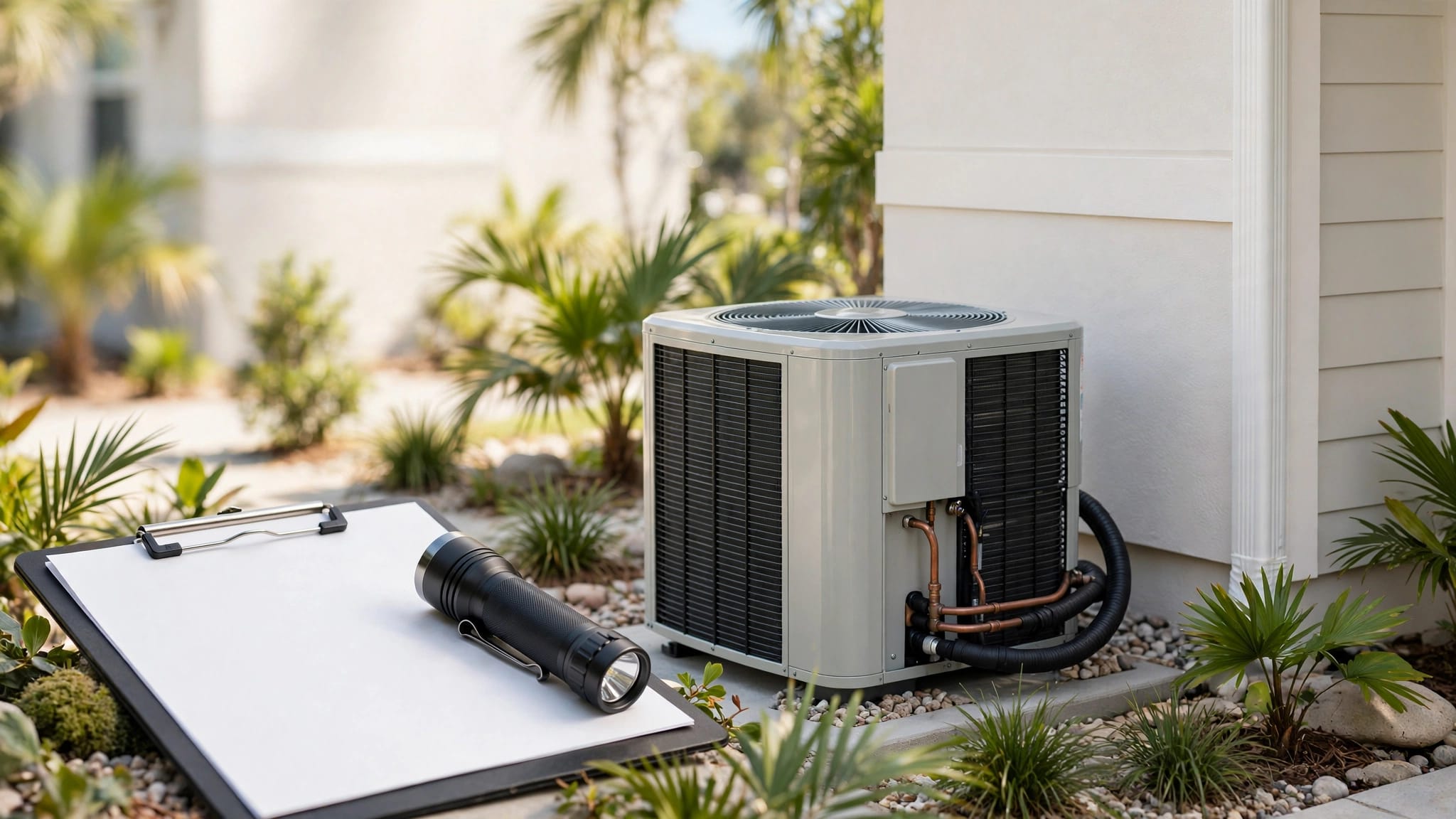
The outdoor unit nameplate tells you what matters most. Look for the amp and voltage ratings, then check the locked rotor amps, or LRA. LRA is the startup number that gives you the clearest picture of how hard the compressor is to turn over. If the label is worn, the model manual or manufacturer specs can fill in the blanks.
A portable generator may run central air if the generator has enough headroom for that startup burst, plus a little extra for the blower and anything else already on. If the generator is already near its limit, the compressor can stall, trip the breaker, or make the generator bog down.
Why central air puts such a heavy load on a generator
A central AC system is not one appliance. It is a package of parts, and the compressor is the big one. The indoor blower uses power too, but the outdoor compressor is the part that causes most of the trouble.
When the compressor starts, it needs a sharp push. If voltage dips too far, the motor may hum without spinning. That can wear the system out and waste fuel at the same time. A generator that works fine for lights and a refrigerator can still struggle here because air conditioning asks for a sudden burst, not a slow climb.
That is why two homes with similar square footage can have very different backup-power needs. A newer 2-ton system might start cleanly on a decent portable unit. A larger or older system, especially one with a tired capacitor or dirty coil, may need far more headroom.
What generator power your AC really needs
These are common planning ranges, not buying advice. The AC nameplate and LRA control the real answer, so verify both before you decide.
| Central AC example | Typical running load | Typical starting demand | What that means |
|---|---|---|---|
| Small system, about 1.5 to 2.5 tons | 1,500 to 3,000 watts | 3,500 to 7,000 watts | Often possible with a strong portable generator if few other loads are on |
| Medium system, about 3 to 4 tons | 3,000 to 5,000 watts | 7,000 to 13,000 watts | Many portable generators struggle, especially if anything else is running |
| Large system, about 5 tons or more | 5,000 watts or higher | Higher surge demand | A portable generator usually is not the best match |
The table gives you a rough feel for the load, but the exact answer still lives on the label. Two 3-ton systems can behave very differently if one has a lower LRA, a soft-start device, or a newer compressor design.
A good rule is to leave margin. If the generator can only barely start the AC on a calm day, it may fail when the weather is hotter, the fuel is lower, or another load turns on at the same moment.
Other household loads can tip the balance
The air conditioner is rarely the only thing you want to run during an outage. A refrigerator, a few LED lights, internet gear, box fans, and a phone charger all add up. None of them sounds like a big load on its own, but together they can eat the extra capacity your AC needs at startup.
That is why a generator that works for one home can fail in another, even with the same AC size. If the refrigerator kicks on while the compressor starts, the generator has to answer both demands at once. If it cannot, the AC may trip off first.
In practical terms, you may need to choose between whole-house comfort and a smaller backup plan. Many homeowners in Southwest Florida decide to keep the basics on, then cool one main room well instead of trying to power the entire home at full load.
Safer ways to stay cool during an outage
If you use a portable generator, keep it outside on a dry, stable surface and away from doors, windows, and garage openings. Exhaust fumes can build up fast, and carbon monoxide is dangerous because you cannot smell it.
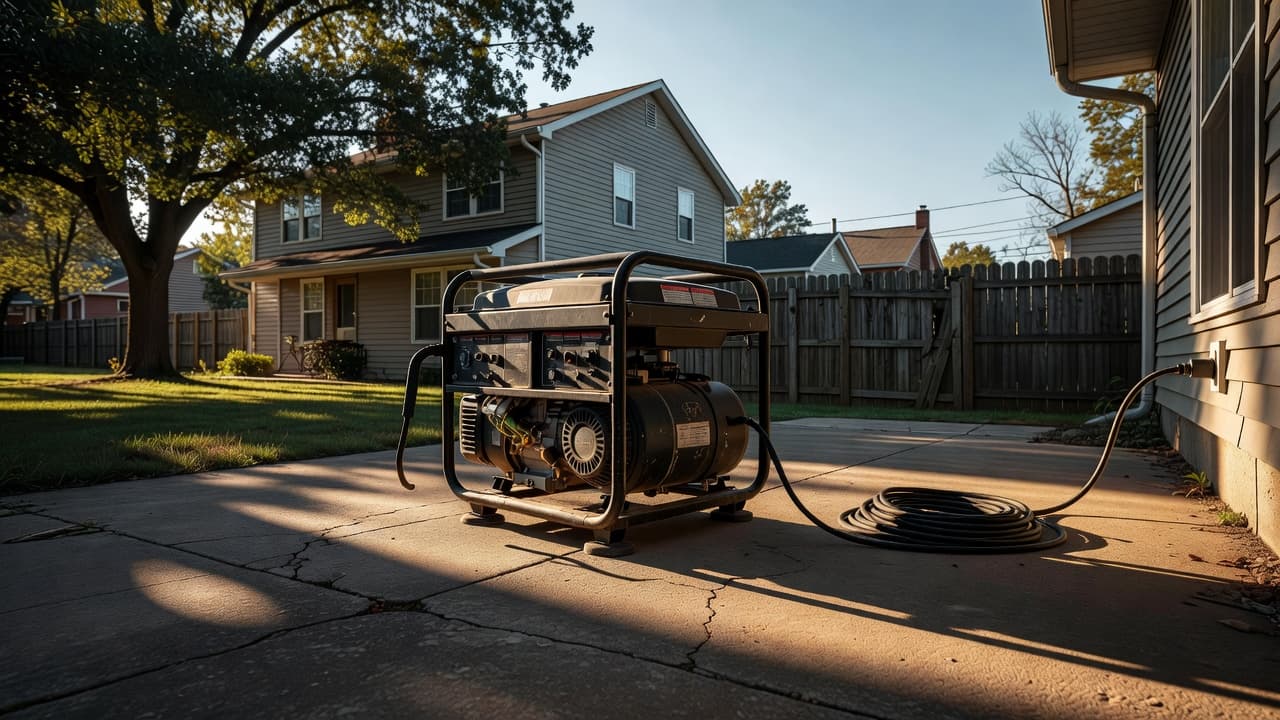
Never backfeed a home through a wall outlet, dryer receptacle, or any improvised connection. Use a transfer switch or interlock so utility power and generator power stay separated.
If the AC is close to the edge, a soft-start kit can help reduce the startup surge. It does not erase the running load, but it can make the compressor easier to start. That can be useful when a portable generator is almost enough, not when the generator is already far too small.
Here is how the main options compare:
| Option | Best for | Tradeoff |
|---|---|---|
| Window unit or portable room AC | Cooling one bedroom or living area | Does not cool the whole house |
| Soft-start kit | Lowering compressor startup demand | Must be installed correctly and still needs enough generator capacity |
| Standby generator | Whole-house backup with central air | Higher cost and a permanent install |
For homeowners who only need one cool room, a window unit can be the simplest answer. For whole-home comfort, a standby generator with proper transfer equipment is usually the cleaner long-term setup.
When an electrician or HVAC tech should look at it
If your AC already hesitates on normal power, a generator is only part of the story. A weak capacitor, dirty coil, failing contactor, or low refrigerant issue can make the compressor harder to start. That problem can show up long before a storm ever hits.
If your system needs attention before hurricane season, HVAC maintenance and repair services can help uncover the issues that make startup harder. If the unit is old, undersized, or unreliable, professional HVAC installation and replacement may make more sense than trying to power a tired system through another summer.
If you want a backup-power check before the next outage, Schedule an Estimate and have the AC nameplate, panel, and generator plan reviewed together. That is the safest way to avoid guessing.
Conclusion
A portable generator can run central air, but only when the numbers line up. The compressor's startup surge, the AC's running load, and the rest of the house all affect the result.
If you are trying to stay cool through a Southwest Florida outage, the smartest move is to check the nameplate, confirm the LRA, and match the plan to the equipment you actually have. A little planning now can save a lot of heat later.
Recent Posts