Should You Replace Your Thermostat With a New AC?
A new AC doesn't always need a new thermostat, but skipping the check can cause trouble fast. If the control and the equipment don't match, you may end up with uneven cooling, short cycling, or a system that never feels quite right.
In Southwest Florida, your thermostat gets a workout for most of the year. Sometimes the old one stays in place. Often, though, replacement is the cleaner choice when compatibility, efficiency, features, or age are concerns.
The right answer starts with the type of system being installed.
Key Takeaways
- Some old thermostats can stay, but only when they match the new system and wiring.
- Compatibility matters most with single-stage, multi-stage, heat pump, and communicating systems.
- A thermostat replacement often makes sense when you want better efficiency, app control, or more reliable comfort.
- If the thermostat is old, inaccurate, or hard to program, replacing it during installation can save time later.
When the Old Thermostat Can Stay
If the new AC is a simple, non-communicating system, your current thermostat may work fine. That is common when you're replacing a basic single-stage unit with another basic unit and the wiring is in good shape. The thermostat also needs to read the room correctly and respond without a lag.
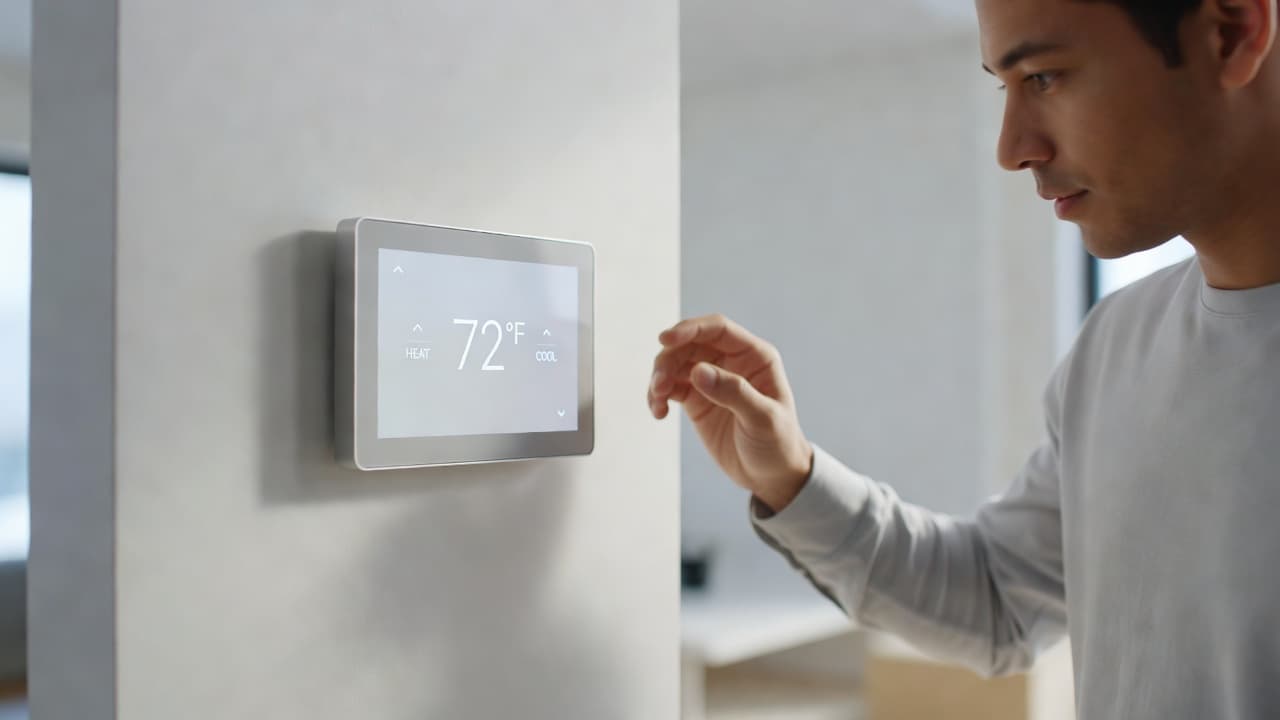
Age still matters. A thermostat that's been on the wall for years can keep running, but worn buttons, weak sensors, and outdated settings can make it less reliable. When a full install is already on the schedule, a thermostat upgrade is often a small add-on that avoids another visit later.
Compatibility Issues That Matter Most
For many homeowners, the thermostat question comes down to control style, not just brand name. A new AC thermostat has to speak the same language as the equipment behind the wall.
The cheapest thermostat is the wrong one if it can't control the equipment properly.
Single-stage and two-stage systems
A single-stage AC only has one cooling level, so the thermostat only needs to call for cooling or stop it. That's simple and flexible. Two-stage or variable-speed systems need more from the thermostat because they can run at different output levels. If the thermostat can't call for those stages correctly, you lose comfort and efficiency.
Heat pumps need a matching thermostat
Heat pumps add another layer because the thermostat has to manage cooling, heating, reversing valve, and often auxiliary heat. A regular cooling-only thermostat won't handle that job. If your Southwest Florida home uses a heat pump, check the model carefully before assuming the old thermostat can stay.
Communicating systems and smart controls
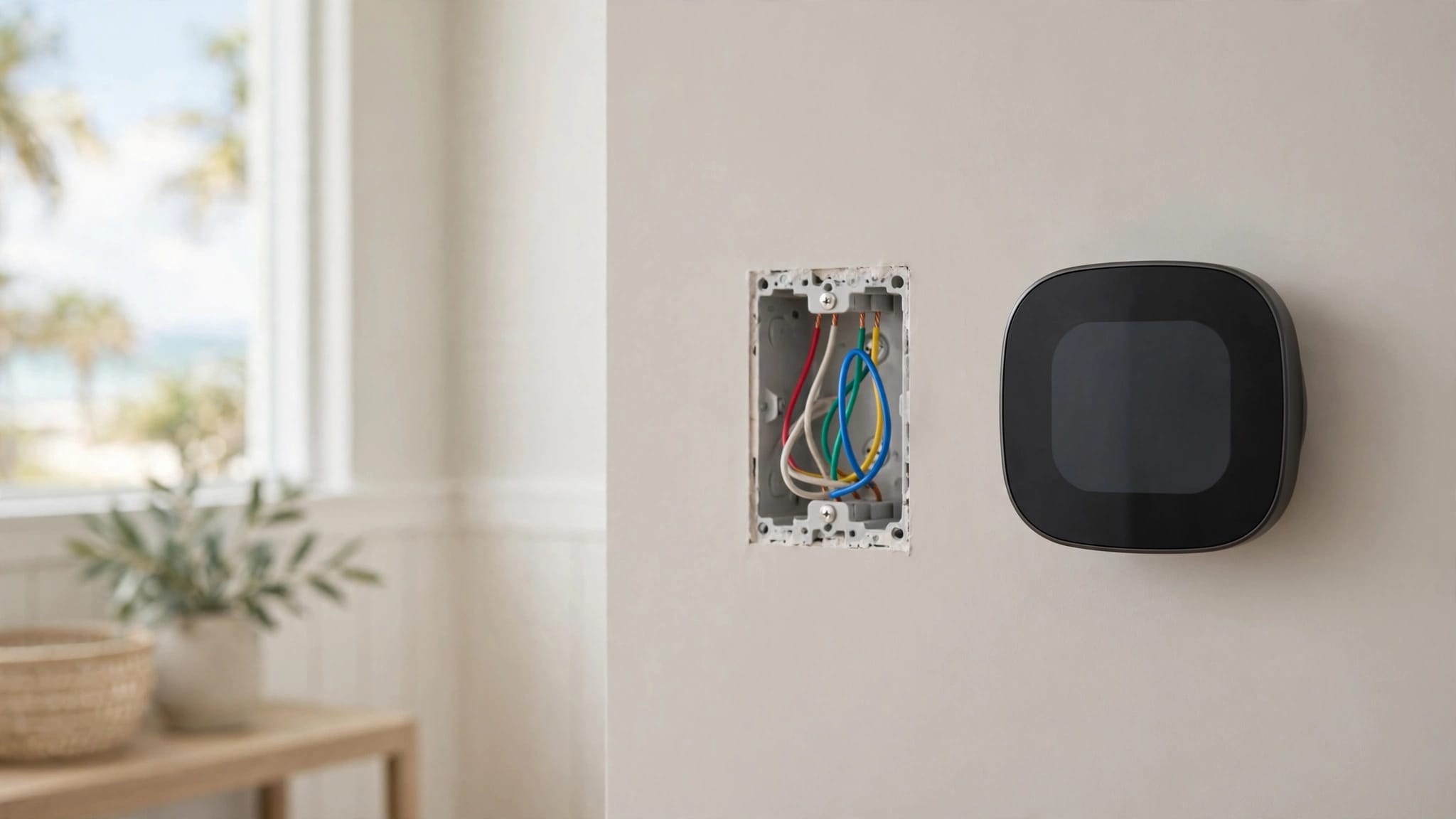
Communicating systems usually need a matched thermostat from the same brand. They don't rely on basic on-off wiring the same way older systems do. Smart thermostats also need the right wiring, and many homes need a C-wire or another power solution. Without that support, the thermostat may lose power, drop settings, or refuse to run the system as expected.
This quick chart keeps the main differences in one place.
| System type | Can the old thermostat usually stay? | What to check |
|---|---|---|
| Single-stage AC | Often yes | Wiring, accuracy, and basic cooling control |
| Two-stage or variable-speed | Maybe not | Stage support and brand compatibility |
| Heat pump | Sometimes | Reversing valve, auxiliary heat, and setup |
| Communicating system | Usually no | Matched control and brand requirements |
| Smart thermostat | Only if supported | C-wire, power source, and equipment compatibility |
If the system is simple, keeping the old thermostat may be fine. If it is staged, a heat pump, or communicating, replacement usually makes more sense.
When Replacing the Thermostat Makes Sense
Replacement pays off when the old control is outdated, hard to program, or tied to older equipment. It also makes sense when you want app control, better scheduling, or more precise temperature management during long cooling seasons. If you are already moving ahead with professional HVAC installation and replacement, this is the easiest time to get the thermostat right.
Here is a quick comparison that helps frame the choice.
| Keeping the old thermostat | Replacing it now |
|---|---|
| Lower upfront cost | Higher upfront cost |
| Works if the system is fully compatible | Better match for new equipment |
| Fewer changes on install day | New features, better controls, cleaner setup |
| May limit efficiency or comfort | Less risk of control problems later |
The biggest downside to keeping an old thermostat is mismatch. A thermostat that seems fine on day one can become the weak link if it can't handle the new AC's stages or power needs.
If you want a matched recommendation during a full install, Schedule an Estimate.
Questions to Ask Before Keeping the Old Thermostat
Before you decide to reuse the old unit, ask these questions:
- Does the thermostat support my new AC's stage count?
- Does it work with my heat pump or auxiliary heat?
- Is there a C-wire or another reliable power source for smart controls?
- Is the thermostat accurate, or has it started drifting?
- Will I miss features I want, like scheduling or app access?
If you answer no to any of those, replacement deserves a closer look. A thermostat that seems "good enough" can still create comfort problems after the install crew leaves.
Conclusion
A thermostat is a small part with a big job. When it matches the AC, the whole system feels smoother and easier to live with.
If the old control fits the new equipment, you can keep it. If it doesn't, replacement is usually the smarter move on install day, especially in a climate where the AC works hard.
The safest path is to treat the thermostat as part of the system, not an afterthought. A good match now can save time, money, and frustration later.
Recent Posts