Can You Pressure Wash an Outdoor AC Unit Safely?

Valor HVAC • July 21, 2026

Share this article

A pressure washer can make quick work of a dirty driveway, but it can damage your outdoor air conditioner in seconds. You should not pressure wash an outdoor AC unit. The safer choice is a gentle rinse with a standard garden hose.

Southwest Florida AC systems collect dust, grass clippings, pollen, sand, and salt residue. That buildup can restrict airflow and make your system work harder. Fortunately, basic exterior cleaning is manageable when you use low water pressure and avoid the electrical components.

Key Takeaways

  • Avoid pressure washers because high-pressure water can bend condenser fins and damage components.
  • Turn the system off before cleaning, and never remove electrical panels for a routine rinse.
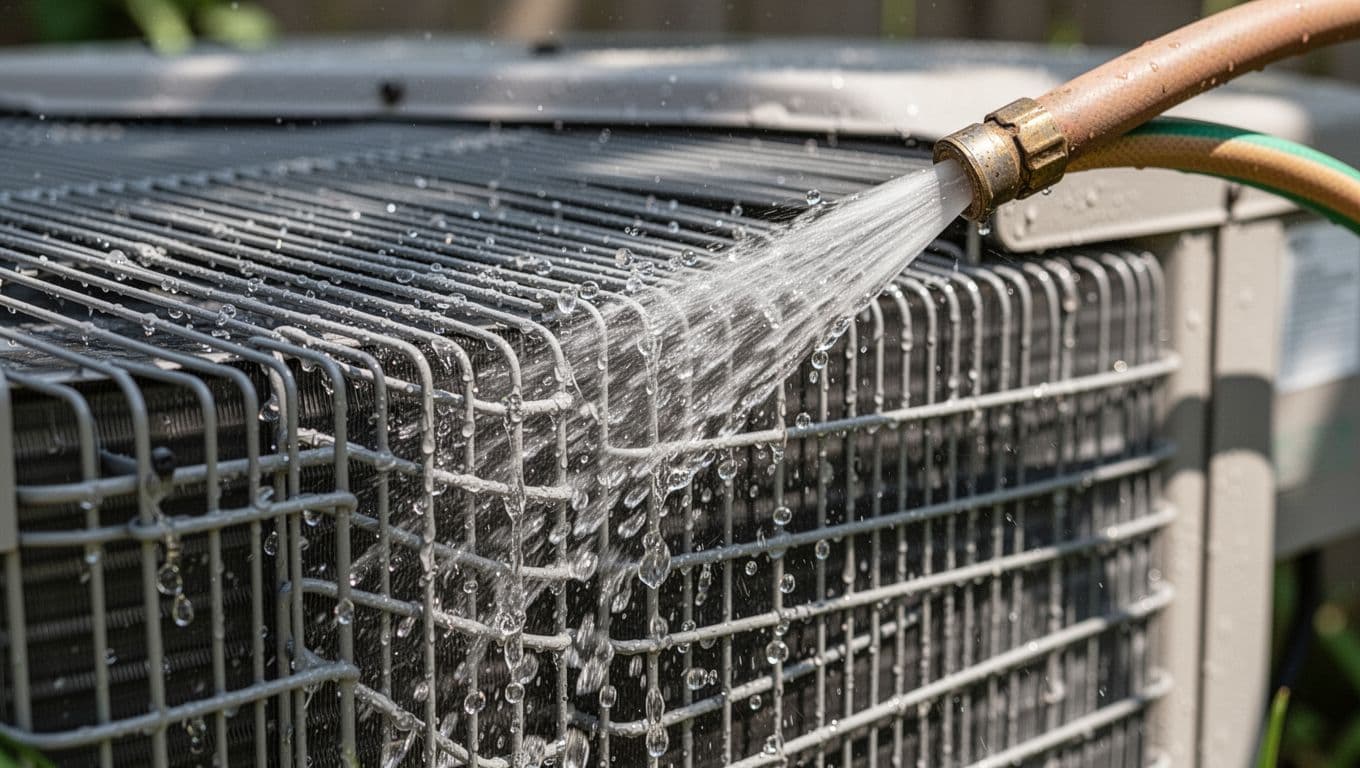
  • Use a standard garden hose with a gentle spray aimed at the outdoor coil.
  • Call an HVAC technician for heavy buildup, corrosion, bent fins, or performance problems.

Why Pressure Washing Can Damage an AC Condenser

Your outdoor AC unit contains a condenser coil covered by thin aluminum fins. These fins release heat from the refrigerant, which helps the system cool your home. Although they look sturdy, they bend easily under concentrated water pressure.

A pressure washer nozzle can flatten the fins or force dirt deeper into the coil. Once the fins become packed together, air cannot move freely through the condenser. The compressor may then run longer, energy use can rise, and the system may struggle during a hot Fort Myers afternoon.

High-pressure water can also reach areas that should stay dry, including the fan motor, wiring connections, and control components. Outdoor units can handle normal rain, but a pressure washer delivers far more force than a typical storm.

A clean AC coil helps airflow, but an aggressive cleaning method can turn a maintenance task into a costly repair.

The nozzle matters, too. A narrow, concentrated spray creates the greatest risk. Even a wider pressure-washer setting can damage older coils, protective coatings, and already-corroded metal. Avoid using a pressure washer around the condenser, regardless of whether the unit looks heavily soiled.

How to Rinse an Outdoor AC Unit With a Garden Hose

A regular garden hose is suitable for light dirt and loose debris. It won't provide the same force as a pressure washer, which is exactly why it's safer for the delicate coil.

Start by turning the thermostat to "off." If you can reach the outdoor disconnect safely, switch it off as well. Never remove a service cover or open an electrical panel to clean the unit. If you can't confirm that the system is off, stop and contact a professional.

Follow these steps:

  1. Clear loose debris by hand. Remove leaves, weeds, grass, and branches from around the cabinet. Keep fingers away from the fan and coil fins.
  2. Use a gentle spray pattern. Choose the hose setting that produces a broad fan of water. Don't use a jet stream, concentrated nozzle, or pressure-washer attachment.
  3. Rinse the outside coil carefully. Aim the water at the side panels and spray across the fins with light, even passes. Work from top to bottom, and avoid blasting water through the top grille.
  4. Keep water away from electrical areas. Don't spray directly into the top of the unit, disconnect box, wiring openings, or control compartments.
  5. Let the unit drain and dry. Wait until excess water has run off before restoring power. Then turn the thermostat back on and listen for normal operation.

The safest homeowner cleaning is a surface rinse. A technician can access the coil from the inside when necessary, which allows dirt to move outward instead of deeper into the fins. That process also gives the technician a chance to check the fan, wiring, drain areas, and other components.

Skip household cleaners, bleach, and harsh degreasers. They can damage coil surfaces or leave residue that promotes corrosion. If plain water doesn't remove the buildup, professional coil cleaning is the better option.

How Often Should You Clean the Condenser in Southwest Florida?

Florida's warm weather means your AC may run for much of the year. That long operating season gives outdoor debris more time to collect on the coil. Homes near the Gulf also face salt-laden air, which can speed up corrosion when residue remains on the metal.

Inspect the unit every few weeks during heavy use, especially after lawn mowing or tropical weather. Rinse it when you see a visible layer of dust, grass, or salt on the exterior coil. You don't need to clean a relatively clear coil on a fixed weekly schedule.

Keep plants, mulch, and stored items away from the cabinet. The condenser needs open space for air to enter and leave. Trim vegetation before it reaches the coil, and remove leaves from the top without pressing them into the grille.

Routine cleaning is only one part of care. Preventative AC maintenance services can include system checks and cleaning that go beyond what you can safely do with a hose. Regular service is especially useful for older systems, coastal properties, and units that run constantly.

When to Call an HVAC Technician

A garden hose won't solve every condenser problem. Schedule professional service when the coil is clogged with packed dirt, the fins are badly bent, or the cabinet shows significant rust or corrosion. These conditions can limit airflow and shorten equipment life.

Turn the system off and call for help if you notice warm air indoors, unusual grinding or buzzing, repeated breaker trips, ice on the refrigerant line, or frequent short cycling. Don't keep rinsing a unit that already has operating symptoms. Water won't correct an electrical fault, refrigerant problem, failing motor, or restricted airflow elsewhere in the system.

You also shouldn't straighten fins with a screwdriver or remove panels to reach hidden dirt. A technician has the tools to clean the coil safely and inspect components that could create a shock or equipment hazard. If your unit needs repeated repairs or no longer cools reliably, you can Schedule an Estimate for repair or replacement options.

Conclusion

You can rinse an outdoor AC unit, but you shouldn't pressure wash it. High-pressure water can bend condenser fins, drive debris into the coil, and reach sensitive electrical parts.

For basic cleaning, shut the system off, clear debris by hand, and use a gentle garden-hose spray on the exterior coil. When buildup, corrosion, or cooling problems go beyond a light rinse, professional service protects both your equipment and your comfort.

Recent Posts

By Valor HVAC July 20, 2026
Fort Myers afternoons can make a comfortable home feel stuffy, even when the air conditioner is running. A ceiling fan can improve that feeling in minutes by moving air across your skin and helping the room feel fresher. The important distinction is that ceiling fans cool peop...
By Valor HVAC July 19, 2026
A room can feel cool and still hold too much moisture. In Fort Myers, that can leave your home feeling clammy, create musty odors, and place extra strain on your air conditioner. The most reliable way to check is with a hygrometer, which displays relative humidity as a percent...
By Valor HVAC July 18, 2026
Opening windows can raise indoor humidity in Florida, but the result depends on outdoor dew point, indoor temperature, air conditioning operation, and how long the windows stay open. On a hot, damp day in Fort Myers or elsewhere in Southwest Florida, outdoor air often brings m...