Flex Duct vs Sheet Metal for Florida Homes
In Southwest Florida, the question of flex duct vs sheet metal affects comfort, energy use, noise, and indoor air quality. However, the material alone rarely determines how well a duct system performs.
Hot attics, high humidity, coastal salt air, and storm exposure create extra challenges for Florida homes. A well-designed system with correct sizing, insulation, support, routing, and air sealing can perform well with either material. Start by understanding how each option handles local conditions.
Why Florida's Climate Changes the Ductwork Decision
Florida homes depend on air conditioning for much of the year. That means ducts often carry cold air through spaces that are extremely hot and humid, especially vented attics.
Poorly insulated or leaky ducts can gain heat, lose cooled air, and allow moisture into places where it can cause damage. The result may be uneven rooms, longer cooling cycles, higher electric bills, or musty odors.
Hot attics create heat and condensation concerns
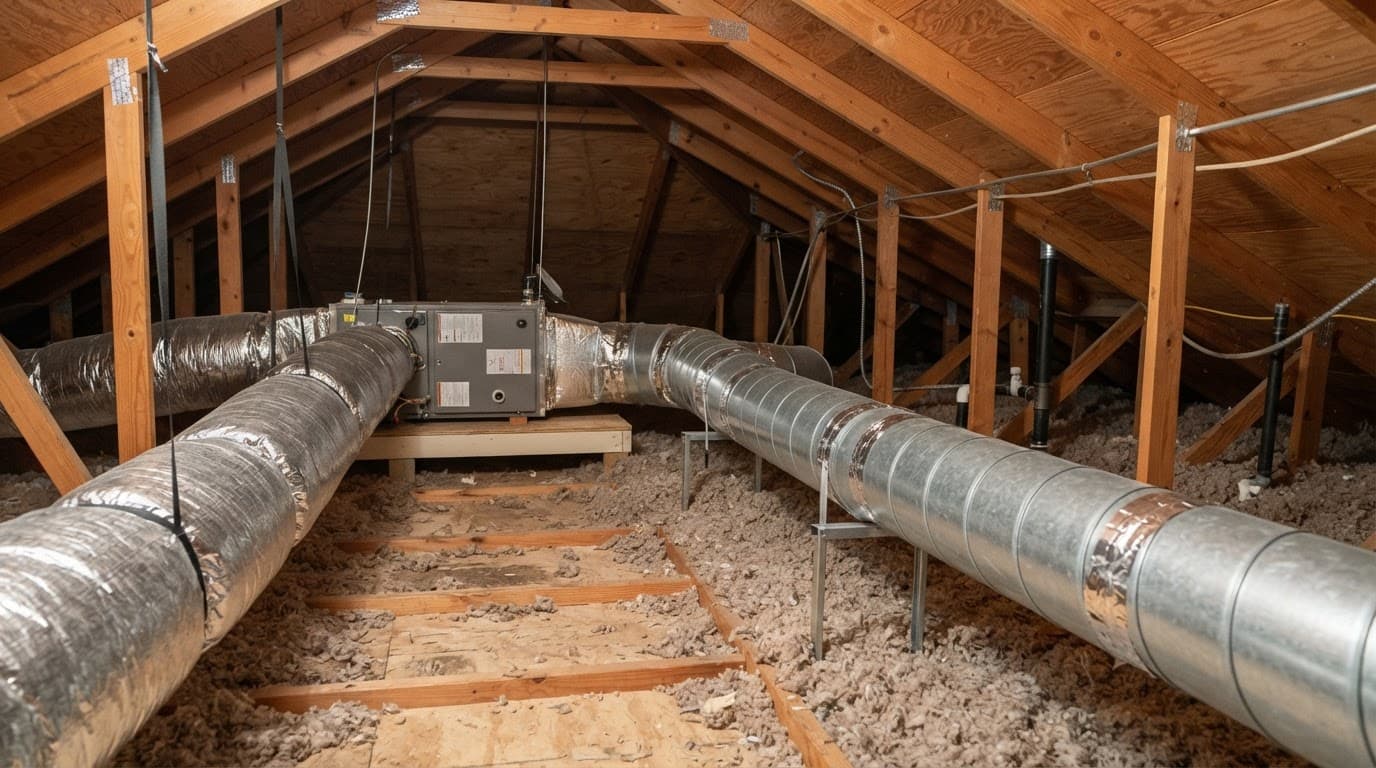
A supply duct in a hot attic carries air that may be close to the home's cooled temperature. If the insulation jacket is damaged, compressed, or poorly sealed, warm humid air can contact cold surfaces.
That temperature difference raises the chance of condensation. Flex duct depends on an intact insulation jacket and vapor barrier, while sheet metal needs properly installed insulation around the outside. Bare metal ductwork in an attic can transfer heat quickly and may sweat under the right conditions.
Moving ducts into conditioned space can reduce these risks. When attic routing is necessary, the installer must protect the ducts with continuous insulation and tight connections.
Salt air and storms affect both systems
Coastal air can accelerate corrosion on exposed sheet metal, plenums, hangers, screws, and other components. Proper material selection and corrosion-resistant accessories matter more near the Gulf Coast than they might farther inland.
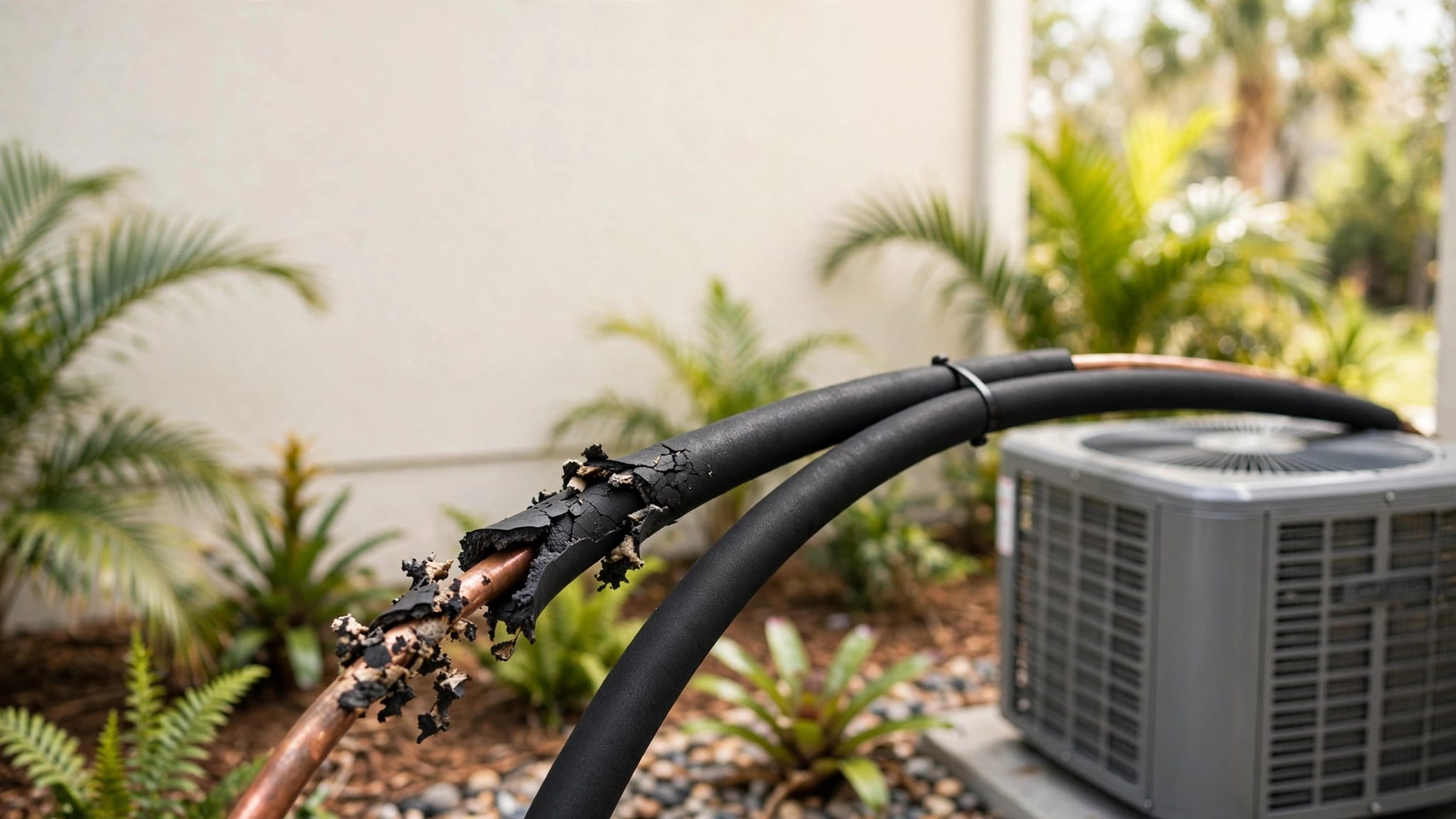
Flex duct doesn't eliminate storm-related concerns. It can tear, disconnect, or become contaminated after roof leaks or wind-driven water intrusion. Any attic duct system should stay clear of standing water, remain accessible for inspection, and receive attention after major roof or storm damage.
Flex Duct vs Sheet Metal: How the Options Compare
With similar sizing and installation quality, the main trade-offs look like this:
| Factor | Flexible duct | Sheet-metal duct |
|---|---|---|
| Up-front installation cost | Often lower because it needs less fabrication | Usually higher because fabrication and fitting take more labor |
| Airflow | Works well when fully extended and routed gently, but sags and sharp bends add resistance | Smooth interiors can support strong airflow, especially in trunks and plenums |
| Durability | More vulnerable to crushing, punctures, pests, and disconnected sections | Holds its shape well but can dent or corrode |
| Noise | The flexible liner can reduce some air and blower noise | Can transmit vibration unless the installer isolates or treats it |
| Repairability | Sections are often faster to replace in tight attic spaces | Repairs can last longer but may require fabrication and more labor |
| Moisture performance | Depends on an intact insulation jacket and sealed vapor barrier | Still needs insulation and air sealing to prevent heat gain and condensation |
The strongest answer to flex duct vs sheet metal depends on where the duct will go and how the contractor designs the entire air-distribution system.
Where flexible duct often fits well
Flex duct is useful for short branch runs, retrofit work, and attic layouts with many obstacles. Its lighter weight allows technicians to route it around trusses and existing plumbing without fabricating every turn.
It can also reduce installation time and soften some airflow noise. However, installers must pull it tight, avoid kinks, use smooth bends, and support it properly. A loose or sagging run can restrict airflow even when the air conditioner itself is correctly sized.
Where sheet metal can earn its higher cost
Sheet metal is often a strong choice for supply trunks, return plenums, air-handler connections, and exposed sections that could suffer physical damage. Its rigid shape supports predictable routing and stays stable over time.
Metal also works well where a straight, smooth air path matters. Still, it needs insulation in unconditioned areas, sealed joints, and protection against coastal corrosion. A poorly sealed metal system can waste as much conditioned air as a poorly installed flex system.
Installation Quality Matters More Than the Material
Ductwork is part of the HVAC design, not simply a set of tubes connected to an air handler. The contractor must match the duct system to the home's cooling load, equipment capacity, room layout, and available installation space.
Sizing and routing control delivered airflow
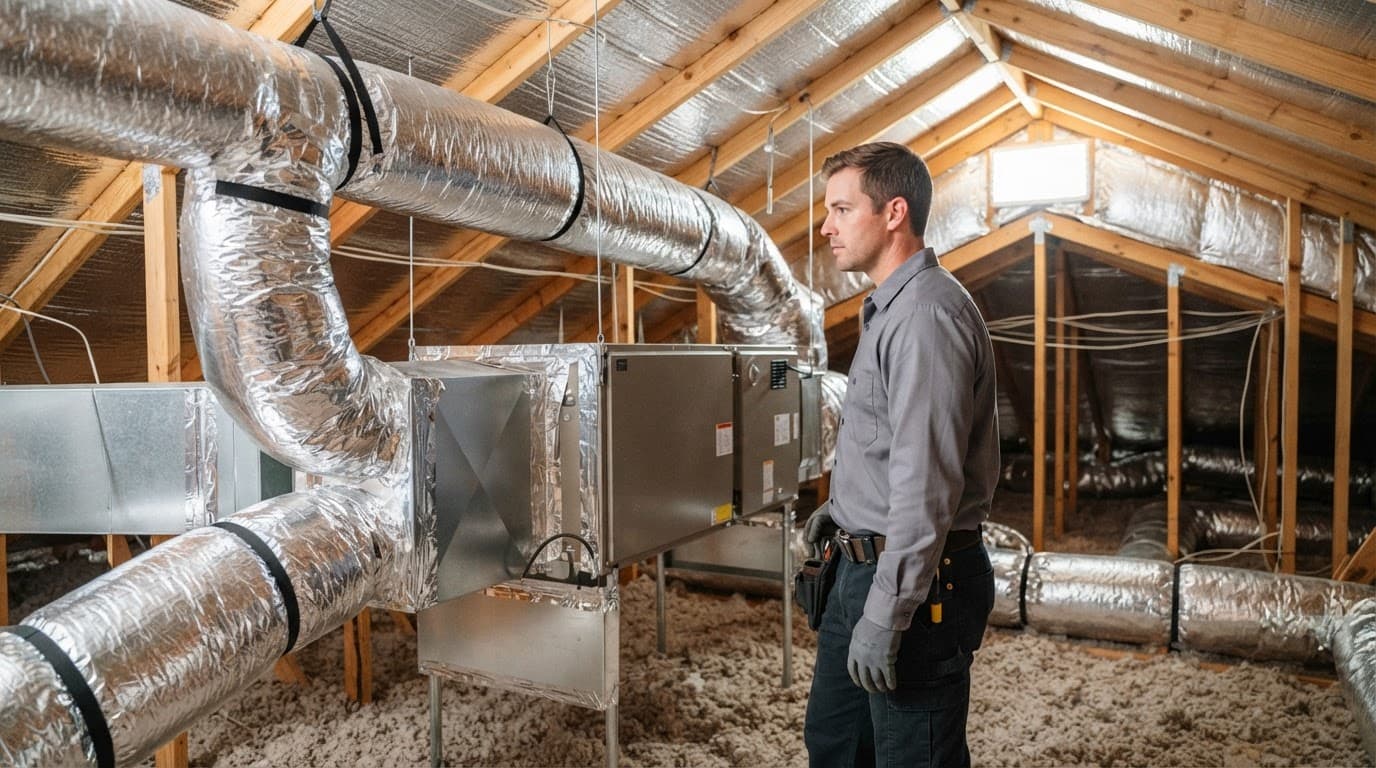
A duct that is too small can create high static pressure and weak airflow. A duct that is too large may reduce air velocity and affect how well air reaches the room. Both problems can contribute to uneven temperatures.
Routing matters as well. Every sharp turn, long run, crushed section, and poorly designed transition adds resistance. Flex duct needs especially careful routing because compression and sag create uneven internal surfaces.
During an AC replacement, the existing duct layout may no longer match the new equipment. A larger or more efficient system still cannot distribute air properly if the trunk, returns, or branch runs are undersized.
Support, insulation, and joints protect performance
Flexible duct needs support that prevents sagging and keeps the insulation from compressing. It should also stay away from sharp edges, hot surfaces, and areas where stored items could crush it.
Sheet metal requires secure hangers, properly fitted connections, and insulation when it passes through an attic or another unconditioned area. Both systems need continuous insulation around joints, boots, plenums, and transitions.
At every connection, the installer should use a code-approved sealing method, such as mastic or listed duct-sealing products. Ordinary gaps around a filter box, air handler, or return platform can pull attic air into the system.
Florida Code and Indoor Air Quality Considerations
Florida's energy and mechanical requirements apply to the complete duct system. They don't make sheet metal or flex duct universally preferable, but they do require contractors to address insulation, containment, and leakage.
Current insulation and testing requirements
Under the 2023, 8th Edition Florida energy-code materials, ducts in unconditioned locations generally require R-6 insulation for supply ducts and R-4.2 for return ducts . Requirements can vary by location and exception, while ducts inside conditioned space may not need insulation under the same rule.
Florida code also requires sealing for ducts, plenums, air handlers, filter boxes, building cavities, and enclosed platforms that form part of the primary air pathway. Duct tightness verification references ANSI/RESNET/ICC 380.
As of August 2026, Florida code-development materials point toward stricter duct testing requirements in the upcoming 9th Edition, including testing at 25 Pa. Adoption and enforcement can depend on the current code edition used by the local jurisdiction, so homeowners should confirm requirements with the permitting office and a licensed HVAC professional.
Leaky returns can affect indoor air quality
Supply leaks waste cooled air, but return leaks can create an indoor-air-quality problem. A return duct operating in an attic may pull in insulation fibers, dust, humidity, and attic odors when its connections or surrounding cavities aren't sealed.
The duct material doesn't prevent this by itself. A flex return with tight connections can perform better than a metal return with open seams. The air handler cabinet, filter rack, return platform, and nearby penetrations also need inspection.
If your home has persistent musty smells, excess dust, allergy complaints, or rooms that stay humid, ask for a duct and air-handler inspection. A visual check can identify collapsed flex, damaged insulation, disconnected boots, and return-side leakage.
A Practical Choice Framework for Florida Homeowners
Use the home's condition and the duct layout to guide the decision:
- For a whole-home installation , request a properly sized system and a duct layout that shows trunk sizes, branch runs, returns, insulation, and routing. A sheet-metal trunk with well-installed flex branches may work well, but another design may suit the home better.
- For an AC replacement , inspect the existing ductwork before connecting new equipment. If the system has collapsed flex, poor insulation, undersized returns, or major leakage, replacing only the outdoor unit may leave the main comfort problem untouched.
- For a repair , replace damaged or inaccessible sections when practical. Sealing a small connection may be enough, but recurring failures, contamination, or widespread insulation damage can justify a larger section replacement.
- For a mixed-material system , make sure every transition is sized correctly and sealed. Combining rigid trunks with flexible branches is common, but the connection points need secure supports and proper insulation.
A professional HVAC ductwork inspection can help determine whether sealing, partial replacement, or a complete redesign makes sense. If the project includes new equipment, compare the duct plan with the professional HVAC installation and replacement proposal before work begins.
Ask the contractor how the system will be tested after installation. The answer should cover airflow, duct leakage, insulation condition, equipment sizing, and return performance, not only whether the ducts look new.
Conclusion
For Florida homes, the better choice in a flex duct vs sheet metal comparison depends on location, design, installation quality, and long-term access. Flex duct can offer lower installation cost and easier routing, while sheet metal can provide strong shape retention and durable trunk or plenum construction.
The most dependable system is properly sized, well supported, insulated for its location, and sealed at every joint. Before replacing an air conditioner or rebuilding attic ductwork, have a licensed professional evaluate the entire air path and verify local permit requirements. When you're ready for a home-specific recommendation, Schedule an Estimate with a Southwest Florida HVAC technician.
Recent Posts