
ERV vs HRV Florida Homes: Which Handles Humidity Better?
Florida air can feel heavy before it even enters your home. For most Southwest Florida homeowners, the ERV vs HRV Florida decision comes down to one issue: which ventilation system adds less moisture to the indoor air.
Both systems bring in fresh air while exhausting stale air. However, they handle heat and humidity differently. That difference matters in Fort Myers and Lee County, where air conditioning works hard for much of the year.
Why Florida Homes Need Planned Ventilation
Older homes often exchanged air through small gaps around doors, windows, and building materials. Newer homes are tighter, which improves cooling efficiency but reduces accidental fresh-air exchange.
Mechanical ventilation gives you control over that exchange. It can dilute indoor pollutants from cooking, cleaning products, furnishings, and everyday living. Yet every cubic foot of outdoor air also brings heat and moisture indoors.
In Southwest Florida, that moisture load can be substantial. A ventilation system should support fresh indoor air without making the home feel clammy or forcing the AC to work harder than necessary.
Sensible heat is the temperature you feel
Sensible heat is the part of heat that changes air temperature. When outdoor air is 92 degrees and indoor air is 75 degrees, sensible heat is the temperature difference.
Both HRVs and ERVs transfer sensible heat. During Florida's cooling season, they can temper incoming hot outdoor air with cooler exhaust air leaving the home.
Latent heat is moisture carried in the air
Latent heat is the energy tied to water vapor. You don't see it on a thermostat, but you feel it when a 74-degree room still feels sticky.
Removing latent heat means removing moisture. Your air conditioner does some of this while it runs. A dedicated dehumidifier removes moisture directly. An ERV can also reduce part of the moisture load in incoming ventilation air, while an HRV cannot.
ERV vs HRV Florida: The Key Humidity Difference
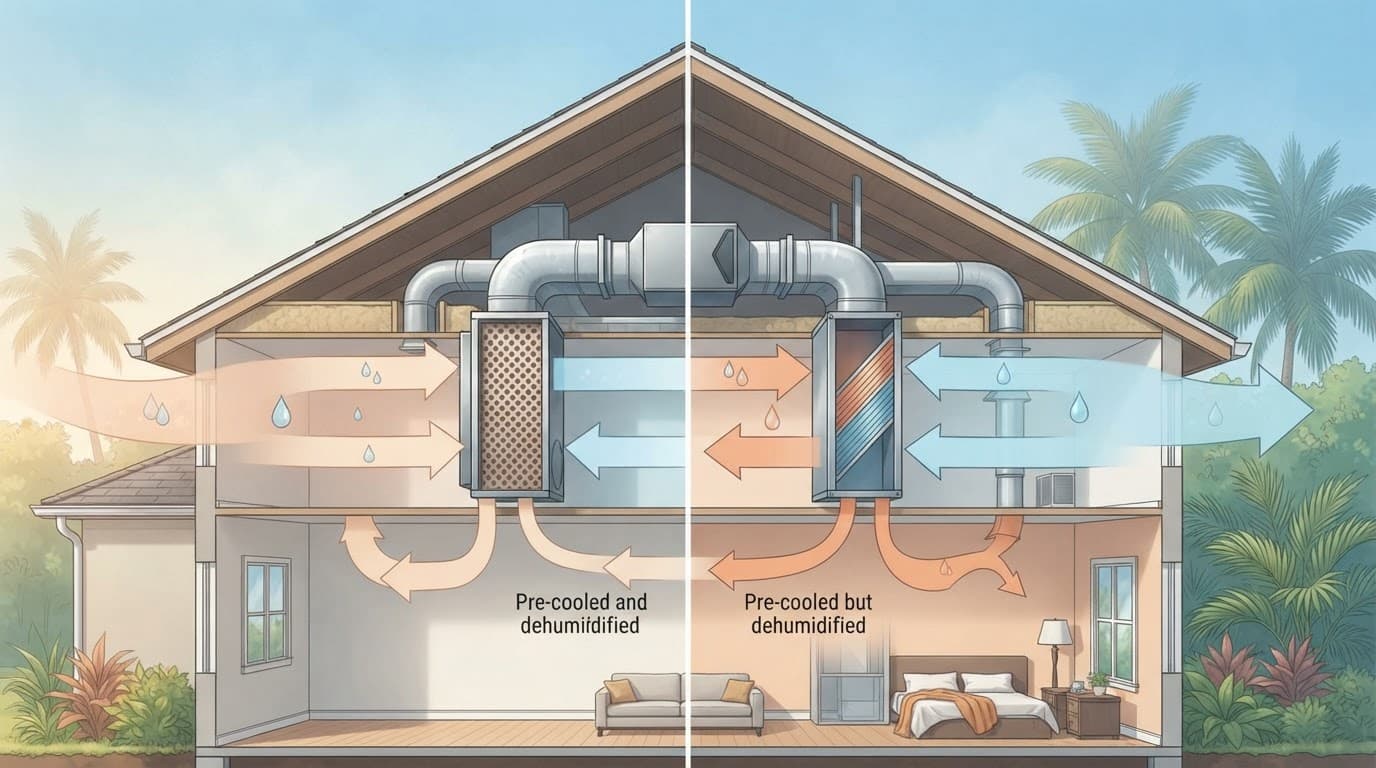
An HRV, or heat recovery ventilator, transfers sensible heat only. An ERV, or energy recovery ventilator, transfers sensible heat and some moisture through an enthalpy core.
That makes the ERV the more climate-appropriate choice for many Florida homes. It doesn't stop humid air from entering, but it reduces the amount of moisture that comes in with the required fresh air.
What an ERV does during hot, humid weather
In summer, the outgoing air from your conditioned home is usually cooler and drier than outdoor air. Inside an ERV, that outgoing airstream helps precondition the fresh incoming airstream.
The two air streams remain separate. However, the ERV core moves some heat and moisture from the incoming air to the exhaust air. As a result, the AC receives ventilation air that is less humid than it would be without recovery.
This is why an ERV can lower the latent load on the cooling system. It gives your AC and dehumidifier less moisture to remove.
Why an HRV is usually a weaker Florida match
An HRV can reduce the temperature load of incoming air. Still, it doesn't transfer moisture. Humid outdoor air enters the home with nearly all of its water vapor intact.
HRVs often fit cold, dry climates well. In those locations, homeowners may want to retain indoor humidity during winter. Florida's long cooling season creates the opposite concern.
An HRV isn't automatically wrong in every Florida project. However, it needs a clear design reason and a plan for the additional moisture it introduces. For most homes in hot-humid Southwest Florida, an ERV is the better starting point.
Coastal and Inland Florida Conditions Aren't Identical
Humidity is high across Florida, especially during summer rains. Yet coastal homes face longer periods of damp air, salt exposure, and weather-driven moisture intrusion.
A house close to the Gulf may run its AC while outdoor dew points remain high day and night. In that setting, reducing the moisture burden on ventilation air can make a noticeable difference in comfort and equipment runtime.
Coastal homes need moisture and corrosion planning
Salt air can corrode outdoor equipment, fasteners, coils, and exposed metal. It also makes regular inspection more important. An ERV should sit within a larger plan that includes sealed ductwork, proper condensate drainage, and equipment suited to local conditions.
If a coastal home smells musty or feels damp with the AC running, the cause might be more than ventilation. Common indoor humidity problems include oversized cooling equipment, dirty filters, duct leaks, fan settings, and drainage issues.
Inland homes still benefit from moisture recovery
Inland Lee County homes can have slightly different wind and salt exposure. However, the summer moisture problem remains. Afternoon storms, wet ground, and consistently humid outdoor air still place a heavy load on cooling equipment.
An ERV is often a sensible choice for inland homes with intentional whole-house ventilation. The final decision should reflect the home's size, occupancy, duct layout, insulation, air leakage, and existing humidity control.
Tight, High-Efficiency Homes Change the Calculation
A tight home holds cooled air better, which is good for energy use. It also holds indoor contaminants and moisture longer unless the home has planned ventilation.
High-performance homes can create a surprising humidity challenge. Their cooling loads may be low enough that an oversized or poorly selected AC system runs short cycles. The thermostat reaches its temperature setpoint, but the system doesn't run long enough to remove much moisture.
Fresh air becomes a larger share of the moisture load
In a leaky home, outdoor moisture may arrive through many uncontrolled paths. A tight home limits those paths, then brings in a measured amount of outdoor air through ventilation.
That controlled approach is healthier and more predictable. However, each planned cubic foot of humid outside air matters more. An ERV reduces the moisture load attached to that fresh air, which helps keep indoor relative humidity in a more comfortable range.
DOE and NREL field work on low-load homes in humid climates has examined smart ERV strategies that meet residential ventilation needs while maintaining acceptable indoor humidity.
A low-load house may still need a dehumidifier
Efficient insulation and windows don't remove moisture. Neither does an ERV. If your home has large gatherings, frequent cooking, long showers, or a high ventilation requirement, humidity can rise even with efficient cooling.
A dedicated whole-house dehumidifier can remove moisture when the AC doesn't need to run. It may also help vacation homes that remain closed for weeks during humid weather. The right setup depends on measured moisture loads, not a one-size-fits-all equipment list.
An ERV Supports Air Conditioning, It Doesn't Replace It
An ERV improves the fresh-air side of humidity control. It does not cool the home by itself, and it cannot remove all the moisture entering through ventilation.
Your AC must still meet the home's sensible cooling load. It also must have enough runtime and capacity to handle the remaining latent load. A dedicated dehumidifier may be needed when moisture remains high after proper ventilation and AC design.
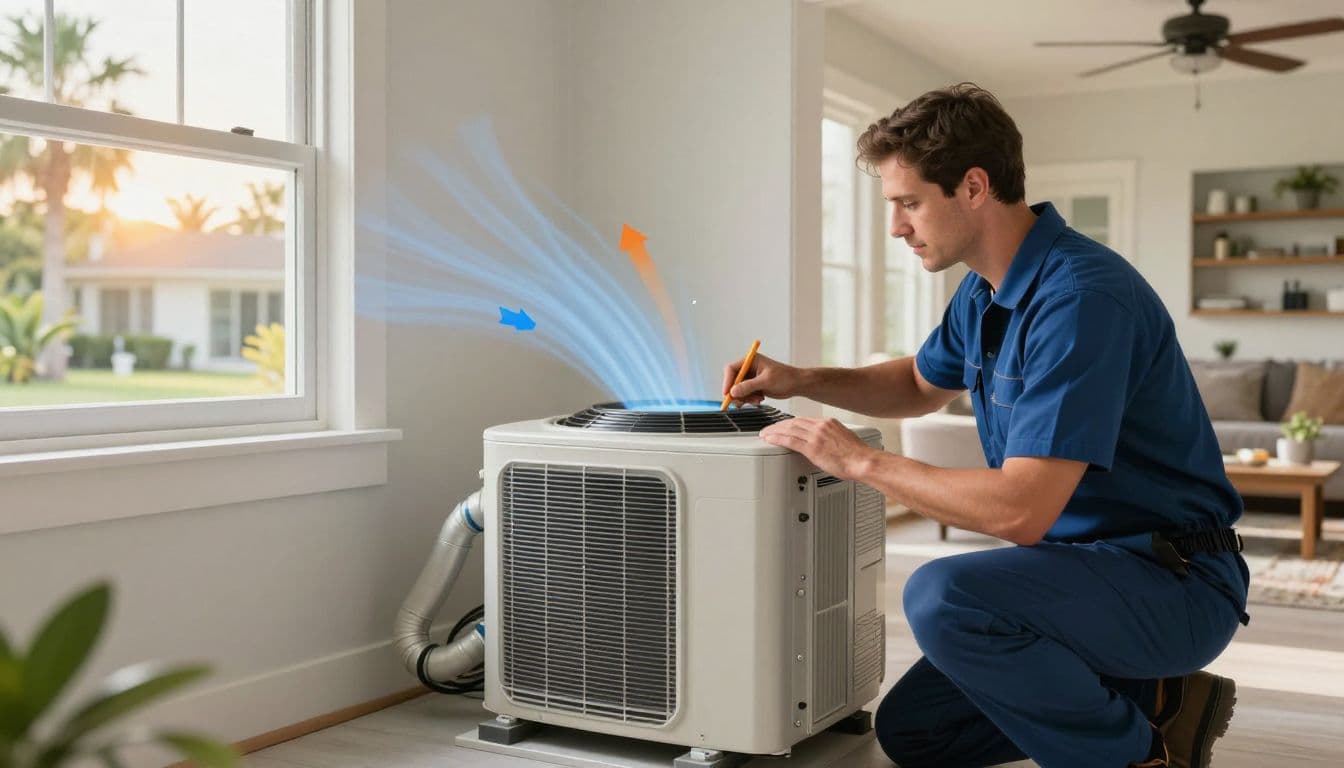
Watch for signs that moisture control is falling short
A reliable hygrometer can tell you more than comfort alone. Florida building guidance commonly treats indoor relative humidity at or below 60 percent as a reasonable target. Many homeowners feel best when humidity stays closer to the middle of that range.

Photo by FOX ^.ᆽ.^= ∫
Look for patterns rather than one high reading after a shower or open door:
- Indoor humidity stays above 60 percent for long periods, even while the AC is operating.
- Bedrooms feel warmer or stickier than the thermostat setting suggests.
- Windows, supply vents, closets, or leather goods develop condensation, musty odors, or mildew.
- The AC runs brief cycles and cools quickly, yet the air never feels dry.
An ERV reduces the humidity load from ventilation air. It can't correct a wet building envelope, an oversized AC system, or ducts that pull humid attic air indoors.
AC sizing still determines day-to-day comfort
A cooling system sized only for temperature can leave a Florida home damp. Oversizing is especially troublesome because the system satisfies the thermostat quickly and shuts off before it removes enough moisture.
When replacement is on the table, ask about cooling capacity, airflow, duct leakage, humidity control, and ventilation as one package. HVAC installation and replacement in Fort Myers should account for the home's layout and moisture needs, not only its square footage.
Indoor Air Quality and Mold Prevention Work Together
Fresh-air ventilation helps dilute indoor contaminants. It can reduce lingering odors and lower concentrations of pollutants that build up in closed homes.
At the same time, moisture control protects indoor air quality. Mold needs moisture to grow, so consistently high relative humidity can create problems behind furniture, in closets, around supply registers, and inside poorly insulated wall cavities.
Keep humidity measurable, not guesswork
A basic hygrometer placed away from kitchens, bathrooms, windows, and supply vents provides a useful baseline. Check it at different times of day, especially during rainy periods and after the home has been closed for several hours.
If readings stay elevated, don't assume the ERV is at fault. Check for plumbing leaks, roof or window intrusion, an unsealed attic access, disconnected ducts, blocked condensate drains, and incorrect HVAC settings.
Comfort also matters. Air at the right temperature can still feel unpleasant when it holds too much moisture. A balanced ventilation plan helps protect both air quality and comfort without relying on open windows during the most humid hours.
Proper Design and Balancing Matter as Much as Equipment Choice
An ERV only works as intended when airflow matches the design. The system needs dedicated supply and exhaust paths, correctly sized ducts, sealed connections, accessible filters, and a condensate plan where required.
A contractor should calculate the home's ventilation requirement under the applicable Florida code and ASHRAE 62.2 guidance. Requirements vary with floor area, bedrooms, and the code edition used for the project.
Balanced airflow prevents pressure problems
A balanced system brings in approximately the same amount of air it exhausts. If exhaust airflow greatly exceeds supply, the home can pull humid outdoor air through cracks and gaps. Too much supply can push conditioned air into cavities and increase moisture risk there.
Commissioning confirms the system's real airflow after installation. It is more reliable than assuming equipment settings and duct lengths are correct on paper.
Maintenance protects performance
ERV filters, grilles, drains, and exterior hoods need regular attention. Dirty filters reduce airflow. Blocked exterior terminations can restrict ventilation, while neglected condensate components can create water problems.
Include the ERV and dehumidifier in your HVAC maintenance in Fort Myers plan. Routine service can catch airflow, drainage, and corrosion issues before they become comfort complaints.
For a new build, major renovation, or persistent humidity issue, Schedule an Estimate with an HVAC technician who can evaluate the complete system. The right recommendation should include your AC, ventilation, ductwork, moisture sources, and indoor humidity readings.
The Right Ventilation Choice for a Florida Home
For most Southwest Florida homes, an ERV handles humidity better than an HRV because it transfers some moisture as well as heat. That lower incoming moisture load gives the cooling system a better chance to keep the home comfortable.
Still, an ERV is only one part of humidity control . Proper AC sizing, sealed ducts, balanced ventilation, routine maintenance, and a dedicated dehumidifier when needed all protect the comfort and air quality of your home.
A well-designed system doesn't merely hit the thermostat setting. It keeps the indoor air dry enough to feel comfortable through Florida's longest, dampest months.
Recent Posts